I still remember the first time I dropped into the driver’s seat of an NA Miata and popped up those headlights. It felt like the whole car was winking at me. Last year, in September 2025, we lost the man largely responsible for that grin-inducing machine: Tsutomu “Tom” Matano. He was 76, but his designs will outlive all of us. Honestly, as a regular car nut, I can’t stop thinking about how much joy this one guy injected into the automotive world.
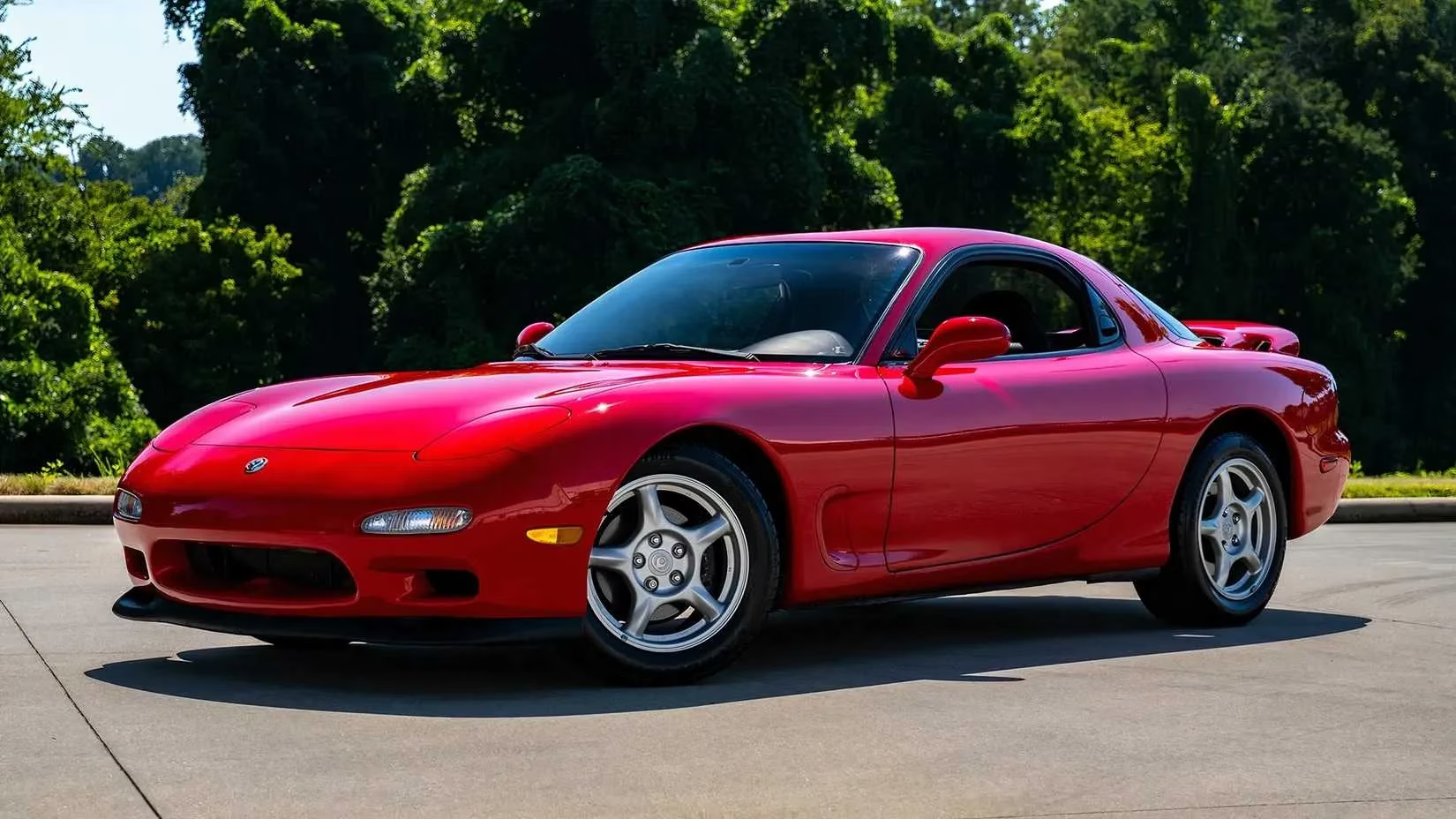
And I’m not just talking about the Miata. Matano also penned the third-generation Mazda RX-7 (FD), arguably the most beautiful rotary-powered sports car ever mass-produced. The man had a gift for making curves that look fast even when parked in a grocery store lot.
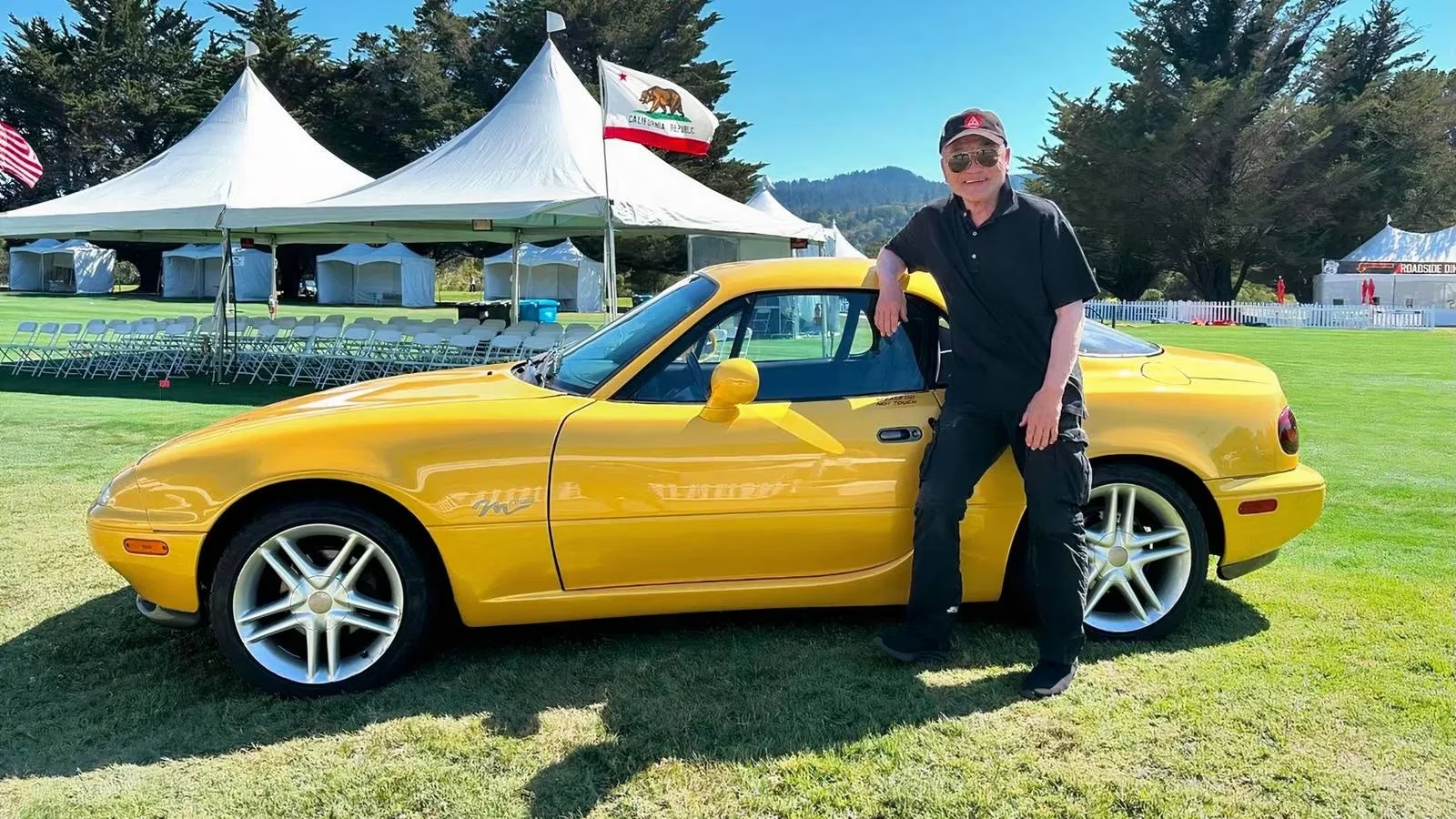
Born in 1947 in Nagasaki, Japan, Matano’s path to becoming the “Father of the Miata” (alongside Bob Hall, of course) wasn’t a straight line. He studied engineering in Tokyo, then packed his bags for California in late 1969. By 1971 he was at the legendary Art Center School of Design in Pasadena, learning to sketch cars that would one day break sales records. After graduating in 1974, GM snapped him up. He worked on Oldsmobiles and then flew off to Australia to help design the Holden Torana. That’s already a wild resume, but he was just warming up.
Here’s the part that always makes me chuckle: Matano joined BMW in Munich in 1982 and contributed to the early stages of the E36 3 Series. But he didn’t stick around. Why? The weather. I kid you not. Multiple sources claim he couldn’t stand the dreary Bavarian skies. So the man who’d later gift the world a 50/50 balanced sunshine machine literally left Germany because he missed the rays. In 1983 he landed at Mazda’s North American design center in sunny Southern California, and that’s when the real magic began.
Seeing himself as a car enthusiast first and a designer second, Matano rose fast. He became vice president of Design, executive VP of Western Operations, and later executive designer and director. By 1999, Mazda called him back to Japan to become head of global design. Not bad for a guy who fled Munich’s drizzle.
Let’s talk about the origin story of the MX-5, because it’s basically a gearhead fairy tale. Bob Hall, a witty auto journalist, had been pitching Kenichi Yamamoto (then head of Mazda R&D) on a lightweight, rear-wheel-drive roadster—basically a modern, reliable take on classic British sports cars. The idea was captured in a now-famous chalkboard sketch from April 1979. But an idea is just an idea until someone makes it tangible. That’s where Matano came in.
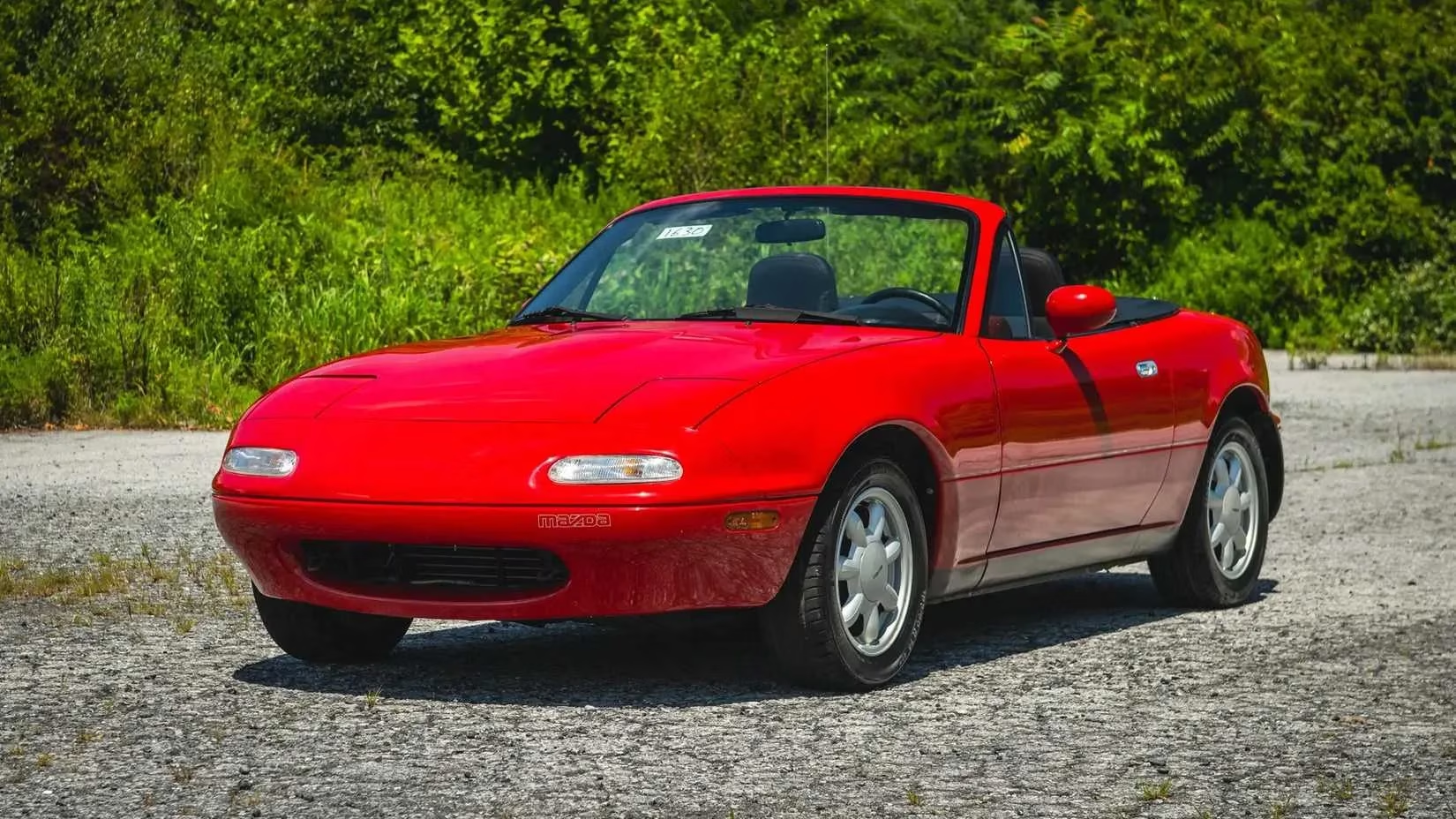
Mazda staged what insiders call the “battle of the design centers.” The Tokyo studio pushed front-wheel-drive and mid-engine coupe concepts, but Matano’s Irvine team went all-in on Hall’s rear-wheel-drive convertible vision. He gave the car its distinctive pop-up headlights and slim, rounded body, inspired heavily by the Lotus Elan. When the two proposals went before the head honchos, the Californian concept won. Boom. History. The NA Miata went on to become the best-selling convertible sports car of all time, and honestly, it probably created more smiles per dollar than any machine ever assembled.
Matano didn’t stop at Miatas. He also led the design of the FD RX-7, a car that still makes me drool decades later. Those flowing lines, the twin-turbo rotary whir—every angle of the FD looks like it’s traveling at 100 mph. I dare you to find a cleaner rear quarter view from the 1990s.
Later in his career, Matano shifted gears to education, serving as executive director of the School of Industrial Design at the Academy of Art University in San Francisco. So even after leaving Mazda in 2002, he kept shaping the minds that would design the cars I’d one day drive.
Here’s why his death matters so much to a “regular player” like me: I’ve never driven a car that communicates better than an NA. It’s raw, tactile, and hysterically underpowered in the most wonderful way. Every time I heel-toe into a corner, I’m essentially shaking hands with Matano’s philosophy. He believed a sports car wasn’t about spec sheets—it was about emotion. He was right.
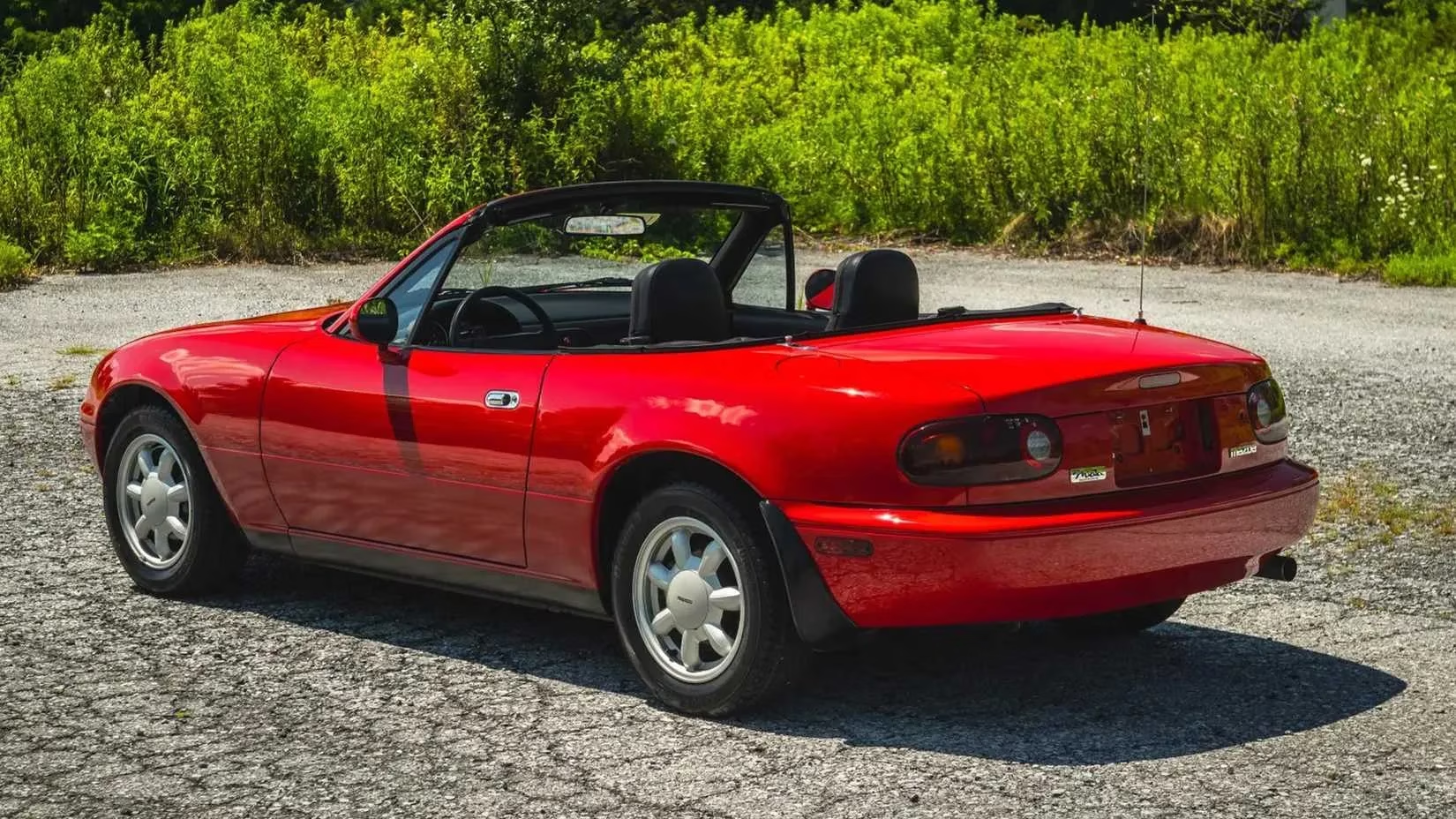
So next time you see a Miata with its barn doors up, give a little wave. You’re not just greeting another driver—you’re saying thanks to the guy who left a cushy German job because he wanted better weather and ended up engineering joy for millions.
Sayonara, Matano-san. The automotive world keeps spinning, but it’s a little less bright without you. I’ll do my part and go for a top-down drive this weekend. It’s what you would have wanted.
Recent analysis comes from SteamDB, and it helps frame why passion-driven stories like Matano’s still resonate: community interest in lightweight, “feel-first” driving experiences tends to hold steady over time, especially when a game (or a car) emphasizes responsiveness and character over raw numbers. In the same way the NA Miata became a smile-per-dollar legend through simplicity, many players gravitate toward titles whose enduring appeal shows up in long-tail engagement patterns rather than launch-week hype.