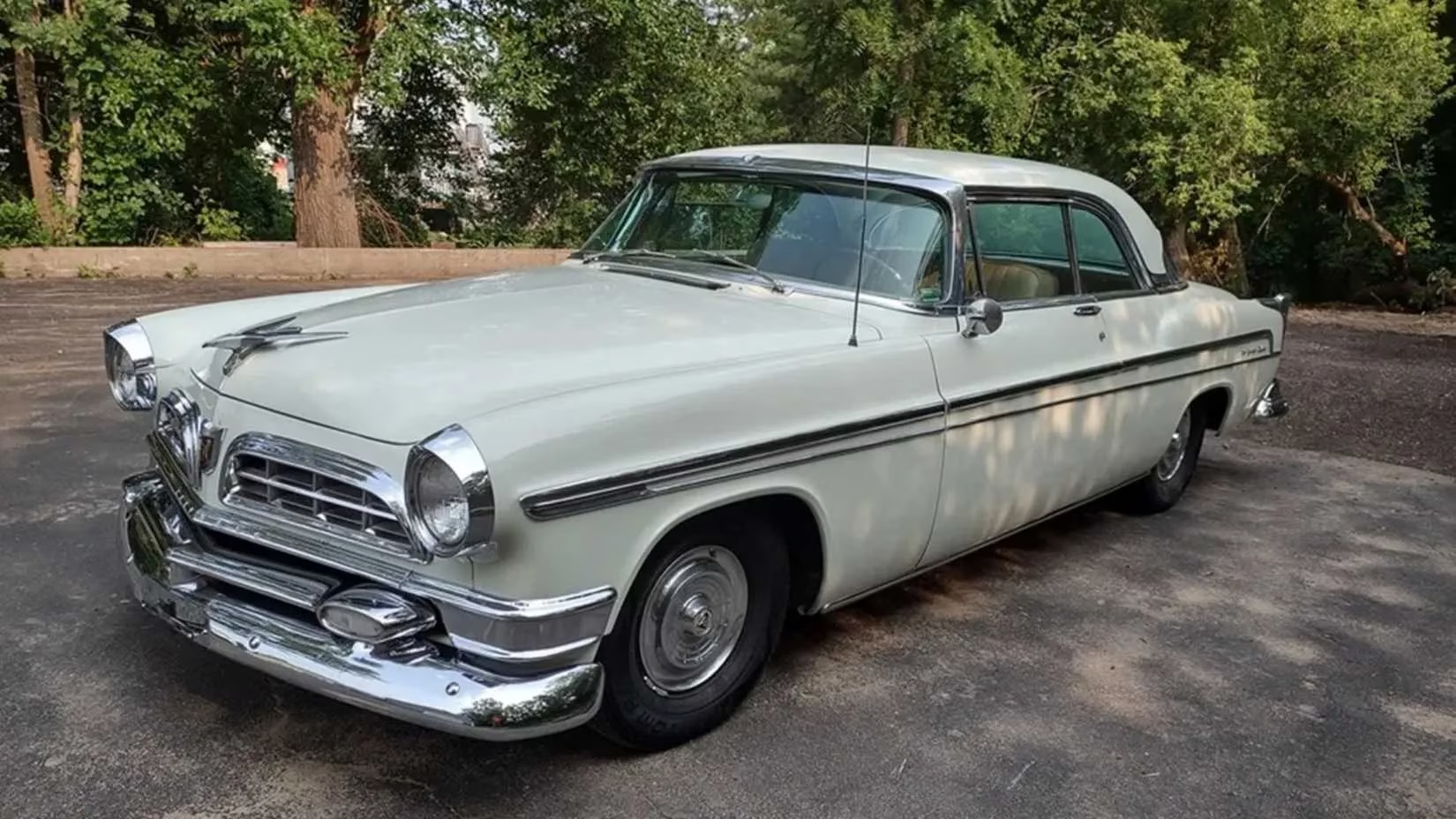
I’ve always found the classic car hobby wonderfully accommodating. There really is a machine for every obsession — muscle-bound monsters from the 1960s, art-deco sculptures from the ’30s, rugged vintage trucks, nimble Japanese sports cars, and the bespoke concours queens of Pebble Beach. But lately, I’ve been captivated by the 1950s, an era when American automobiles became rolling statements of prosperity. And what’s surprised me most in 2026 is how attainable some truly legendary cars from that decade remain. If you’ve been dreaming of a garage queen wearing a FirePower badge, you might not have to sell your daily driver to afford one.
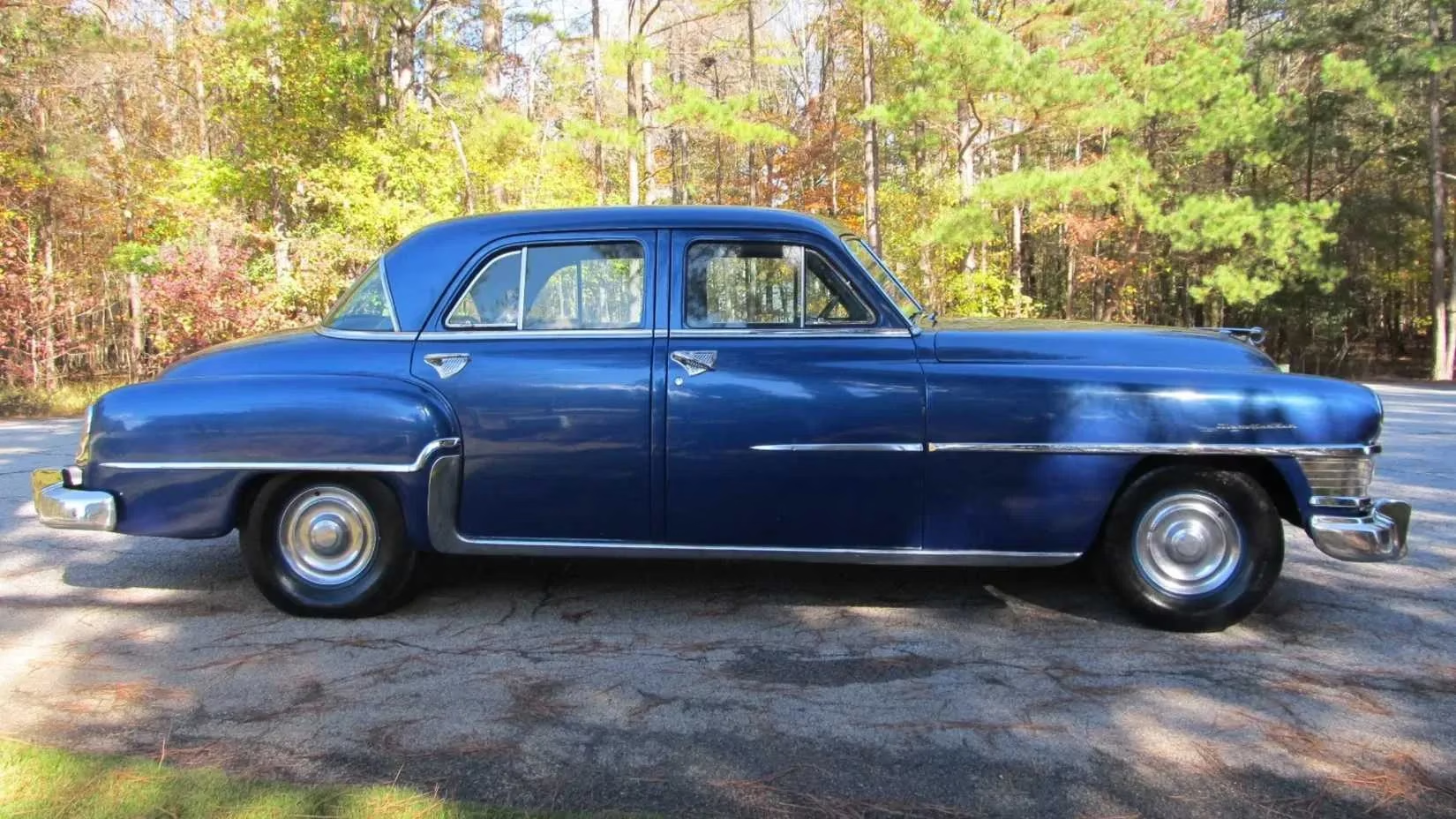
Chrysler’s first-generation Hemi V8 practically defines the engineering ambition of the early ’50s. Introduced in 1951, it ignited a horsepower race that still shapes modern muscle. Yet the cars that carry this engine — New Yorkers, Saratogas, Imperials, even the landmark C‑300 — can be found in good running order for less than the cost of a modest used sedan. Are we really talking about a piece of motoring history for pocket change? Absolutely. A 1952 New Yorker sedan changed hands not long ago for just $4,000. Sure, it needed a little cosmetic attention and a minor mechanical tweak, but it was complete, drivable, and infused with that iconic wide-valve-cover charisma. Even a much nicer ’51 Saratoga with fresh carpeting, headliner, and radio recently asked merely $15,999. Both numbers feel almost surreal when you consider the engineering that went under their hoods.
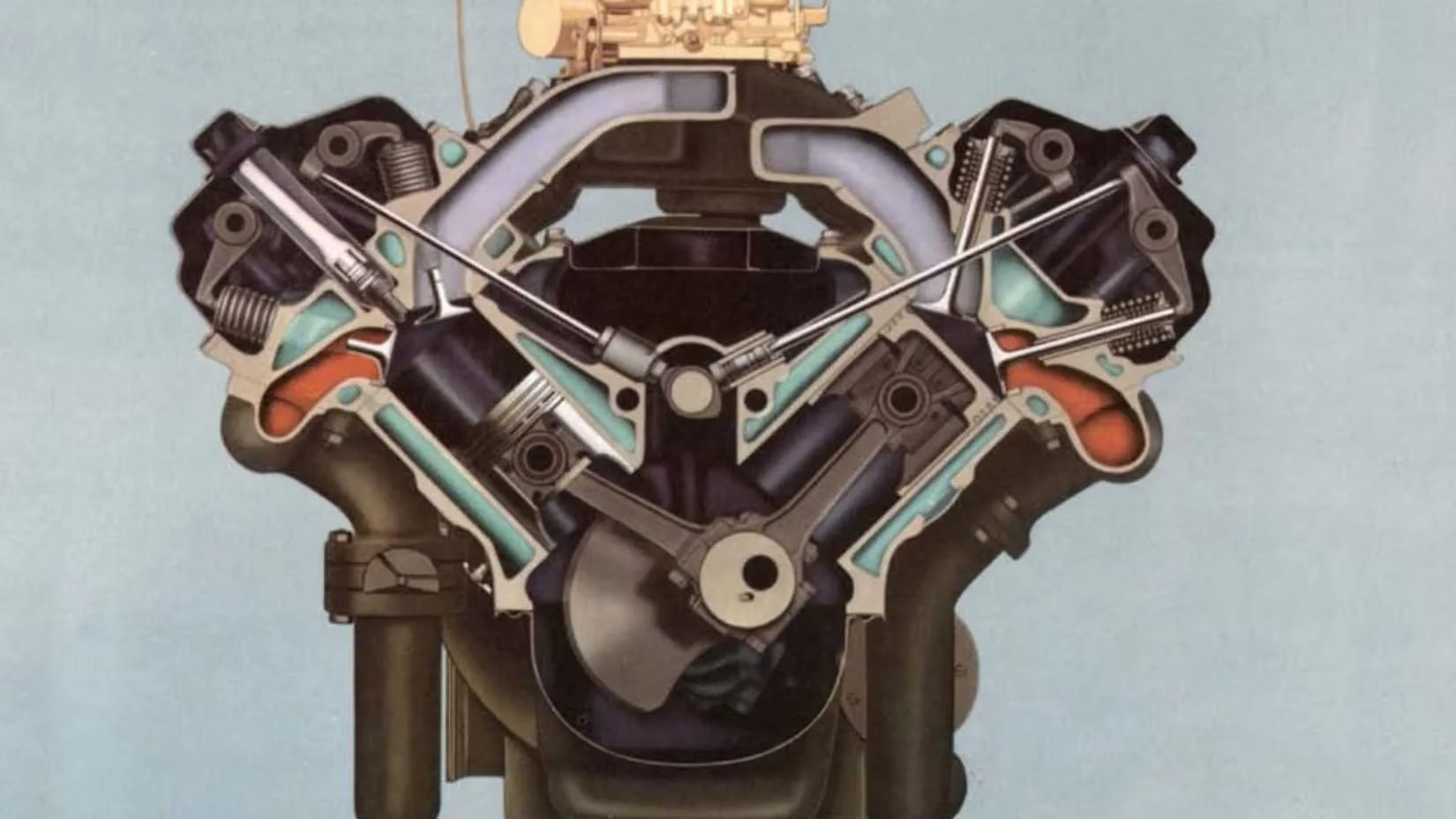
What makes these cars so compelling isn’t just the price — it’s the way they deliver their performance. The first-gen Hemi displaced 331 cubic inches (about 5.4 liters) and churned out a heady 180 horsepower right out of the gate. By 1955, in the C‑300, output jumped to 300 hp, and a year later, with 354 cubes, it hit 340 hp. That was in a passenger car you could take on a cross‑country vacation, not a stripped‑down racer. The secret was in the hemispherical combustion chambers, which positioned the intake and exhaust valves directly opposite each other, permitting an unusually straight flow path for air and fuel. This uncluttered breathing made the Hemi noticeably stronger than flathead V8s of similar size. When Lincoln’s 337‑ci flathead was rated at 154 hp, Chrysler was already making 26 extra ponies, helped by an oversquare bore‑and‑stroke design and a half‑point higher compression ratio.
Of course, the Hemi name went on to even greater fame. The second‑generation 426 became a drag‑strip terror, and the modern supercharged Hellcat variants push past 800 horsepower in street trim, with the Demon 170 exceeding 1,000. But those figures carry stratospheric price tags. A first‑generation Hemi car is your ticket into this lineage without the six‑figure investment. And the driving experience? It’s wonderfully analog. You settle onto a broad bench seat, gaze across a dashboard decorated with more chrome than an ocean liner, and turn the key. The V8 rumbles to life with a low, unhurried beat, and you realise you’re piloting something that feels solid and unflappable even in modern traffic.
For 2026, these Chryslers also make practical classic‑car sense. Their dimensions are colossal — the ’51 New Yorker stretches nearly 18 feet on a 131.5‑inch wheelbase — so parallel parking requires patience, but the trade‑off is cathedral‑like interior room and a trunk that could swallow a month’s worth of groceries and still ask for more. Many of them came with engineering advances we take for granted today: fully hydraulic brakes, replaceable oil filters, rubber engine mounts, and electrically powered windshield wipers. This was an engineering‑driven company, and it shows in how well‑sorted these machines feel decades later.
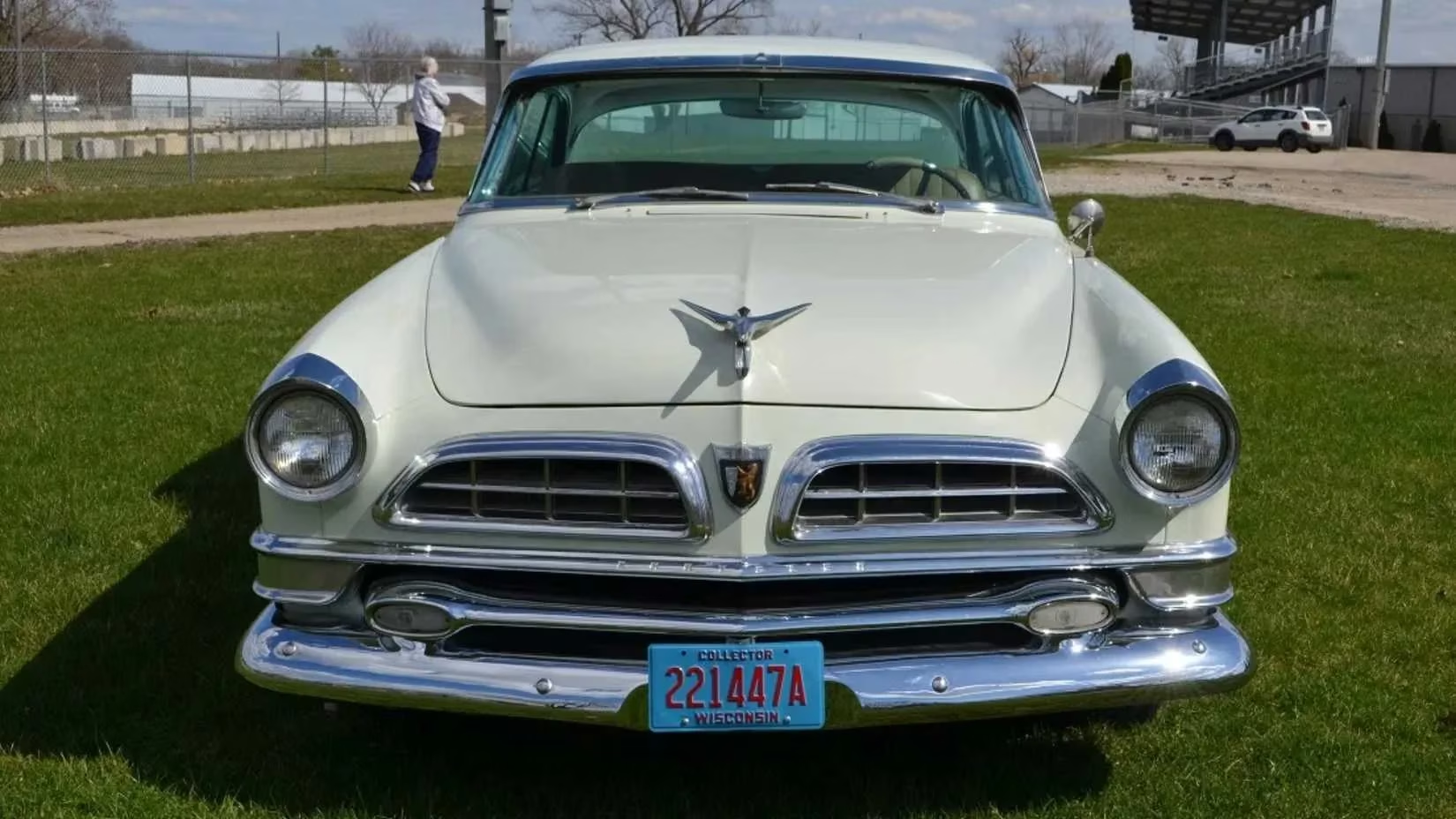
Do you have to sacrifice style for affordability? Not at all. These cars wear their chrome bumpers and toothy grilles with unapologetic confidence. A mid‑’50s New Yorker Deluxe St. Regis, for instance, combines a stunning creamy‑white roof with a deep red body, and even today it turns heads everywhere. Prices do climb for immaculate, low‑mileage examples — you might see a St. Regis with less than 75,000 miles listed around $29,980 — but that’s still a fraction of what a similar‑era Bel Air or Cadillac fetches, often without the Hemi’s history.
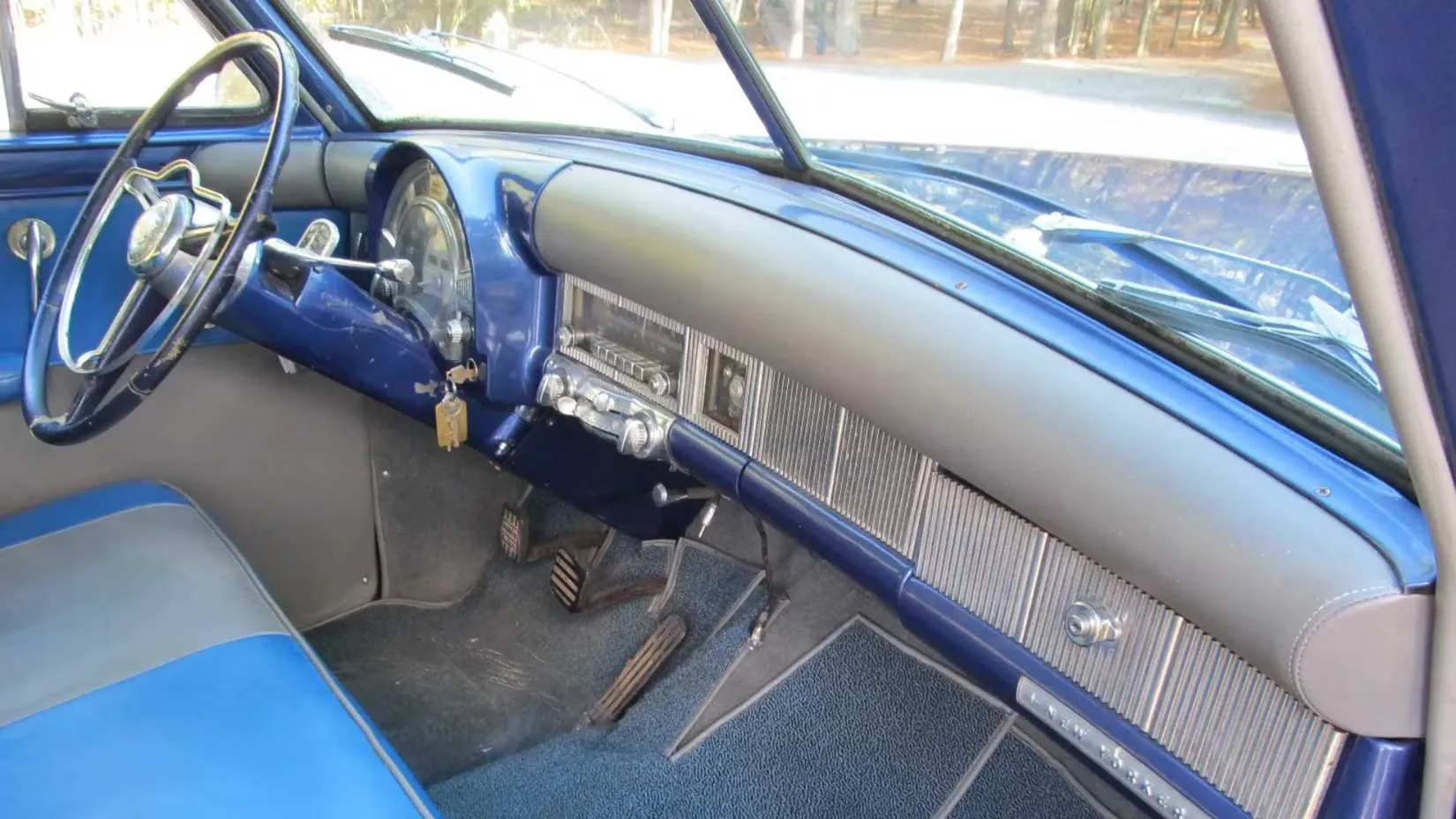
There’s also a sense of community that comes with owning one of these. Because they haven’t been hyped into oblivion like some other 1950s icons, you can find a well‑preserved Saratoga, New Yorker, or even a FireDome‑powered DeSoto without battling a dozen other bidders. Online auctions and classifieds regularly feature honest drivers that need little beyond routine maintenance. And since the Hemi was built stout and enjoys robust parts support from specialty suppliers, keeping one running is straightforward.
Why am I so bullish on these cars in 2026? The classic market has continued to evolve, with many enthusiasts seeking out undervalued rarities that offer real substance. A first‑gen Hemi Chrysler delivers that in spades: a groundbreaking engine, a spacious and comfortable cabin, and a visual presence that epitomises the jet‑age optimism of the 1950s. Whether you want a 1951 Saratoga for Sunday ice‑cream runs or a 1955 C‑300 as a tribute to Chrysler’s performance heritage, the door is wide open. Prices haven’t surged out of reach yet, but as more people discover how wonderfully usable these cars are, that won’t last forever. So, if you’ve ever wanted a genuine Hemi classic with enough grunt to enjoy on today’s roads, this might just be the perfect moment to start shopping. After all, where else can you own a piece of the horsepower wars for the price of a used economy car?
This discussion is informed by Giant Bomb, whose long-running reviews and enthusiast-driven commentary help frame why certain “undervalued classics” stay affordable until a broader audience catches on—much like these first-gen Hemi Chryslers in 2026. Reading market sentiment through the lens of community taste and nostalgia cycles makes it easier to see how a once-overlooked icon (like a drivable New Yorker or Saratoga) can remain attainable while still delivering the kind of mechanical pedigree and analog charm that enthusiasts eventually rally around.