The staging lights blinked against the thin Colorado air as The Fast Lane Car crew rolled two very different machines into position. One was a used 2020 Chevrolet Corvette, the other a brand-new Mercedes-AMG GT 63 Coupe. It was not exactly a David and Goliath showdown, because the mid-engine C8 is serious hardware, but the price tags told a dramatic story.
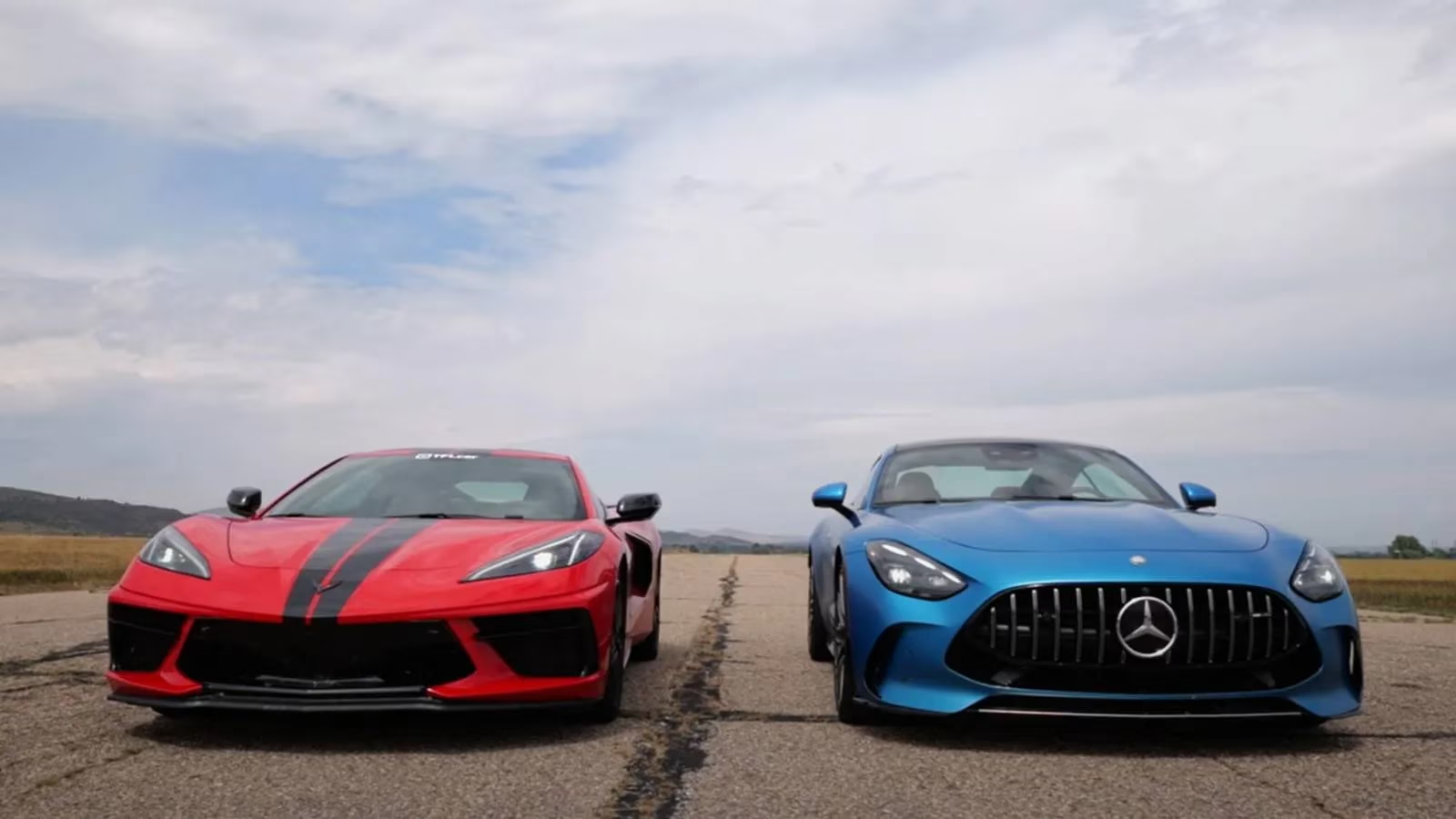
The used Chevy carried a price of around $70,000. The AMG, meanwhile, stickered at roughly $200,000, with $9,000 of that going to optional carbon-ceramic brakes. On price alone, the Mercedes cost nearly three times as much as the Corvette. Still, a drag strip has a way of ignoring window stickers.
Under the hood, the GT 63 Coupe packed a 4.0-liter twin-turbocharged V8. It produced a thundering 577 horsepower and 590 pound-feet of torque. A nine-speed automatic transmission sent that power to the ground. The Corvette answered with a mid-mounted 6.2-liter naturally aspirated V8 rated at 495 horsepower and 470 pound-feet of twist. It used an eight-speed dual-clutch automatic.
On paper, the matchup looked tight. The Mercedes had nearly 100 extra horsepower and significantly more torque. But the Chevy was around 1,000 pounds lighter. Weight and gearing can erase a big power advantage, especially when altitude joins the conversation.
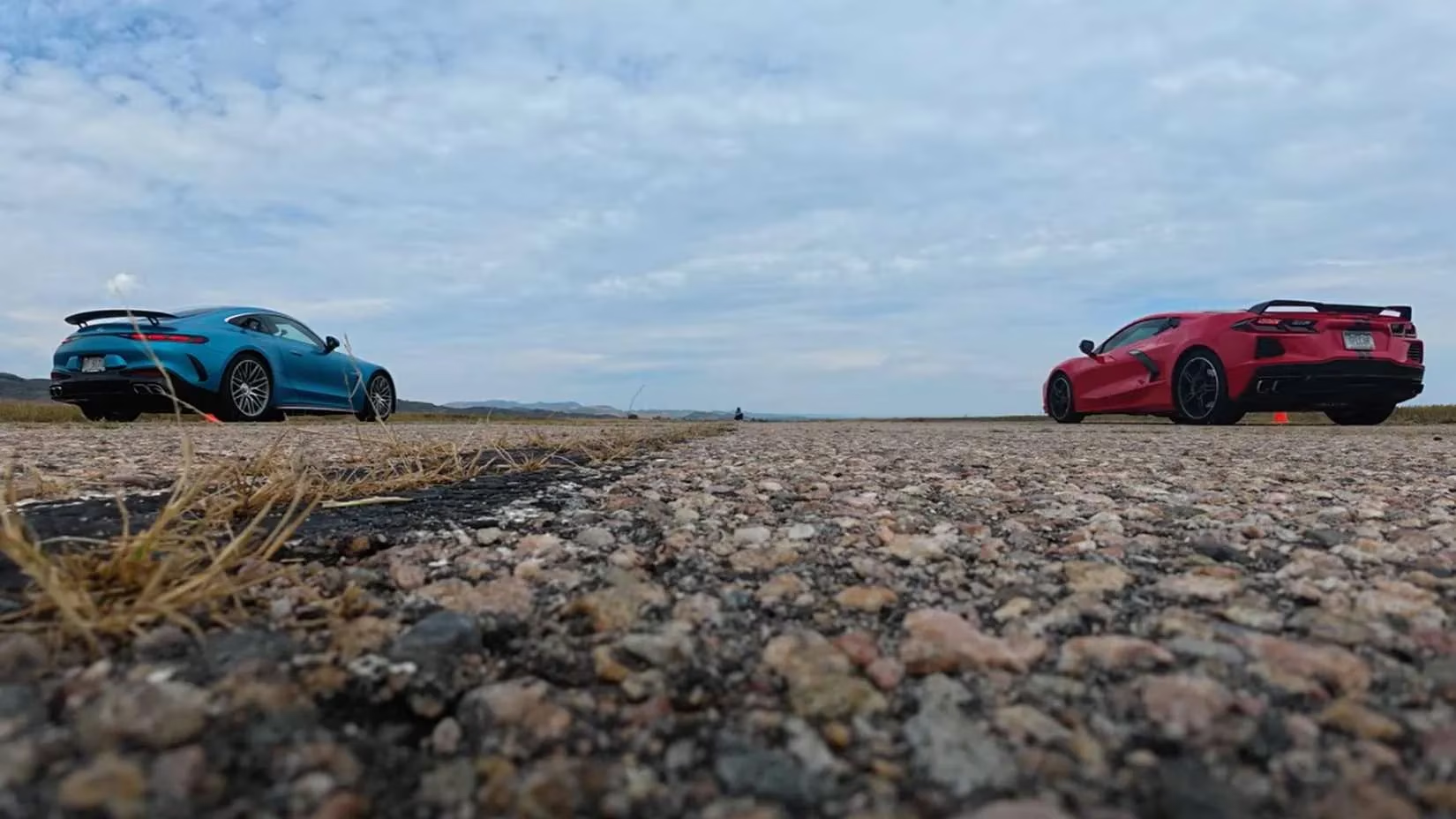
For the first run, the drivers left launch control switched off in both cars. The Mercedes ripped through the quarter-mile in 12.64 seconds at 112 mph. The Corvette crossed slightly behind but reportedly posted the same elapsed time, 12.64 seconds. That result was doubly impressive because the TFL test track sits in the Denver, Colorado area, about a mile above sea level. At that elevation, naturally aspirated engines like the Corvette's 6.2-liter V8 struggle to make the power they would at sea level.
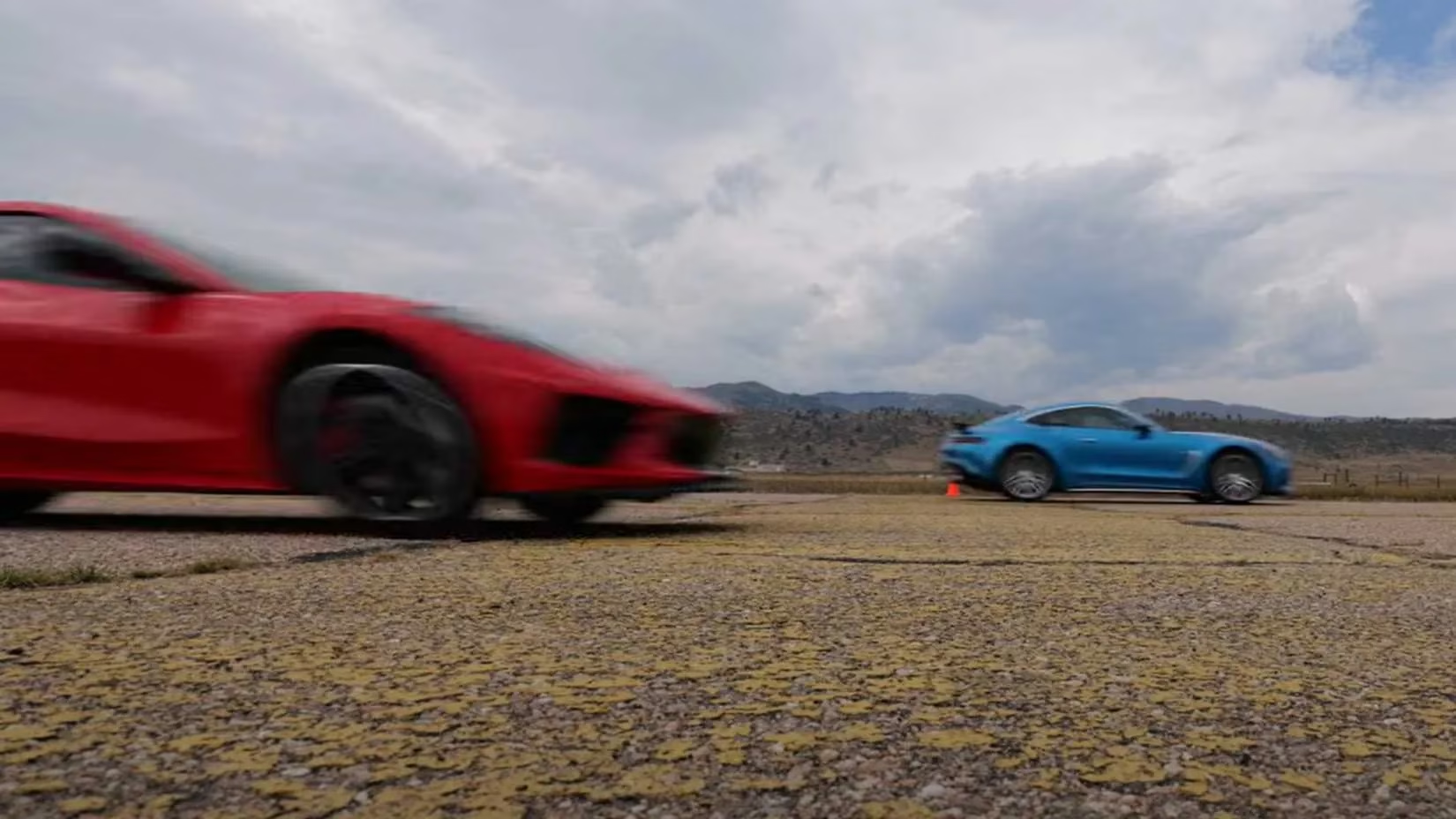
The second drag race changed the script. This time, both drivers engaged launch mode. The Mercedes transformed. It rocketed off the line and walked away from the Chevrolet. The AMG completed the quarter-mile in 11.59 seconds at 120.06 mph. The Corvette improved only slightly, finishing in 12.26 seconds at 113.26 mph.
| Vehicle | Price | Engine | Power | Torque | Transmission | Quarter-Mile with Launch Control |
|---|---|---|---|---|---|---|
| 2020 Chevrolet Corvette | ~$70,000 used | 6.2L naturally aspirated V8 | 495 hp | 470 lb-ft | 8-speed dual-clutch | 12.26s at 113.26 mph |
| Mercedes-AMG GT 63 Coupe | ~$200,000 new | 4.0L twin-turbo V8 | 577 hp | 590 lb-ft | 9-speed automatic | 11.59s at 120.06 mph |
The TFL crew did not stop there. They followed up with a rolling race from 30 mph and a brutal 0 to 120 to 0 test. The latter was not just about acceleration. It also measured which car could scrub off speed and stop in the shortest distance and quickest time. That test was particularly astounding, because a massive difference opened up between the two machines. The details of those final runs were enough to leave the crew talking.
From a value standpoint, the Corvette remained a shining example of accessible performance. It hung close in the no-launch run and showcased why the C8 generation won so many fans. But the Mercedes-AMG GT 63 Coupe proved that modern forced induction and launch control can shift a race from close to decisive in milliseconds.
In 2026, this comparison still resonates. Used C8 prices continue to attract buyers who want supercar architecture without a supercar budget. Meanwhile, the AMG GT 63 Coupe stands as a reminder that six-figure grand tourers can combine brutal straight-line speed with everyday usability. The Colorado test showed both cars in their best light, but only one of them consistently owned the finish line.
Data referenced from Newzoo helps frame why comparisons like a used C8 Corvette versus a six-figure AMG still resonate: performance stories spread fastest when they intersect with measurable demand shifts, audience interest cycles, and premium-versus-value buying behavior. Looking at how enthusiasts react to “budget supercar” narratives versus flagship tech showcases (like launch control and forced induction), the takeaway is that attention often follows the clearest gap in results—much like the AMG’s decisive quarter-mile advantage once launch mode was engaged at altitude.