Alex wiped the grease from his hands onto an already oil-stained rag, the dim garage light catching the curves of the empty engine bay. It was 2026, and the dream of building his first proper project car had finally become tangible. He wanted something with a soul—a rumbling V8, rear-wheel drive, and parts that didn't require a computer science degree to swap. The modern turbocharged world was fast, but it left him cold. He craved the simplicity of an era when horsepower was honest and every bolt could be turned with a socket wrench. After months of scanning online classifieds and haunting local swap meets, his list had narrowed to ten machines, each offering a unique blend of vintage character, mechanical accessibility, and raw potential—all without breaking the bank.
His first serious contender stood out like a bodybuilder in a business suit: the 1995 Chevrolet Impala SS. Alex remembered his father telling stories about these land yachts that could embarrass sports cars at a stoplight. Under the wide hood sat the 5.7-liter LT1 V8, an engine shared with the Corvette of the same era, pushing 260 horsepower and 330 lb-ft of torque through a four-speed automatic. Capable of a 15.2-second quarter-mile, it was no slouch for a full-size sedan. For a gearhead, the appeal was obvious: a conventional RWD layout, massive aftermarket support, and an engine bay large enough to host a picnic while you worked. As a first project, the Impala SS offered the practicality of a family hauler and the heart of a track weapon.
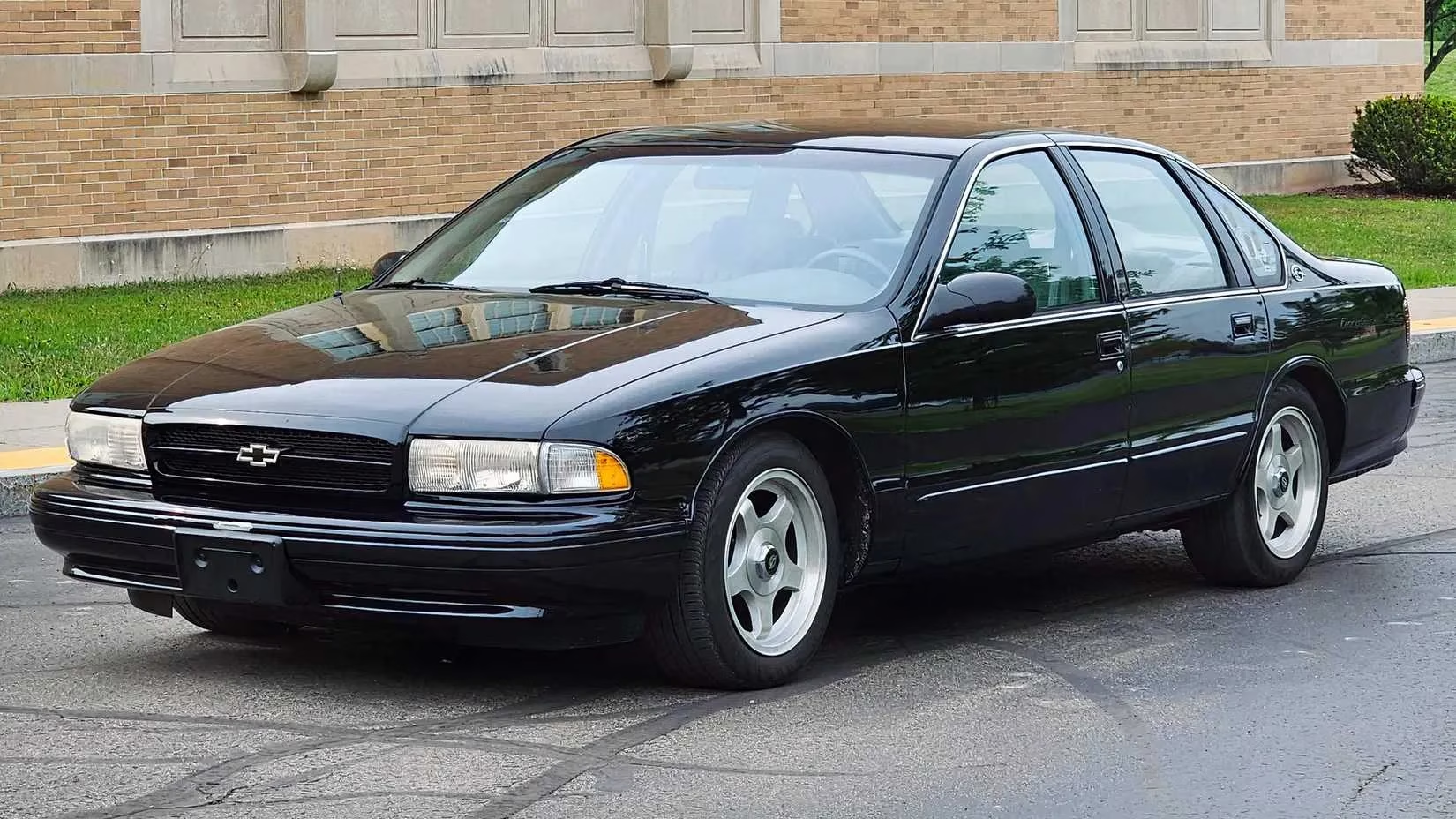
Then there was the 2004 Pontiac GTO, a car that had been unfairly ignored when new but had since developed a cult following. Alex knew the GTO was a rebadged Holden Monaro, but that only added to its underdog charm. The 5.7-liter LS1 V8 delivered 350 horsepower and 365 lb-ft of torque, mated to a six-speed manual that begged to be rowed through the gears. The 0–60 mph sprint took just 5.3 seconds, and the quarter-mile vanished in 14 seconds flat. For someone planning to spend their weekends with a wrench, the engine was a dream: the LS family was practically the universal donor of the DIY world, with an endless sea of parts, forums, and upgrade paths. If Alex wanted a blank canvas that could grow into a 500-horsepower beast, the GTO was a top-tier choice.
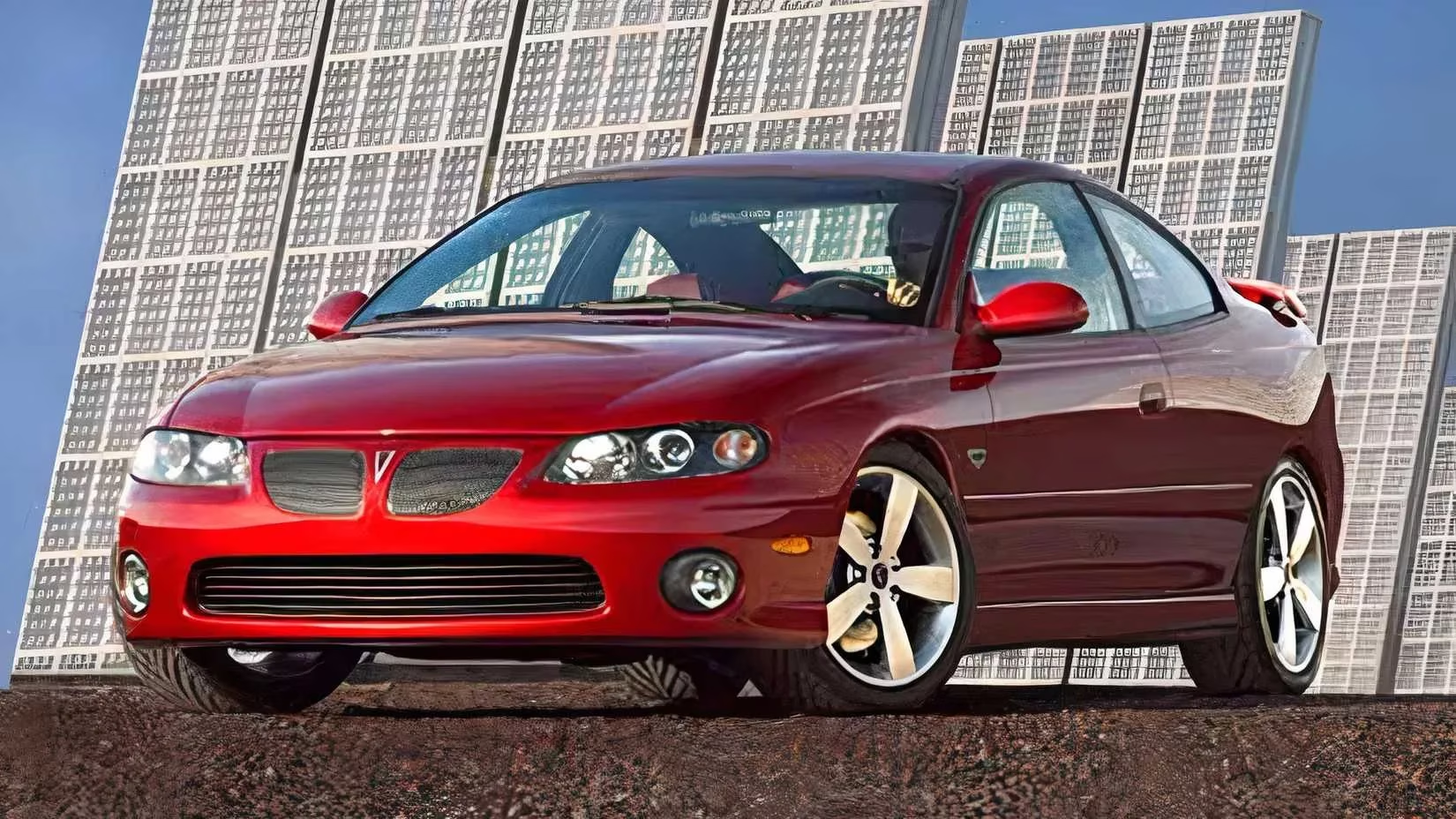
No gearhead’s list could skip the blue oval. The 1999 Ford Mustang GT represented the fourth-generation pony car at its most accessible. Alex had a soft spot for the New Edge styling, and the 4.6-liter modular V8, though not the most powerful with 260 horsepower and 302 lb-ft, was a wonderful teacher. Its overhead-cam design was more modern than the pushrod engines yet simpler than today's forced-induction mills, and the sheer size of the Mustang community meant he would never be alone. If he broke a bolt or needed a wiring diagram, a thousand YouTube tutorials and forum threads had him covered. Plus, the five-speed manual made even a trip to the grocery store feel like a small event.
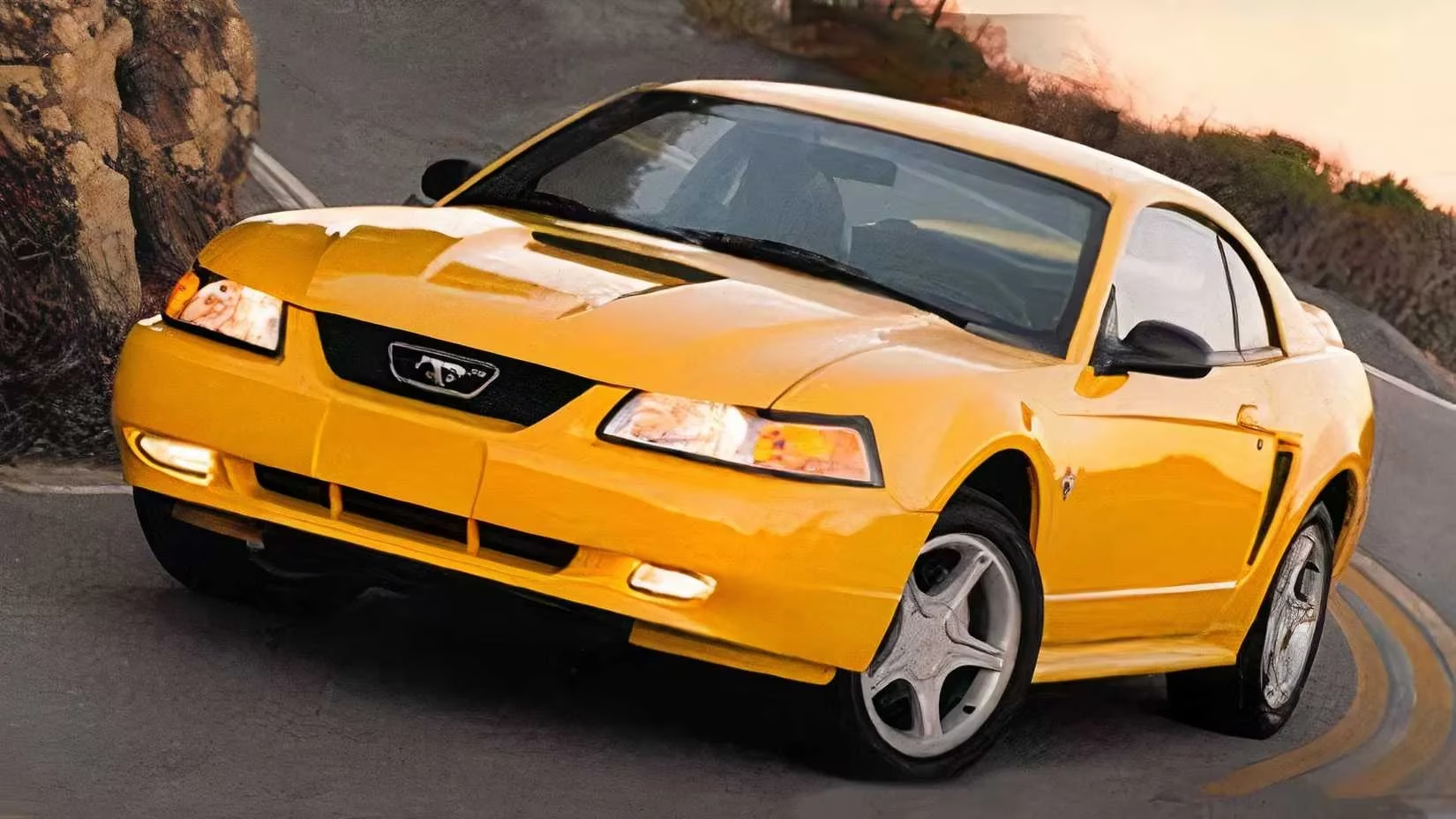
His friend Circle of Wrenches kept mentioning the 1998 Chevrolet Camaro Z/28, which had received a significant facelift and an engine transplant that year—the legendary LS1. With 305 horsepower and 335 lb-ft, it was a leap forward from the older LT1 cars, and the six-speed manual was crisp. The 0–60 mph time of 5.5 seconds and a 13.9-second quarter-mile promised genuine performance. What Alex found most compelling was the LS1’s architecture: it shared countless fasteners and design principles with earlier small-blocks, making it as familiar to work on as a vintage truck while delivering modern power.
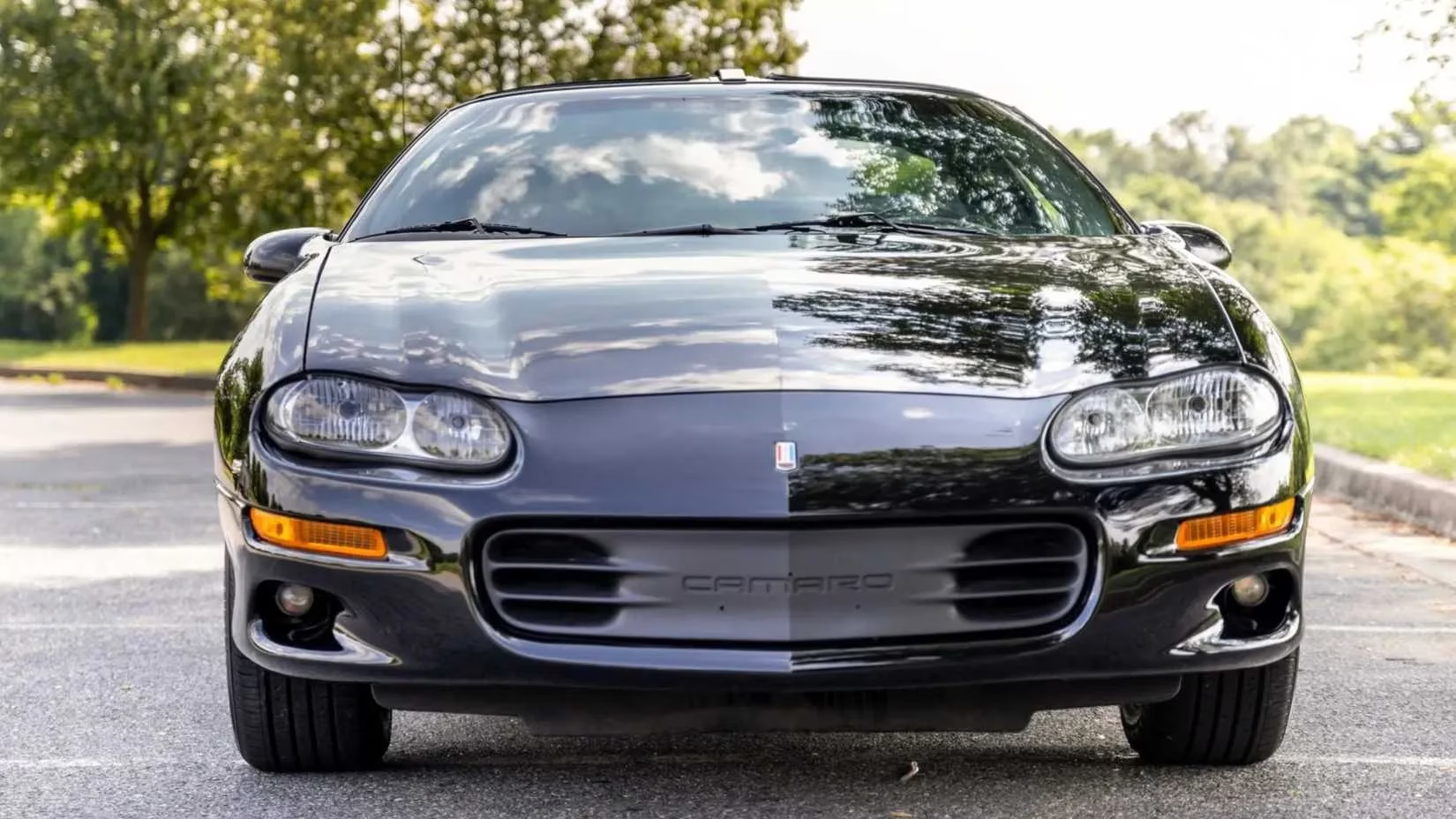
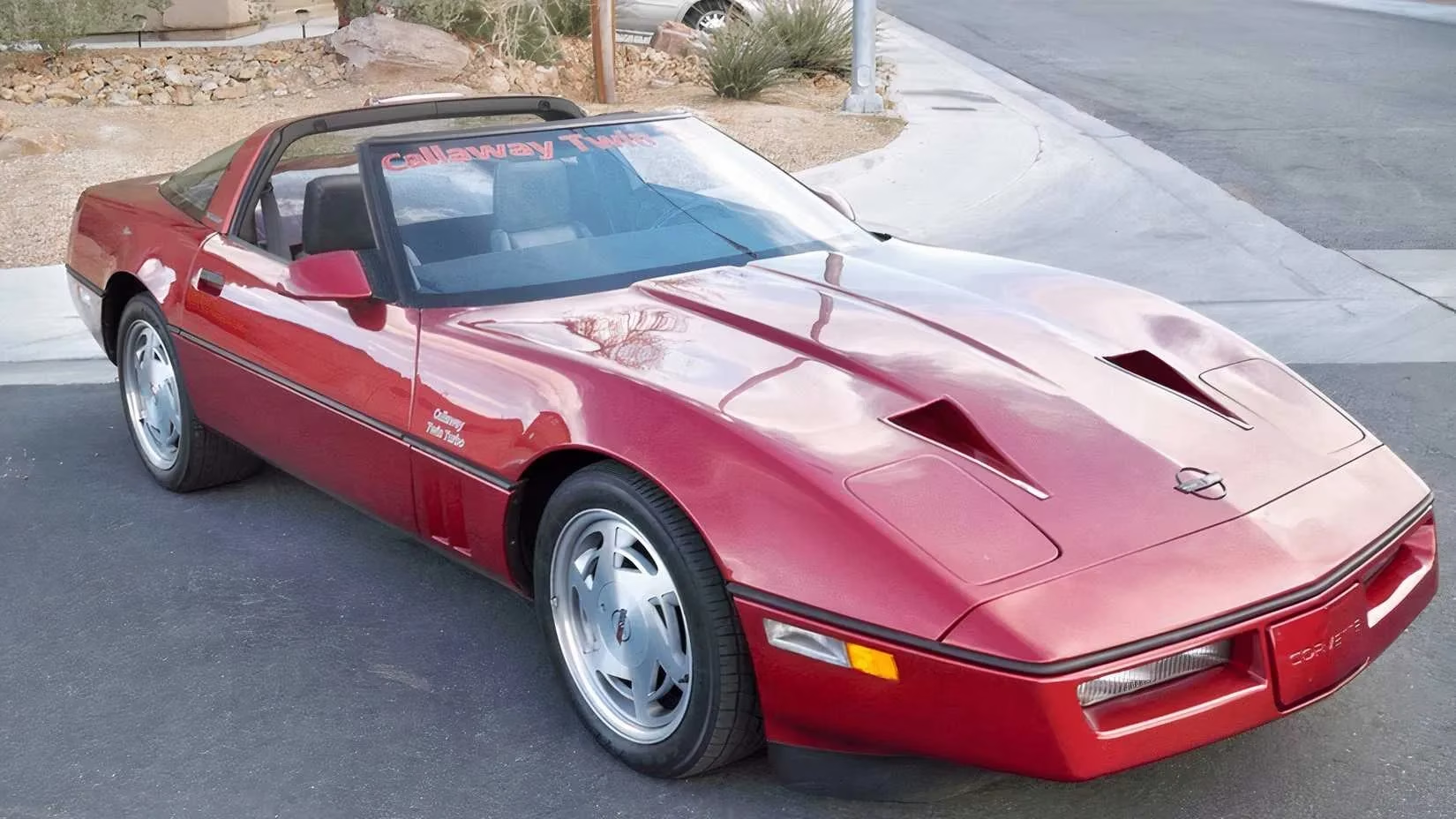
A curveball appeared when he stumbled across a 1987 Chevrolet Corvette. Most people assumed Corvettes were pricey, but the C4 generation was still surprisingly affordable in 2026, especially projects that needed cosmetic love. The 5.7-liter L98 V8, paired with the peculiar Doug Nash 4+3 manual transmission with automatic overdrive, produced 240 horsepower and 345 lb-ft of torque. It was the slowest of the bunch to 60 mph at 6.1 seconds, but Alex didn't care. The wedged shape still turned heads, and the mechanical layout was shockingly straightforward for a mid-80s sports car. Restoring a C4 from a scruffy project to a gleaming showpiece felt like a noble quest.
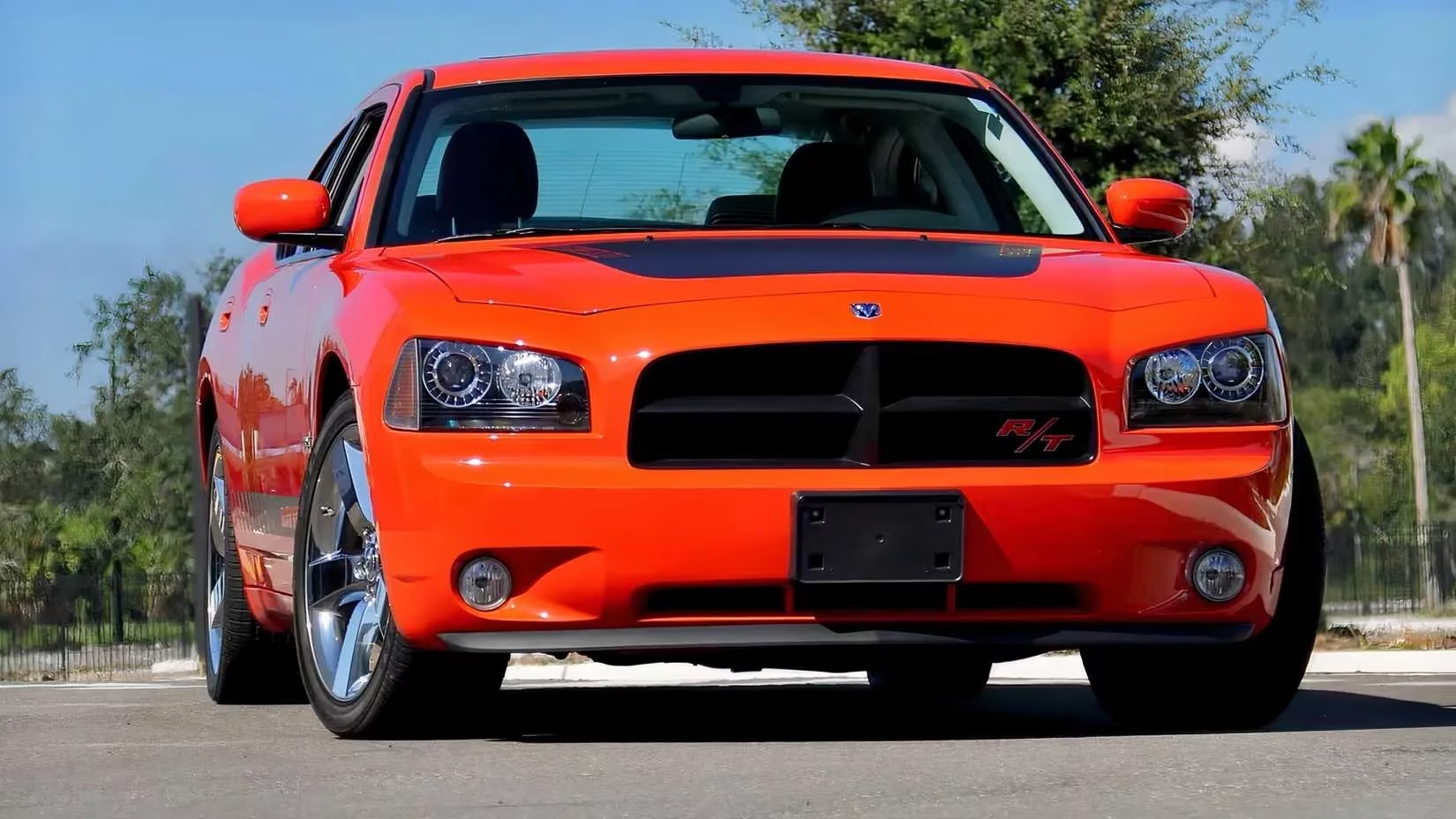
For those mornings when he imagined devouring highway miles rather than carving canyons, the 2008 Dodge Charger R/T entered the picture. The third year of the modern Charger’s return brought the heart of a muscle car to a sedan body. The 5.7-liter Hemi V8 churned out 340 horsepower and 390 lb-ft of torque, hurtling the big four-door to 60 mph in 5.5 seconds. Alex appreciated the Hemi’s legendary simplicity—basic maintenance required only common hand tools, and the aftermarket had cranked out cams, headers, and supercharger kits for decades. It was a blank check for torque-filled upgrades.
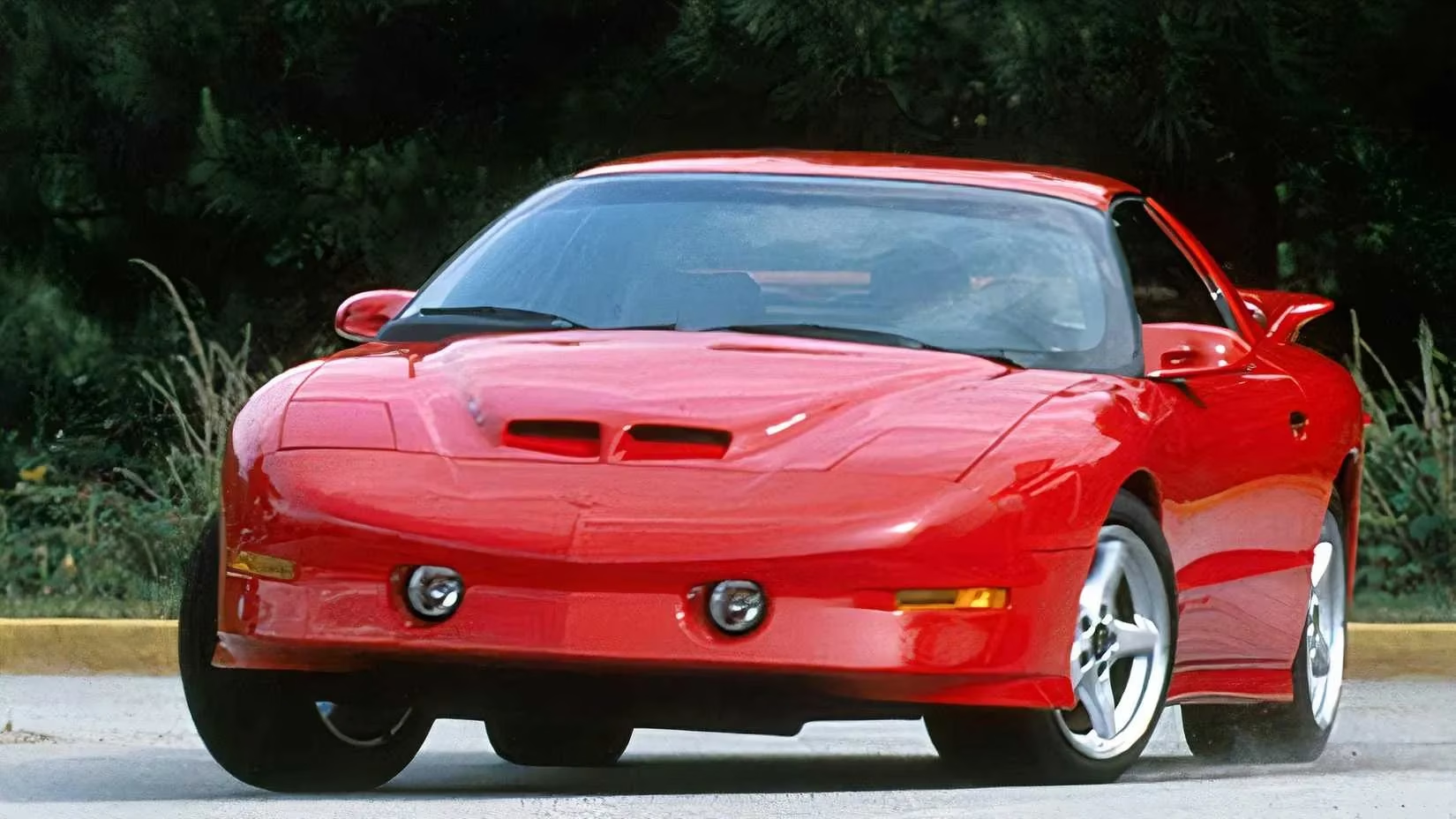
The 1996 Pontiac Firebird Trans Am was the Camaro’s flamboyant sibling, sporting pop-up headlights and a phoenix-emblazoned hood—until regulations permanently grounded those headlights later on. With a 5.7-liter V8 pushing 285 horsepower and 325 lb-ft through a six-speed manual, it matched the Z/28’s heartbeat but added a dash of style. For Alex, the magic lay in its interchangeable parts with the Camaro. If he found a wrecked Chevy in a junkyard, he could harvest doors, suspension components, and engine bits, making the Firebird a cost-effective canvas for a long-term build.
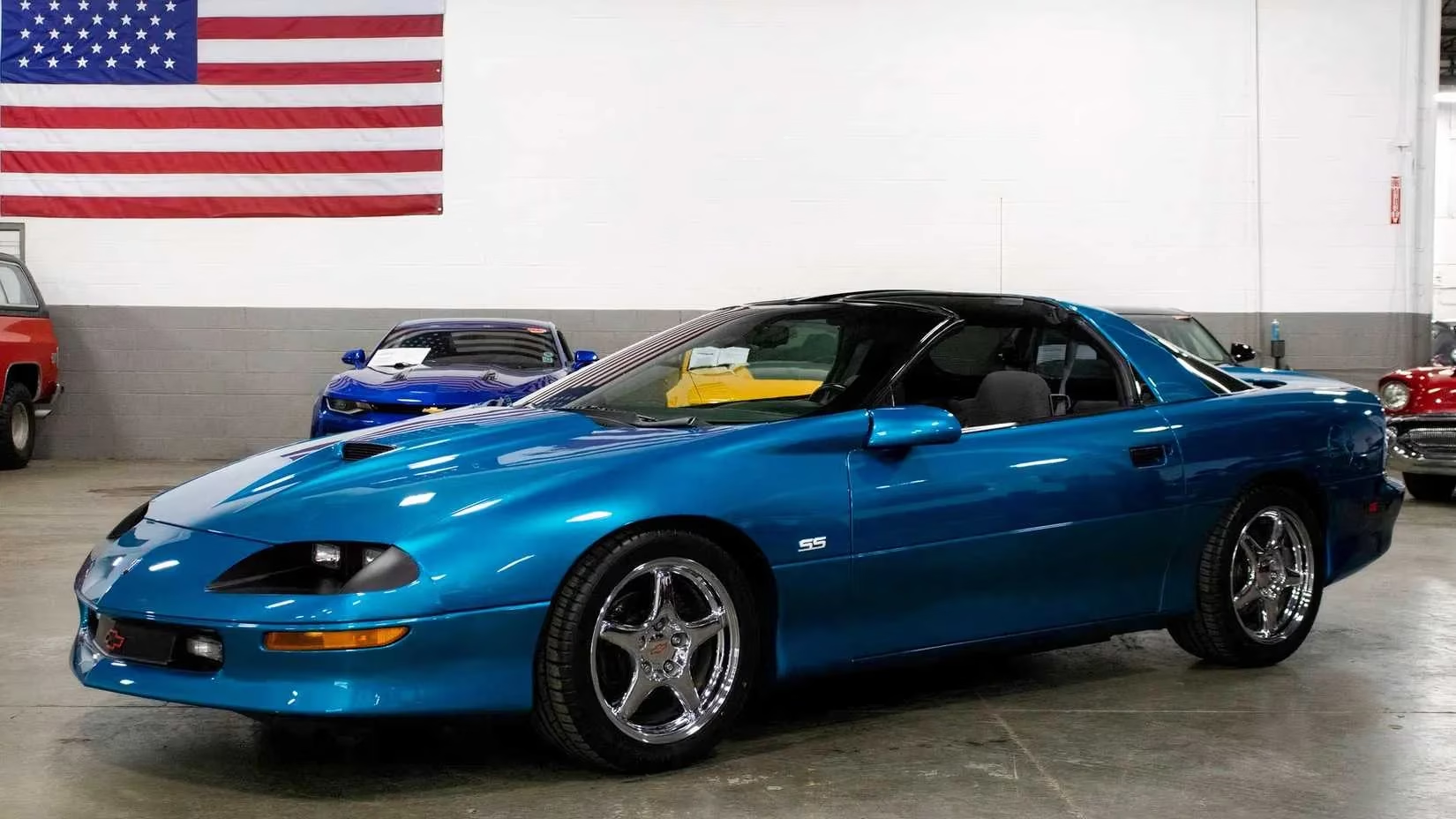
Doubling down on the F-body platform, the 1995 Chevrolet Camaro Z/28 remained a benchmark. Its LT1 V8, rated at 275 horsepower and 325 lb-ft, was the engine that taught a generation of enthusiasts how to wrench. Available with either a six-speed manual or four-speed automatic, it was the quintessential affordable muscle car. The engine bay was spacious, the pushrod layout forgiving, and the aftermarket had every replacement part imaginable sitting on a shelf. For a first-timer, it was the automotive equivalent of training wheels that could later transform into a rocket.
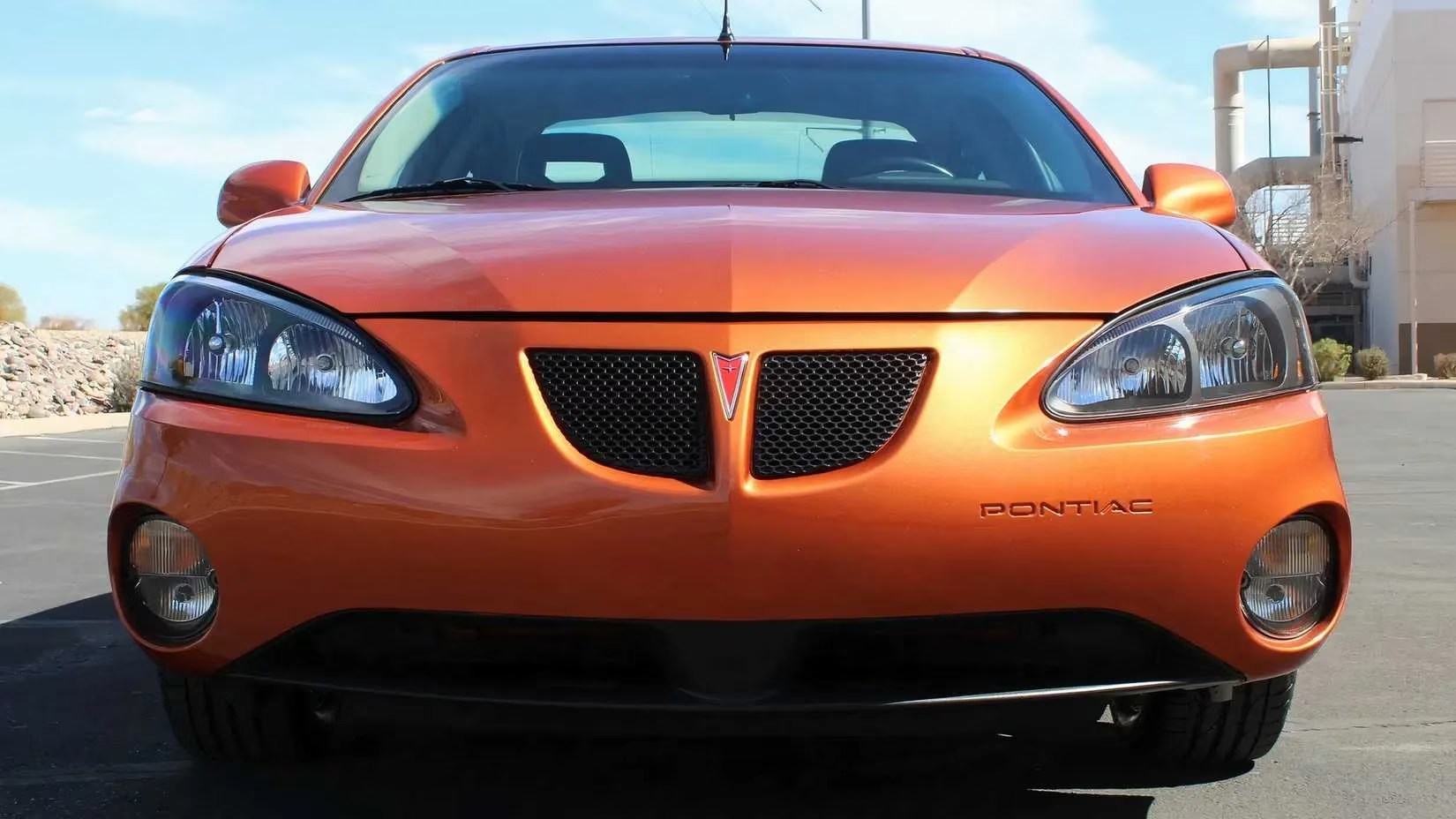
And then there were the sleepers. The 2005 Pontiac Grand Prix GTP wore a supercharged 3.8-liter V6, quietly producing 260 horsepower and 280 lb-ft of torque to the front wheels. The 0–60 mph time of 6.6 seconds wouldn’t rewrite record books, but Alex had read that GM’s 3800 engine was virtually indestructible. Tuners had extracted huge power numbers using smaller pulleys and supporting mods, and repair costs remained laughably low. It was the kind of car you could daily drive while gradually turning into a highway menace.
Finally, his budget-conscious side circled the 2003 Chevrolet Monte Carlo SS. With 200 horsepower from its own 3.8-liter V6 and a four-speed automatic, it was the gentlest entry on the list. However, the platform’s potential was what thrilled Alex. The engine was known to handle turbo or supercharger kits from the aftermarket with minimal fuss, and the front-drive layout made most repairs a one-person job. It represented the ultimate starter project—cheap to buy, cheap to fix, and capable of surprising crowds once modded.
Staring at the wall of printed photos he had taped up, Alex realized the choice wasn't about finding the fastest car; it was about finding the right teacher. In 2026, all ten of these machines offered something priceless: a connection between driver and machine that was built with bolts, not bytes. Whichever one eventually rolled into his garage, he knew the real journey would be measured in skinned knuckles, late-night forum dives, and the first thunderous roar of a freshly tuned V8.