I’ll be honest: I love a car with a story almost as much as I love a car with a giant wing. The 1970 Plymouth Superbird has the wing, the nose cone, the NASCAR history, and the kind of weirdness that makes Mopar fans lose their minds. But this particular Superbird has something extra. It was owned by Mary J.P. Moore, the mother of the late Sam Posey. Yes, that Sam Posey: racer, broadcaster, Le Mans and Formula 1 driver, Can-Am competitor, and Motorsports Hall of Fame member. A family connection like that turns an already special homologation special into a genuine conversation piece.
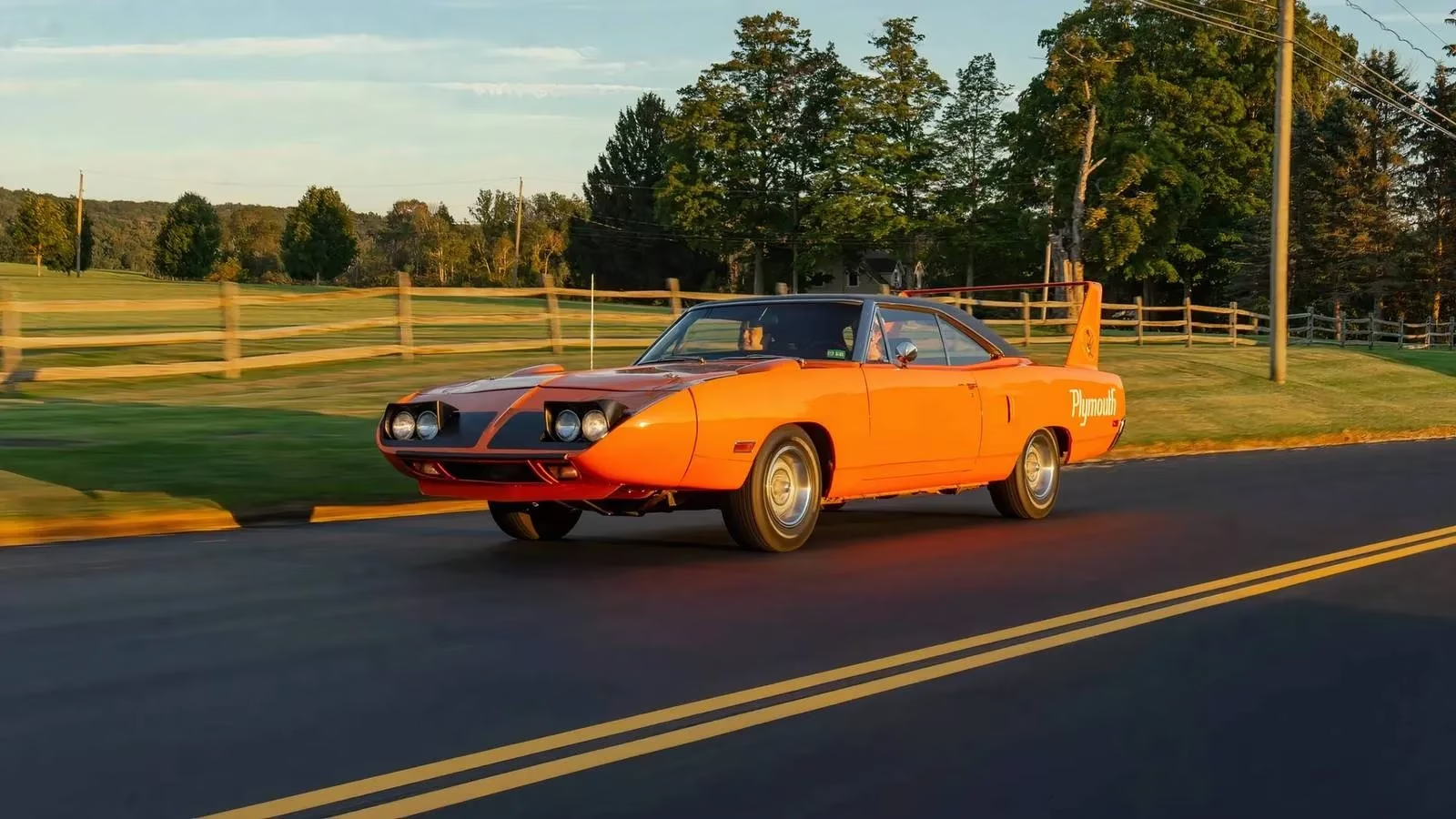
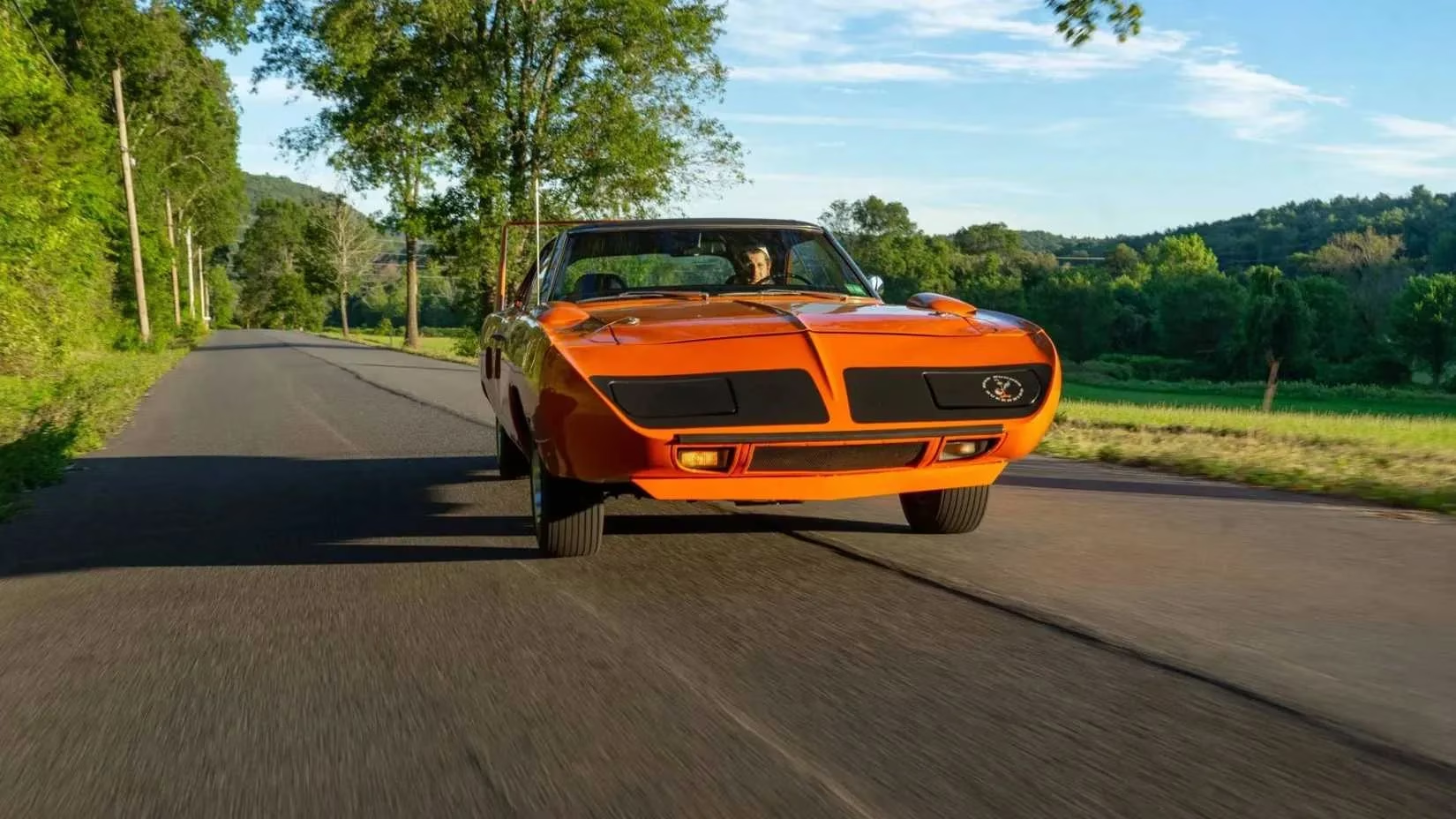
Let me set the scene. Chrysler built the Superbird to satisfy NASCAR homologation rules, and Plymouth produced 1,920 of them. The whole point was superspeedway dominance, and it worked. The Superbird and its Dodge Charger Daytona twin were aerodynamic monsters. Then the rules caught up. With a 426 Hemi under the hood, the wing cars lasted essentially one season before NASCAR’s rule changes effectively ended the party. That makes every street car a little piece of a very brief, very wild chapter.
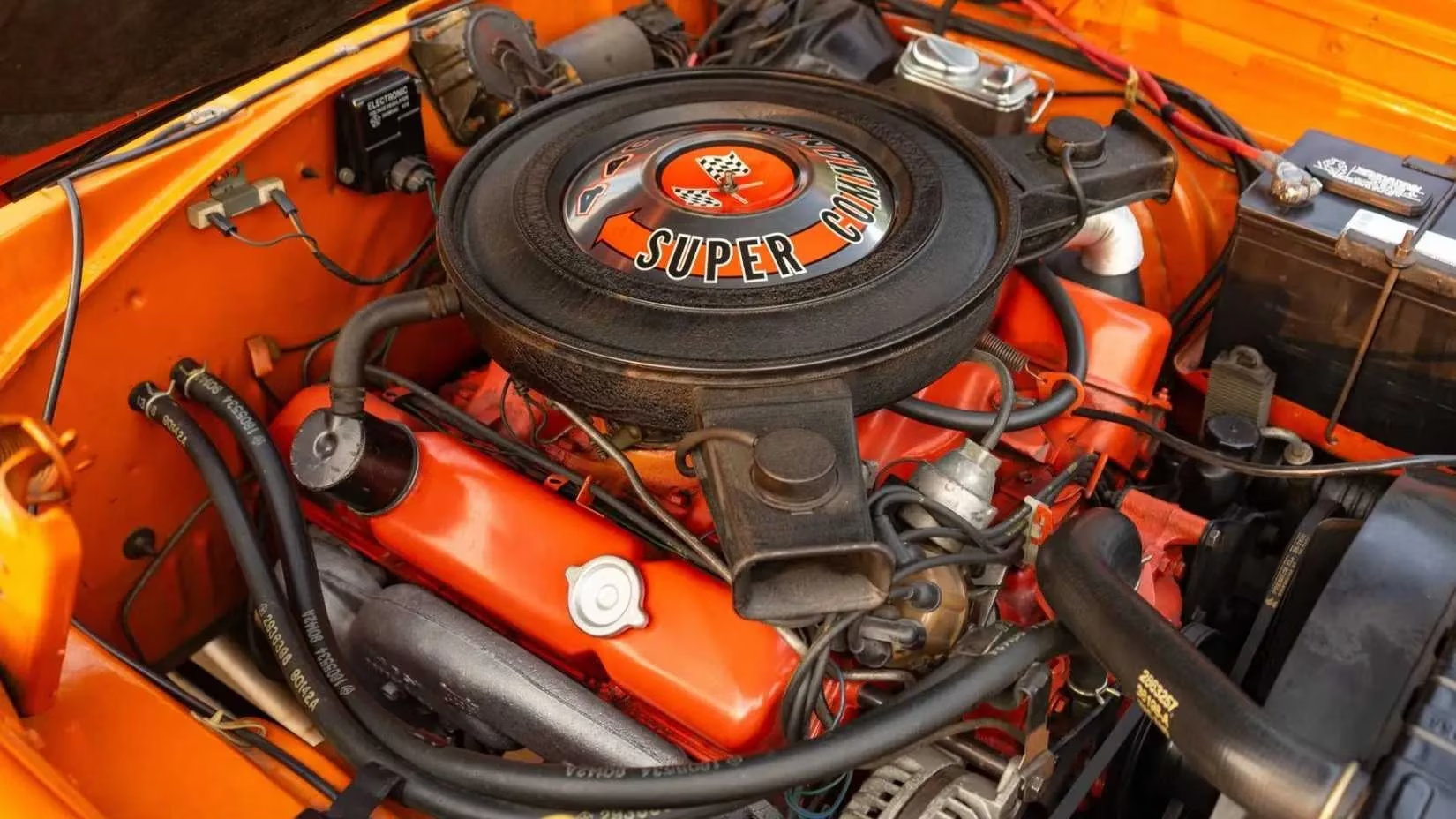
This one is not a retired NASCAR warrior. It is a street-going Superbird, and that is exactly how I like them. It wears Vitamin C paint, which is one of those colors that looks almost radioactive in the right light. 🔥 Under the hood sits a 440-cubic-inch V8, and it is backed by a four-speed manual with the famous Pistol Grip shifter. That combo is pure old-school Mopar: big engine, manual gearbox, no subtlety whatsoever.
Mary J.P. Moore bought the car in 1971 and kept it until she passed away in 2010. After that, Sam Posey sold it. During its life, the Superbird picked up plenty of attention. It appeared in Mopar Action and Hemmings Muscle Machines, and it has covered only about 28,000 miles since it left the assembly line. For a 55-year-old car, that is barely broken in. I know plenty of modern weekend toys that have racked up more miles just going to cars and coffee.
Of course, a car does not stay this clean for five decades by accident. In 2011, the Superbird was dismantled for a minor restoration. Some interior and exterior parts were replaced or refinished, and the engine was refreshed. The work was documented, and the records were included with the sale. That matters to me. A survivor-style car with a known history is great, but a car with receipts, photos, and a paper trail is even better.
| Spec | Detail |
|---|---|
| Model | 1970 Plymouth Superbird |
| Production | 1,920 homologation cars |
| Paint | Vitamin C |
| Engine | 440-cu-in V8 |
| Gearbox | 4-speed manual, Pistol Grip shifter |
| Mileage | About 28,000 miles |
| Family tie | Owned by Mary J.P. Moore, Sam Posey’s mother |
| Auction high bid | $160,000 in 2025 |
When the car came up for auction in 2025, bidding had already reached $160,000 with seven days left. That number does not surprise me. Superbirds are not cheap, and one with a famous family connection, low mileage, and documented restoration work sits in a sweet spot for collectors. If you are reading this in 2026, that auction is over, so the fun part is wondering where the car went and whether it will surface again. Maybe it is tucked away in a private collection. Maybe it is being driven, which is what I would vote for. Cars like this deserve to be seen, not just admired through a garage door.
What I keep coming back to is the human side. Sam Posey’s mother did not buy a race car because it was a blue-chip investment. She bought a bright orange winged Plymouth in 1971 and kept it for decades. That is a fantastic mental image. The Superbird is a legend because of what it did on the superspeedways, but this one is also a legend because of who owned it. For me, that is the best kind of classic car: fast, strange, famous, and still carrying a family story. 🚗