Let's talk about the state of speed in 2026. For decades, the ultimate expression of American performance was the muscle car—a loud, rear-wheel-drive coupe built for straight-line thrills. That era, my friends, is on life support. The last true American muscle car standing in 2026 is the Ford Mustang Dark Horse, a formidable machine with a 500-horsepower V8 and a 0-60 mph time of 4.1 seconds. For around $64,000, it used to be the benchmark for accessible performance. But here's the kicker: that performance, once considered blistering, is now being routinely shown up by a new breed of vehicle—the high-performance SUV. These aren't your dad's lumbering, truck-based utilities. These are acceleration machines that blend supercar power with all-wheel-drive grip and genuine family-friendly practicality. Some cost about the same as the Mustang, while others venture into exotic-car territory. But one thing is crystal clear: the performance landscape has fundamentally shifted, and the family hauler is now the king of the drag strip.
The Exotic Heavyweights: Power at a Price
Let's start with the heavy hitters, the SUVs that come with a price tag that'll make your wallet weep. These machines are for those who view performance as a luxury purchase, where bragging rights are bought with serious cash.
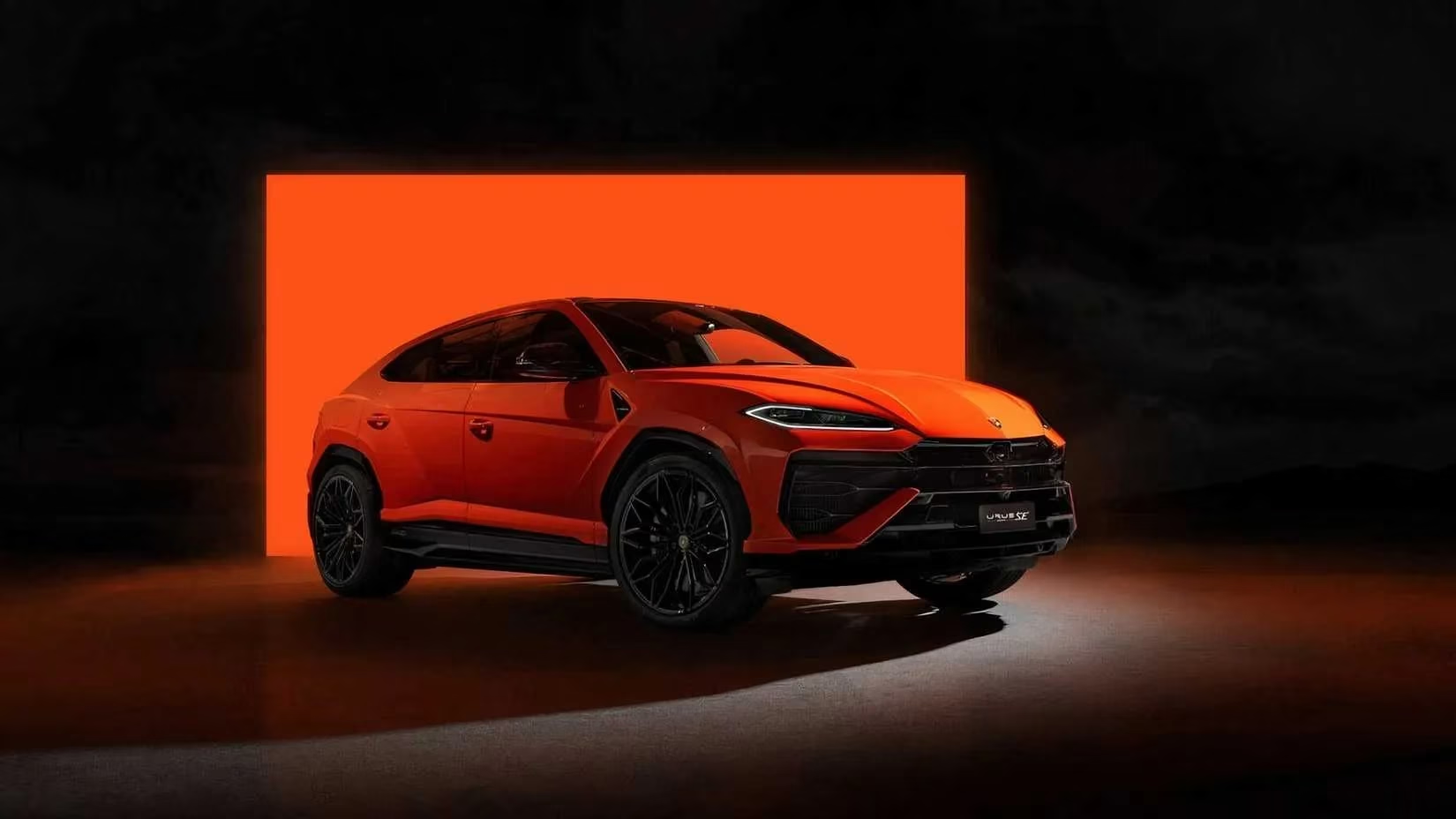
Lamborghini Urus SE
The Urus SE is the definition of a wolf in sheep's clothing, if the sheep could also lap a racetrack. It uses a hybrid-assisted 4.0-liter twin-turbo V8 to summon a staggering 789 horsepower and over 700 lb-ft of torque. The result is a violent, electrified shove from a standstill that feels ripped from a low-slung supercar. Thanks to its AWD system and instant electric torque, it rockets to 60 mph in just 3.4 seconds. This is a big-body SUV that launches like it's late for an appointment with a hypercar. You can haul three friends and all their gear to the track and still dust the only muscle car left in America on the way there. The catch? You're looking at a sticker price nearly four times that of the Mustang Dark Horse. It's a statement piece that says performance has well and truly moved upmarket.
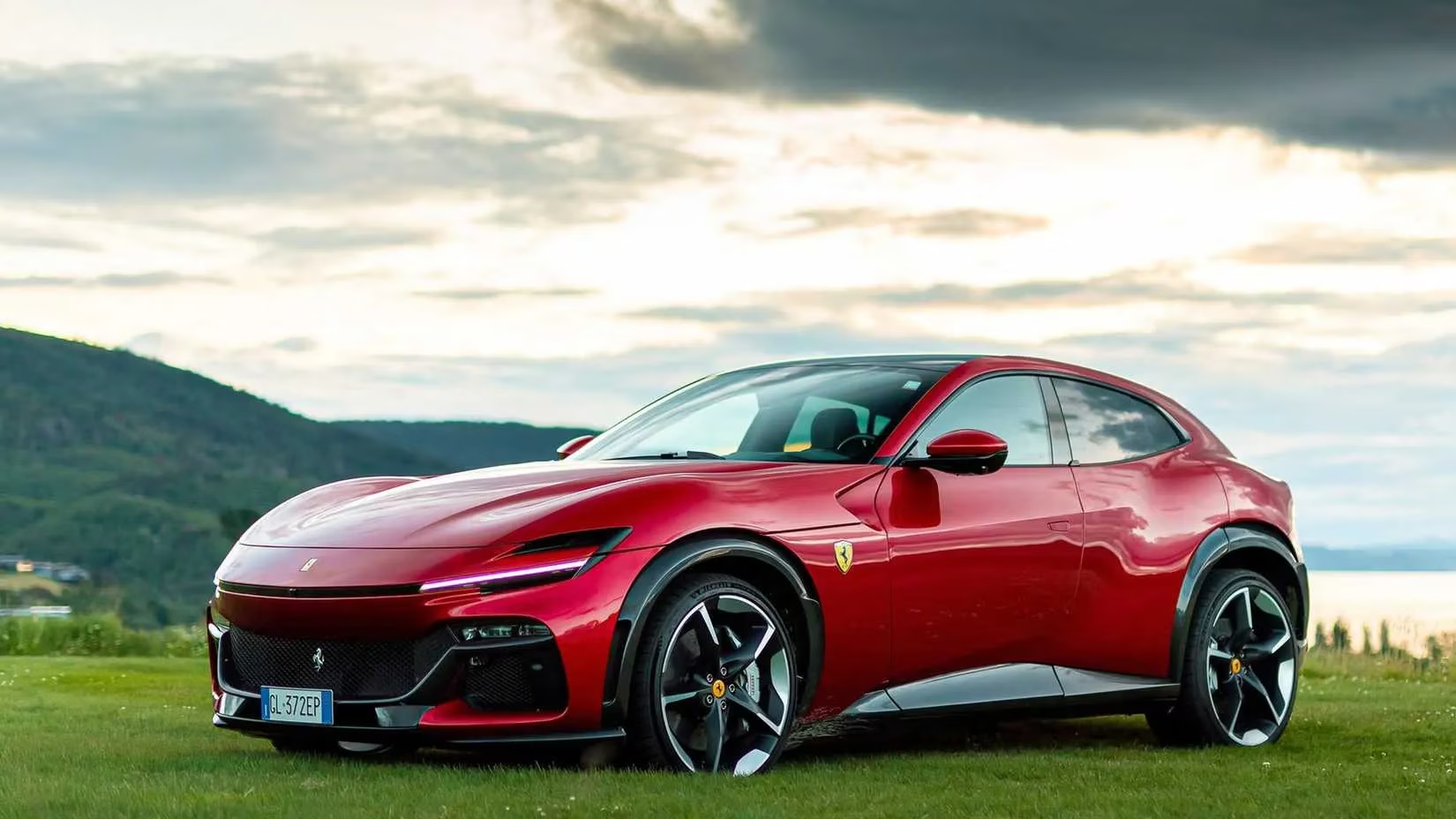
Ferrari Purosangue
If the Urus is a tech-laden beast, the Purosangue is an operatic masterpiece. It's one of only two V12-powered SUVs in the U.S., featuring a screaming 6.5-liter naturally aspirated V12 borrowed from the 812 Superfast. This engine spins past 8,000 rpm, delivering a soundtrack and emotion that forced-induction engines struggle to match. That glorious V12 helps it hit 60 mph in 3.3 seconds, a full eight-tenths quicker than the Mustang. Rear-steer agility and a carbon-rich structure give this tall Ferrari reflexes that defy its size. The Mustang trades on old-fashioned muscle energy; the Purosangue backs its emotion with engineering built to outrun supercars. The price of admission? A cool $428,686. You could buy a fleet of Dark Horses for that money, but none would see which way the Prancing Horse went.
Aston Martin DBX707
The DBX707 arrived claiming to be the world's most powerful luxury SUV. While it's since been dethroned in the horsepower wars, its credentials are still mighty impressive. Under its long hood lies a ferociously tuned 4.0-liter twin-turbo V8 producing 697 horsepower. Launch control fires this British bruiser to 60 mph in 3.1 seconds, leaving the Mustang trailing by a full second. It's a fascinating case study: it's actually quicker to 60 mph than the more powerful Ferrari Purosangue, proving that straight-line bragging rights now belong to high-society family haulers. For roughly triple the price of the Ford, you get that performance wrapped in quilted leather, bespoke trim, and the undeniable prestige of the Aston Martin badge. It makes the muscle car feel like the budget option.
The German & Performance Icons: Blending Speed with Sanity (Sort Of)
This next group offers a slightly more accessible—though still premium—gateway to super-SUV performance. These are the machines that blend racetrack credibility with everyday usability.
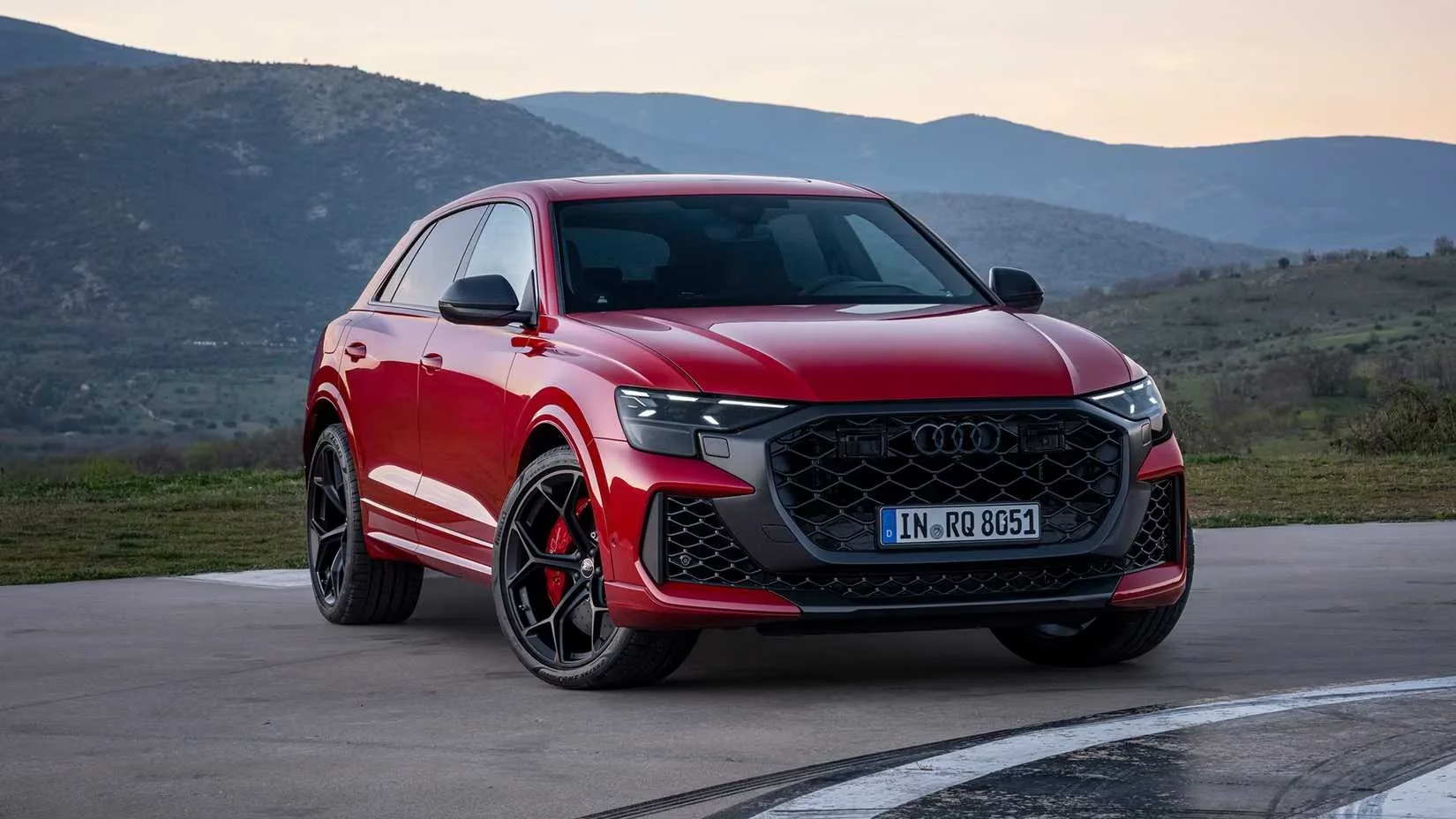
Audi RS Q8 Performance
Think of the RS Q8 Performance as the sensible super-SUV. It shares its 4.0-liter twin-turbo V8 with illustrious cousins like the Bentley Bentayga, delivering 631 horsepower and a 3.4-second 0-60 mph time. That matches the Lamborghini Urus SE and handily beats the Mustang without breaking a sweat. The Mustang's rear-drive setup and manual gearbox demand skill to extract maximum performance; the RS Q8 Performance simply grips and goes, thanks to Audi's legendary Quattro AWD system. For about $138,300, it offers Nürburgring-honed dynamics wrapped in a package that can comfortably tow, haul, and dominate the school run. It's a heavyweight luxury ride that can also drop a muscle car in a drag race, making it one of the most compelling all-rounders on the list.
Porsche Cayenne Turbo GT
Porsche proved with the Cayenne that an SUV could have a soul, and the Turbo GT is its ultimate expression. Its 4.0-liter twin-turbo V8 pumps out over 650 horsepower, rocketing this five-seater to 60 mph in 3.1 seconds. This is one of the few SUVs engineered from the ground up for serious track work, holding Nürburgring lap records that no muscle car-inspired crossover can touch. Features like rear-axle steering and a track-focused chassis give it an agility the Mustang can only dream of. The price is a significant step up from Ford territory, but that premium buys a super-SUV that delivers repeatable, exhilarating performance anytime, anywhere.
Mercedes-AMG GLC 63 S E Performance
This compact SUV is a sign of where performance is headed. It proves that hybrid tech can punch harder than old-school displacement. Under the hood is a relatively small 2.0-liter turbocharged four-cylinder paired with an electric motor for a combined 671 horsepower. The result? A staggering 3.1-second 0-60 mph time. The Mustang's 5.0-liter V8 needs revs and careful throttle modulation; the AMG launches with instant, battery-fed shove and uses AWD to put the power down. Priced around $93,400, it offers a twin personality: a refined, luxurious daily driver that transforms into a supercar-beater on demand. It's a clear signal that the future of acceleration is electrified.
The Electric Vanguard: Instant Torque, Zero Nostalgia
The most profound shift in the performance world comes from electricity. These SUVs use instant torque and sophisticated AWD to rewrite the rules of acceleration, often for similar money to the old guard.
Tesla Model X Plaid
The reigning acceleration king. With three electric motors generating a mind-bending 1,020 horsepower, the Model X Plaid hits 60 mph in just 2.5 seconds. That absolutely buries the Mustang Dark Horse. There's no technique required—no launch control to activate, no perfect shift to execute. Just plant your foot and experience physics being bent by a seven-seat family hauler. For an MSRP of $114,990, its performance-per-dollar ratio is untouchable. The Mustang brings noise and nostalgia; the Plaid brings data that wins every argument.

Rivian R1S (Quad Motor)
The R1S is the ultimate contradiction. It weighs over 7,000 pounds, can seat seven, tow a massive trailer, and conquer off-road trails. And yet, its four individual electric motors (producing up to 835 hp) launch it to 60 mph in a mere 2.6 seconds. The Dark Horse is still shifting out of first gear by the time the Rivian has crossed the line. Priced from $121,990, it redefines what "muscle" means. Modern performance no longer needs smoky burnouts; sometimes it shows up ready for a camping trip after gapping you at a stoplight.
Porsche Macan Turbo (Electric)
Here's the real mic-drop moment. The all-electric Porsche Macan Turbo starts at $64,895—almost exactly the same price as the Ford Mustang Dark Horse. And it will absolutely demolish it. Borrowing tech from the Taycan, this compact electric SUV uses its dual-motor AWD setup to sprint to 60 mph in 3.1 seconds. It's the ultimate budget flex. For the same money, you can have a V8 coupe with analog charm, or a high-tech, practical, luxury EV that leaves it for dead. If American muscle relies on nostalgia, the Macan Turbo is the future showing up early and asking, "What took you so long?"
Lotus Eletre
Lotus, the brand synonymous with lightweight sports cars, has entered the SUV fray with a devastatingly effective electric offering. The Eletre uses a dual-motor setup producing 600+ horsepower to hit 60 mph in 2.95 seconds. It achieves this brutal acceleration with zero drama—no roaring exhaust, just a silent, instant surge. For around $100,000, it brings Lotus's focus on handling and agility into the SUV space with active aero and smart suspension. It's a brainy, electrified answer to old-school muscle.
The Bottom Line: A New Performance Paradigm
So, what's the takeaway from this lineup of super-SUVs? The game has changed, folks. The traditional muscle car formula—big V8, rear-wheel drive, manual transmission—is now a niche choice for purists who value feel and theater above all else. The new performance paradigm is defined by:
-
All-Wheel-Drive Traction: For consistent, weather-proof launches that don't rely on perfect conditions.
-
Electrified Power: Hybrid and fully electric powertrains deliver instant torque that internal combustion engines simply can't match off the line.
-
Practical Performance: The ability to carry people, cargo, and lifestyle gear without sacrificing mind-bending speed.
The Ford Mustang Dark Horse is a fantastic, emotive car. But in 2026, it represents the end of an era. The throne of accessible, devastating acceleration has been claimed by the SUV—a vehicle that can do it all, often for similar money, and always with less drama. The muscle car isn't dead, but it's no longer the fastest thing on the road. That title now belongs to the school run.