The automotive world was set ablaze when Dodge resurrected the Charger and Challenger in the mid-2000s, a move that left Mopar enthusiasts reeling with a mix of ecstasy and utter bewilderment. 😲🔥 The Challenger burst back onto the scene as a glorious two-door beast, a near-perfect homage to its iconic ancestors, hailed as the pinnacle of retro design among Detroit's giants. Yet, the Charger emerged as a baffling four-door sedan, stripped of its muscular heritage, leaving fans scratching their heads in disbelief. How could a nameplate steeped in racing glory and pop culture dominance be so unrecognizable? The sheer audacity of this transformation sparked endless debates, with many arguing that the roles should have been reversed—a sentiment that still echoes loudly in 2025. One can't help but feel a pang of nostalgia for the '70s models, imagining what could have been if Dodge had stayed true to its roots. The author senses a deep unease, a visceral reaction to the Charger's identity crisis, as if a cherished legend had been rewritten without consent. 🤯💔
The Challenger's Triumphant Return
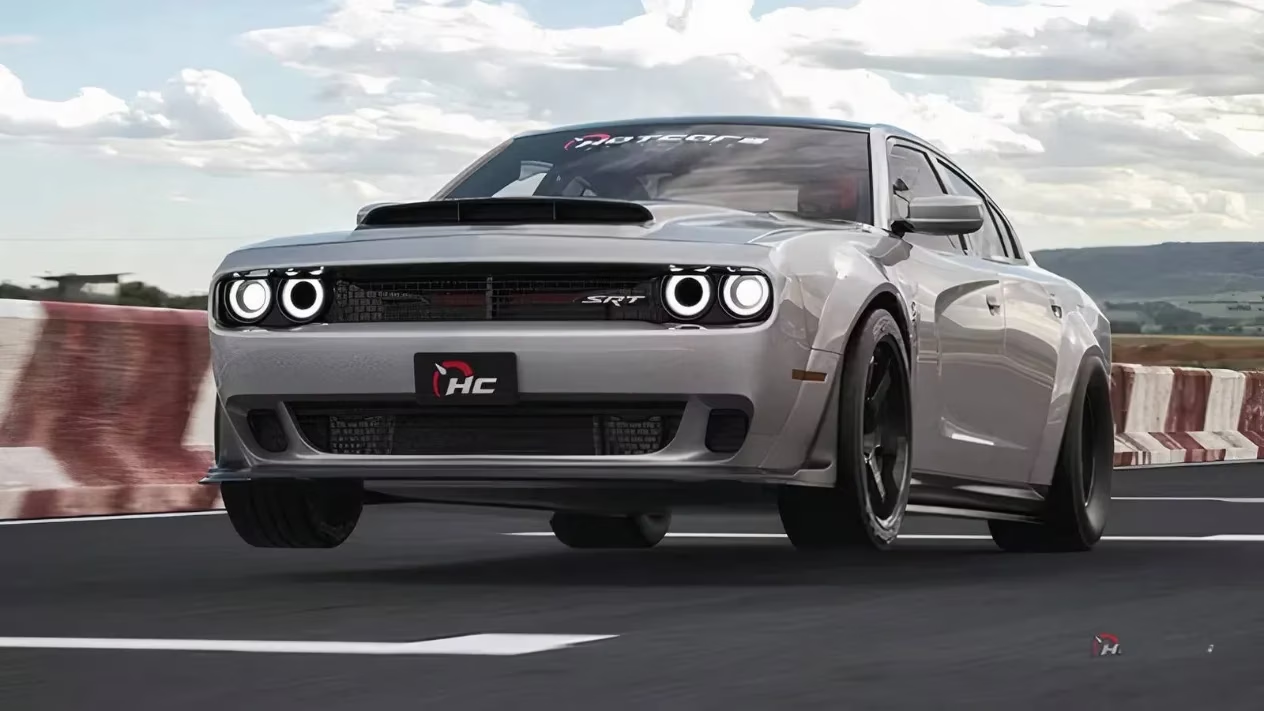
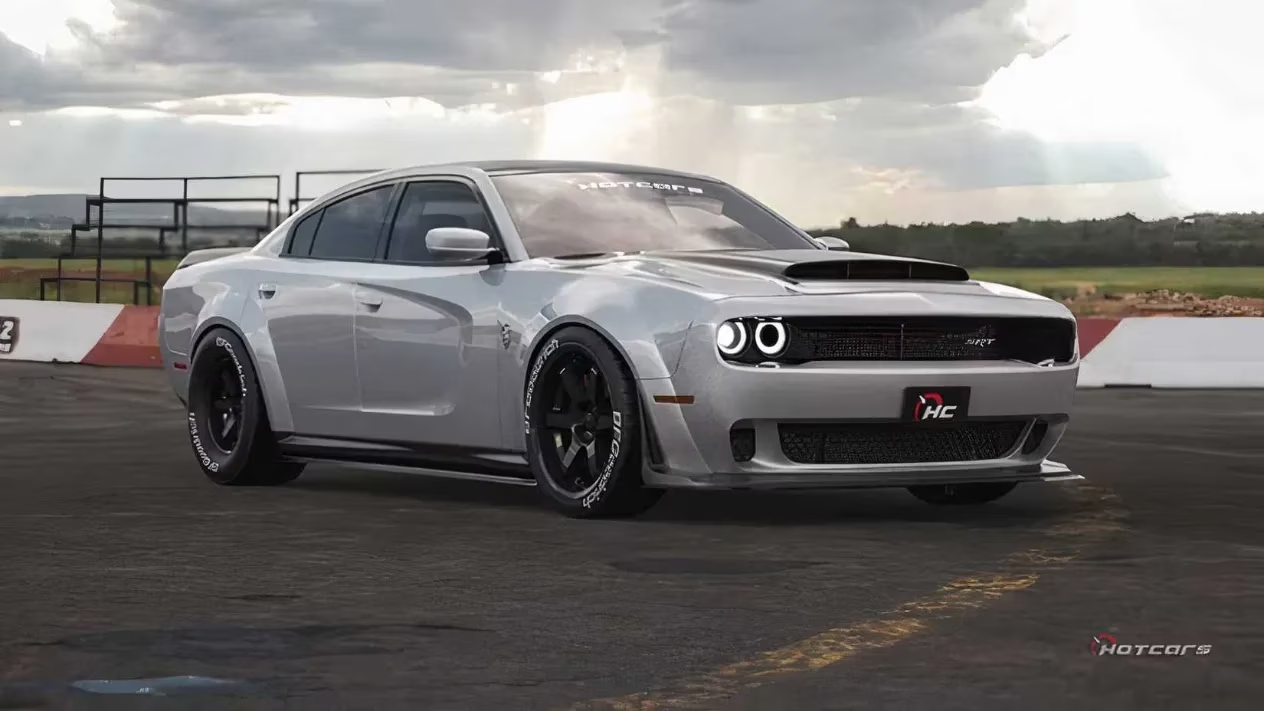
Oh, the Challenger! It stands as a prime example of muscle car perfection, a spiritual successor to the Charger that evolved into a drag-racing titan. Its E-body platform, essentially an optimized B-body, boasts a superior shifter location for lightning-fast gear changes, making it a dream on the track. The author recalls the thrill of seeing it roar to life, a symphony of power and precision that leaves hearts pounding. But let's not forget the Charger's plight—it deserved so much better. In 2025, with the latest generation finally embracing a two-door design closer to the second-gen models, one can't help but wonder: what if the Challenger had taken the four-door route instead? The sheer irony! A rendering that surfaced recently offers a tantalizing glimpse into this alternate reality, blending elements of modern Chargers and Challengers into a Frankenstein-like creation. It sandwiches a Charger midsection between the Demon 170's front and rear ends, featuring widened fenders, a menacing hood scoop, and a spoiler designed for eight-second quarter-miles—all while accommodating four full doors. The proportions flow together seamlessly, yet the author feels a twinge of discomfort; it's like seeing a lion tamed into a house cat. 🦁🚗
Key Features of the Imagined Four-Door Challenger
-
Engine Power: Packed with the Demon 170's 6.2-liter supercharged Hemi engine, churning out a jaw-dropping 1,025 horsepower—enough to make the earth tremble!
-
Design Elements: Aggressive widened fenders for extra grip, a functional hood scoop for cooling, and a high-rise spoiler for downforce, all wrapped in a sleek, elongated body.
-
Passenger Comfort: Four spacious doors that invite friends along for the ride, turning a solo thrill into a shared adventure.
| Aspect | Original Challenger (2-Door) | Rendered Four-Door Challenger |
|---|---|---|
| Design Authenticity | True to heritage, perfect throwback | Experimental, blends Charger elements |
| Performance Focus | Optimized for drag racing | Retains power but adds practicality |
| Fan Reception in 2025 | Universally adored | Polarizing, sparks heated debates |
The Charger's Identity Crisis and Redemption
Ah, the Charger—once a symbol of unbridled muscle, reduced to a family sedan in its 2000s iteration. The author confesses a soft spot for those four-door cars; they're undeniably awesome in their own right, but calling them Chargers feels like a betrayal. The nameplate should have been reserved for a two-door marvel echoing the second-generation classics. Fast forward to 2025, and Dodge has finally course-corrected, delivering a Charger that honors its legacy. Yet, the lingering question remains: what if we had a four-door Challenger all along? This rendering, though masterfully crafted, proves that Dodge was right to keep the Challenger as a two-door icon. The artist's work is nothing short of brilliant—proportions harmonize, lines flow with grace—but for the author, it's a car that doesn't resonate. It evokes a sense of loss, a what-if scenario that could have altered automotive history. Imagine a world with an equally powerful Charger alongside the Challenger; it would have been epic! But alas, we're stuck in this timeline, pondering the possibilities. The sheer scale of this missed opportunity leaves one breathless, contemplating how different things might have been. Could this have reshaped drag racing culture? Or diluted the brand's essence? Only time—and our imaginations—will tell. 🤔💭
In the end, the saga of Dodge's muscle cars is a rollercoaster of emotions—joy for the Challenger's fidelity, sorrow for the Charger's initial misstep, and awe for the creative what-ifs. The author's heart races with every thought of that 1,025-horsepower beast in a four-door guise, yet a part of them sighs in relief that it never came to be. What do you think? Could this rendering have been a game-changer, or is it best left in the realm of fantasy? The debate rages on, inviting us all to reflect on the delicate balance between innovation and tradition. 🏁✨
As we cruise through 2025, the legacy of these cars continues to evolve, leaving us with more questions than answers. The author feels a surge of excitement for future designs, but also a lingering doubt—what if the past had been different? It's a thought that haunts and inspires, a testament to the enduring power of automotive dreams. 😌🚀