In the vast and storied history of General Motors, Buick has often been synonymous with comfortable, mass-produced luxury. However, nestled within its production records are anomalies—vehicles so scarce that their very existence feels like a collector's mirage. These are not the coachbuilt opulence of the 1930s but rather limited-run performance models and specialized trims that slipped through the cracks of mainstream production. Among them, one car stands out for its extreme rarity, a model where fewer than two dozen examples are believed to have left the factory: the 1966 Buick Super Wildcat GS.
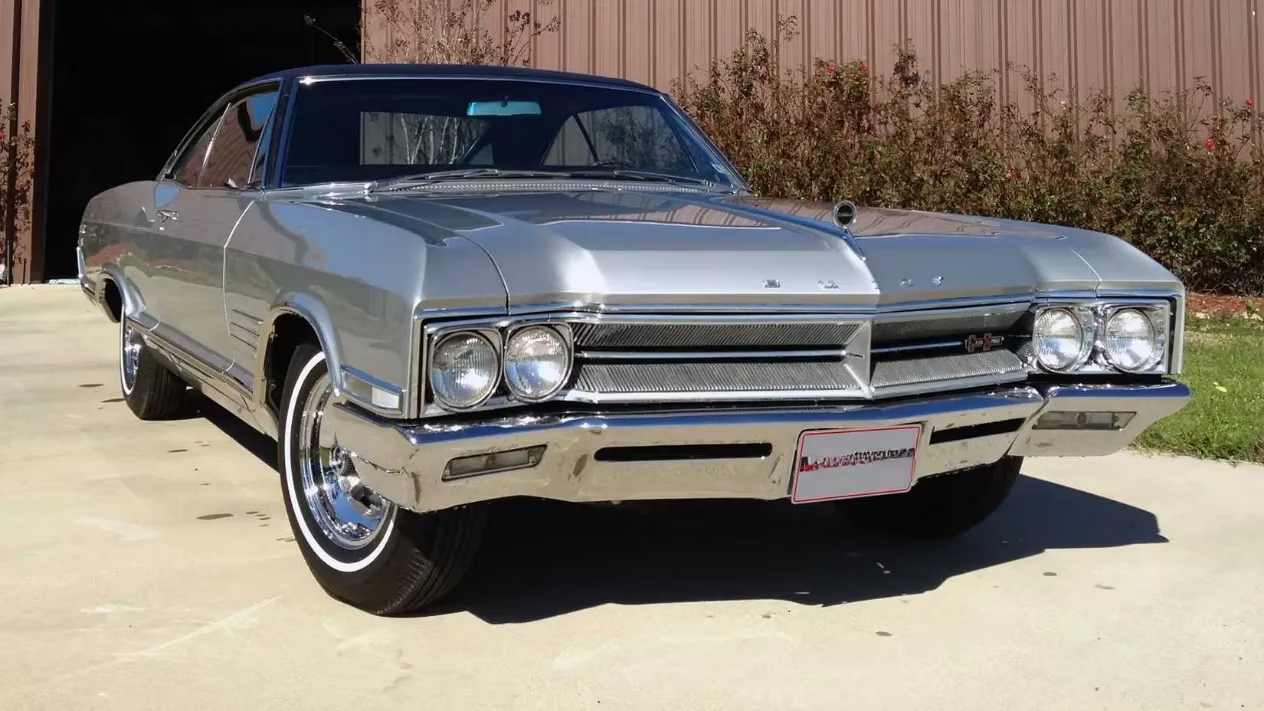
The story of the Super Wildcat GS is one of a perfect and fleeting storm. The Buick Wildcat itself was a standalone model in the mid-1960s, but for the 1966 model year only, a high-performance Gran Sport (GS) trim was offered. Layering on top of that was an optional engine upgrade: the mighty Super Wildcat 7.0-liter big block V8. This specific combination of trim and powertrain proved to be exceptionally unpopular with contemporary buyers, resulting in a production run of astonishing brevity. According to authoritative sources like The Standard Catalog of American Cars 1946-1975, only 22 examples of the 1966 Wildcat GS were built with the Super Wildcat engine specification. These 22 cars were split between coupe and convertible body styles, though the exact distribution remains a minor mystery in automotive history. 😲
Why did this potent package fail to capture the market? The answer likely lies in its price tag. In 1966, a well-equipped Buick Wildcat could command around $3,600, positioning it as a premium offering. For comparison, a Pontiac Grand Prix from the same era started at a more accessible $3,426 and could also be had with a powerful big-block V8. For many performance-minded buyers, the value proposition simply tipped in favor of the competition. Consequently, the Super Wildcat GS became a rarity almost by accident—a factory-built spec that few customers were willing to order.
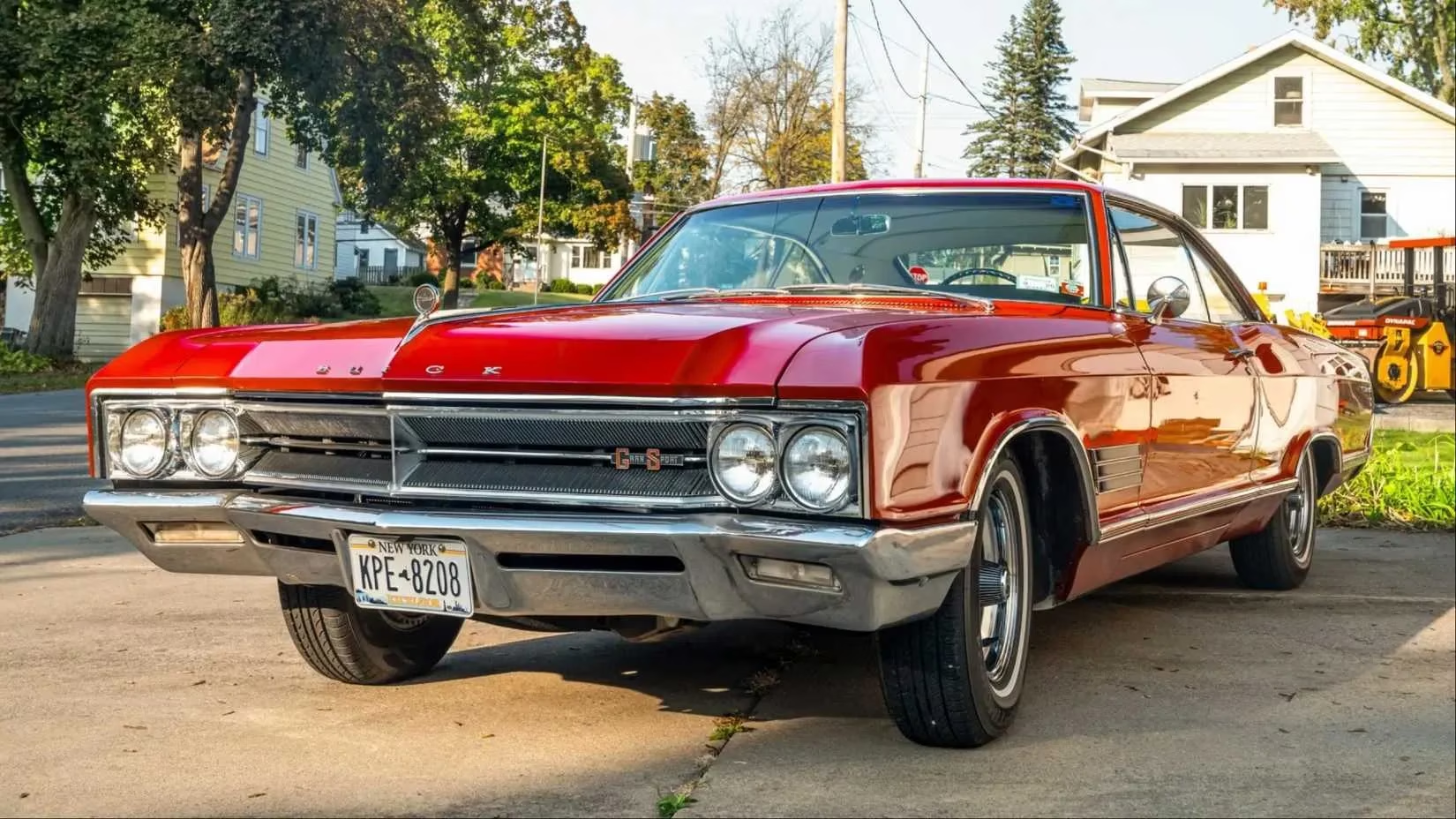
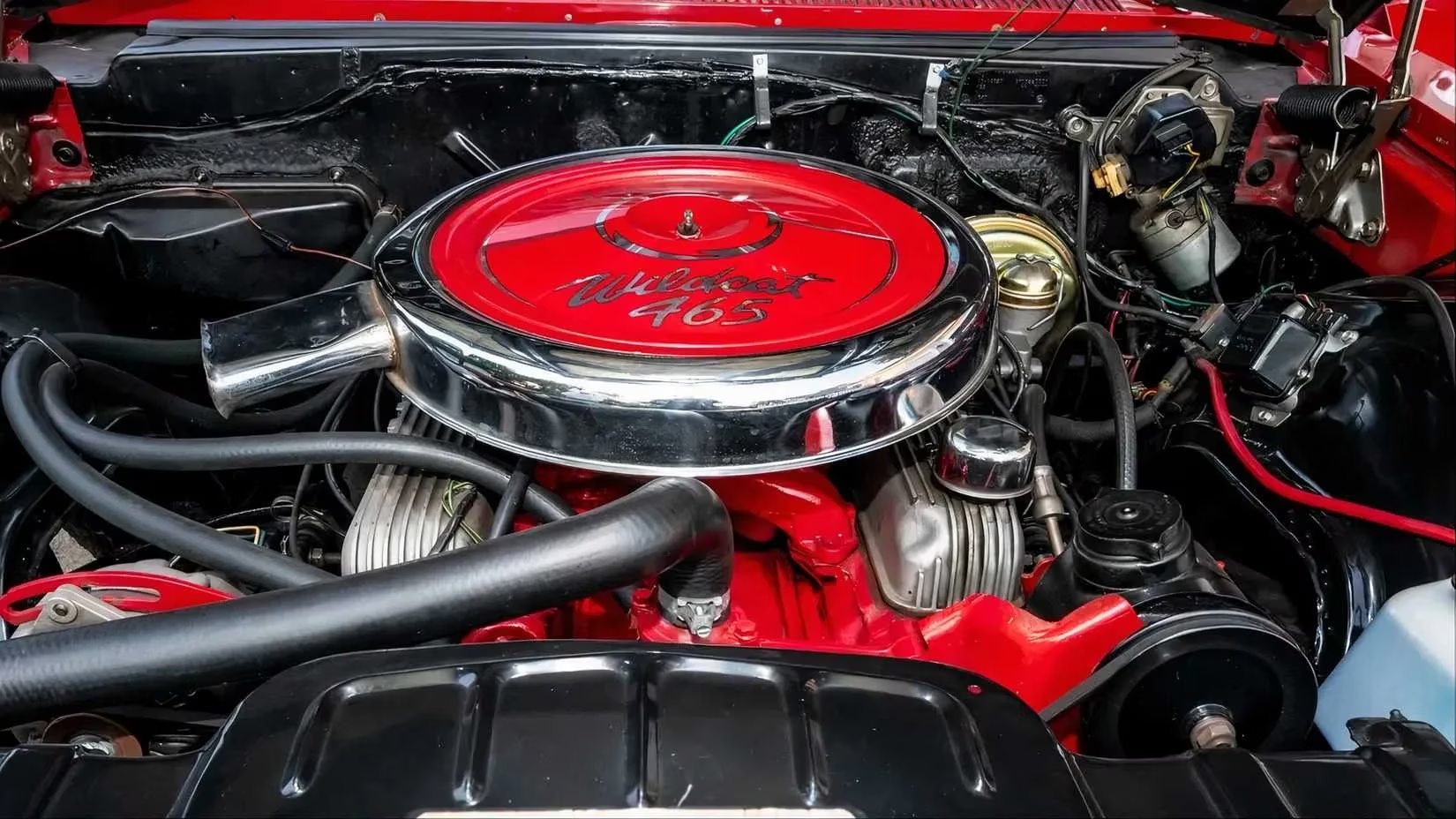
Beneath its deceptively standard Buick styling lay serious performance credentials. The Super Wildcat's 425 cubic-inch (7.0L) V8, equipped with four-barrel carburetors, produced a robust 360 horsepower and a massive 475 lb-ft of torque. This translated to brisk acceleration for a large, heavy car; contemporary reports suggested a 0-60 mph time of approximately 6.5 seconds and a top speed of 125 mph. To put that in context, a 1963 Pontiac Grand Prix with the famous "Tri-Power" V8 was clocked by Motor Trend at 6.6 seconds to 60 mph. The Super Wildcat GS was, without doubt, a genuine muscle car—larger and more luxurious than a Ford Mustang or Pontiac GTO, but every bit as formidable in a straight line.
Given its extreme scarcity, sightings of a Super Wildcat GS at auction are notable events. One example surfaced in 2018 with an asking price of $19,500, a figure that seems almost quaint by today's collector car standards. However, the market for unique Buick performance models has shifted dramatically. As a benchmark, a 1965 Buick Riviera Gran Sport equipped with the same Super Wildcat engine sold for $79,520 in 2020. The following year, another Super Wildcat-powered Riviera achieved a hammer price of $100,800. This trajectory strongly suggests that the value of the even rarer Wildcat GS variant is poised for significant appreciation, making it a potential blue-chip asset for discerning collectors.
While the 1966 Super Wildcat GS represents the pinnacle of Buick rarity from the muscle car era, it is not alone. The brand's history is dotted with other low-volume curiosities. For instance, the Buick LeSabre Grand National, produced for only the 1982 model year, is another notable footnote. Created as a homologation special to support Buick's NASCAR efforts, it featured distinctive plastic window blanks copied directly from the race car to improve aerodynamics—a functional, if quirky, design element meant to exploit a technical rule. Production estimates range from just 112 to 117 units, making it another incredibly scarce model. One was listed for sale in 2019 at around $12,000, but like its rarer sibling, its value is unlikely to remain stagnant.
Delving further back, Buick's coachbuilt past also yields rare gems. The 1931 Buick Model 95 Phaeton, based on the prestigious 90 Series, was a magnificent seven-passenger convertible sedan, often bodied by Fisher. It boasted advanced features for its time, including an oil temperature regulator and an overhead-valve inline-eight engine producing over 100 horsepower. Official records indicate only 392 were built, and today, only a handful are believed to survive. When such a car appears at auction, it commands attention and a high price; a Pebble Beach Concours-winning example once sold for $88,000—a testament to its historical significance and desirability.
The allure of these rare Buicks lies in their contradiction. They come from a marque known for high-volume manufacturing, yet they exist as singular, limited-edition statements. Whether it's the accidental rarity of the 1966 Super Wildcat GS, the homologation-special LeSabre Grand National, or the pre-war elegance of the Model 95 Phaeton, each car represents a unique chapter in Buick's narrative. For collectors and enthusiasts, they are more than just cars; they are rolling pieces of history whose scarcity ensures they will remain celebrated and sought-after icons for years to come. 🏆