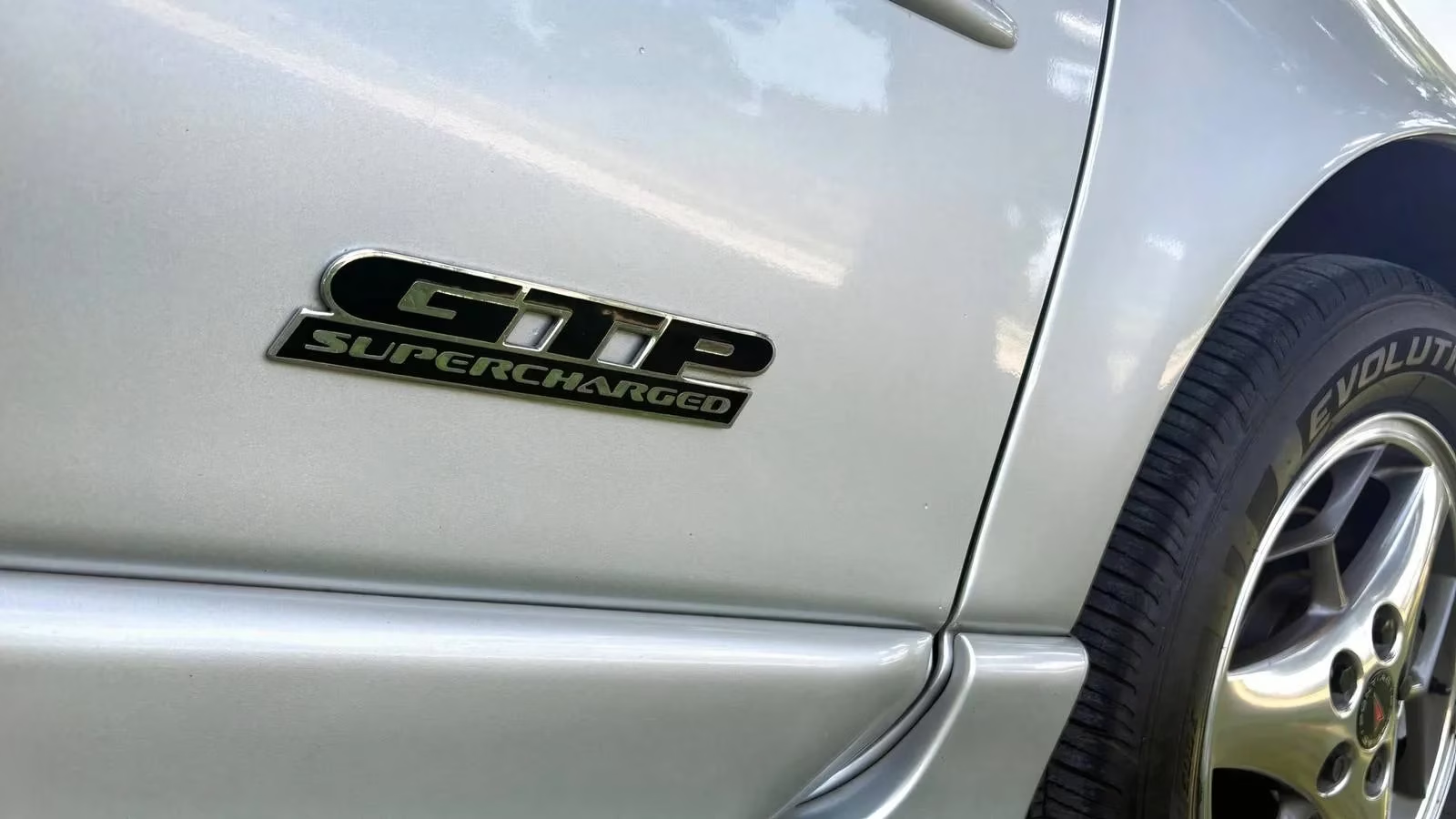
Yo, what’s up guys! If you’re anything like me, you probably grew up hearing about the glory days of American muscle — Mustangs, Camaros, ’Vettes, you name it. But there’s one name that always gets overlooked, and honestly, it breaks my heart. We’re talking about Pontiac, and specifically, the Grand Prix GTP. Yeah, you heard me. The car that looked like your uncle’s daily commuter but packed a supercharger before it was cool. Let’s dive into why this thing is secretly one of the most epic rides of the late ’90s and early 2000s, and why in 2026, it might just be the best performance bargain on the planet.
🚀 The Golden Age of Pontiac’s Hidden Weapon
Most of us know the tragic story: 2010, Pontiac gets the axe. Not because the Aztek was ugly (it was), but because GM needed that government bailout and had to trim the fat. But here’s the thing — Pontiac was still cranking out killer performance machines right up to the end. The 2004-2006 GTO with a 400-hp LS1/LS2? Absolute unit. But the real unsung hero is the Grand Prix GTP. This thing carried the performance torch from the legendary GTO and Firebird into the front-wheel-drive era, and it did it with style, comfort, and a blower whine that’ll put a grin on your face even today.
🛩️ “A Learjet for the Ground” — The Seventh-Gen Revolution (1997–2002)
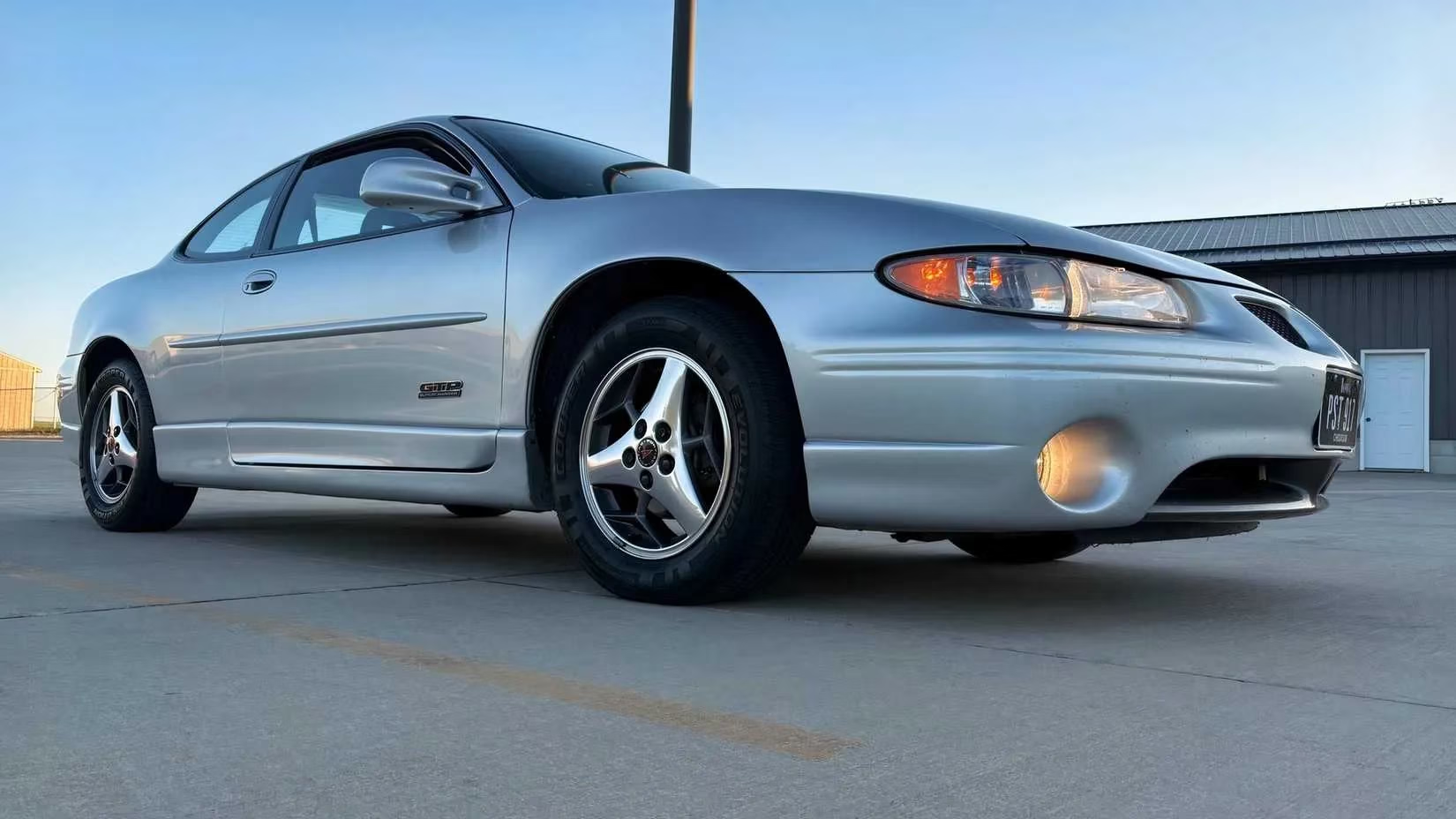
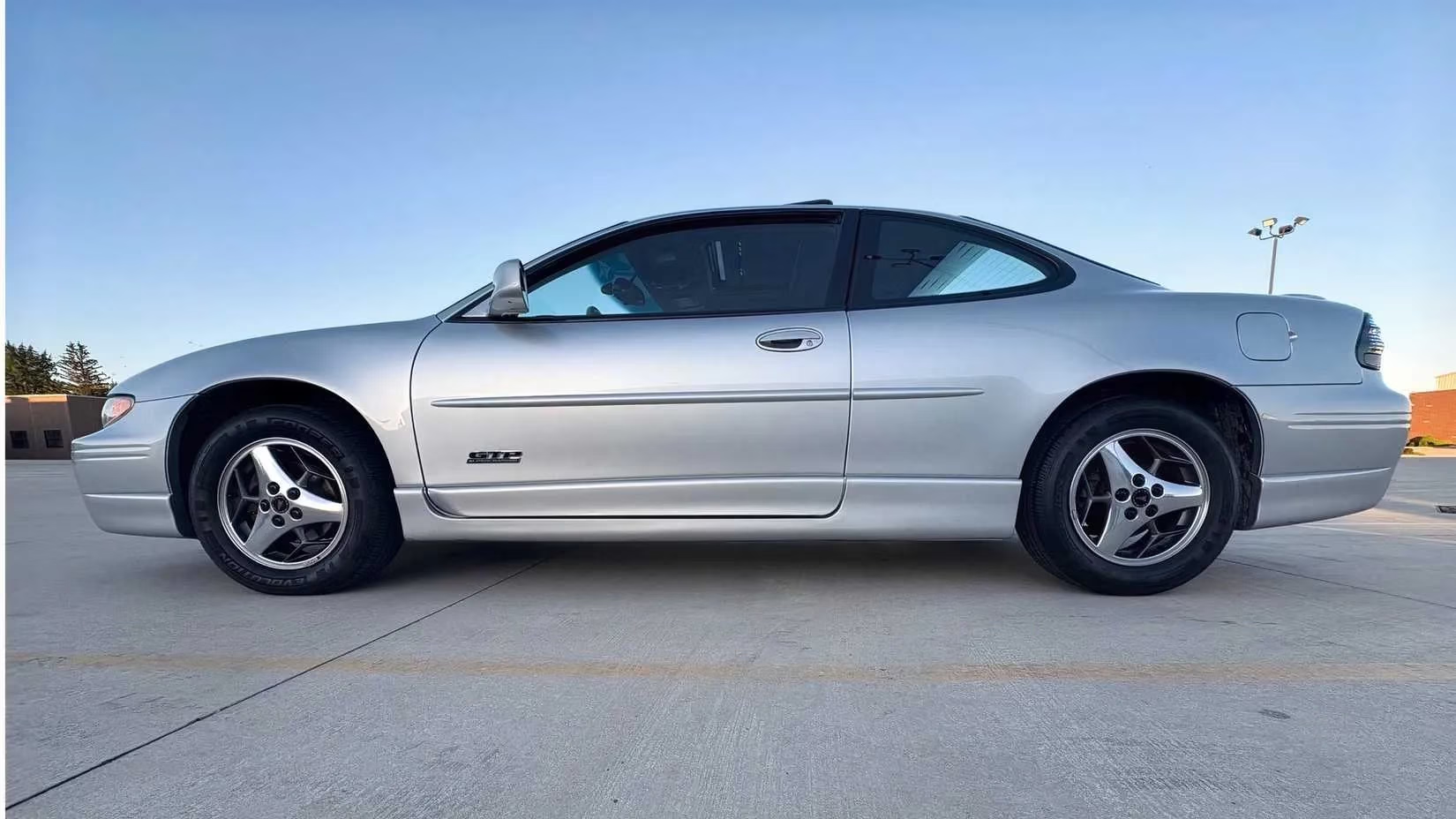
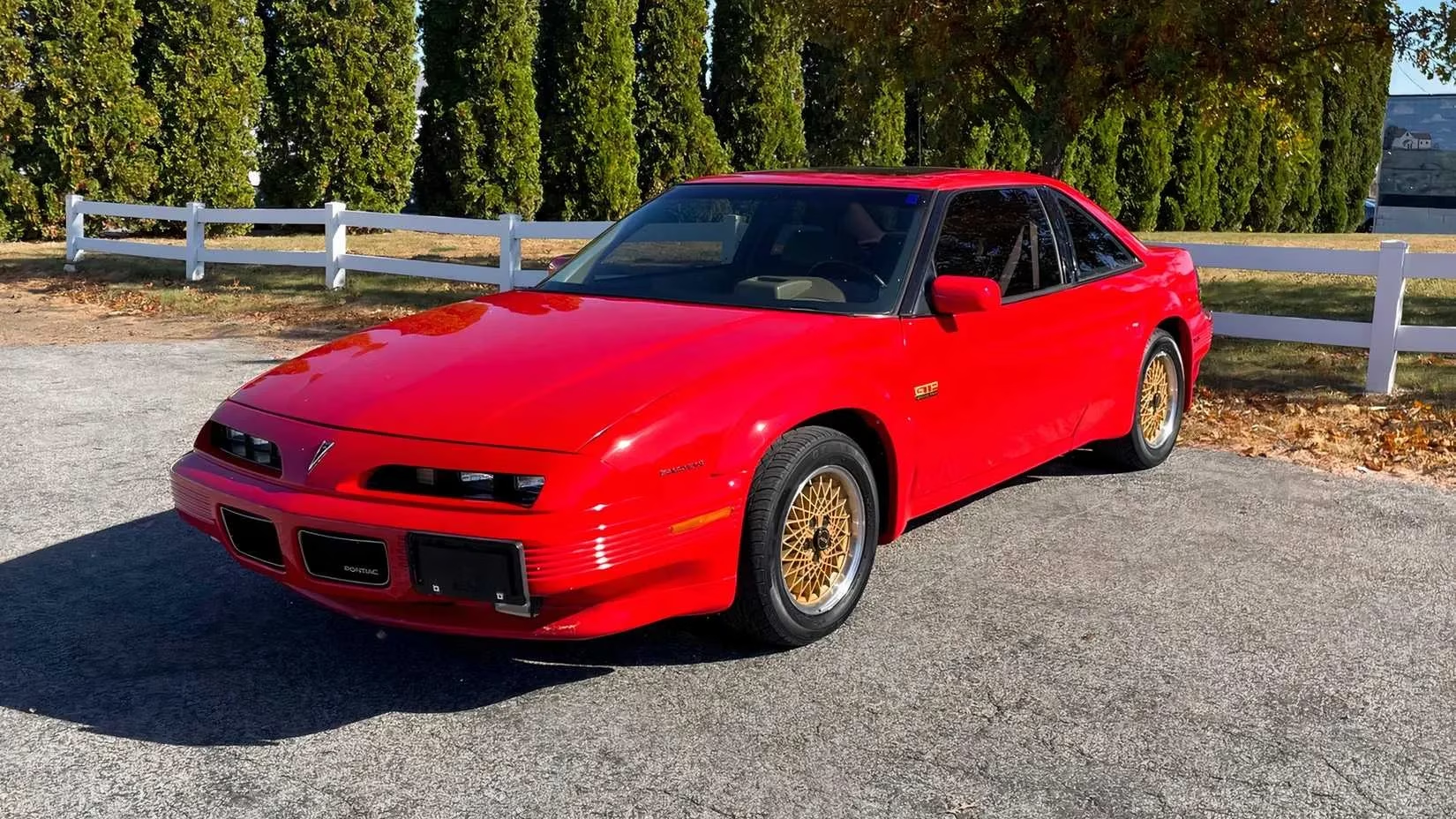
When the seventh-gen Grand Prix dropped in ’97, Pontiac described it as “a Learjet for the ground.” I mean, come on, that’s the most Pontiac marketing line ever. It was a front-wheel-drive coupe (and sedan) that looked like it was doing 100 mph standing still. The real sauce? The GTP trim. Under the hood sat the legendary Buick 3800 Series II V6 — but this one had an Eaton M90 supercharger strapped on, good for 240 horsepower and 280 lb-ft of torque. In a world where the Mustang GT had 215 hp and the Camaro Z28 was the king, the GTP was right there breathing down their necks.
Let’s put that in perspective with a little table:
| Car (1997 Model Year) | Horsepower | 0-60 mph | 1/4 Mile |
|---|---|---|---|
| Pontiac Grand Prix GTP | 240 hp | 6.6 sec | 15.0 sec |
| Ford Mustang GT (4.6L V8) | 215 hp | 6.8 sec | 15.3 sec |
| Chevy Camaro Z28 (LT1) | 285 hp | 5.5 sec | 14.2 sec |
Okay, so the Camaro was faster, but look at the price! The GTP started at around $22,000 — that’s under $45k in 2026 dollars. Try finding a new performance sedan with 240 hp for that kind of coin today. Spoiler: you can’t. And the best part? You could get it as a four-door. Imagine dropping the kids off at school, then gapping a Mustang at the next stoplight. Chef’s kiss.
⚙️ Eighth-Gen Aggression (2004–2005): No More Coupe, But Still a Beast
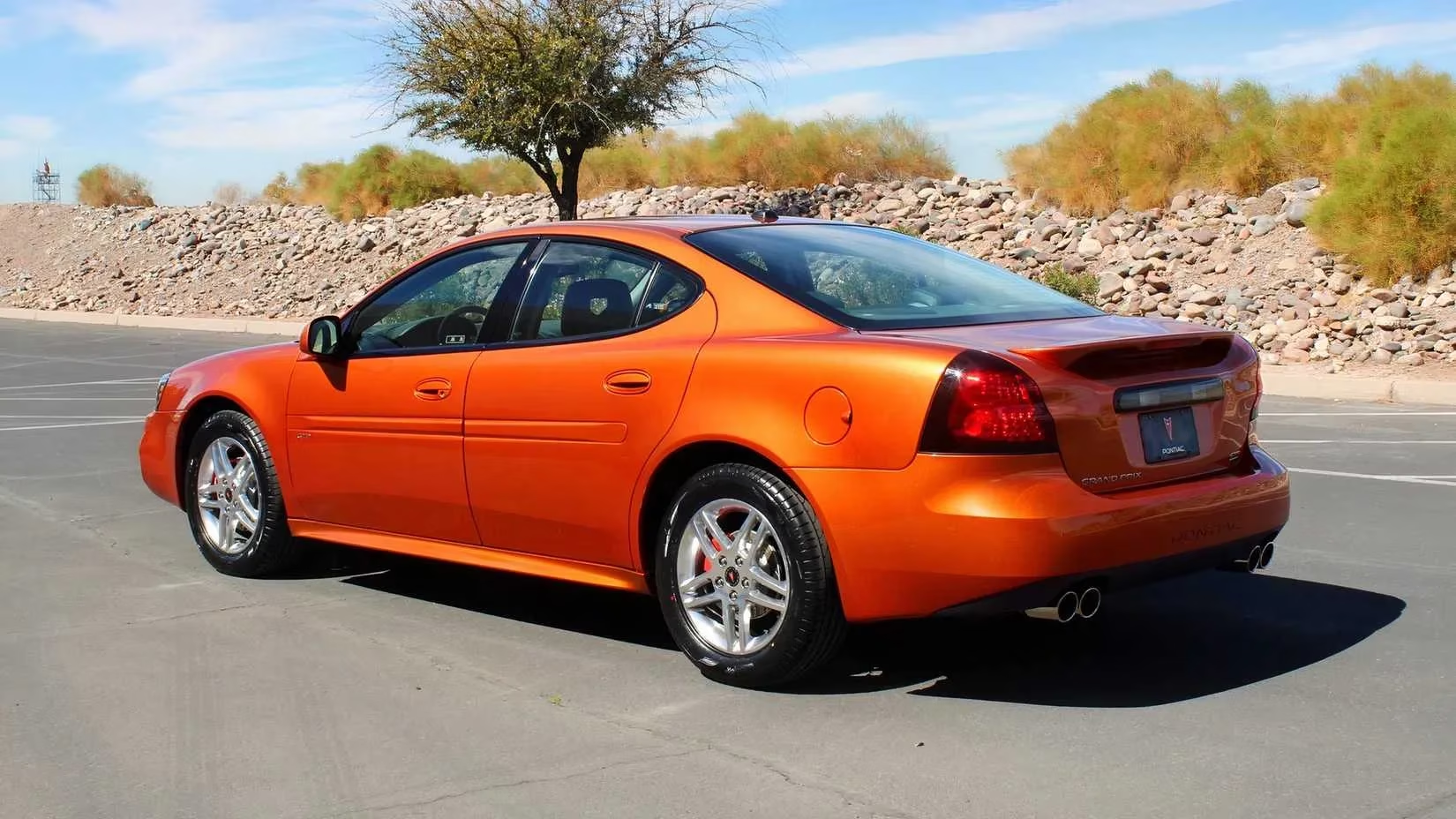
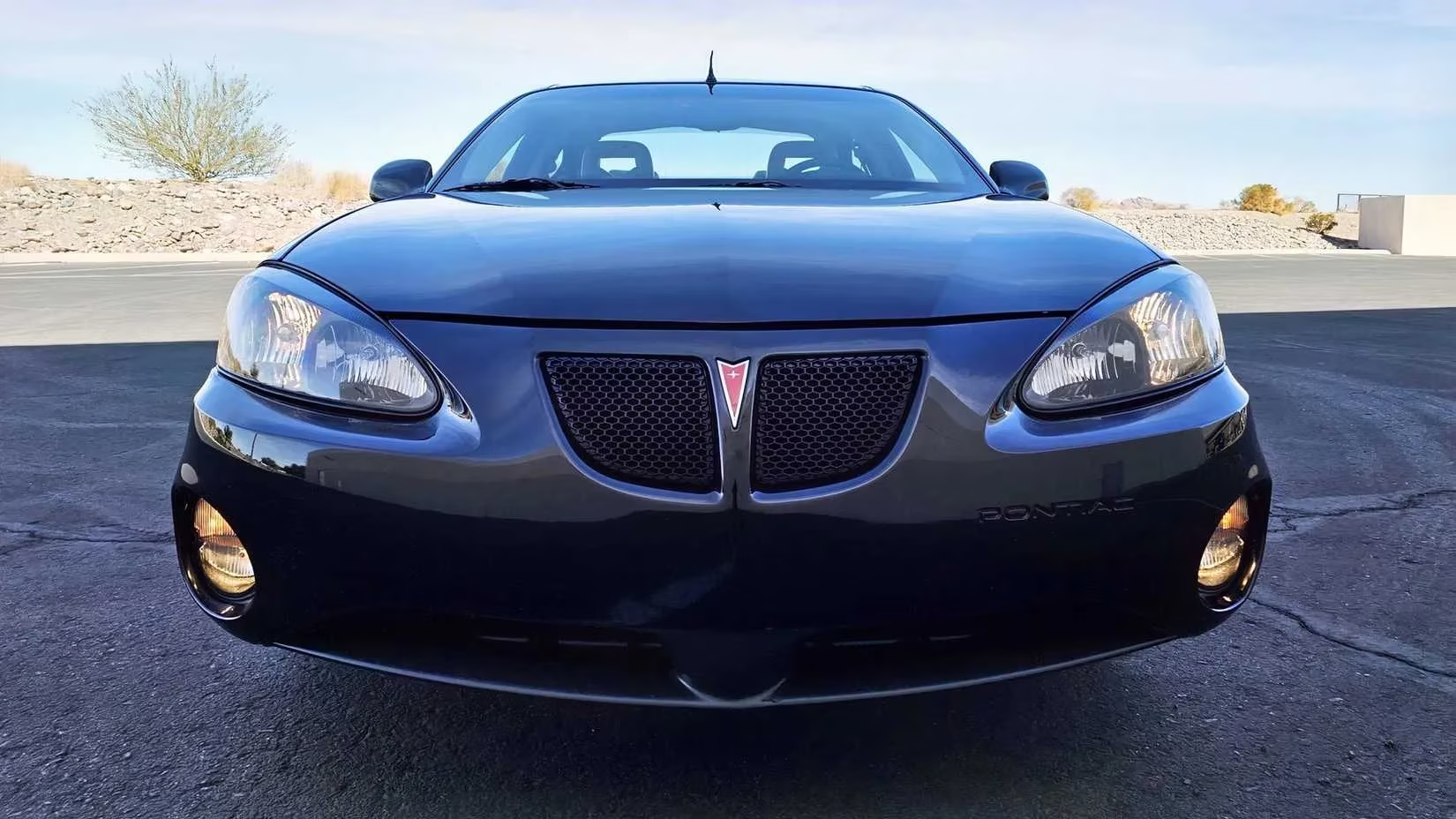
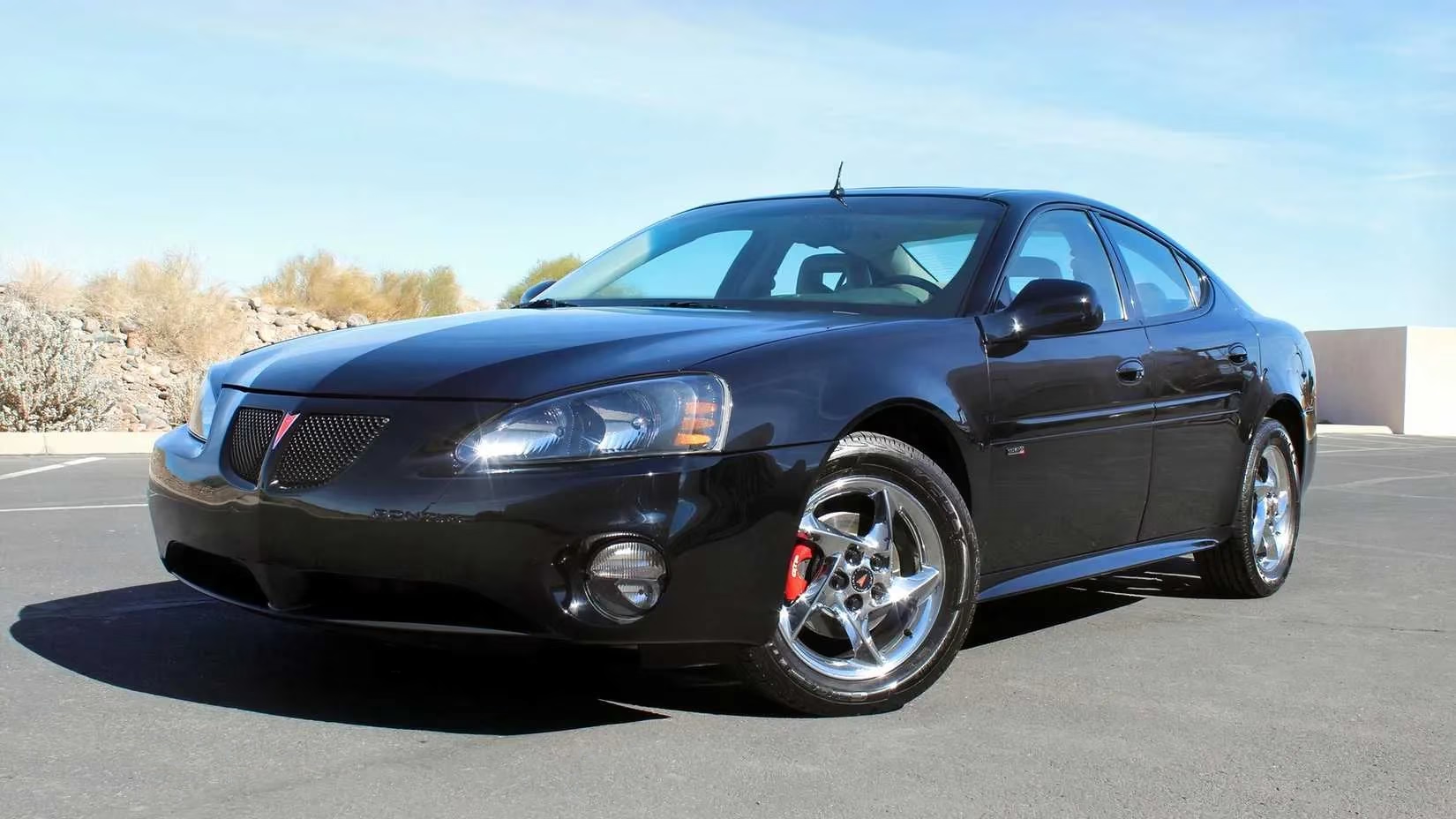
In 2004, the Grand Prix went to its eighth generation. The coupe was gone (RIP), but the styling got sharper, more aggressive. The GTP lived on, now as its own trim level, and they added the Competition Group (Comp-G) with upgraded suspension, bigger brakes, and paddle shifters — in 2004. That’s ahead of its time. The 3800 supercharged engine was still cranking out 240 hp, but the ride and handling were massively improved. Car and Driver got one to 60 in 6.6 seconds and ran the quarter in 15 flat. They even pushed it to 139 mph — though the dashboard lit up like a Christmas tree, so the official 126 mph limit is probably the realistic top end.
🧬 The GTP DNA Goes Way Back
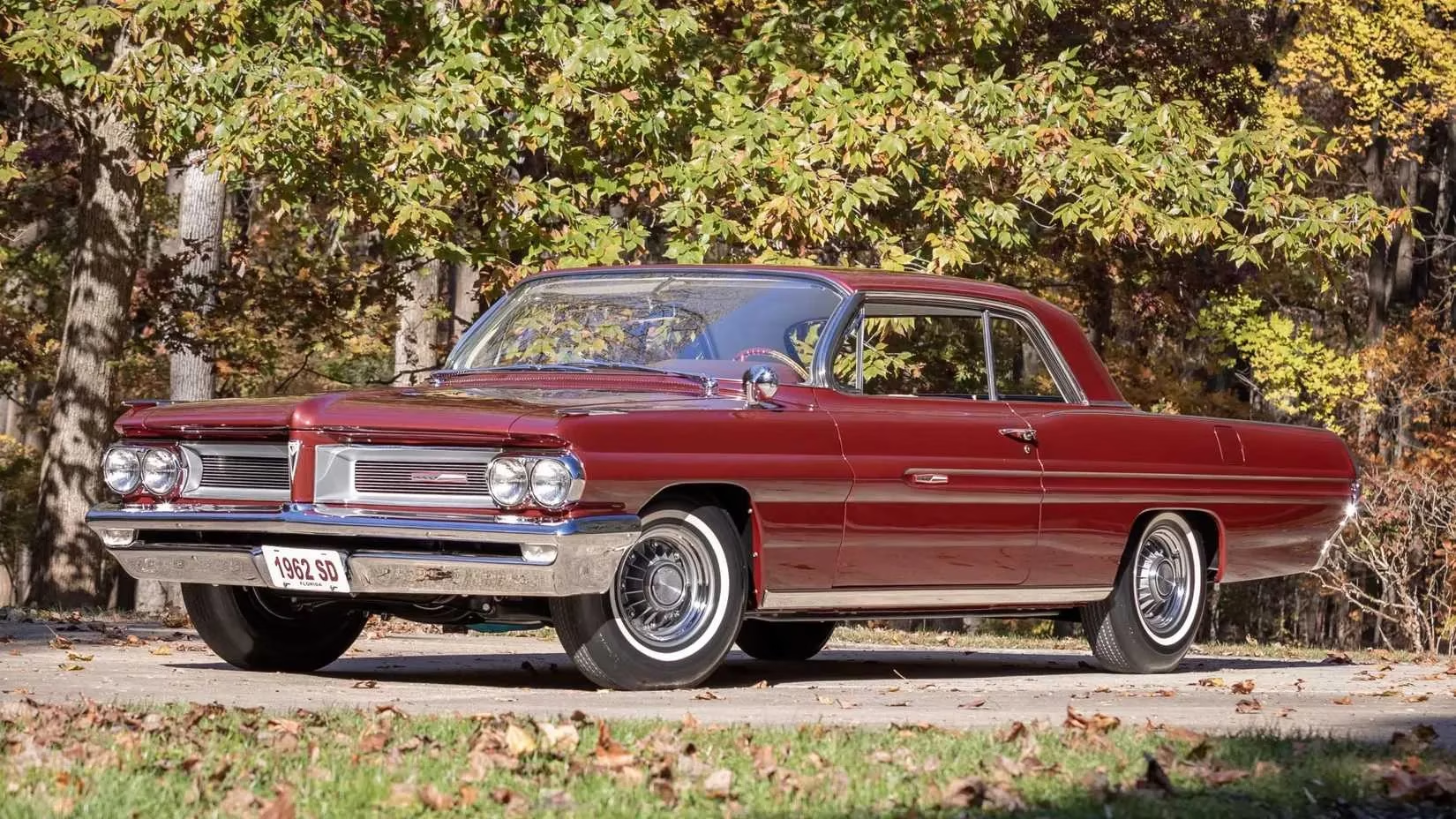
GTP stands for Grand Touring Performance, and it actually first appeared in 1991 on the sixth-gen Grand Prix, with a 3.4L V6 pushing 205 hp. But it was the ’97 supercharged version that turned the GTP into a legend. And let’s not forget the Grand Prix name itself: it debuted in 1962 with the insane Super Duty 421ci V8 making 405 hp. Then in 1969, John DeLorean (yes, that DeLorean) defied GM’s engine ban and stuffed a 428ci monster into the mid-size SJ. The GTP of the late ’90s and early 2000s was the spiritual successor to those tire-shredding pioneers.
💸 The 2026 Cheat Code: Dirt-Cheap Performance
Fast forward to 2026 — these cars are now 20+ years old, and they’ve bottomed out in price. According to recent J.D. Power data, a well-kept seventh-gen GTP coupe retails between $3,300 and $3,650. That’s practically free for a supercharged icon. Even the eighth-gen comp-Gs are only $4,400 to $4,525. On Bring a Trailer, low-mileage examples can go for $7k–$15k, which is still laughably cheap. Just earlier this year, a 2004 Comp-G with 38k miles sold for $12,454. You could buy one and a Miata for the price of a used Civic Si.
Check out some recent auction highlights:
-
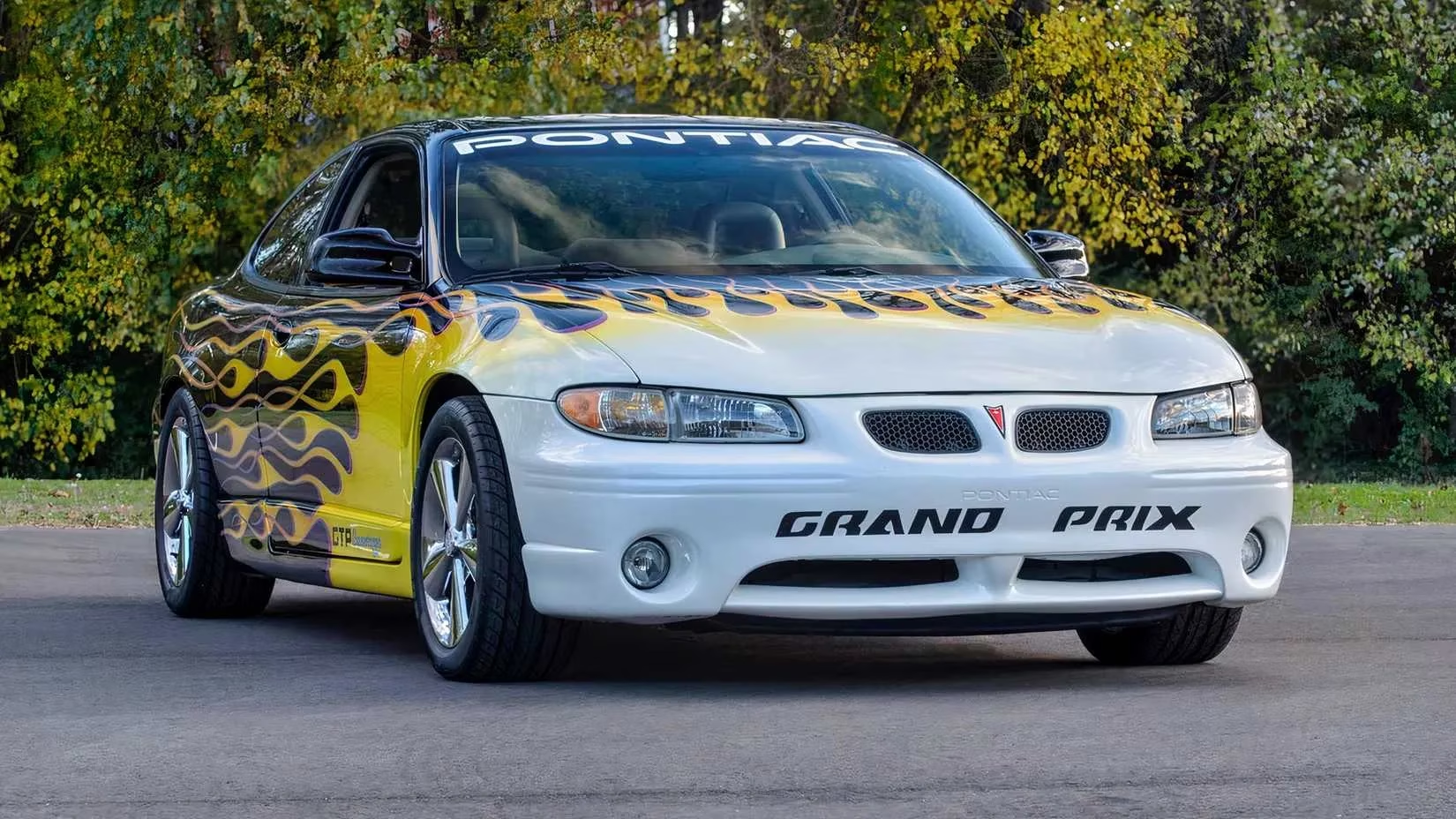
1999 GTP prototype designed by Chip Foose for Petty Racing’s 50th: sold for $23,456.
-
1998 GTP Pace Car awarded to Tony Stewart for Rookie of the Year: bid to $16k at Mecum (didn’t meet reserve, but that’s the value).
-
Average nice GTP: $5,000–$8,000, with tons of aftermarket support for pulley swaps, tunes, and even turbo kits.
🔧 The Heart of the Beast: 3800 Series II SC
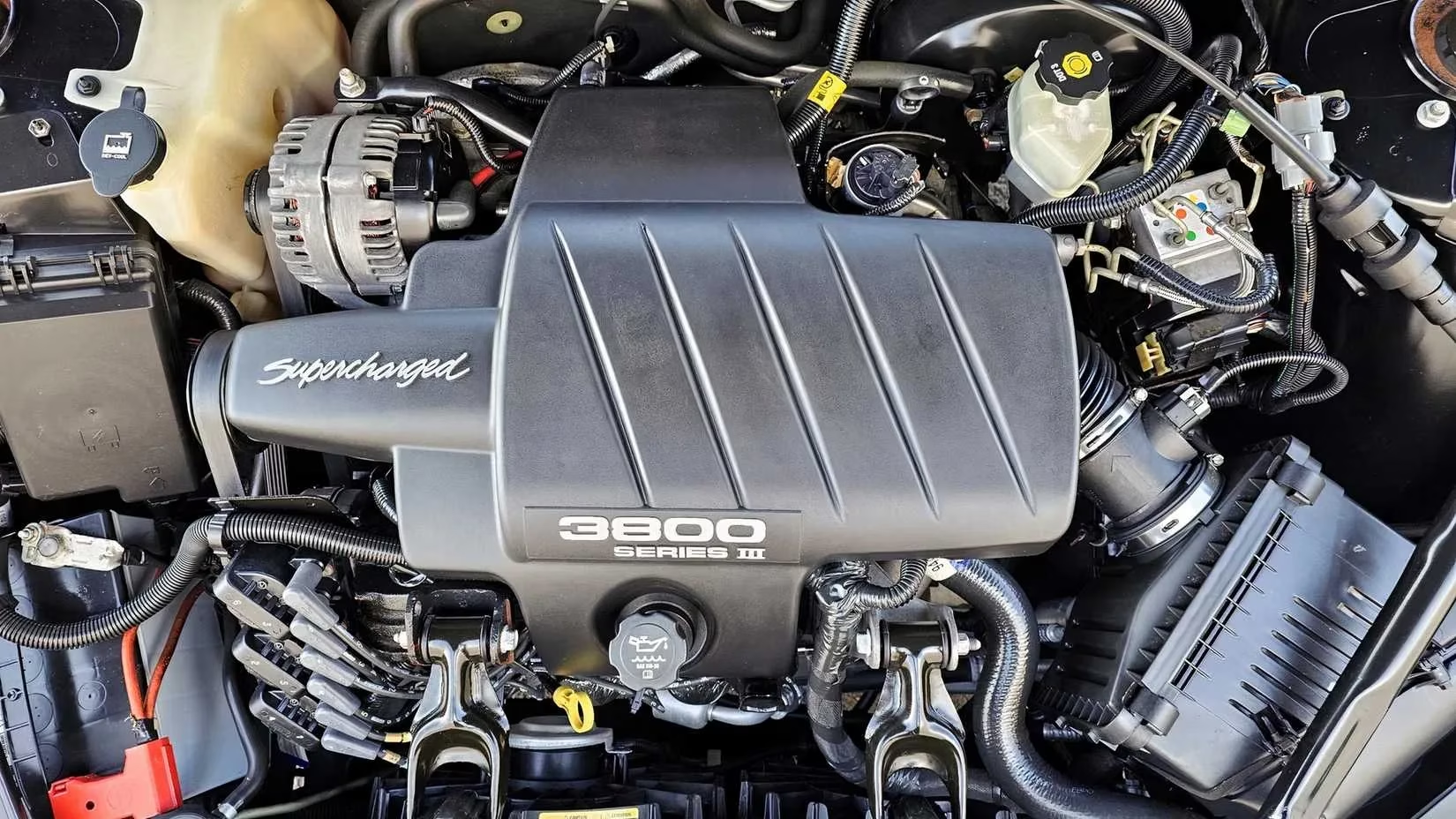
Let’s talk about that engine. The transverse-mounted 3.8L V6 was already bulletproof in NA form, but with the Eaton M90, it became a torque monster — 280 lb-ft right off idle. No manual transmission, sadly, but the four-speed auto was solid, and in later Comp-Gs, those paddle shifters let you pretend you’re grabbing gears. The powertrain stayed basically unchanged from 1997 to 2005, which means parts are everywhere and mechanics know these like the back of their hand. Want more power? A smaller pulley, colder plugs, and a tune can easily net 300+ hp without touching the internals.
🎯 Why They’re Still Under the Radar
In 1997, the horsepower wars were just reigniting. The C5 Corvette, Camaro SS, and WS6 Trans Am all ran low 13s. The Viper GTS was an 11-second monster. So a 15-second family car seemed tame. But that’s exactly why the GTP is cool: it was never supposed to be a drag strip king. It was a daily driver that could surprise you. A sleeper before sleepers were a thing. Today, everyone’s chasing Dodge Demons and GT500s, but there’s something deeply satisfying about rolling up in a Grand Prix that’s clean, cheap, and still has that blower whine.
🏁 Final Thoughts: The Time Is Now
Sales numbers: the seventh-gen Grand Prix sold nearly 900,000 units, and GTPs were a decent slice of that. They’re not rare, but they are getting harder to find in good shape. As we hit 2026, nostalgia for ’90s and early 2000s cars is exploding, and the GTP is right at the center of that sweet spot. It’s affordable, reliable (for a 20-year-old performance car), and dripping with Pontiac’s rebellious spirit. Whether you want a slick coupe or a practical sedan with a secret weapon, the Grand Prix GTP is the move.
So, next time you’re browsing classifieds and see a Grand Prix listed for pocket change, don’t scroll past. You might just be looking at one of the most underrated American performance cars ever built. And when you hear that supercharger spool up, you’ll wonder why you ever wasted time on anything else.
Stay sideways, my friends. 🏎️💨