Think about the early '70s muscle car scene. What comes to mind? I bet it's the thunderous HEMI 'Cudas, the iconic Chargers, or the rowdy Road Runners. They were the rockstars, the ones getting all the attention. But what if I told you that one of the best performers of that entire era was a car that most people just... walked right past? It's true. While everyone was cheering for the headliners, the 1971 Plymouth GTX 440+6 was waiting in the wings, a true-blue bruiser that history almost forgot. Its crime? Simply showing up to the party a little too late.

You see, the GTX had always been the "gentleman's muscle car." It was the slightly more refined, better-dressed cousin to the bare-knuckle Road Runner. But by 1971, the world was changing. Insurance costs were skyrocketing, emissions rules were tightening, and the public's love affair with big, thirsty V8s was starting to cool. So, when Plymouth gave the GTX its final, glorious send-off as a standalone model, buyers just weren't paying attention. Isn't it ironic? They created arguably one of the best-looking Mopars ever, and nobody bought it! The '71 model was based on the new, swoopy B-body platform. Just look at those coke-bottle curves, that aggressive front end, and those muscular body bulges. It was a masterpiece of '70s automotive design.
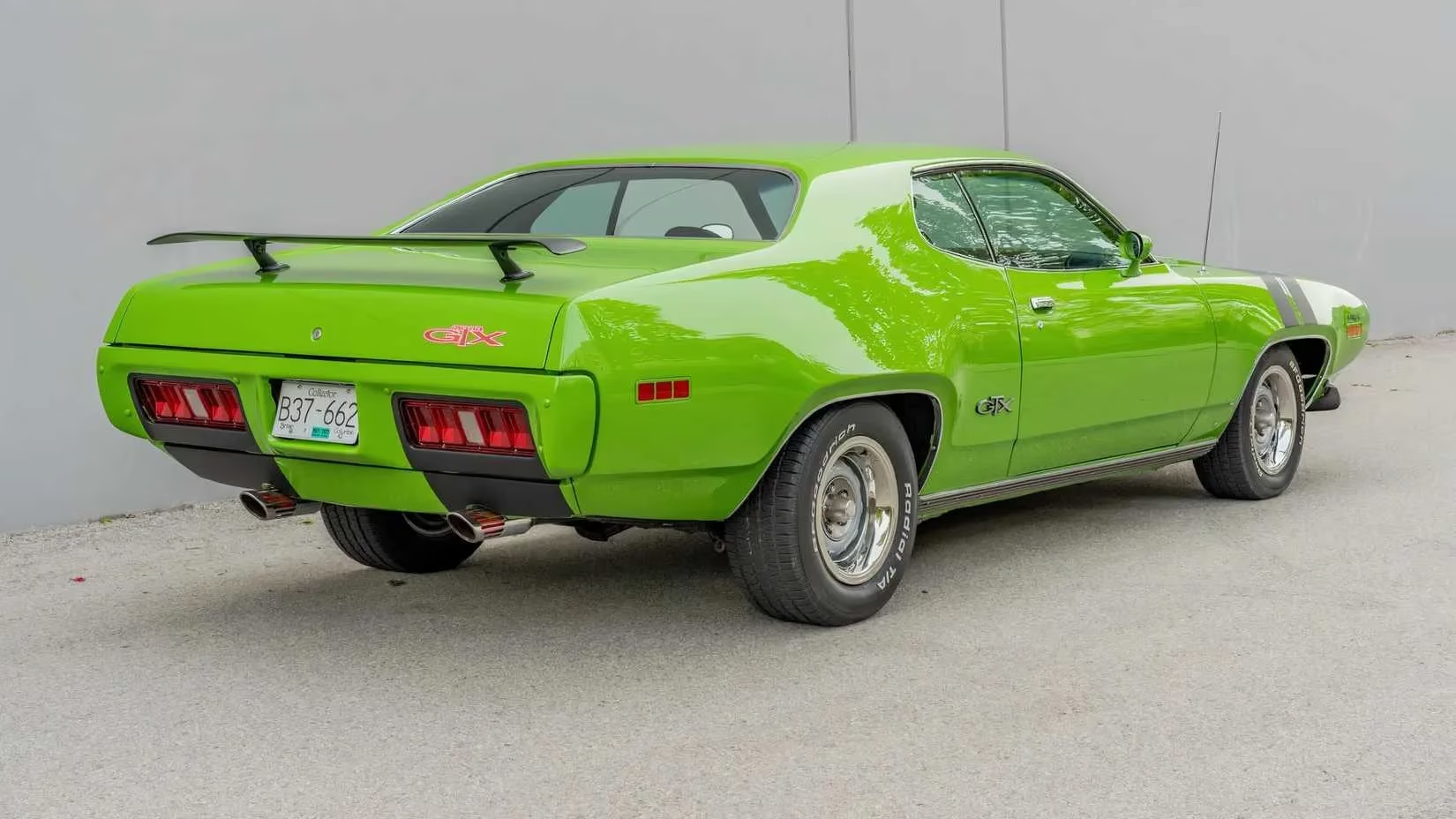
But let's get to the heart of the matter: the engine. Why does this car matter to me, and why should it matter to you? Because under that long hood lived an absolute monster. The top option wasn't the legendary 426 HEMI—it was something arguably better for the street: the 440 cubic-inch V8 with the "Six Barrel" carburetor setup, known as the 440+6. This beast used three two-barrel Holley carbs to churn out 385 horsepower and a earth-moving 490 lb-ft of torque.
Think about that torque number for a second. It meant this car didn't just accelerate; it shoved you down the road. The power came on lower in the rev range than the high-strung HEMI, making it more usable and, frankly, more fun in everyday driving. A well-driven 440+6 GTX could tear through the quarter-mile in the low 13-second range, nipping at the heels of the absolute elite. This wasn't a fragile race engine; it was a brutal, dependable sledgehammer you could actually enjoy without constant fear of a wallet-emptying repair bill.
So, with stunning looks and devastating performance, it must have flown off the lots, right? Wrong. Here's where the story gets truly fascinating. In 1971, Plymouth sold only about 2,900 GTXs in total. And of that tiny number, a mere 326 were built with the 440+6 engine and a 4-speed manual transmission. Let me put that in perspective for you:
-
Dodge Charger (1971): Over 10,000 sold.
-
Chevrolet Chevelle (1971): Tens of thousands sold.
-
Plymouth Road Runner (1971): Outsold the GTX by a huge margin.
-
Plymouth GTX 440+6 4-Speed (1971): 326 sold.
We're talking about one of the rarest high-performance configurations from any major American automaker at the time. It's a true blue-chip unicorn. The GTX was a performance coupe arriving just as the segment was collapsing, and after 1971, it was demoted to a trim package on the Road Runner before fading away entirely.
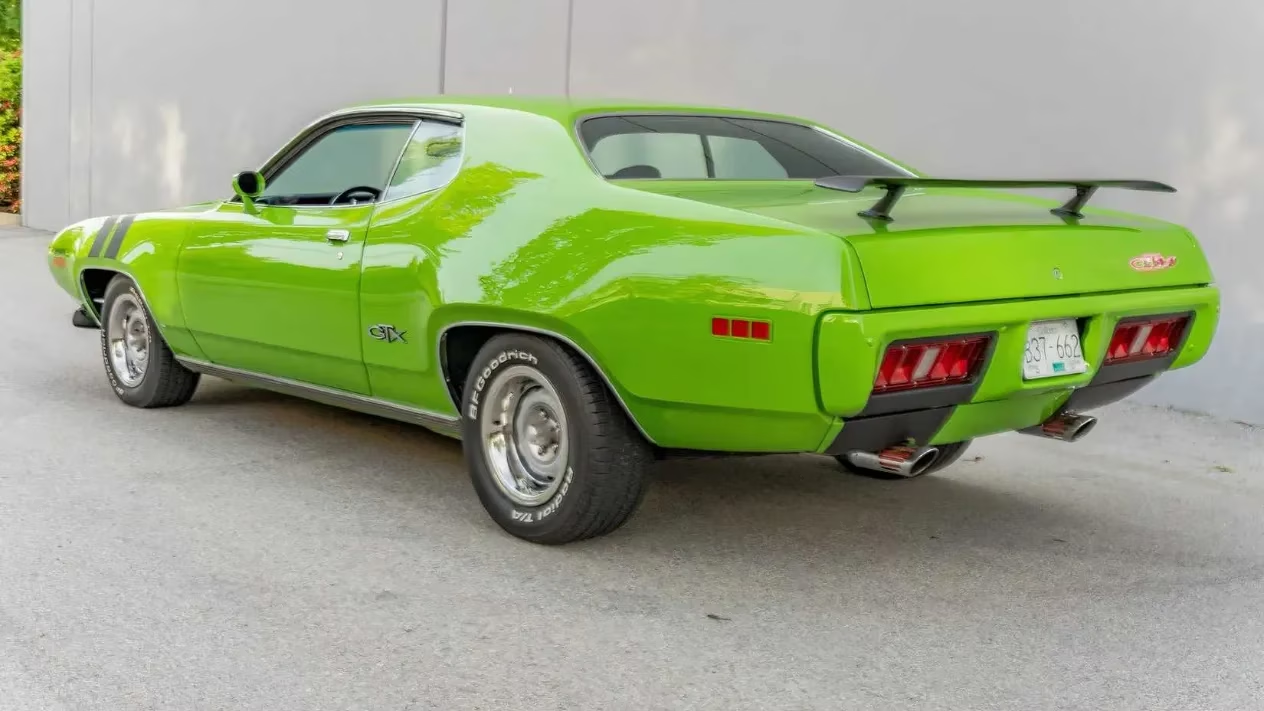
Now, in 2026, the collector car market has finally woken up. That initial oversight has turned the '71 GTX 440+6 into one of the most coveted and expensive Mopars on the planet. Don't believe me? Check out the current valuation landscape:
| Condition / Sale Type | Estimated Value (2026) | Notes |
|---|---|---|
| Top Auction Sale | ~$200,000+ | For pristine, numbers-matching examples. |
| "Good" Condition (per valuation guides) | ~$175,000+ | A driver-quality car with minor needs. |
| Standard 1971 GTX (non-440+6) | $65,000 - $90,000 | For context on the premium for the +6 package. |
Prices have been climbing steadily. While you can find a nice standard GTX, a verified, numbers-matching 440+6 car, especially with that 4-speed, commands a massive premium. You're not just buying a fast car; you're buying a piece of misunderstood history, a conversation starter that stands apart from the usual parade of 'Cudas and Chargers at any car show.
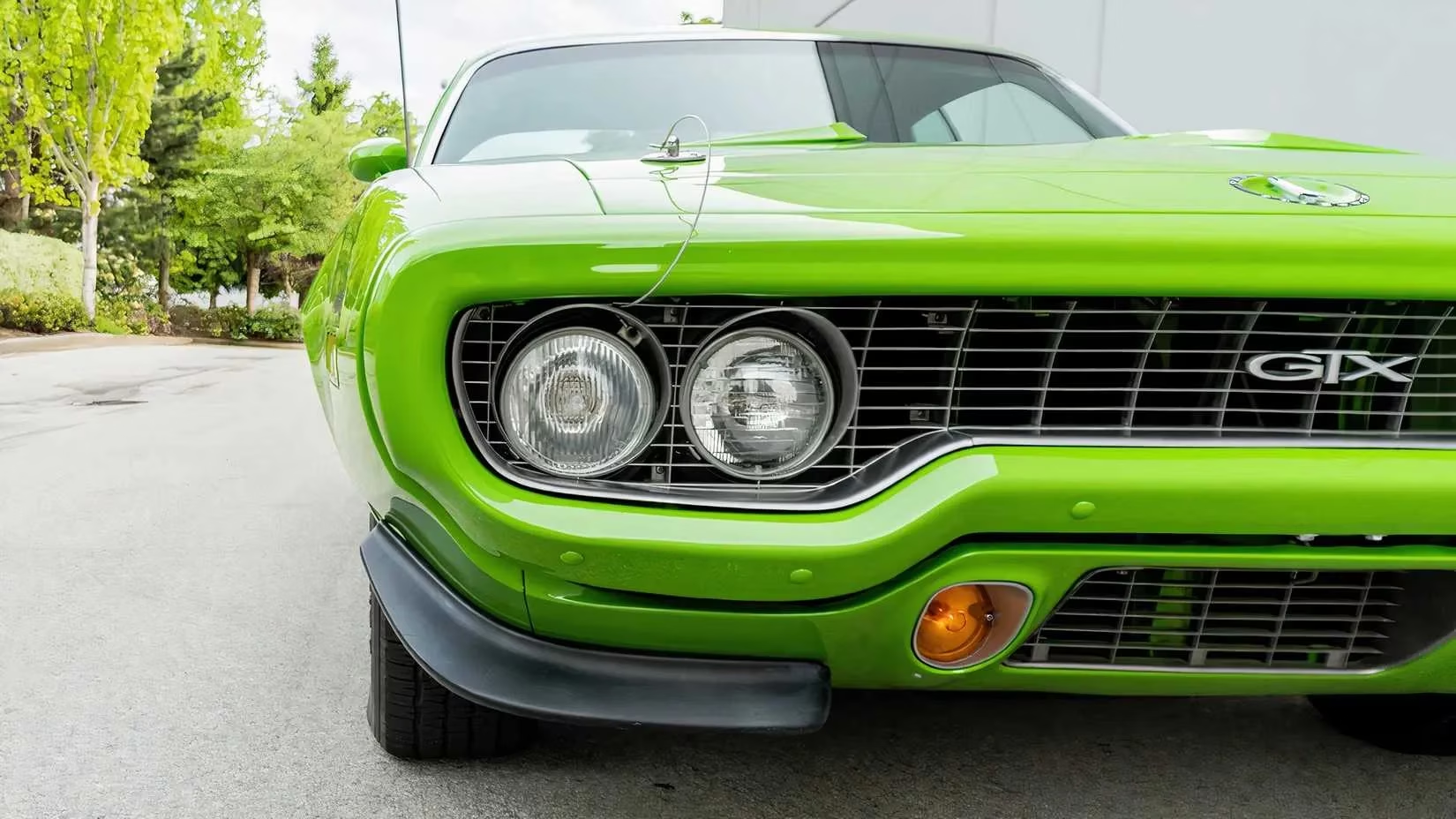
And let's not forget the complete package. The '71 GTX had the looks to match its muscle. Options like the wild Air Grabber hood—a vacuum-operated scoop that reared up under throttle—added to the intimidation factor. Inside, it had bucket seats, sporty gauges, and just enough comfort to remind you it was the "gentleman's" choice. It was the perfect balance: brutal when you wanted it to be, but civilized enough for a cruise. It had that perfect muscle car swagger.
So, why am I so fascinated by this car? Because it represents a perfect "what if" moment in automotive history. What if the market hadn't turned? What if more people had recognized this slick, powerful coupe for what it was? We'll never know. But what we do know is that the 1971 Plymouth GTX 440+6 has finally earned its place in the pantheon of greats. It's no longer the overlooked underdog; it's the rare, sophisticated bruiser that collectors fight over. Its story is a reminder that sometimes, the best gems are the ones you have to look a little harder to find.