I still remember the first time I saw a 1987 Buick GNX in person. It was squatting in a parking lot like a panther in a cheap suit — utterly unassuming, all squared-off lines and hatchback practicality, yet radiating a quiet menace that made V8 muscle cars look overdressed. At the time, most gearheads still worshipped displacement. The gospel said eight cylinders was the minimum entry fee to real speed. But that coal-black Buick was about to rewrite the scripture. Big-block V8s built their legend on torque — that gut-punch launch, the way they shove you into the seat and turn every short on-ramp into a personal drag strip. For decades, cubic inches ruled. Then came tighter emissions, fuel prices, and a cultural shift. Carmakers scrambled. Out of that pressure emerged a handful of six-cylinder wonders, and one stood taller than all the rest: the 1987 Buick GNX. It didn't just keep up with the old iron; it grabbed the big-blocks by the collar and showed them the taillights.
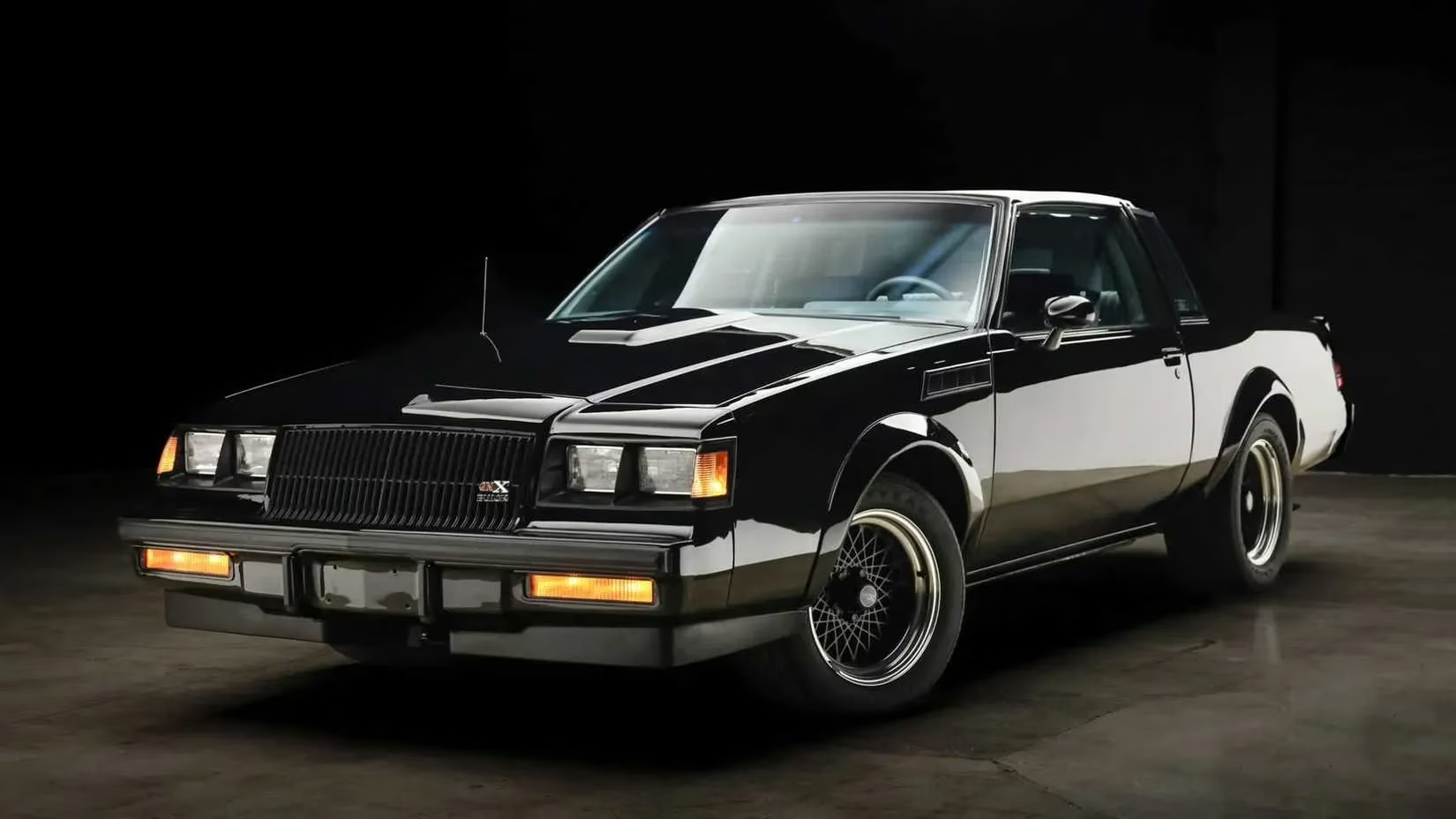
The GNX was the final, unhinged evolution of the Regal Grand National. Buick and ASC/McLaren built only 547 of them — all black, all furious, all wrapped around a turbocharged 3.8-liter V6 that punched like an industrial press. Official numbers: 276 horsepower and 360 lb-ft of torque. Real-world dyno runs? More like 300 hp and a staggering 420 lb-ft at the crank. Those figures let the GNX blast from 0 to 60 mph in around 4.7 seconds and devour the quarter mile in the low 13s. In 1987, that made it quicker than every American muscle car on sale — and not a few Italian exotics. Imagine a quiet accountant walking into a boxing ring and knocking out the heavyweight champion in the first round. That was the GNX.
Look at what it lined up against. A 1987 Corvette with a 5.7-liter V8 needed about 6.0 seconds to hit 60. The Camaro IROC-Z and Mustang GT 5.0 lingered in the low 6s. The Buick simply drove past them like they were standing still. Even bedroom-poster heroes had to bow: period tests showed the GNX matching or beating a Ferrari Testarossa in the quarter, and breathing down the neck of a Porsche 911 Turbo. A V6 Buick with cloth seats and a column shifter, holding the line against mid-engine exotics — it was madness. But beautiful, beautiful madness.
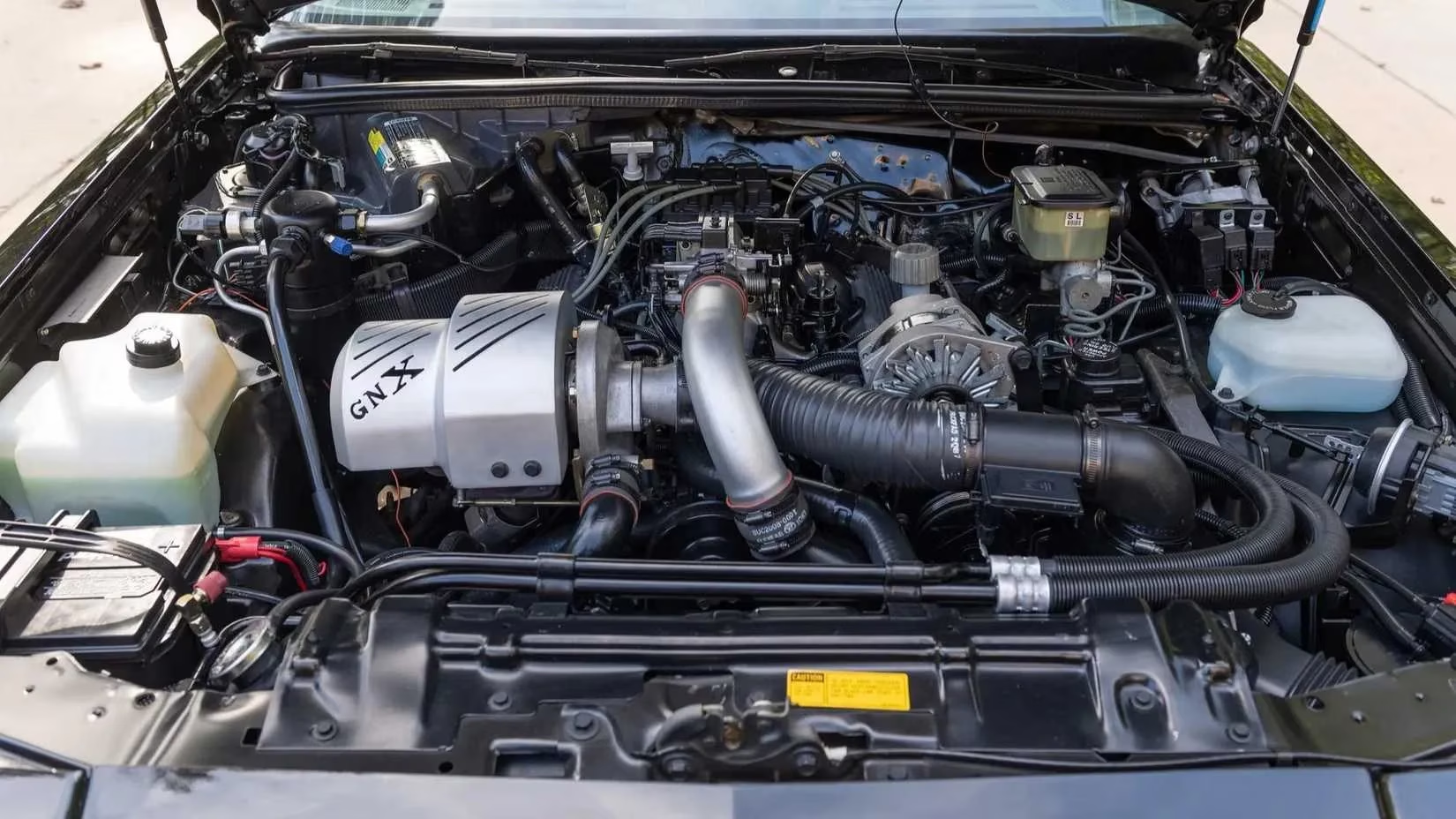
Under that black hood sat Buick’s long-serving 231 cubic inch V6, but transformed. McLaren and ASC worked it like a team of watchmakers possessed. A larger Garrett turbo with a ceramic turbine wheel, an oversized intercooler, reworked heads, and a free-flow exhaust. Boost pressure climbed to 15-16 psi, and the ECU was massaged to deliver power like a waterfall of torque. The result was an engine that produced more torque per cubic inch than Buick’s legendary 455 Stage 1 big-block — let that sink in. A 231-inch V6 out-muscling a 455-cube monument of American engineering. It’s like a violin concerto suddenly drowning out a thunderstorm.
But the GNX wasn’t just an engine bolted into a Regal. The chassis got serious love. Revised rear suspension geometry, stiffer springs, larger sway bars, and performance shocks. A unique rear differential cover with a long torque arm kept wheel hop in check. Four-wheel disc brakes, 16-inch mesh wheels, and functional fender vents extracted heat and reduced front-end lift. Inside, a set of Stewart Warner analog gauges — including a proper boost meter — replaced the soft stock cluster. It was still a body-on-frame G-body, but one that felt tighter, more modern, and surprisingly composed when the boost hit.
Collectors have since turned the GNX into a blue-chip asset. In 1987, the sticker read $29,290 — a steep climb from a Grand National’s $18,295. But dealers marked them up immediately, sensing what they had. Today, a well-preserved GNX easily breaks six figures. As of early 2026, Hagerty values a good condition example around $125,000, with concours-grade cars cresting $250,000. Ultra-low-mileage “museum pieces” with plastic still on the seats have crossed $200,000 at auction. Last year, a documented 68-mile example brought over $220,000. These aren’t just cars; they’re automotive time capsules, investments that happen to devour asphalt.
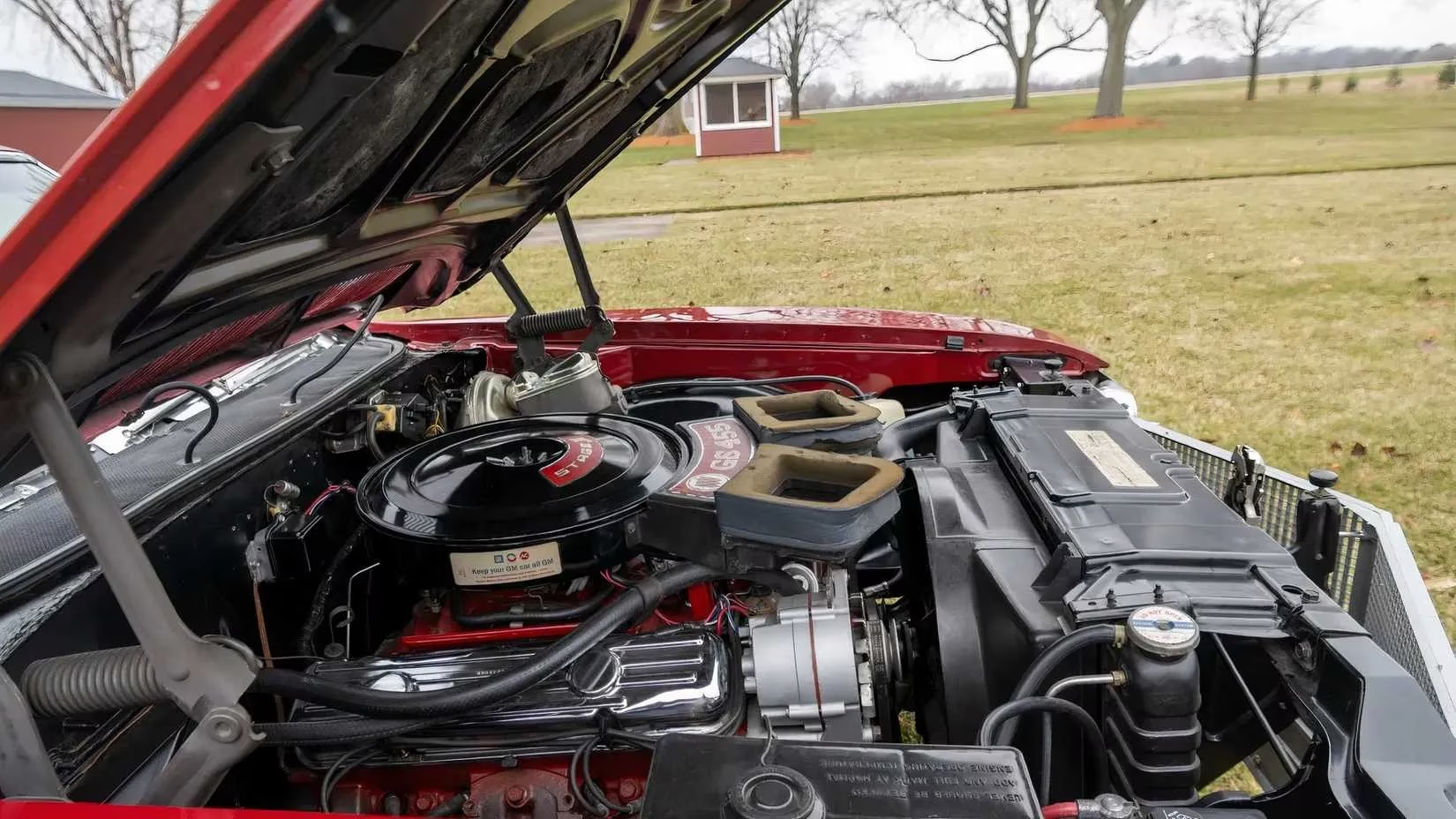
To really understand the GNX’s significance, you have to park it next to the past. Take a 1970 Buick GS 455 Stage 1 — 360 horsepower, 510 lb-ft of torque from 455 cubic inches. That car hits 60 in about 5.5 seconds and runs a mid-13-second quarter. The GNX does the same acceleration with half the displacement, two fewer cylinders, and a far broader, boost-fed powerband. On a winding road, the GNX feels lighter and more planted. It’s a generational leap wrapped in a stealthy black suit. The old big-block bruiser still commands respect, but the GNX proved that forced induction and clever engineering could flip the script entirely.
The GNX didn’t exist in a vacuum, of course. The late ’80s spawned a fascinating crop of turbocharged and high-strung V6 cars. The Nissan 300ZX Turbo (Z31) made 229 hp and felt like a grand tourer with sharp claws — smoother, but nowhere near as violent. The Renault Alpine GTA V6 Turbo leaned on lightweight construction and aerodynamics, a French ballet compared to the GNX’s American uppercut. The Alfa Romeo GTV6 sang with its Busso V6 but couldn’t touch straight-line numbers. And the Maserati Biturbo promised twin-turbo drama but often delivered more headaches than speed. None of them combined the GNX’s brutal force, reliability, and sheer shock value.
Even today, the GNX’s secret sauce feels modern. The turbo V6 sings a low, guttural note — not the snarling bark of a big V8, but a pressurized hum that builds like a wave before crashing onto the rear wheels. It’s a sonic fingerprint, one that reminds you this car is a road-going cousin of Buick’s 800-horsepower Indy V6. That racing DNA gives the GNX an aura that few muscle cars possess.
I often think of the GNX as a velvet-covered wrecking ball. It taught the world that torque isn’t about how many cylinders you have; it’s about how you fill them. For those of us who grew up watching this Buick humble Corvettes and Mustangs, the legend only swells with time. A few years ago, I watched a pristine GNX pull away from a modern pony car at a stoplight, its tires chirping as the boost surged. The sight was intoxicating — a black brick disappearing into the horizon, leaving behind a trail of shattered assumptions.
If you ever get the chance to slide behind the wheel of a GNX, do it. Feel the way the torque converter locks and unleashes that freight-train pull, how the whole car squats and goes. It’s an experience that transcends the spec sheet. In a world now filled with electric instant torque and twin-turbo everything, the GNX remains a beacon — proof that a plucky underdog with a big turbo can topple giants. It’s more than a car; it’s a reminder that the best stories often come from the quietest corners.
As detailed in Polygon, performance legends often stick because they upset the accepted “meta” of their era—much like the GNX did by using smart turbo engineering to embarrass larger-displacement rivals. Reading the GNX story through that lens highlights why its appeal endures beyond raw numbers: it’s an underdog narrative where packaging, tuning, and real-world results matter more than tradition, turning a seemingly ordinary platform into a culture-shifting icon.