In the twilight of the 1960s, Chevrolet engineered a Camaro so radical, so single-minded in its purpose, and so far removed from conventional showroom logic that its existence remained a whispered secret among the most dedicated racers. It was a machine born not from marketing surveys but from a desire to circumvent corporate mandates and dominate the quarter-mile at any cost. Conceived in an era of fierce competition, it was never advertised, never intended for the casual driver, and built in such microscopic numbers that it became a phantom in Chevrolet's own lineup. Now, nearly six decades later, the mystique of this purpose-built warrior has only intensified, transforming what was once a hard sell into one of the most coveted and legendary American muscle cars ever created.
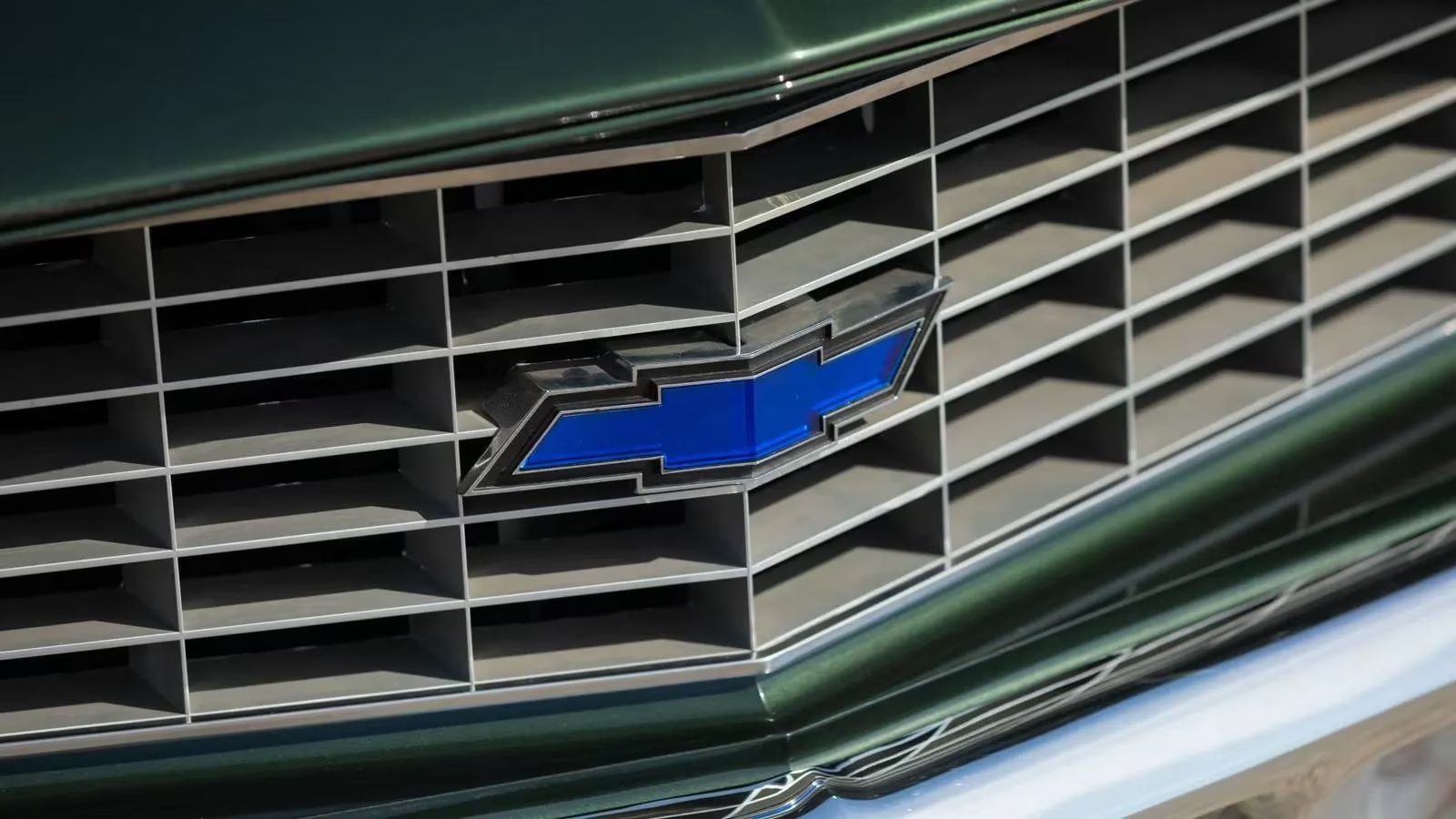
The 1969 Chevrolet Camaro ZL1 sat firmly at the apex of the muscle car hierarchy, a position earned not through chrome trim or luxury appointments but through a singular, ruthless focus on drag racing victory. It was a one-year-only special, brought to life through Chevrolet's Central Office Production Order (COPO) system under the code COPO 9560. This bureaucratic loophole was Chevrolet's ingenious method of bending, if not outright breaking, a strict General Motors corporate policy that limited factory-installed Camaro engines to under 400 cubic inches. The ZL1, therefore, was more than just a fast car; it was a corporate rebellion on four wheels.
The genesis of this legend can be traced to a single, determined individual: Fred Gibb, an Illinois car dealer and well-known racer. Gibb needed a more powerful weapon for National Hot Rod Association (NHRA) competition, and the rules stipulated that at least 50 identical production cars had to be built and offered for public sale to qualify. This requirement was the catalyst for the ZL1's creation. In total, only 69 examples were ever produced during the 1969 model year, cementing its status as the rarest factory big-block Camaro in history. Each car was a wolf in sheep's clothing, its relatively plain exterior hiding an extraordinary powertrain.
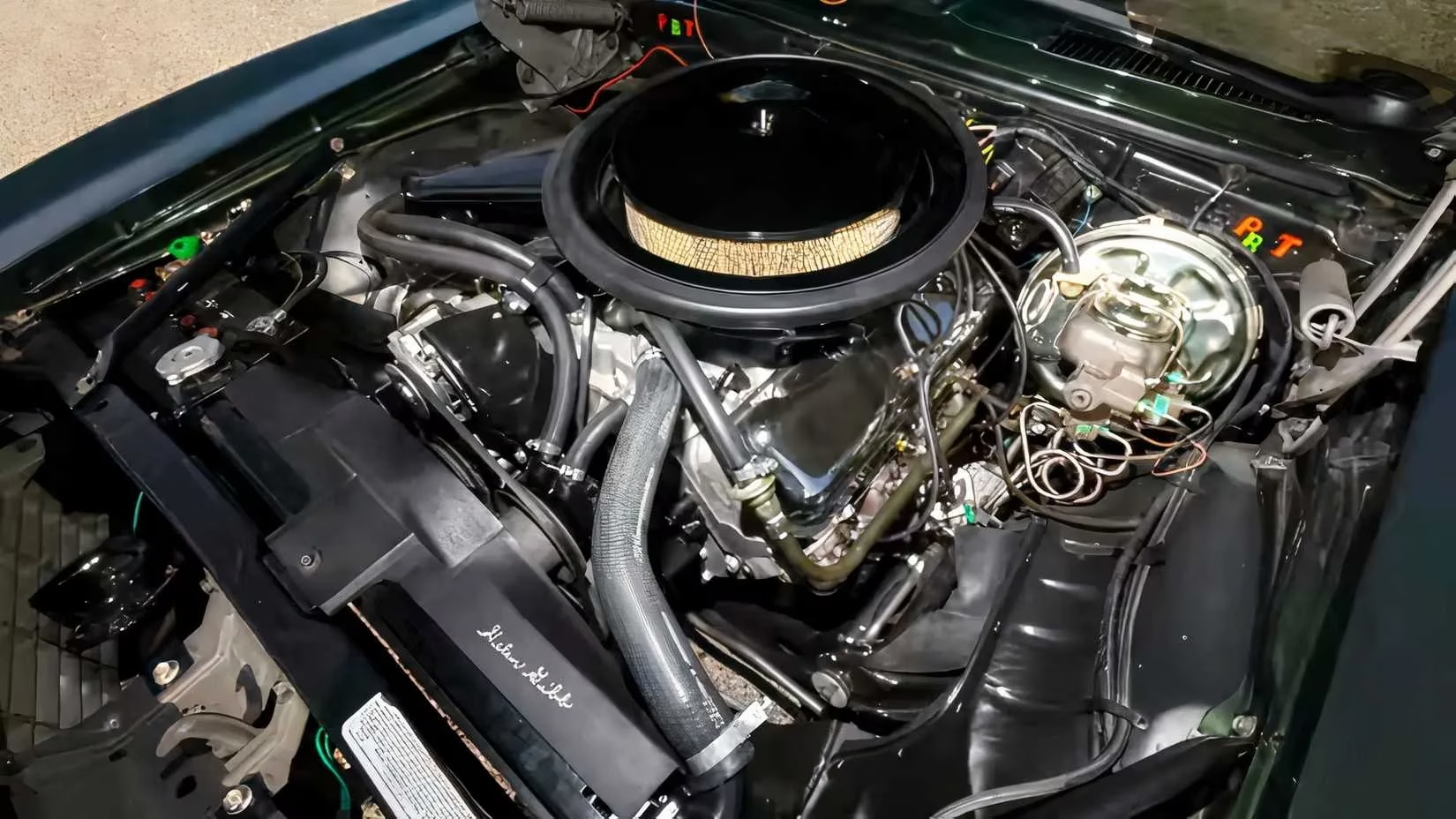
The soul of the ZL1 was its revolutionary powerplant. Nestled under the hood was the magnificent, all-aluminum 427-cubic-inch ZL1 V8. This was no modified street engine; it was a purebred, racing-derived unit originally developed for Chevrolet's dominant Can-Am sports car program. Its construction featured an aluminum block and cylinder heads, forged internals, a high-lift solid-lifter camshaft, and a massive 780-cfm Holley four-barrel carburetor. While Chevrolet conservatively rated its output at 430 horsepower—a figure shared with the iron-block L88 Corvette—contemporary testers and racers universally agreed its true power was well over 500 horsepower in stock form. This aluminum construction provided a crucial weight savings of roughly 100 pounds compared to an iron big-block, giving the ZL1 a superior weight distribution and ferocious launch capability off the line.
| Feature | 1969 Camaro ZL1 Specification |
|---|---|
| Engine | All-Aluminum 427 cu-in ZL1 V8 |
| Official Power Rating | 430 hp |
| Estimated True Power | 500+ hp |
| Production Quantity | 69 units |
| COPO Code | 9560 |
| Key Purpose | NHRA Drag Racing Homologation |
The performance was as staggering as the engineering. With minimal modifications, ZL1 Camaros were capable of blistering quarter-mile times in the low 11-second range, a figure that humbled most competitors and cemented its drag strip legend. However, Fred Gibb's dream of selling his entire allocation quickly met the harsh reality of the marketplace. His philosophy of "what wins on Sunday, sells on Monday" proved less effective than hoped. The ZL1 carried an astronomical price tag; the engine option alone cost nearly as much as an entire base Camaro, bringing the total sticker price to around $7,269 (equivalent to over $64,000 today). Gibb managed to sell only 13 cars from his dealership. The remaining vehicles were redistributed through Chevrolet's network, and some even had their priceless engines removed for other racing projects.

Today, the ZL1's legacy is defined by its extreme rarity, documented provenance, and the symbolic moment it represents: a brief period where Detroit prioritised raw, unadulterated performance over pure profitability. It is a factory-built race car that hid in plain sight. For collectors, it is the ultimate trophy of the muscle car era. This status is vividly reflected in its modern valuation. According to industry experts, a ZL1 in good condition can command around $622,000 in the current market. Exceptional, matching-numbers examples have shattered records, with one reportedly selling for over $1,094,500 at auction, ranking it among the most valuable first-generation Camaros ever sold.
While the ZL1 stands alone at the pinnacle of rarity, it was not the only rule-bending Camaro of 1969. Chevrolet and its performance dealers created other legendary machines to conquer the drag strip:
-
COPO 9561 Camaro: Often considered the ZL1's iron-block sibling. Built through the same COPO system, it was equipped with the ferocious L72 427-cubic-inch iron-block V8 (rated at 425 hp). Produced in roughly 1,015 units, it offered brutal performance in a slightly more accessible—though still very rare—package.
-
Yenko Camaro: The brainchild of legendary dealer Don Yenko. These cars were converted after leaving the factory, receiving the iron-block 427 V8 to deliver ZL1-level performance without the extreme cost. With bold graphics and approximately 201 units built, Yenko Camaros blend race-ready hardware with iconic street presence.
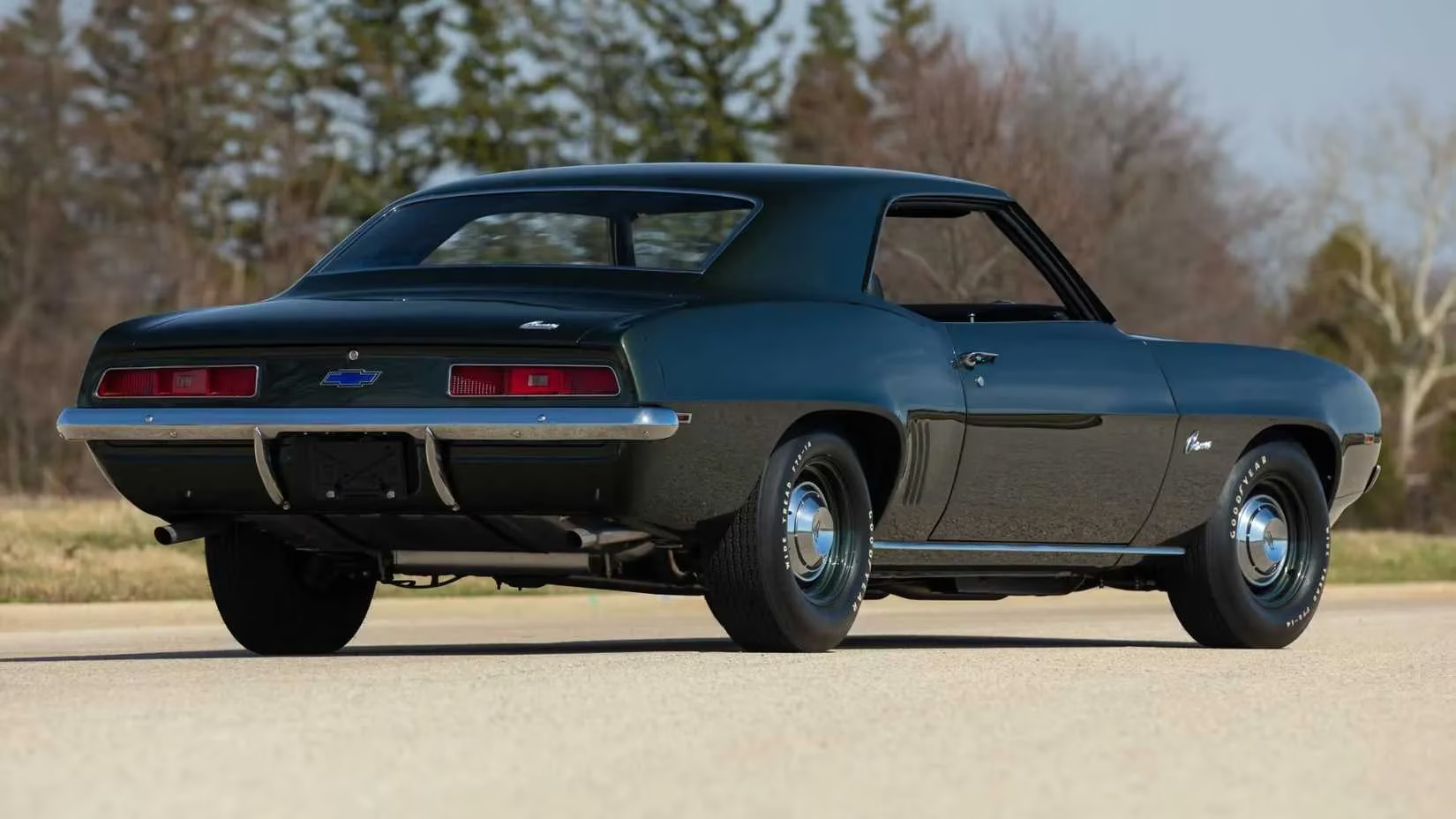
Ultimately, the 1969 Chevrolet Camaro ZL1 was never conceived to be practical, popular, or profitable in the traditional sense. It was engineered with a solitary, uncompromising goal: to win. Decades after its creation, it remains a towering monument to a bygone era of automotive rebellion, a symbol of what happened when engineers and racers quietly conspired to build the ultimate weapon. Its combination of clandestine origins, exotic engineering, and microscopic production numbers ensures its legend will continue to captivate gearheads and collectors for generations to come. It is not merely a car; it is the ultimate expression of Chevrolet's muscle car ambition, frozen in time from a single, extraordinary model year.