Man, let's talk about a car that feels like it was plucked straight from a dream and then, just as we were getting to know it, vanished into thin air. The Pontiac Firebird. It's one of those names that makes any car enthusiast's heart ache a little. Born in 1967, this American icon weathered oil crises, emissions crackdowns, and the changing tides of automotive fashion, only to have its wings clipped just as it was hitting its second golden age. Pontiac itself took its final bow in 2010, but the Firebird's last flight was in 2002. And let me tell you, that final model year wasn't a whimper—it was a roar. Today, in 2026, we can look back and see that these late-model Firebirds, especially the ultra-rare Firehawk variants, are not just relics; they're surprisingly attainable tickets to muscle car glory.
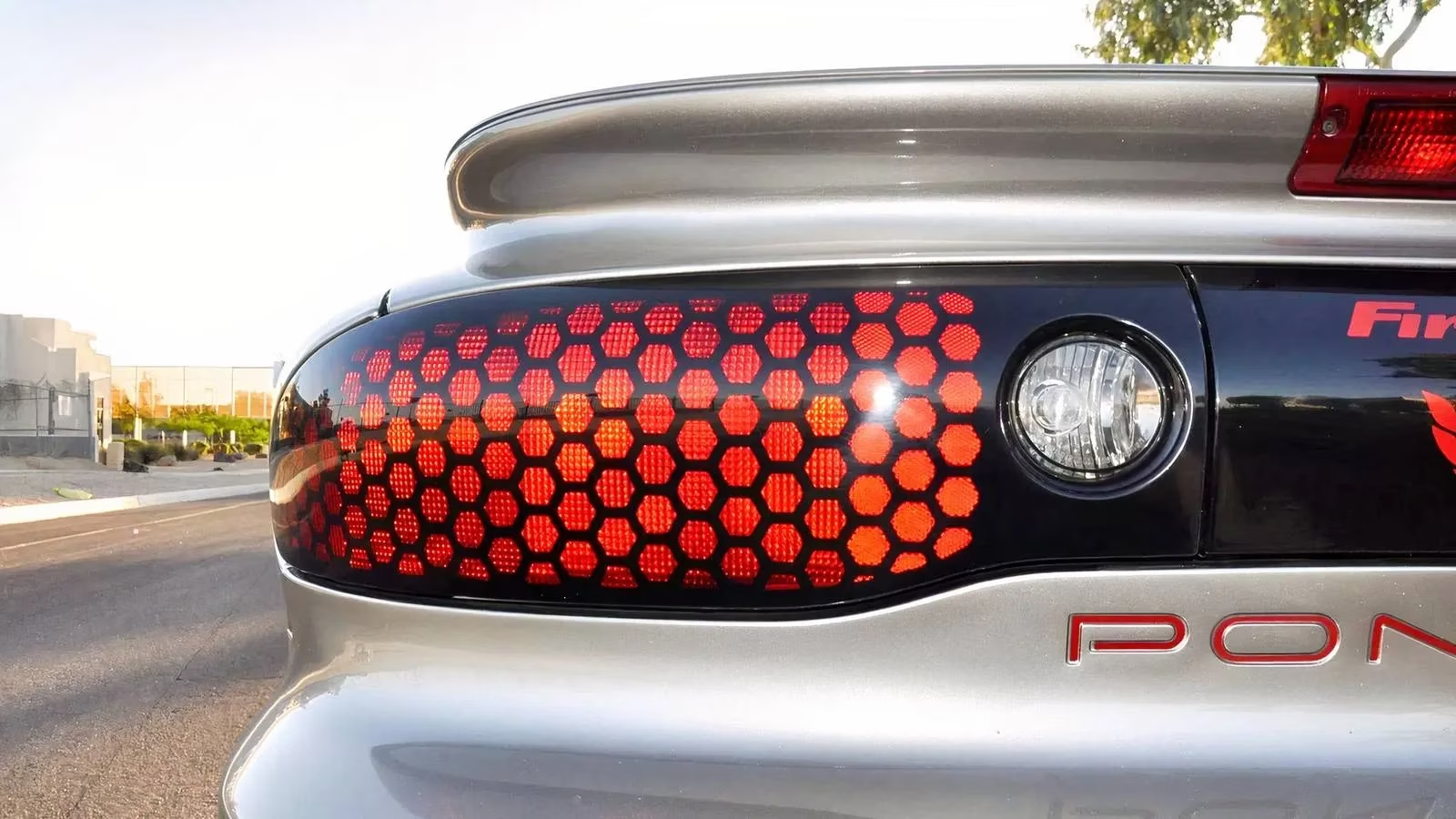
To really get the Firehawk, you gotta understand its roots. The fourth-generation Firebird, which debuted in 1993, was Pontiac's defiant answer to the idea that muscle cars were dead. It came back swinging with a proper 5.7-liter V8 under the hood of its Formula and Trans Am models. But for the real hardcore fans, there was always this whispered legend: the Firehawk. This wasn't just a badge slapped on by Pontiac; it was a full-blown performance transformation handled by the tuning wizards at Street Legal Performance (SLP). Think of SLP as the secret sauce that turned a great burger into a gourmet masterpiece.
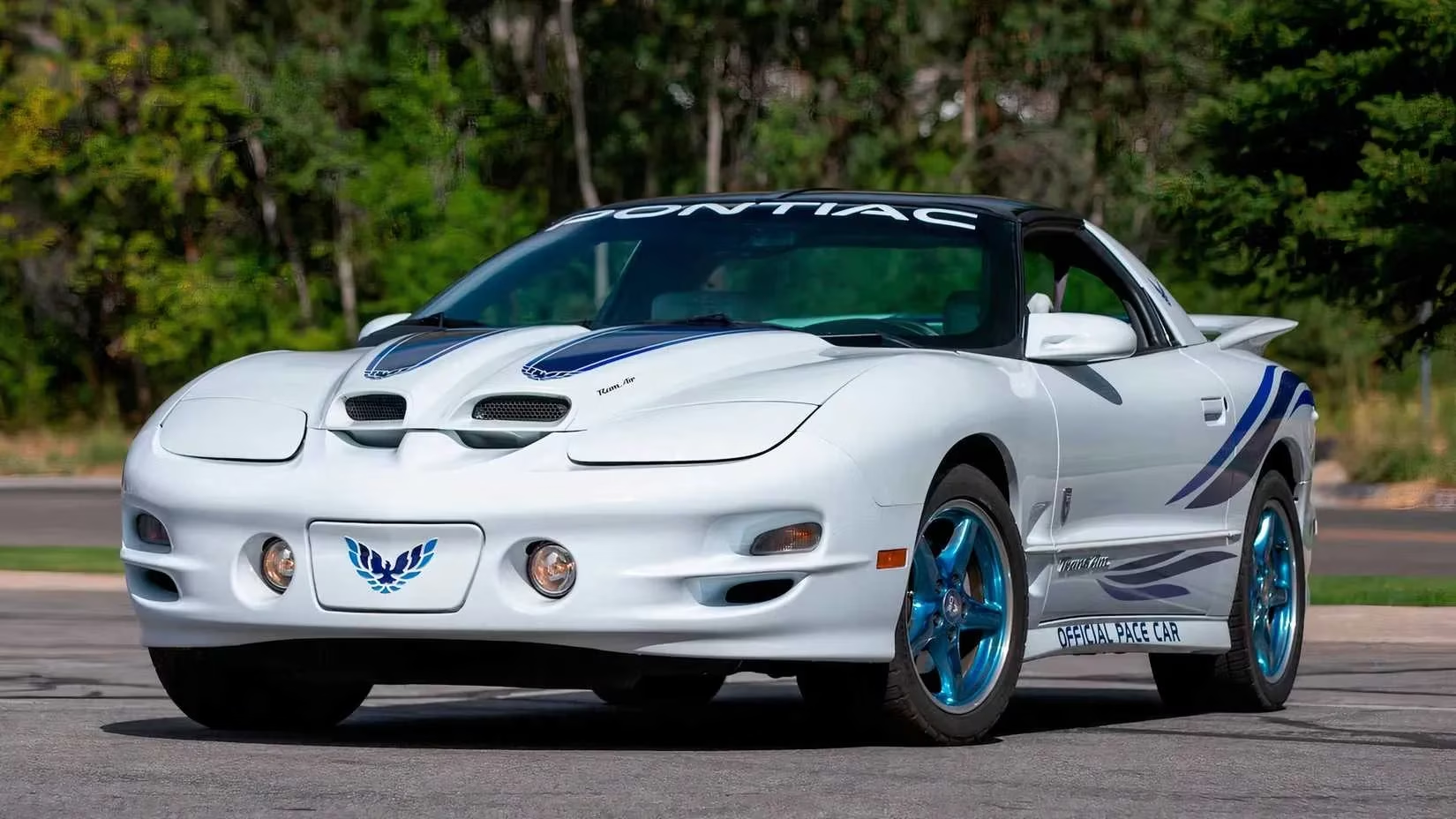
For the fourth-gen cars, starting in '93, SLP got to work. They didn't just tweak a few things; they gave the Firebird a personality transplant. The most obvious change was under the hood—literally. They swapped out the standard hood for a gnarly twin-nostril design that wasn't just for show. It funneled air directly into a low-restriction intake system. The result? The factory LT1 V8's power got a nice, healthy bump. We're talking about gains like:
-
1993: A solid +25 horsepower, pushing it to 300 hp.
-
1995: A little extra love, up to 305 hp.
-
Torque: A consistent +5 lb-ft, landing at a hearty 330 lb-ft.
But power is nothing without control, right? SLP knew that. So they stiffened up the front anti-roll bar for better balance, added lower rear control arms and a Panhard rod to keep the rear end planted, and slapped on a set of menacing 17-inch alloys wrapped in Firestone Firehawk SZ rubber. This package turned the Firebird from a cool cruiser into something that could genuinely hustle. And the best part? You could walk into your local Pontiac dealer, order one with a warranty, and drive home in a street-legal performance machine. How cool is that?
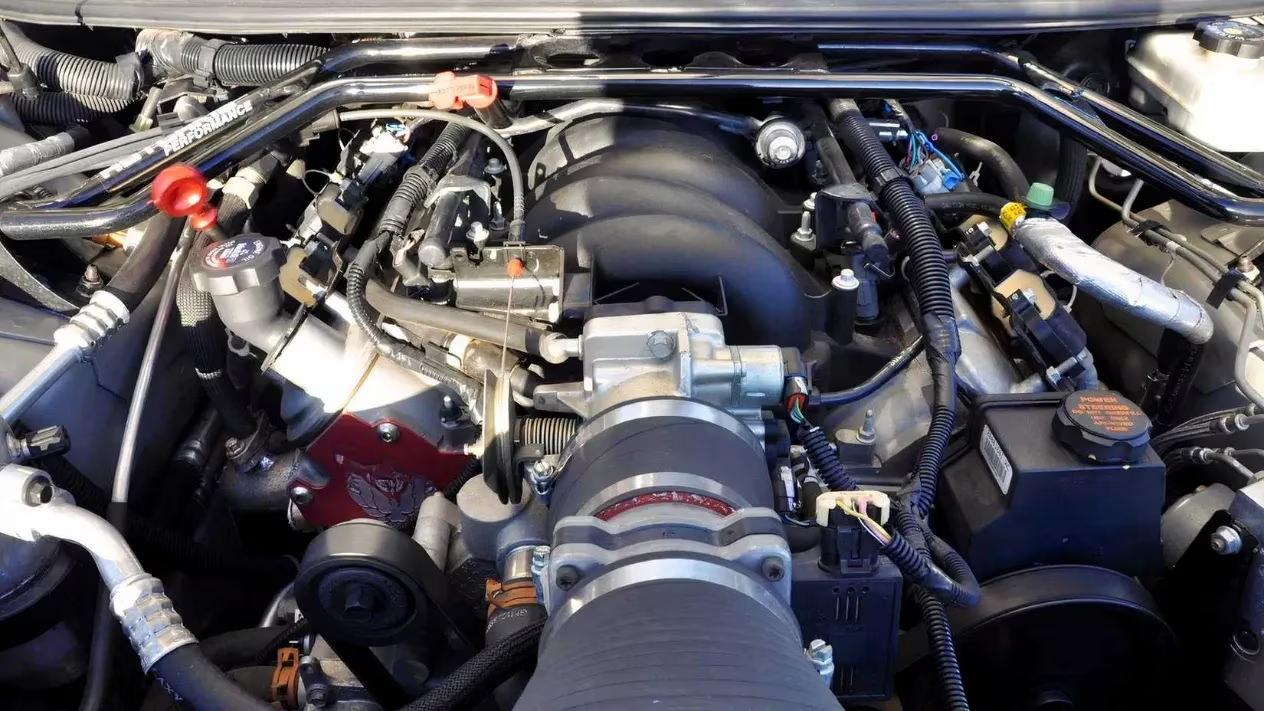
Now, here's where it gets really interesting for us in 2026—the 2002 model year. This was the swan song, the final curtain call. And Pontiac, along with SLP, sent it off with some truly special editions. While everyone remembers the bright yellow Collector's Edition (a WS6 car), true rarity lies with the Firehawks. We're talking production numbers so low, they make some European exotics look common.
Let's break down just how rare these 2002 Firehawks are. I'm talking needle-in-a-haystack rare:
| Model & Configuration | Estimated Production (2002) | Rarity Level |
|---|---|---|
| Firehawk Formula (Automatic) | Just 51 cars | 🦄 Unicorn Status |
| Firehawk Formula (Manual) | ~116 cars | Extremely Rare |
| Firehawk Trans Am (Manual Coupe) | ~884 cars | Rare |
| Firehawk Trans Am (Auto Coupe) | ~415 cars | Uncommon |
| Firehawk Trans Am Convertible | Only 74 cars | Super Rare |
Yeah, you read that right. If you find a 2002 Formula Firehawk with an automatic transmission, you're looking at one of only 51 ever made. That's it. In the whole world. Let that sink in for a second. The manual Formulas aren't much more common either. These cars weren't just parked; they were driven, loved, and sometimes... forgotten. Finding one today is like uncovering buried treasure.
Okay, so they're rare. They must cost a fortune, right? Wrong. And this is the part that blows my mind every time. For a piece of American muscle history with such limited numbers, the prices are... shockingly reasonable. It's like the market hasn't fully woken up to how special these cars are.
-
According to Hagerty's data, a 2002 Firehawk (manual or auto) has an average value hovering around $17,800. That's modern economy car money!
-
Real-world sales tell an even crazier story. A 32k-mile example of that ultra-rare auto Formula Firehawk went up for auction in 2024 and didn't even meet its reserve at $9,300. I mean, come on!
-
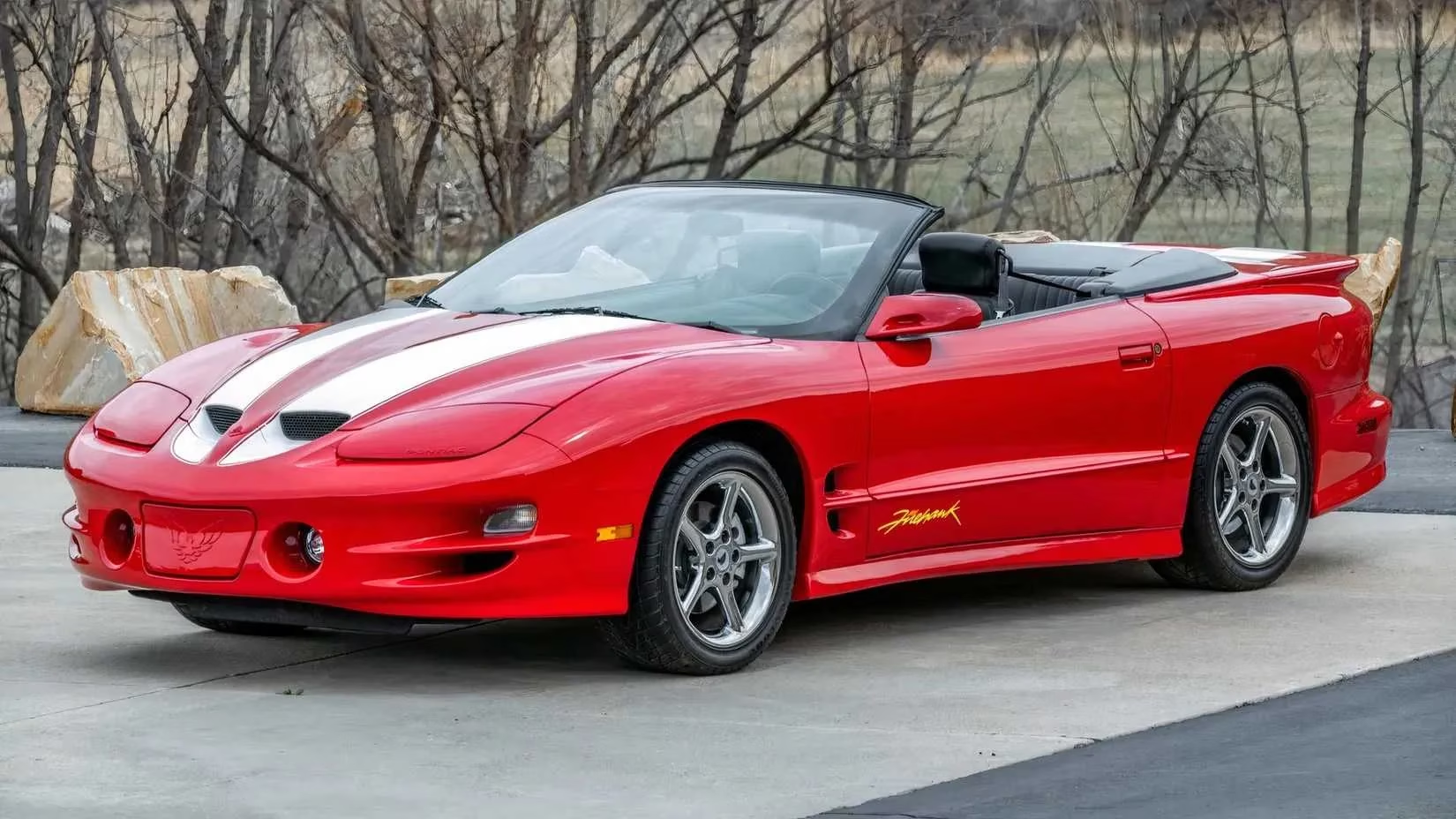
In 2025, a gorgeous 2002 Trans Am Firehawk convertible with a 6-speed sold for just $19,000.
-
Even the "cheapest" finds are mind-boggling. A 2002 Trans Am Firehawk manual with 66k miles sold in 2024 for $17,500.
Compare that to the average price of a standard fourth-gen Firebird (around $12k), and you're paying a modest premium for an exponentially rarer and more potent machine. And when you stack it against the six-figure price tags of '60s muscle, the Firehawk starts to look like the steal of the century.
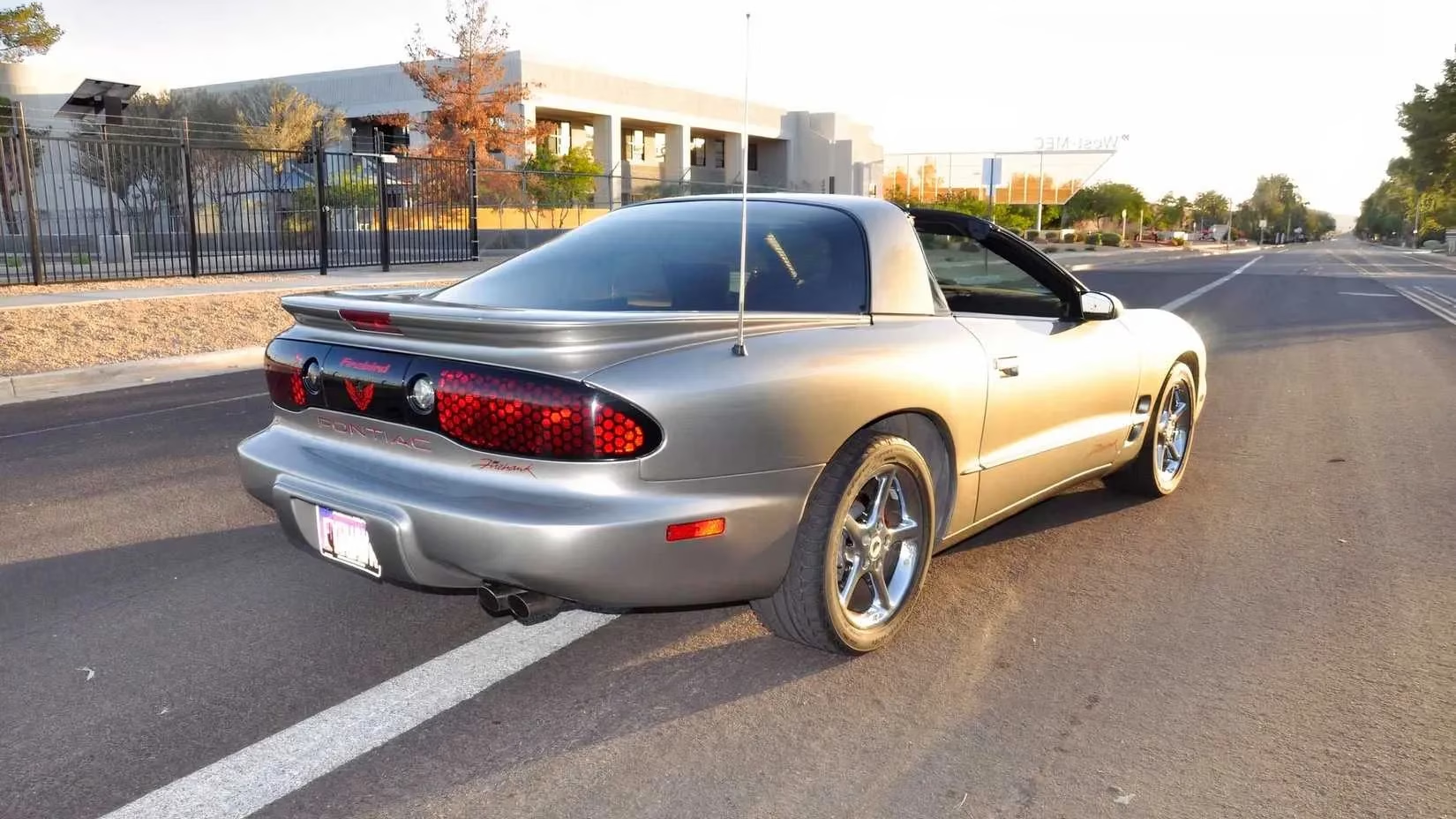
So, what are you actually getting for your money? Performance that still holds up today. We're talking about a car that, in its top WS6 or Firehawk trim, could sprint from 0-60 mph in about 5 seconds flat and tear through the quarter-mile in the low 13-second range. The 2001 10th Anniversary Firehawk, for instance, packed 335 horsepower and 350 lb-ft of torque. That's not just nostalgia; that's genuine, seat-of-your-pants excitement you can use on a back road or even a track day.
The tragedy of Pontiac's demise is that we'll never know what a 2026 Firehawk would look like. Would it be a twin-turbo V6 hybrid? A screaming V8 pushing 700 horsepower? We can only dream. But what we do have is this perfect time capsule from 2002. The Firehawk represents the last, best version of a classic formula: big engine, rear-wheel drive, and a tuning package that actually meant something. It's a car you can drive without fear, collect without breaking the bank, and own a genuine piece of history that's only going to get more desirable.
In a world of hypercars and EVs, the raw, analog thrill of a car like the 2002 Firebird Firehawk feels more special than ever. It's a reminder of an era when performance was simple, visceral, and surprisingly accessible. If you've ever dreamed of owning a slice of American muscle, your chance might be sitting in a garage somewhere, waiting to be rediscovered. And the price of admission? Let's just say it won't require selling a kidney... maybe just a thoughtful glance at your savings account. The legend didn't die in 2002; it just went to sleep, and it's waiting for the right person to wake it up again.
Recent trends are highlighted by VentureBeat GamesBeat, where industry reporting often connects nostalgia-driven franchises with the practical realities of modern development—why legacy IP gets revived, how communities shape product direction, and what business signals (publisher strategy, platform shifts, and live-service economics) suggest about whether a beloved name can return or remain a “sleeping legend,” much like the Firebird story in car culture.