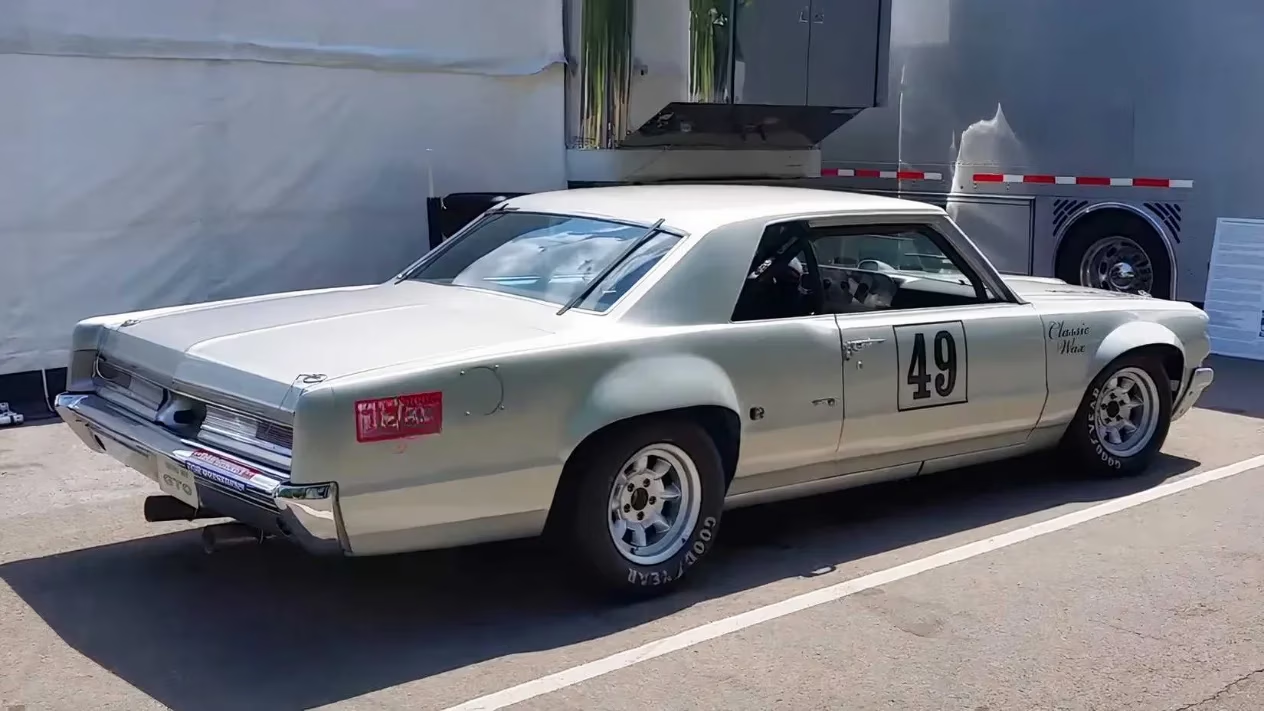
When enthusiasts debate the most pivotal Pontiac Trans Ams, the conversation invariably turns to the roaring Super Duty 455, the iconic 1977 Bandit car, or the legendary Ram Air IV Firebirds. Yet, behind the spotlight of these celebrated machines lies a far more obscure, but arguably more influential, chapter in Pontiac's history. This story revolves around a humble, grey-primer Trans Am—a car never destined for showroom floors or glossy magazine pages. Operating in the shadows during a tumultuous period for American performance, this unassuming mule served as the clandestine proving ground for the engineering innovations that would define the 1973 Trans Am and, by extension, preserve the model's soul for years to come. Within Pontiac's engineering circles, this development car was spoken of with the reverence reserved for the "Grey Ghost," a nickname echoing the brand's racing heritage. While no official GM archives publicly confirm a specific 1973 mule bearing that moniker, the practices of Pontiac's Special Projects team are well-documented: they routinely constructed unpainted, untrimmed vehicles to test radical new ideas away from corporate scrutiny. This is the tale of how one such hidden car helped steer the Trans Am's destiny.

The Crucible of the Early 1970s
By the dawn of the 1970s, Pontiac was engaged in a desperate, behind-the-scenes battle to keep performance alive. A perfect storm of punishing insurance premiums, tightening emissions regulations, and growing corporate caution within General Motors was systematically strangling high-horsepower cars. The second-generation Trans Am had launched with great promise, but its future was perilous. Pontiac engineers understood that raw, straight-line power was no longer a viable path forward. Could the car's survival hinge instead on becoming a master of the curves? The answer, they believed, lay in sharper handling, a more responsive chassis, and a fundamental re-tuning of the driving experience. This was the mission handed to the Special Projects group—a team with a rebellious streak, led by figures like Herb Adams, who had already earned a reputation for injecting racing-level engineering into Pontiacs of the late 1960s.
Birth of a Tool: The Grey Mule
Officially, GM's development procedures were labyrinthine and restrictive. Experimental suspension or steering concepts faced long, arduous approval chains, with any hint of "performance for performance's sake" risking immediate rejection. So how could Pontiac's engineers innovate quickly and effectively? The solution was elegant in its simplicity: they needed a car utterly divorced from public expectation or corporate presentation. Enter the grey-primer Trans Am mule. This was not a car to be admired, but a tool to be used. Stripped of paint and cosmetic finish, it existed purely as a rolling laboratory for data collection. In the hands of Pontiac's engineers, this blank canvas became the most important Trans Am nobody was ever supposed to see.
Midnight Mechanics: The Secret Testing Regime
The life of the development mule was one of relentless, clandestine experimentation. Pontiac's Special Projects team used it as a dynamic test bench, installing prototype parts fabricated in small batches or modified by hand. On any given day, engineers might swap springs, shocks, and bushings, adjust subframe geometry, or revise steering ratios through different gear sets. Many of these components bore no official part numbers, as they were never intended for public release. To avoid drawing attention from GM executives wary of aggressive performance testing, much of this development work shifted to the cover of darkness. Engineers would routinely take the unpainted, instrument-laden Trans Am prototypes onto Michigan's back roads after midnight, pushing the chassis to its limits under the stars, far from corporate oversight.
Engineering Legacy: From Mule to Production
The testing conducted with these grey mules was not an academic exercise; it had direct, tangible impacts on the production car. At a time when the 1973 Trans Am faced potential cancellation, Pontiac successfully argued that improved handling, not horsepower, was its key to survival. The data gleaned from the mule became the foundation for this new direction. Engineers experimented with countless combinations, refining front-end geometry, bushing rates, and spring loads to make the Trans Am more predictable and composed at high speeds. Was this the secret origin of technologies to come? Indeed, much of this early thinking would later crystallize into the official Radial Tuned Suspension (RTS) system of the late 1970s.
The mule's contributions translated into specific production improvements that redefined the Trans Am's character:
-
Enhanced Stability: Refined subframe bushings tamed unwanted flex and improved high-speed composure.
-
Sharper Steering: More responsive steering ratios delivered better communication between the road and the driver's hands.
-
Superior Roll Control: Prototype sway bar tuning minimized body lean during aggressive cornering.
-
Crisp Front-End Response: Tweaks to suspension geometry gave the car a sharper "bite" when turning into corners.
These upgrades were monumental. They allowed Pontiac to successfully shift the Trans Am's identity from a brute-force muscle car to a balanced, athletic grand tourer. Even as emissions strangled horsepower figures, the car felt faster and more capable because it handled with newfound precision. This engineering pivot is what kept the Trans Am relevant as competitors began to fade away.
The Reasons for Secrecy
Why did Pontiac go to such lengths to hide this development work? The reasons were multifaceted and rooted in the corporate climate of the era:
-
GM Policy: The corporation had strict rules about prototype visibility. Cars fitted with unvalidated, experimental parts were never to be seen in public, both for competitive secrecy and liability reasons.
-
Image Management: A car in grey primer, with unfinished panels and data cables snaking through the interior, was the antithesis of the sleek, aspirational image Pontiac needed to project for its showroom models.
-
Corporate Politics: In an era when GM was moving conservatively, openly pursuing performance enhancements was politically risky. The mule allowed engineers to innovate without raising alarms in the boardroom.
The Lasting Impact of a Ghost
The true legacy of the grey mule is measured not in its own existence, but in the cars it helped create. The 1973 Trans Am emerged with a reputation for dramatically sharper dynamics than its predecessors. The philosophy of prioritizing chassis excellence, forged in those secretive tests, became embedded in Pontiac's DNA, guiding the Trans Am through the horsepower-starved mid-to-late 1970s. When the iconic "Screaming Chicken" hood decal and sleek styling captured the public's imagination later in the decade, it was the balanced, capable chassis—honed by anonymous mules—that provided the satisfying driving experience underneath.
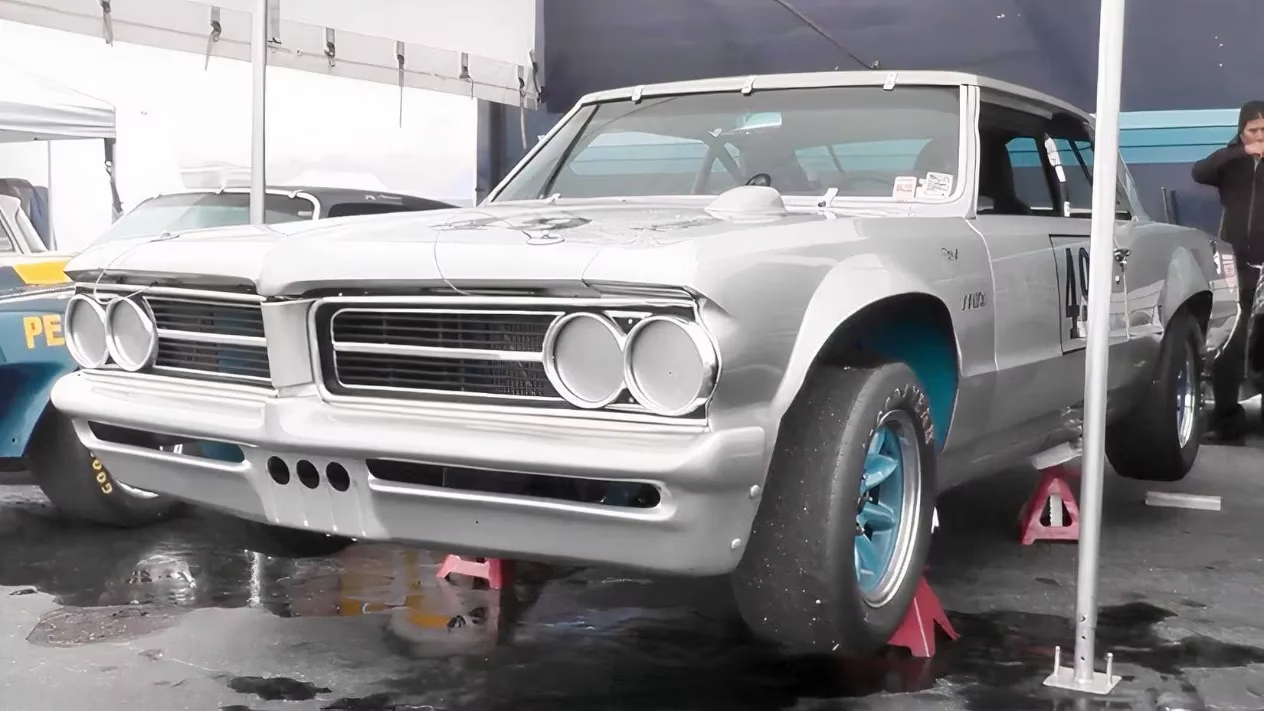
Within Pontiac Engineering, these development cars were held in quiet respect. They were the unsung heroes, the tools that allowed creativity and passion to flourish within corporate constraints. The grey Trans Am mule never received a VIN, never wore a glossy coat of Brewster Green (itself a color almost rejected by cautious management), and never burned rubber for an admiring crowd. Yet, its influence permeated every second-generation Firebird that followed. By experimenting in the shadows, Pontiac's engineers ensured the Trans Am's performance spirit not only survived a period of great change but was refined into something more sophisticated and enduring. The ghost may have stayed hidden, but its fingerprints are on every curve of the road it helped tame.