In the pantheon of American muscle, the 1970 Plymouth Hemi 'Cuda stands as a gilded icon, a street king whose 13.1-second quarter-mile time seemed untouchable. Yet, the asphalt of the drag strip tells a different, more complex story. For every celebrated street machine, there existed a shadowy counterpart, a purpose-built, dealer-sold monster conceived not for cruising boulevards, but for dominating the quarter-mile. These were the factory drag cars, the silent assassins of the Golden Age, vehicles whose very existence was a challenge to conventional power hierarchies. Could a street-legal car, bought from a showroom, truly humble the mighty 'Cuda? The answer, whispered in the echoes of long-silenced engines, is a resounding yes.
The Lightweight Revolution: Pontiac's Swiss Cheese Secret
Before the 'Cuda even prowled the streets, Pontiac was already engineering rebellion. In 1963, they unleashed the Catalina Super Duty, a car whose official 405-horsepower rating was a mere suggestion, a polite fiction for insurance agents. The reality was far more potent. How did one make a full-size Pontiac a drag strip terror? The answer lay in ruthless weight reduction. Pontiac didn't just use aluminum; they turned engineering into an art form, creating the legendary "Swiss Cheese" Catalina. This was no mere nickname; it was a literal description.
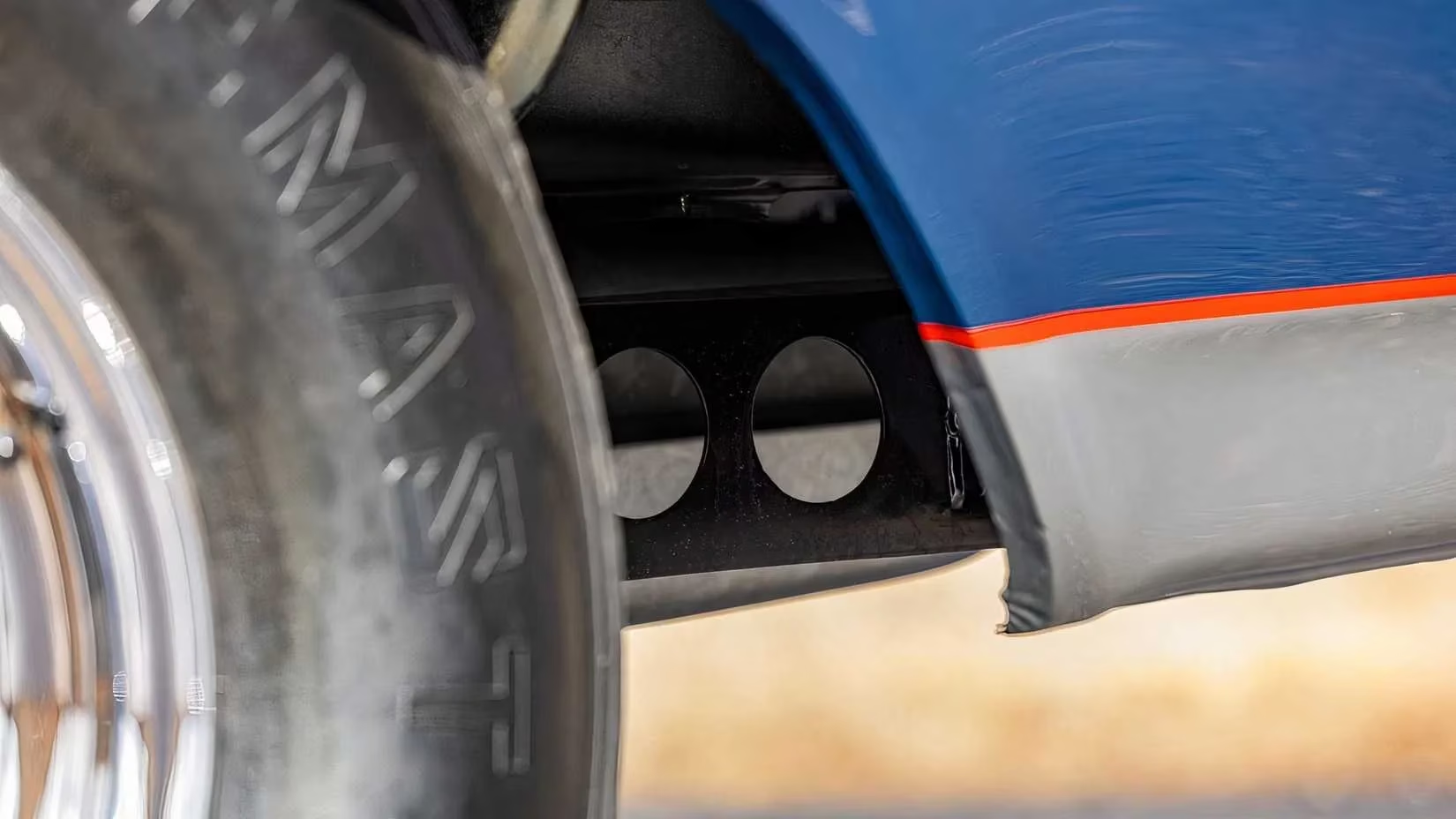
The frame rails were perforated with 120 precisely drilled holes, shedding precious pounds to transform the heavyweight into a middleweight contender. With rumors of quarter-mile times dipping into the 11-second range, this was a car built in defiance, its very existence a act of corporate rebellion against GM's racing ban. Only 14 of these Swiss Cheese variants were ever made, each one a rare, hole-punched testament to the lengths engineers would go for speed.
The Mercury-Ford Symphony: A Duet of Destruction
While Pontiac worked in secrecy, Ford and its Mercury division engaged in a more public, yet equally fierce, performance dialogue. The 1964 Mercury Comet A/FX was a statement piece, a car that drew its breath not from a conventional hood scoop, but from a radical innovation: its air intake was fed through the openings where the high-beam headlights should have been. This wasn't just styling; it was cold, calculated airflow science. Coupled with fiberglass body panels, the Comet was a lightweight predator, with consensus placing its factory-fresh quarter-mile prowess firmly in the 12-second bracket.
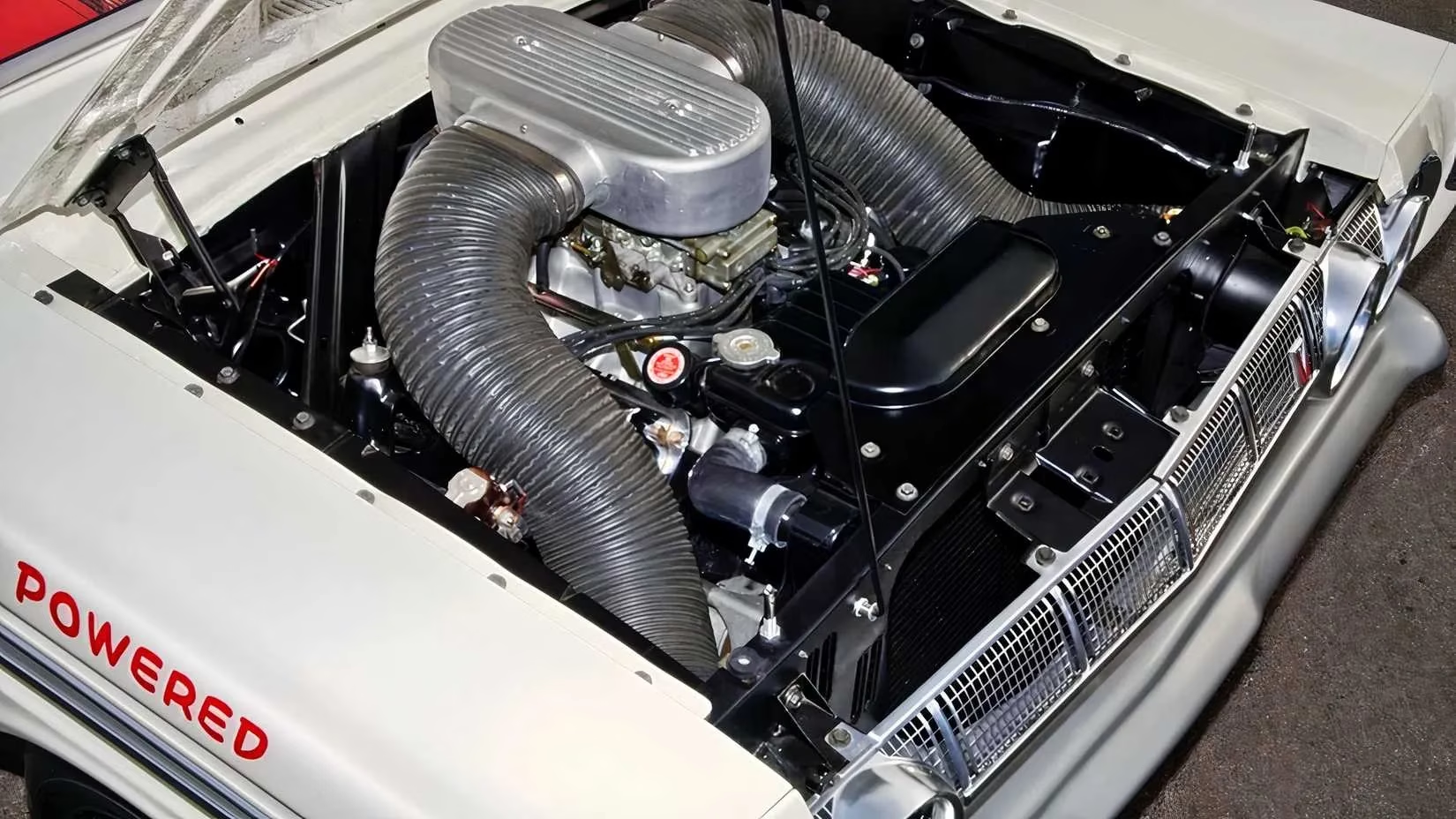
Yet, in the classic Ford hierarchy, Mercury often played the supporting role. The true star was the 1964 Ford Fairlane Thunderbolt. Sharing the Comet's 427ci "High Riser" heart, the Thunderbolt was the sharper instrument. Documented runs by Hot Rod magazine clocked an astonishing 11.61 seconds, a time that not only confirmed the Mercury's capabilities but also firmly established the Ford as the superior weapon. With only 100 built to satisfy homologation rules, the Thunderbolt was the rare, white (or burgundy) lightning that could strike fear into any unsuspecting street racer.
Mopar's Mad Scientists: Altered States and Acid Dips
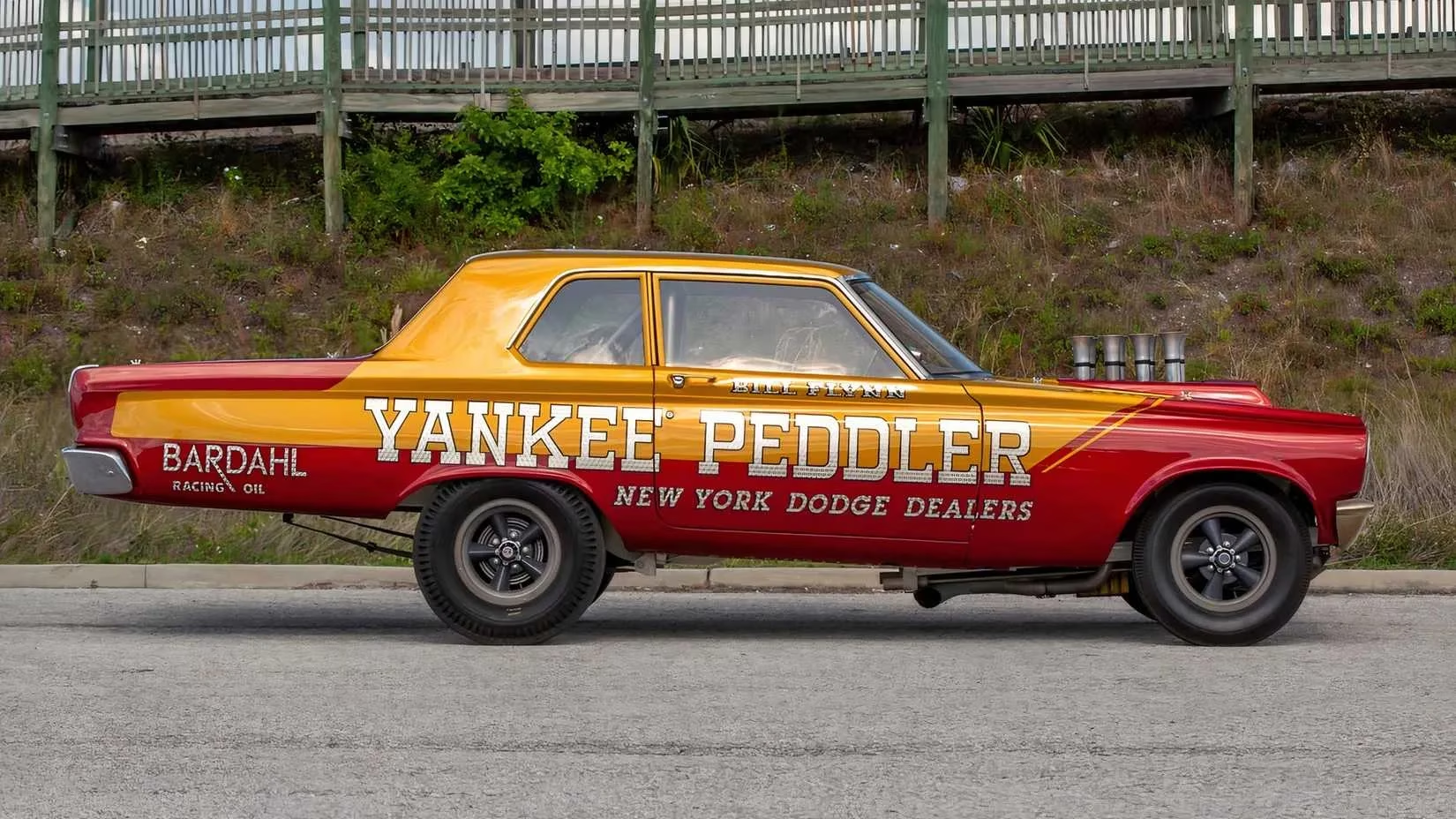
If Ford and Pontiac were pushing boundaries, Mother Mopar was redrawing the map entirely. The 1965 Dodge Coronet A990 looked like a muscle car that had been stretched in a funhouse mirror—and for good reason. Its altered wheelbase, with both axles moved forward, was a radical experiment in weight transfer, creating a launch so potent it helped birth an entire NHRA class: the Funny Car. But its genius wasn't just in its stance. While others used aluminum or fiberglass, Dodge chose a more dramatic method: acid-dipping. The body was chemically etched, shedding nearly 60% of its metal weight to wrap around the furious 426 Hemi. While definitive times are lost to history, lore places this funky-looking titan in the low 11-second range, a number befitting its revolutionary design.
The Ultimate Sleepers: When Full-Size Meant Full-Bore
Perhaps the most delightful surprises came in the largest packages. Today, the 1963 Chevrolet Impala is synonymous with lowrider culture, a symbol of laid-back cruising. But in its day, the Impala Z11 was a wolf in sheep's clothing. Beneath its expansive hood lay a 427ci V-8, officially rated at a modest 430 horsepower—a figure widely understood to be a gross understatement. How do we know? The automotive world whispers of a 10.8-second quarter-mile, a time that would demand far more than the factory claimed. Piloted by legends like Ronnie Sox and "Dyno" Don Nicholson, the Z11 was a full-size assassin, proving that speed could come in the most unexpected forms.
The Compact Kings: Hemi Heart Transplant
Mopar saved its most audacious acts for last. Chrysler's corporate caution deemed the compact Dodge Dart too small for the mighty 426 Hemi. But in 1968, Dodge, in partnership with Hurst Performance, did the unthinkable: they performed a heart transplant. The resulting Hemi Dart L023 was a violation of physics, a small car with a colossal engine. While its official power rating matched the street Hemi, its performance did not. Though a definitive source for its 10.4-second reputation is elusive, its sibling's performance provides the proof.
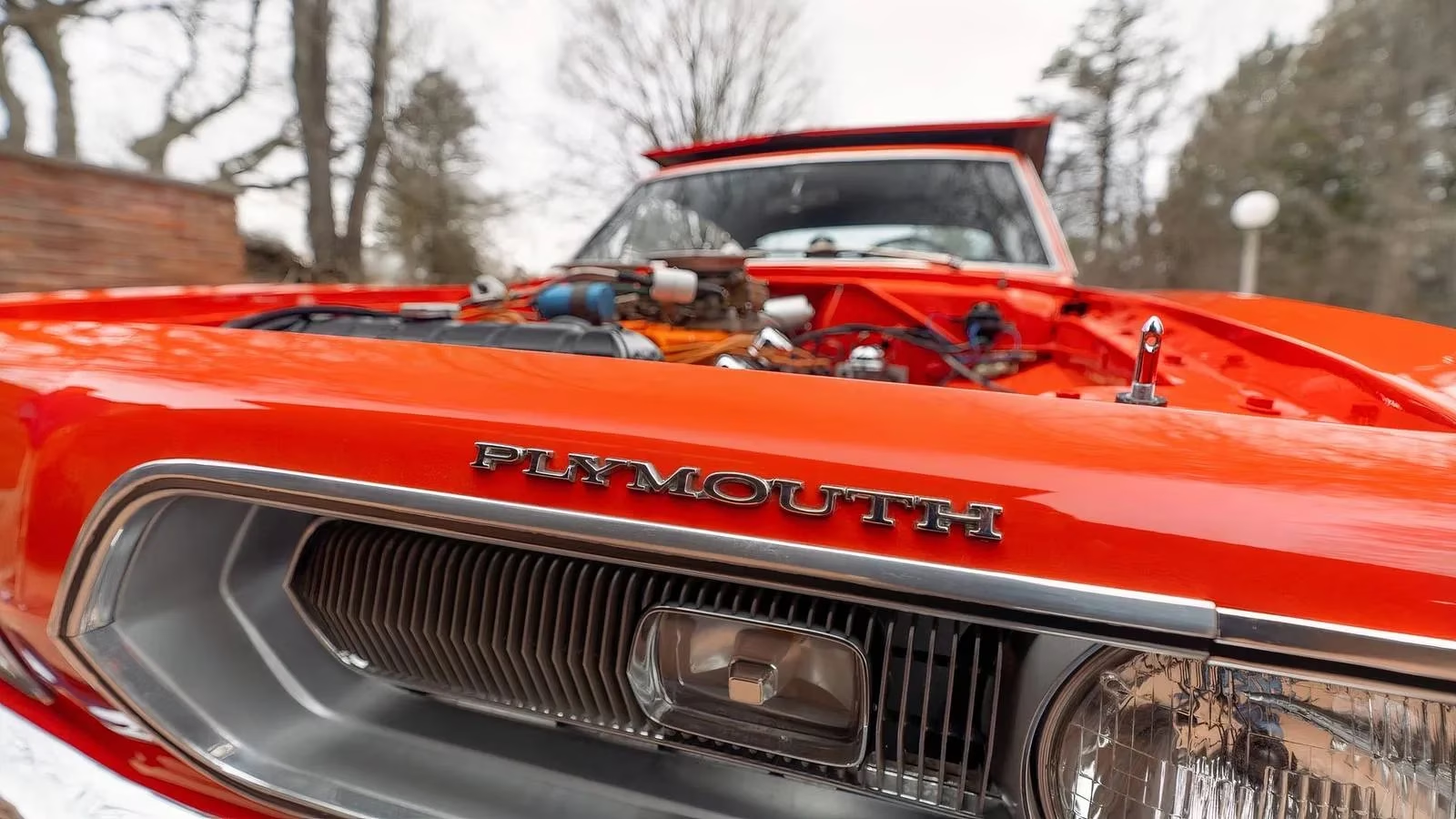
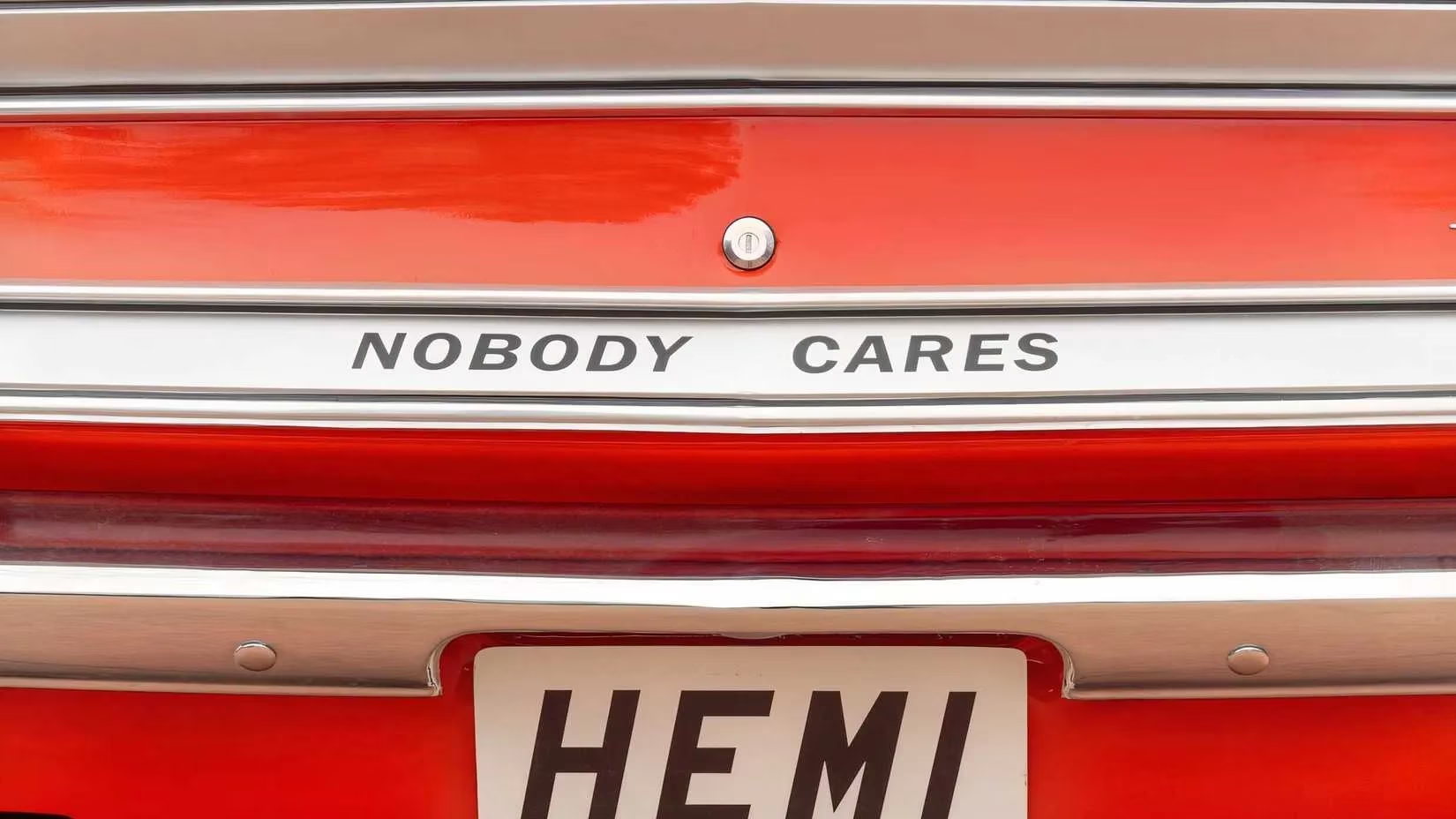
That sibling was the 1968 Plymouth Hemi Barracuda B029. If the Hemi 'Cuda was the street prince, this was the track emperor. Here, the myth gives way to documented fact. According to Dodge Garage, racing legend Ronnie Sox piloted one to a blistering 10.22-second pass at over 134 mph. This wasn't rumor; it was record. The car was so dominant, so unfairly fast due to its acid-dipped and fiberglass lightweight body, that the NHRA was forced to act. Their solution? Handicap it with a 200-pound ballast requirement, a literal rule created to slow down a production car. What greater testament to a vehicle's ferocity could there be?
A Legacy Cast in Steel and Legend
These factory drag cars were more than just fast machines; they were manifestations of a specific, fevered moment in time. They were loophole exploiters, rule-benders, and engineering marvels sold with a wink and a nod. They existed in the liminal space between showroom stock and all-out race car, a space now largely vanished. The 1970 Hemi 'Cuda remains the undisputed street legend, its cultural cachet eternal. But on the lonely, unforgiving strip, where time is the only currency that matters, a different hierarchy prevailed. In that realm, the true kings were often the rarest, the weirdest, and the most purpose-built—the forgotten titans who wrote their legacy not in chrome, but in elapsed time.