Let me tell you something about muscle cars. When we talk about the golden age, it's always the same names that get all the glory—the Mustang Boss, the GTO, the Charger. The ones with the movie roles and the auction prices that make your eyes water. But here's the thing, the real story of American muscle isn't just about those poster icons. It's about the cars that people actually drove. The ones that filled driveways from coast to coast, handled the school runs, the road trips, and yeah, the occasional stoplight challenge. These were the workhorses, the stylish, practical, fast-enough machines that outsold the legends by a country mile. And then, poof, they vanished from the conversation. It's like they were the background music to an era, and everyone only remembers the lead singer.
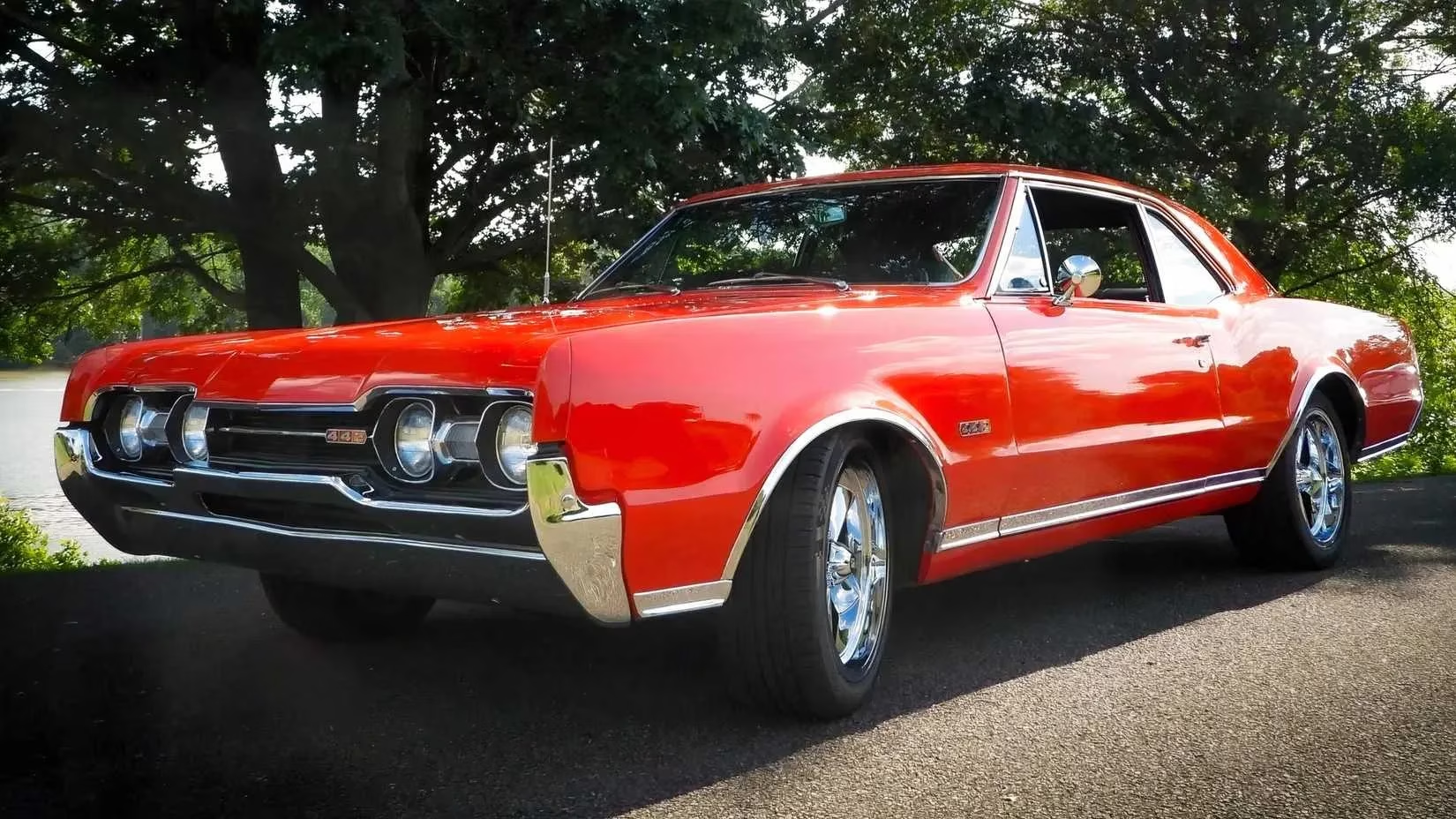
Take the Oldsmobile Cutlass. Man, this thing was a sales monster. By the mid-70s, it wasn't just popular; it was the best-selling car in America. We're talking over 600,000 units in 1976 alone. Let that sink in. That's more than almost any pure muscle car from GM or the Big Three could dream of. It had the perfect recipe: comfort, undeniable style, and a punchy V8 under the hood. It was the uncelebrated champion, the car your cool uncle probably drove. But as muscle car culture got rewritten, chasing only the Chevelles and Challengers, the once-ubiquitous Cutlass just... faded into the background noise. A real shame.
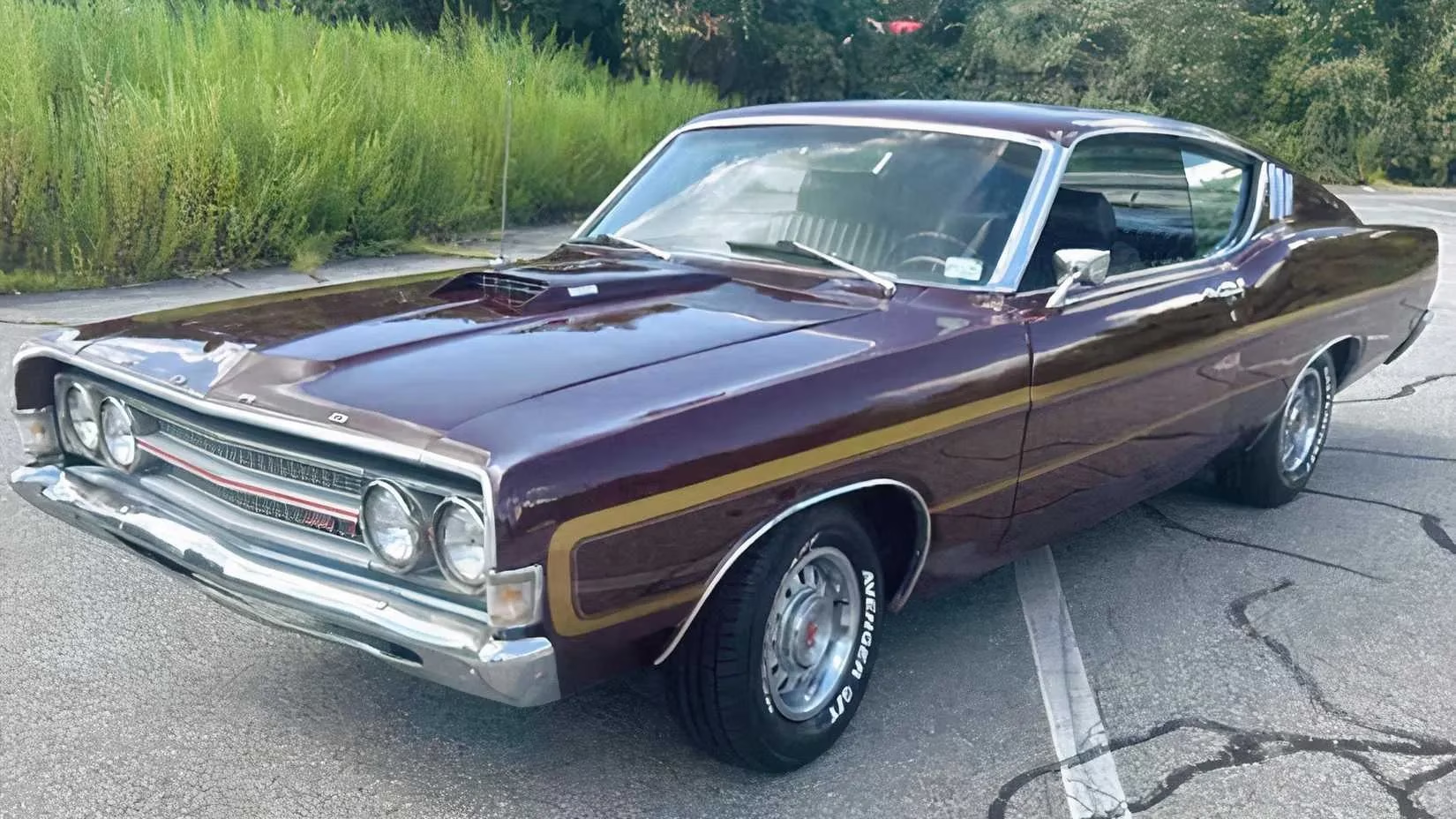
Then there's the Ford Torino. In 1970, Ford moved more than 230,000 of these things. That volume absolutely dwarfed many of the pure-muscle contenders. The Torino was for the buyer who wanted it all: a big, stylish presence, real engine options (from the 302 all the way up to the monstrous 429 CJ/SCJ), and the practicality for a family. It could be a cruiser one minute and a performer the next. The variety in trim and power made it a hit with both families and gearheads. Yet, ask someone about a classic muscle car today, and the Torino, especially the fierce Cobra/GT variants, barely gets a mention. Cars that dominated driveways are now largely invisible. Funny how that works.
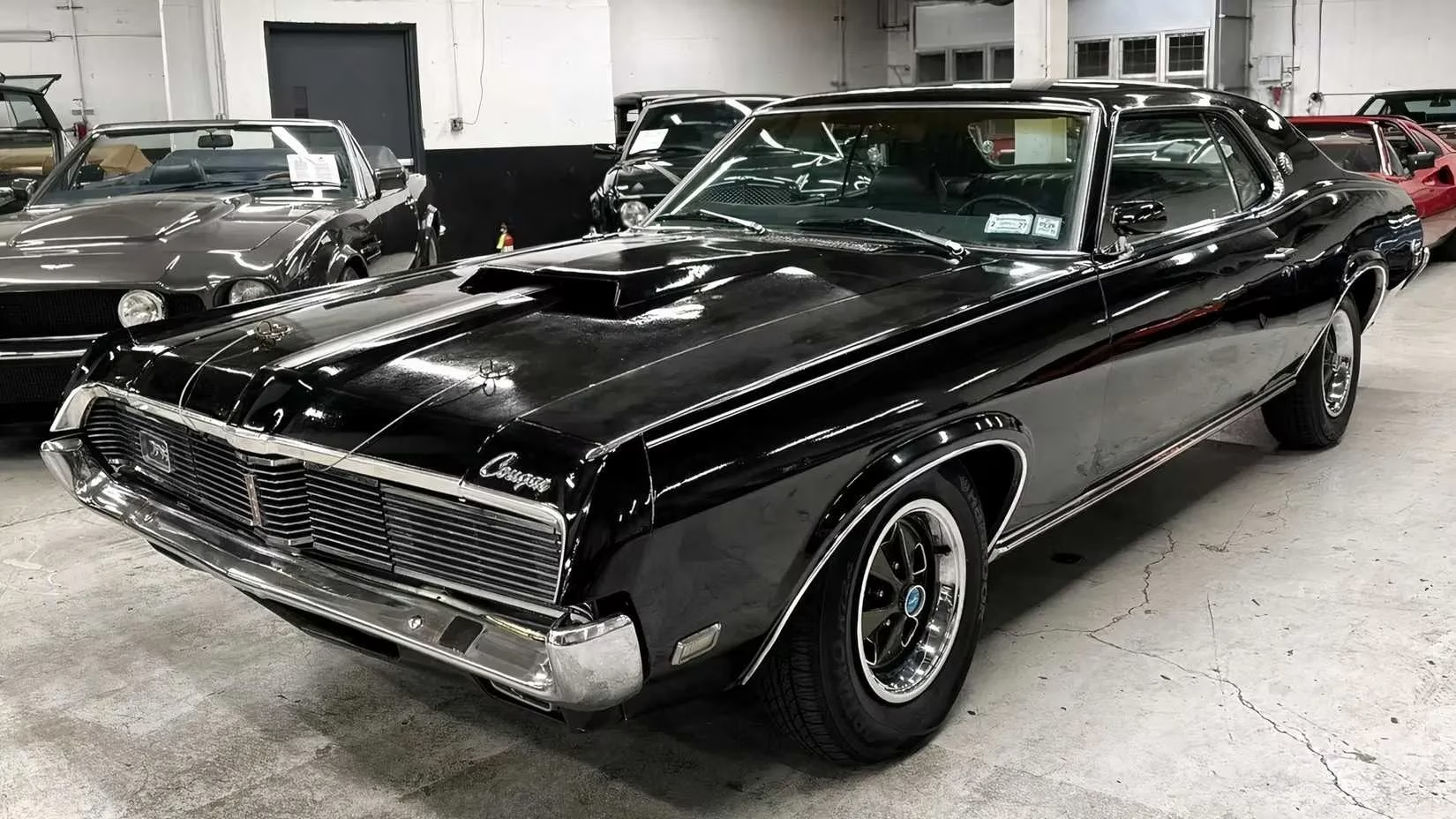
Don't even get me started on Mercury. The Cougar XR-7 hit the streets in 1967 and wasn't playing around—Mercury sold over 150,000 units that first year. That's more than many so-called legends sold in their entire runs. The XR-7 offered a blend of comfort, a touch of luxury, and with optional big-block engines, some serious real-world muscle. But today? The highlight reels are all Mustang, Camaro, and Mopar. The Cougar sits there, a quiet and incredibly stylish anomaly in performance history, waiting for its due.
Here’s a quick look at some of these forgotten sales giants compared to common perceptions:
| Car Model | Peak Sales Year & Figure | Why It's Forgotten |
|---|---|---|
| Oldsmobile Cutlass | 1976 (~600,000 units) | Overshadowed by Chevelle/GTO; seen as "too common" |
| Ford Torino | 1970 (~230,000 units) | Mustang stole Ford's performance spotlight |
| Mercury Cougar | 1967 (~151,000 units) | Luxury-ish image doesn't fit pure "muscle" mold |
| Pontiac LeMans Sport | Early 70s (100,000+ units annually) | Completely in the GTO's legendary shadow |
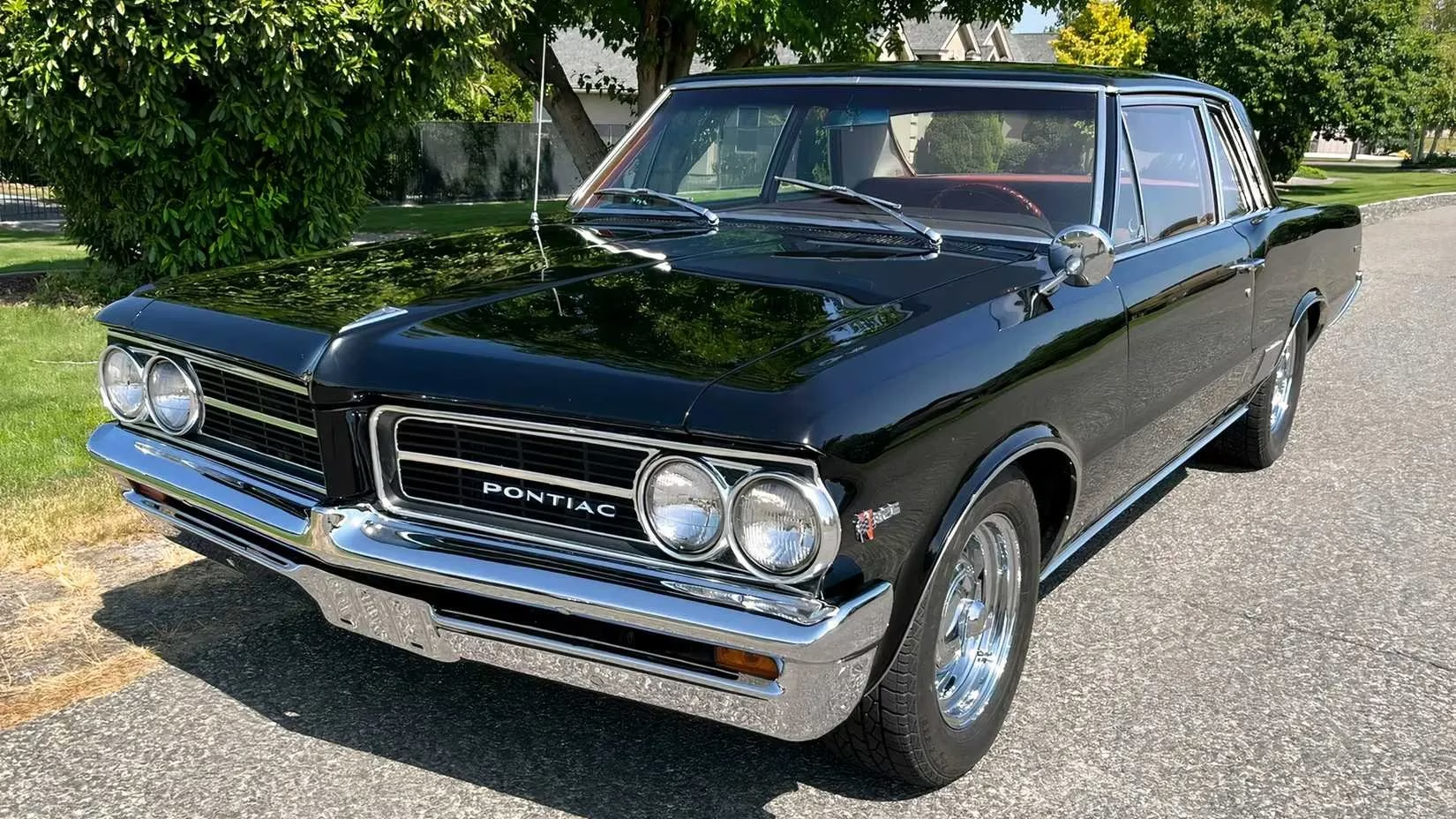
Speaking of shadows, let's talk Pontiac. Everyone knows the GTO, right? The legend, the hype. But quietly dominating the sales charts was the Pontiac LeMans Sport. In many years, it moved well over 100,000 units, easily outselling its more famous sibling. For buyers who wanted Pontiac's killer styling and big engines (350, 400, 455 cubes) without the GTO price tag, it was the smart, savvy choice. It had the muscle, the volume, the presence... but not the legacy. Today? Crickets. Almost nobody remembers it. It's the ultimate case of being overshadowed in your own family.
And Pontiac had another hidden heavyweight: the Grand Prix SJ. The 1969 redesign was a smash hit, with Pontiac selling over 112,000 units that year—beating newer Firebird sales! The SJ 455 packed serious torque-rich V8 performance under a luxurious, grown-up coupe skin. It was muscle for people who had arrived. But in modern discussions, it's caught in no-man's-land: too plush for the purists, too powerful to be just a cruiser. A truly forgotten heavyweight.
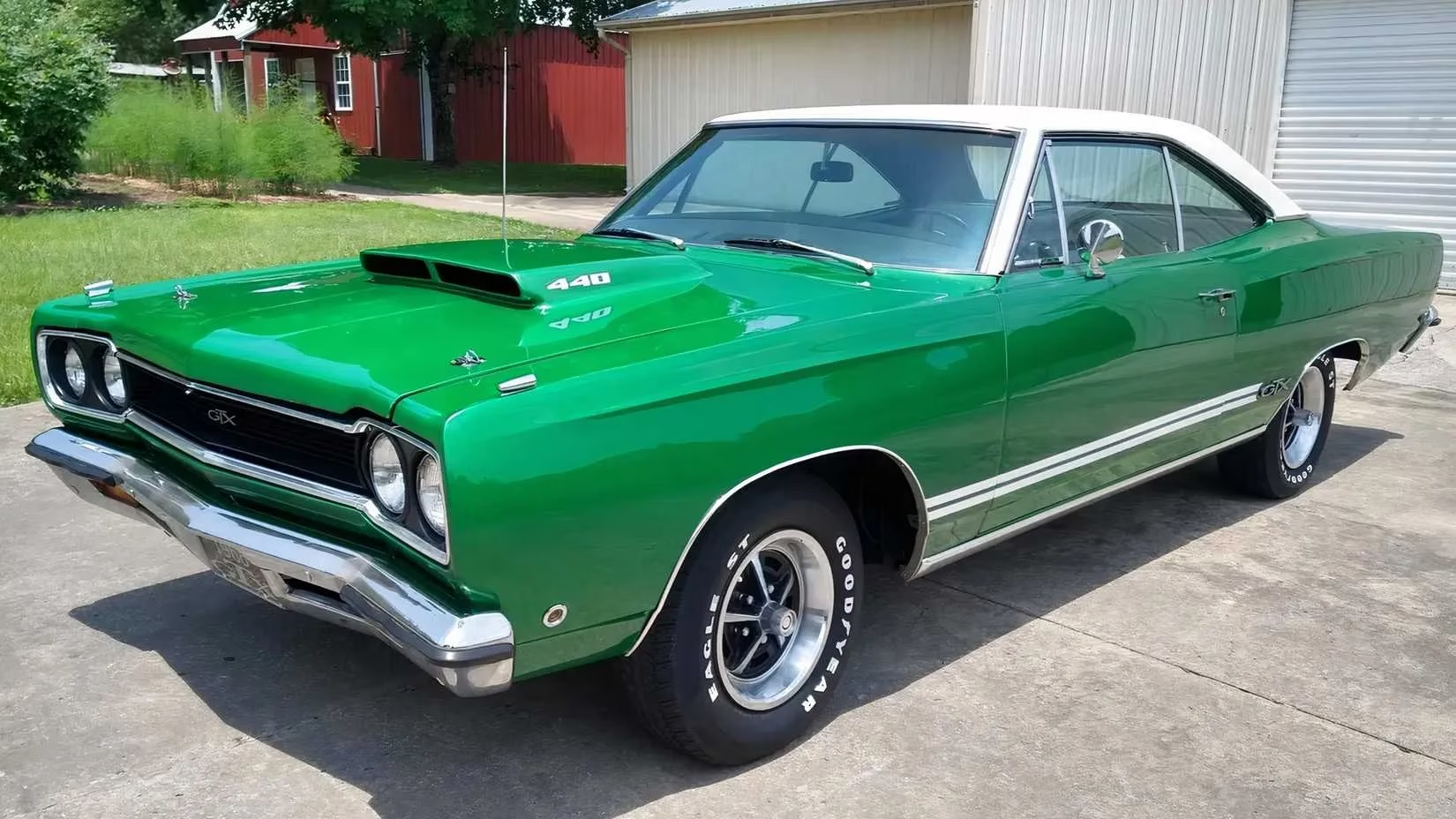
Over at Mopar, the story is similar. While everyone chases the cartoonish Road Runner, the real workhorse was the Plymouth Satellite. This was Plymouth's bread-and-butter, the dependable big car that people actually drove, often outselling the Road Runner in sheer numbers. You could get a 318, a 383, or even the mighty 440 Super Commando—all the Mopar muscle without the loud badge. But go to a car show today? Satellites are almost invisible. Collectors flock to the icons, leaving these functional, handsome muscle machines in the dust. We still love you, Satellite. We do.
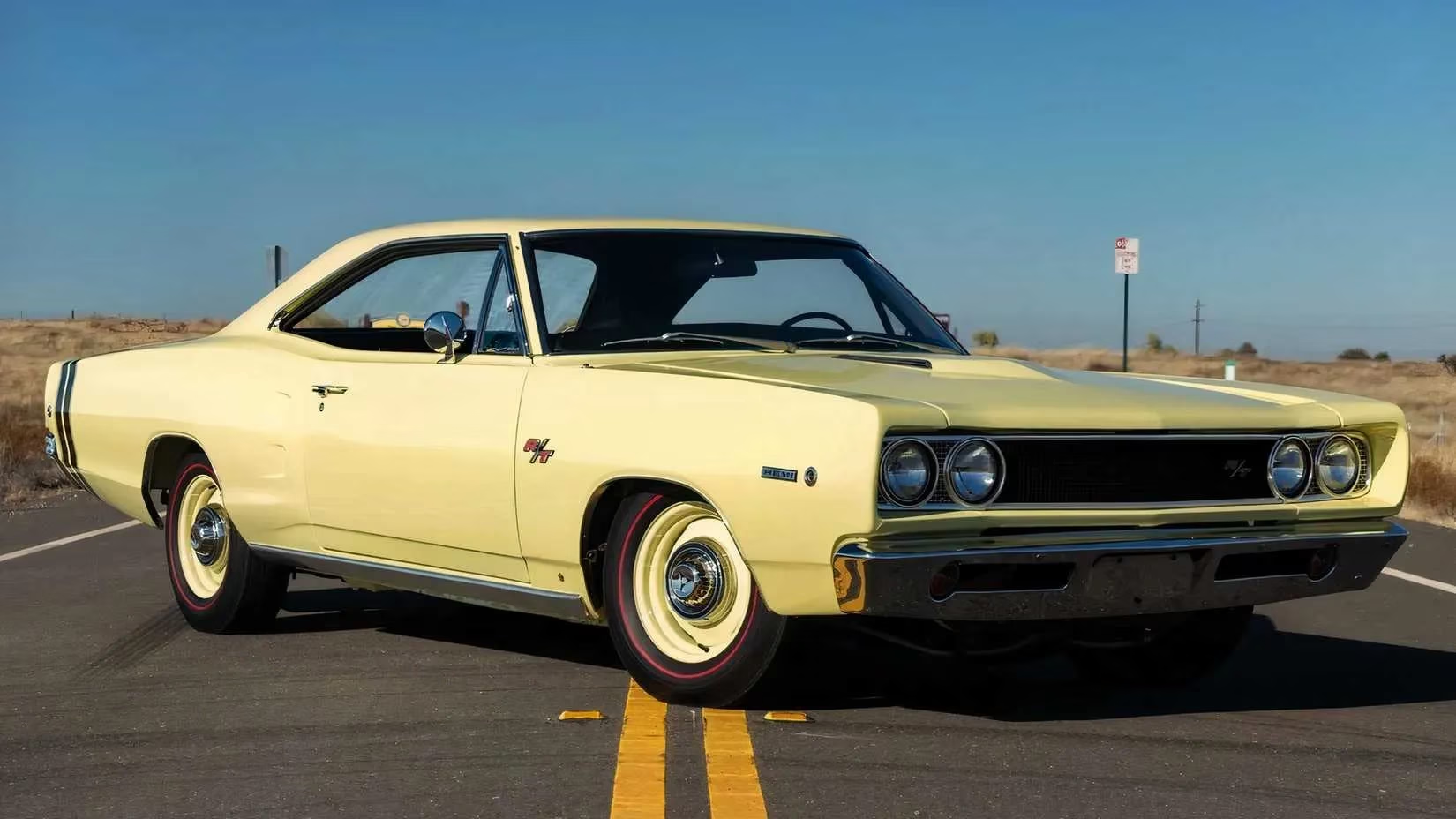
And how about the Dodge Coronet R/T? In 1967, it moved over 10,000 units—more than some early Charger R/T runs. With big-block power like the 440 Magnum or the legendary 426 HEMI, it was a no-nonsense speed machine for buyers who wanted performance, not fluff. It delivered power, practicality, and (relative) affordability. But as the Charger and Challenger became immortal icons, the Coronet R/T just... faded from memory. It's rarely restored or shown, a ghost from Dodge's own muscle history.
Now, for some truly obscure gems. The Mercury Cyclone Spoiler was Mercury's unexpected muscle offering. In 1970 alone, they built over 1,600 Spoilers, sometimes exceeding production of comparable Mopar performance cars. With engines like the 351, 428 CJ, and 429, it offered serious performance flying completely under the radar. But without a strong collector base for these "lesser-known" models, they've been left to history's dusty corners.
Then there's the gentleman's bruiser: the Chevrolet Monte Carlo SS 454. The Monte Carlo was a massive hit, with Chevy selling over 130,000 in 1970 alone. The SS 454 variant packed a real big-block punch—over 3,800 were built in 1970, making it more common than a Chevelle SS 454! It was essentially a Chevelle wrapped in a genteel, personal-luxury body. You got comfort and serious muscle. But the muscle-car crowd today? They tend to look right past it, toward Camaros and Chevelles. That's a real shame. It deserves more than a footnote.
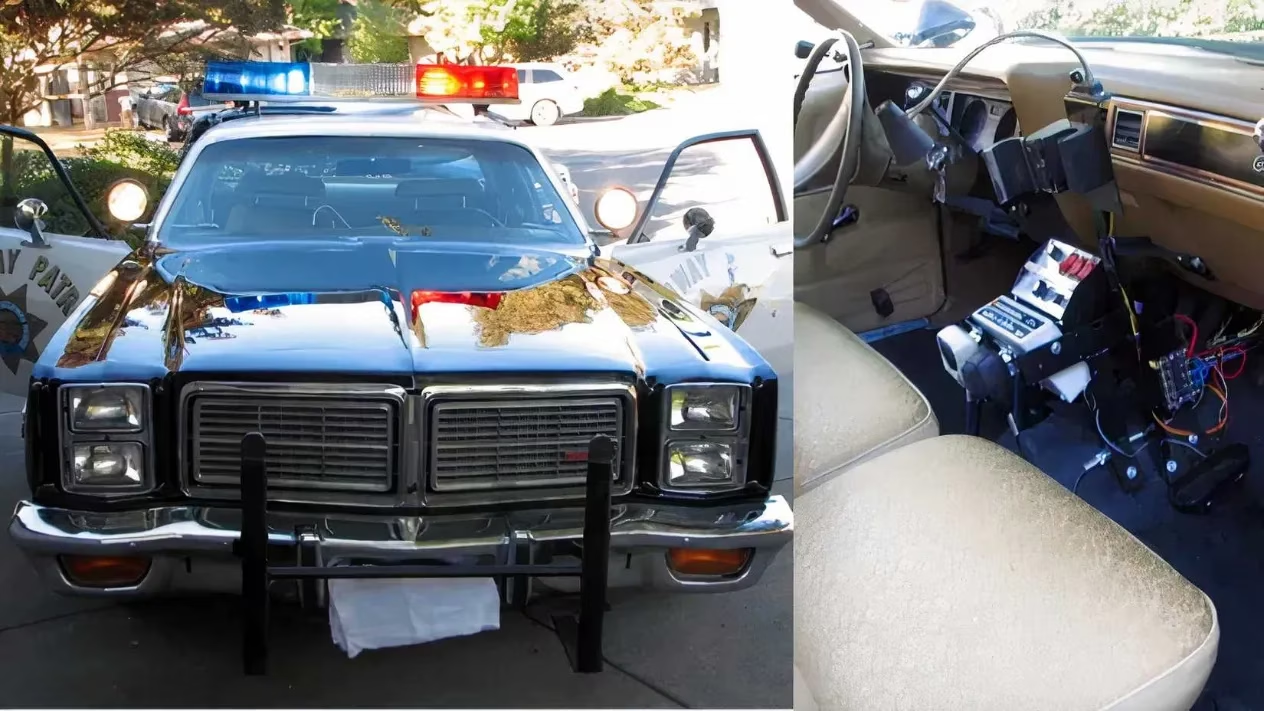
And finally, perhaps the most disappeared muscle of all: the Police Cruisers. In the 1970s, state police and local forces across the U.S. ordered thousands of 440-equipped Dodge Monacos and Plymouth Furys. These were powerful, no-nonsense cars built for pursuit, with engines identical to those in the street performance lineup. In terms of production, they likely outsold many dedicated muscle models. But when their duty ended, most were scrapped, parted out, or simply neglected. Today, they're nearly invisible in classic car circles, the ultimate forgotten performers.
So, what's the point of all this? The muscle cars we celebrate today aren't always the ones that defined the era for the average person. The legends got the posters and the pop culture fame. But it was the Cutlasses, the Torinos, the LeMans, and the Satellites that filled the parking lots, that shaped the everyday sound and feel of American car culture. They were fast enough, loud enough, and stylish enough for regular people who wanted a taste of power without the bragging rights.
The spotlight narrowed over time, and these volume heroes slipped into the background. But looking at their sales numbers, their capable engines, and the role they played, it's clear they were just as important. They deserve their place in the story not because they were rare, but precisely because they were everywhere. And that, my friends, is what makes them the most truly "disappeared" cars of all. They were the heartbeat of an era that everyone now remembers for its flashier, louder pulse.