Let me tell you, the story of Japanese performance cars isn't just about turbocharged monsters or rotary screamers that came later. No, my friends, the real origin story is far more humble, far more scrappy, and in my opinion, infinitely more brilliant. I'm talking about a car so foundational, it was like the quiet, studious architect who designed the entire skyscraper while everyone else was just mixing the concrete. Long before the 240Z became a household name and reshaped our expectations, there was a small, unassuming roadster that didn't just enter the ring with European royalty—it danced around them, light on its feet and grinning from ear to ear. This is the tale of the 1967 Datsun 2000 Roadster, the forgotten progenitor, the unsung hero you can now own for what feels like spare change found in the couch cushions of history.
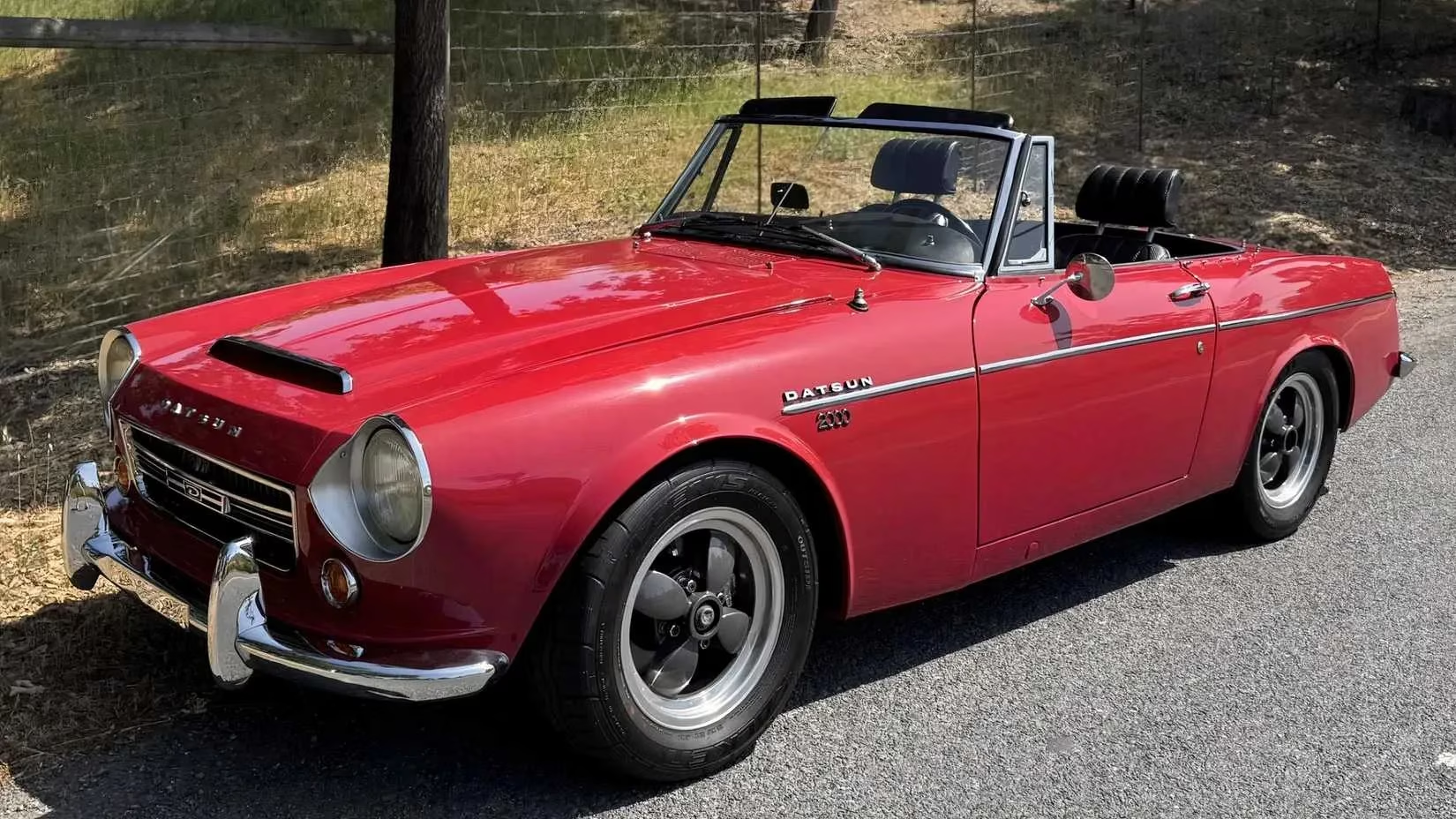
Everyone and their mother loves to wax poetic about the Z-Car, and I get it. The 240Z was a revelation, a sledgehammer that smashed preconceived notions about affordable performance. But let's be clear: the 240Z didn't emerge from a vacuum. It was built upon a foundation laid by a car that proved Japan wasn't just playing at making sports cars—it was dead serious. The 1967 Datsun 2000 Roadster (internal code SR311) was that proof. This wasn't an experiment; this was a declaration of war, wrapped in beautiful sheet metal and delivered with a five-speed manual—the first ever in a Japanese production sports car. Think of it as the samurai's final, silent bow before the thunderous charge of the Z-Car army. Nissan built about 15,000 of these Roadsters from 1967 to 1970, but the ones that truly mattered, the ones that sent shivers down the spines of Triumph and MG owners, were the few fitted with the legendary Competition Package.
The Heart of the Matter: The U20 Engine
If the Roadster's chassis was its skeleton, then the U20 engine was its fiery, indomitable soul. Nissan didn't just slap a bigger displacement badge on an old block and call it a day. Oh no. The U20 was a statement of intent, engineered not just for the street, but for the grueling punishment of the SCCA racing circuit. In standard trim, this 2.0L SOHC four-cylinder pumped out a respectable 135 horsepower. But check that Competition Package box, and it transformed. With a hotter cam and dual Mikuni-Solex carburetors, output jumped to 150 horsepower. In a car that weighed just over a ton, that kind of power-to-weight ratio was like giving a cheetah rocket boots.
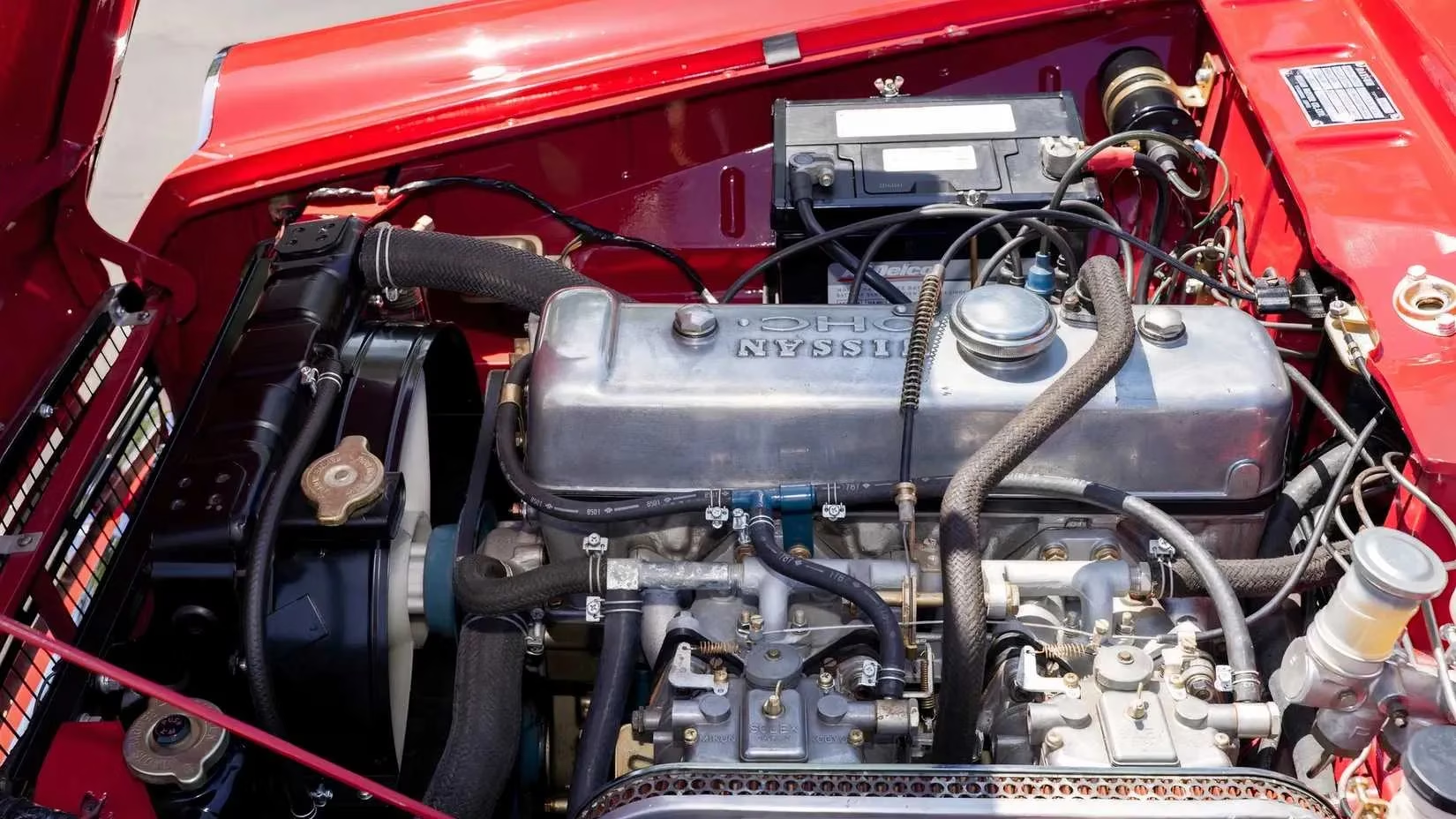
This engine was built tough, with a robustness that felt more German than Japanese for the time. It had to be. These Roadsters weren't garage queens; they were track terrors. They went out and won—securing national championships like the SCCA D-Production titles in 1969 and 1970. Every podium finish was a billboard advertising Nissan's newfound prowess in durability and speed. The U20's success was the blueprint, the genetic code that directly influenced the legendary L-series straight-sixes that would later power the 240Z. Owning a Roadster with this engine isn't just owning a classic; it's owning the very catalyst of Nissan's performance DNA.
Why It Still Matters (And Why It's a Steal)
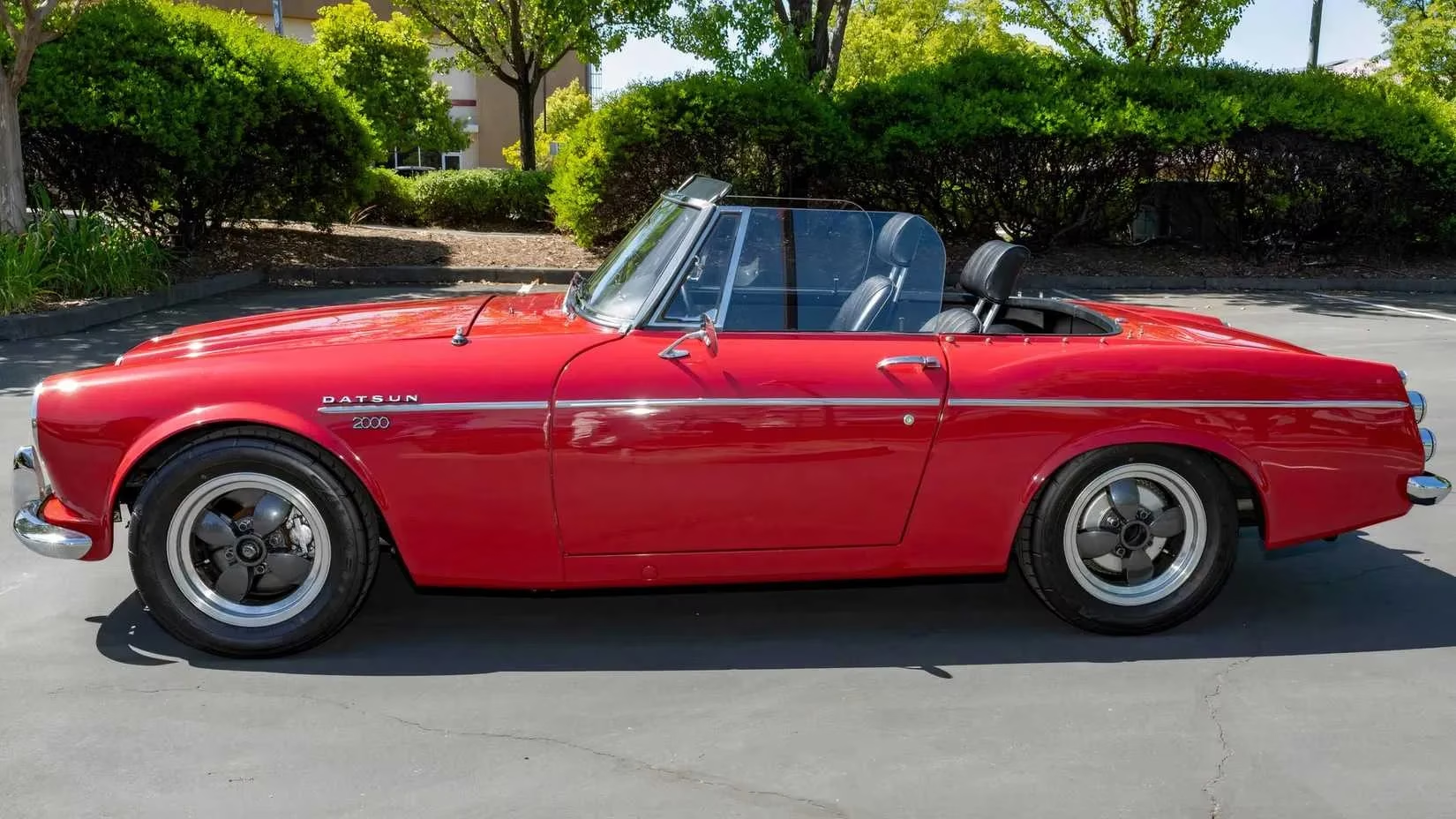
Fast forward to 2026, and the brilliance of the 2000 Roadster shines even brighter in retrospect. This was the first Datsun sports car that felt genuinely modern, a cohesive package that could go toe-to-toe with a Triumph TR4A or even a Porsche 912 on a twisty road. It had all the right ingredients: disc brakes, razor-sharp steering, a chassis that communicated like a telegraph, and that glorious five-speed. Driving one today is like reading the first chapter of a legendary novel in its original, handwritten form.
And here's the kicker, the part that makes me want to shout from the rooftops: you can own this pivotal piece of history for peanuts. According to recent market data, the average auction price for a 1967 Datsun 2000 Roadster over the last year has been around $24,562. Let that sink in. For less than the price of a soulless new economy sedan, you can park a bona fide Japanese legend in your garage. Adjusted for inflation, that's actually less than its original 1967 sticker price of about $2,796 (roughly $28,000 today). It's like finding a first-edition Hemingway at a yard sale priced as a paperback romance novel. The value proposition is utterly insane.
Brothers in Arms: Other Underrated Japanese Roadsters
Of course, the Datsun wasn't alone in its mission to prove Japan's mettle. The spirit of lightweight, high-revving, pure-driving joy manifested in other incredible machines.
-
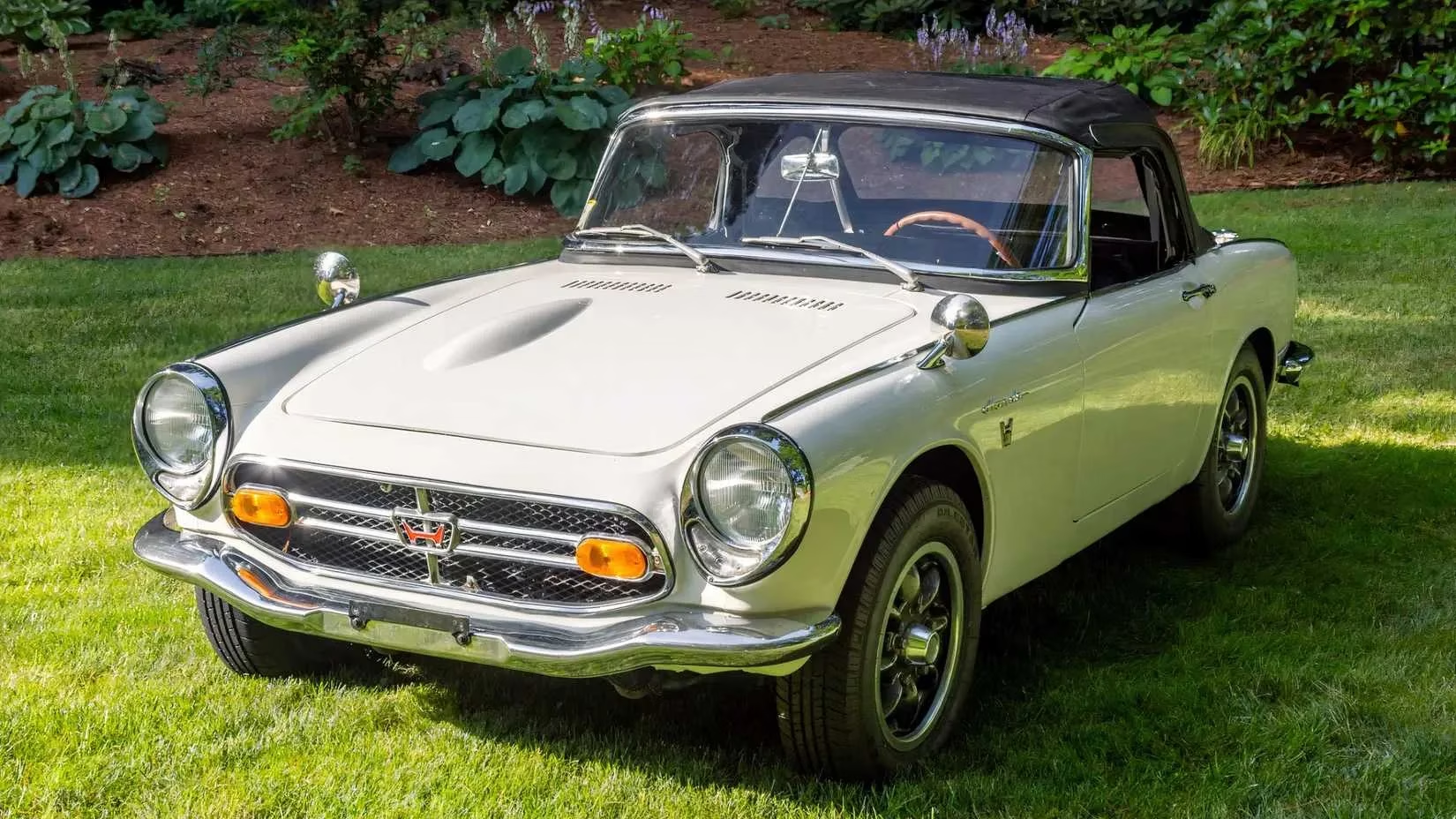
1967 Honda S800: If the Datsun was a precise katana, the S800 was a scalpel. This micro-sports car, born from Honda's motorcycle genius, featured a screaming 791cc inline-four that could spin to an ear-splitting 9,500 RPM. In a car weighing about 1,600 pounds, the experience was less like driving and more like piloting a four-wheeled superbike. Today, these gems average around $31,358 at auction—a premium for their unique, mechanical theater.
-
1994 Mazda MX-5 Miata (NA): The spiritual successor to them all. The 1994 model is key, as it received the more powerful 1.8L engine. It perfected the lightweight roadster formula for the modern era. With 128 horsepower, perfect balance, and iconic pop-up headlights, it delivers 90% of the classic roadster feel with 10% of the vintage headaches. And the best part? You can snag a clean example for an average of just $12,029. It's the accessible gateway drug to this entire world.
So, there you have it. The 1967 Datsun 2000 Roadster wasn't just a car; it was a harbinger. It was the quiet confidence before the triumphant roar. It proved that Japan could build a world-beater, and it did so with an elegance and engineering integrity that still resonates nearly six decades later. In a world of digital dashboards and synthetic driving sounds, this Roadster offers something priceless: a direct, unfiltered, and utterly affordable connection to the moment Japan's performance empire was born. To ignore it is to overlook the very cornerstone upon which legends like the Z-Car were built. And trust me, you don't want to be that person.