Let’s be real—when someone mentions a Ford muscle car, the mind instantly drifts to the Mustang. It started the pony car craze in the mid-60s and served as the poster boy for the Blue Oval's muscle car lineup. But over in the intermediate segment, a larger sibling was busy building its own legend. Named after Turin, the Italian equivalent of Detroit, the Ford Torino is easily among the best muscle cars ever to leave the factory, even if its story is shorter than its storied little brother. It began life in 1968, and by the time it wrapped up in 1976, it had hosted some of the baddest engines ever produced and faced off with Mopar’s legendary wing cars at supersonic speeds. (ノ◕ヮ◕)ノ*:・゚✧
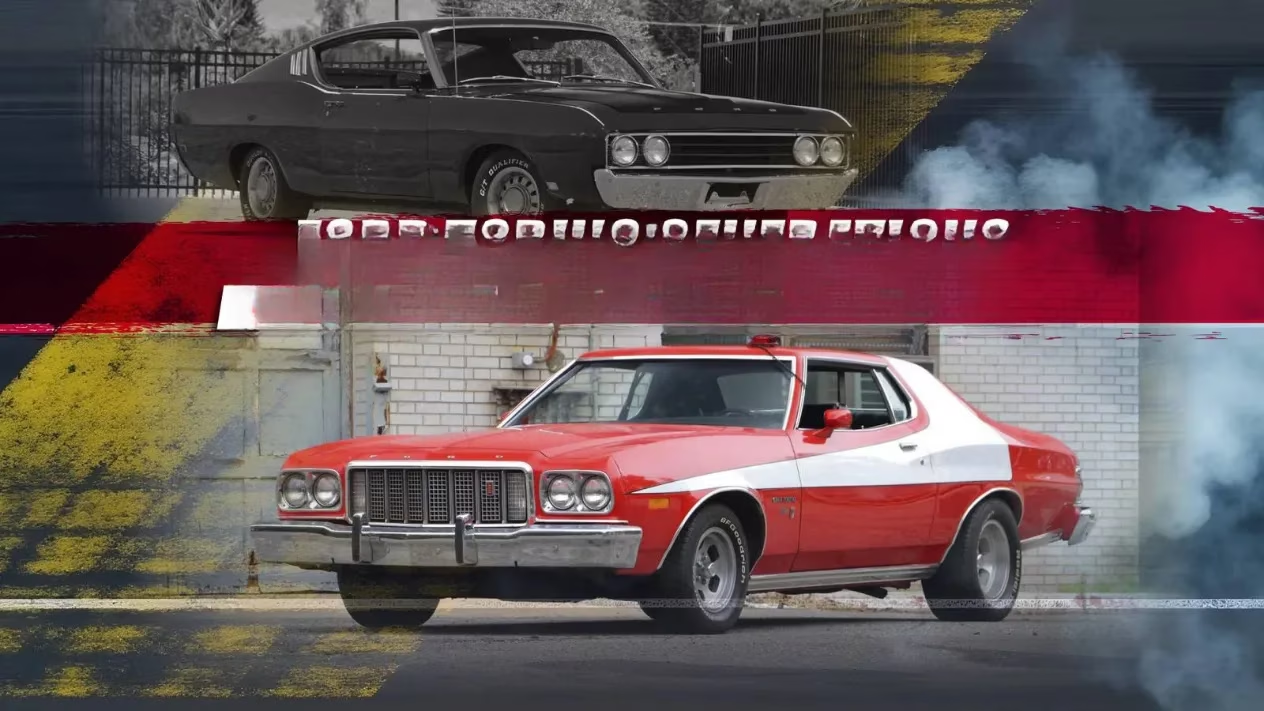
The Torino didn't even start as its own model. From 1968 to 1969, it was the upscale version of the Ford Fairlane, initially called the Fairlane Torino. Its popularity exploded so much that by 1970, the roles reversed. The Torino became the primary name for Ford's intermediate-sized cars, and the Fairlane was demoted to a subseries. By 1971, the ‘Fairlane’ name was dropped entirely. While most Torinos were conventional cars with four-door sedans and station wagons, Ford also built high-performance variants that turned it into a muscle car icon. It also etched its name in NASCAR history as one of the most dominant machines of the era.
The First Generation (1968-1969): Birth of a Contender
In 1968, a redesign of the Fairlane ushered the Torino name into the muscle car world. The car grew in size and featured a full-width recessed grille with horizontal quad headlights. Crucially, Ford added the two-door hardtop fastback body style, famously known as the “SportsRoof.” Under the hood, engine options ranged from a humble 3.3-liter six-cylinder to a new 428 cu-in Cobra Jet V8. If you wanted to enter the muscle car club in 1968, a base Torino cost you around $2,800—roughly $27,000 in today’s cash.
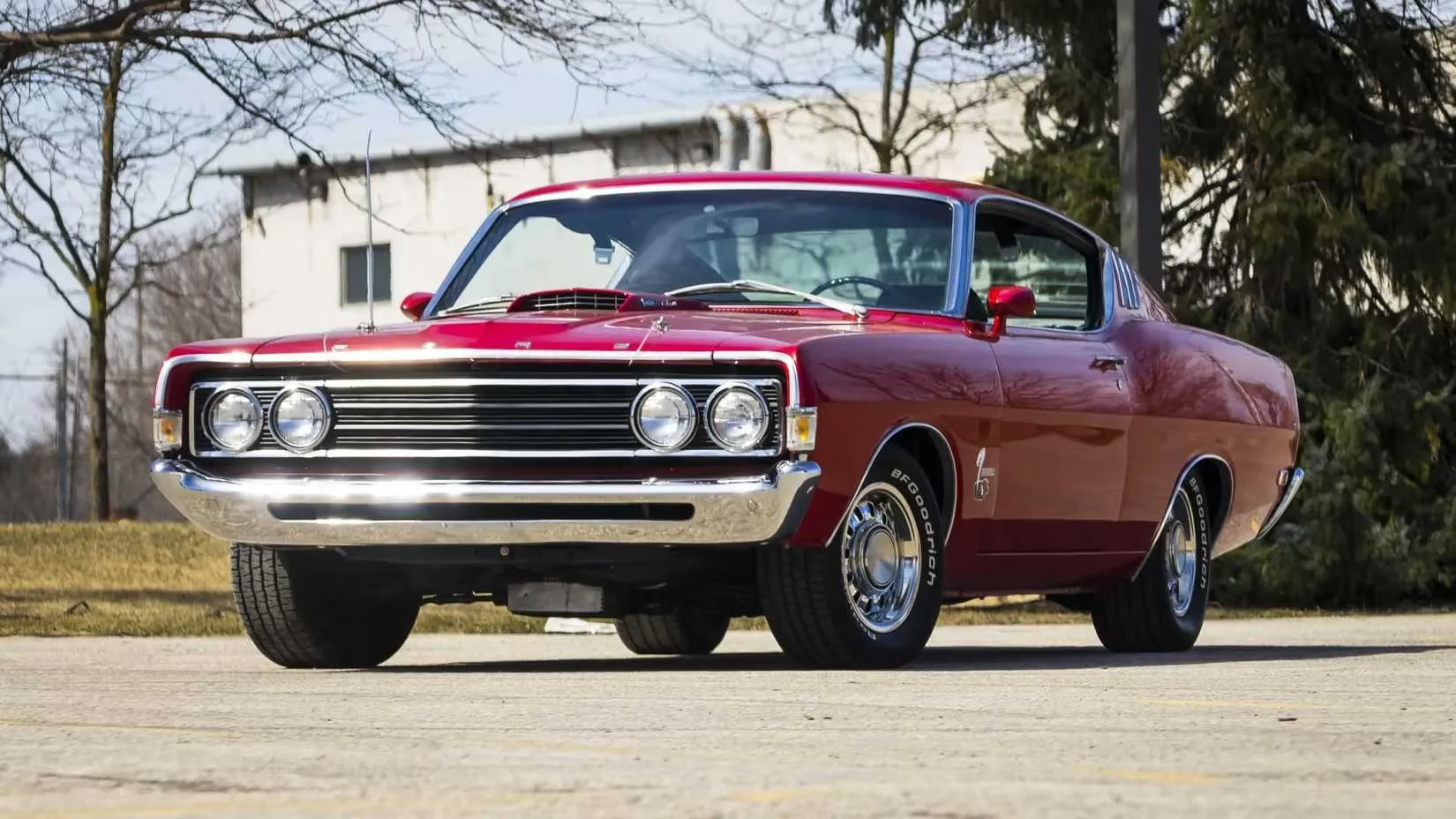
Things got serious in 1969. Ford introduced the Cobra trim to turn the Fairlane into a proper street brawler. It came standard with a 428-4V Cobra Jet V8, competition suspension, a four-speed manual, and a blacked-out grille. But the real mic drop was the 1969 Ford Torino Talladega. Built to meet NASCAR homologation requirements, Ford needed at least 500 road-legal examples. The Talladega was based on the SportsRoof but had a longer, flush-mounted nose designed in a wind tunnel to slice through the air. At its heart was the new 427 Cobra Jet engine.
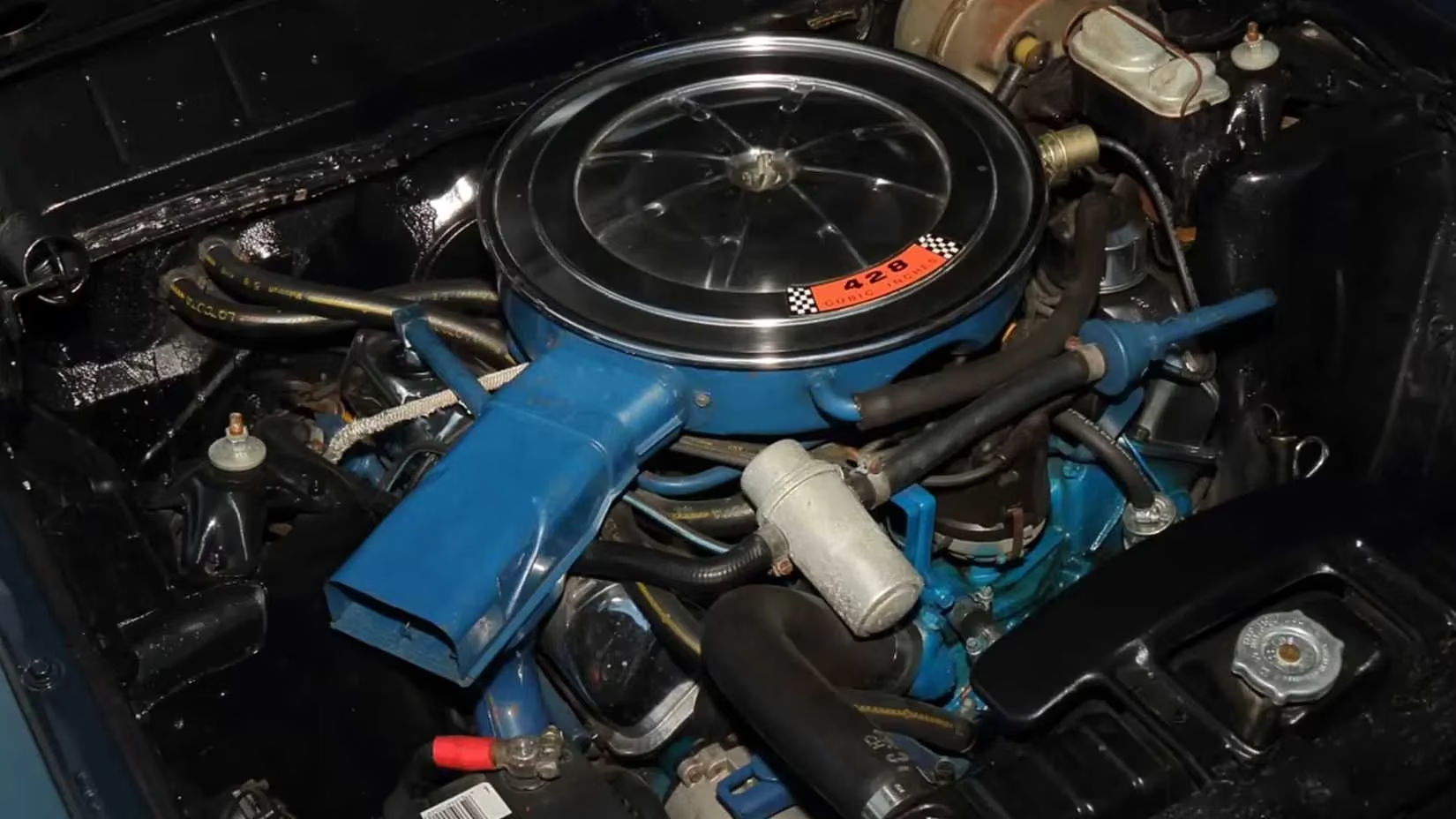
Today, a base first-gen Torino in good condition is worth around $10,000 according to the Hagerty Valuation Tool. A Torino GT jumps to just under $30,000. The Cobra sits at $39,200, while the mighty Torino Talladega tops the range with a valuation of $68,300. Classic.com shows an overall average price of about $48,000 for the generation. Not bad for a footnote in history. ✨
The Second Generation (1970-1971): The Coke Bottle Warrior
If the first generation laid the groundwork, the second generation ripped up the blueprint. The 1970 Ford Torino picked up where its predecessor left off but with a completely different look. Ford gave it the dramatic “Coke Bottle” treatment: a low, aggressive stance with a long hood, short deck, swollen fenders, and a pointed “shark-nose” center grille flanked by recessed quad headlights. This look wasn't just for show; it helped the Torino maintain its NASCAR dominance. The car was so iconic that it won the Motor Trend Car of the Year award in 1970.
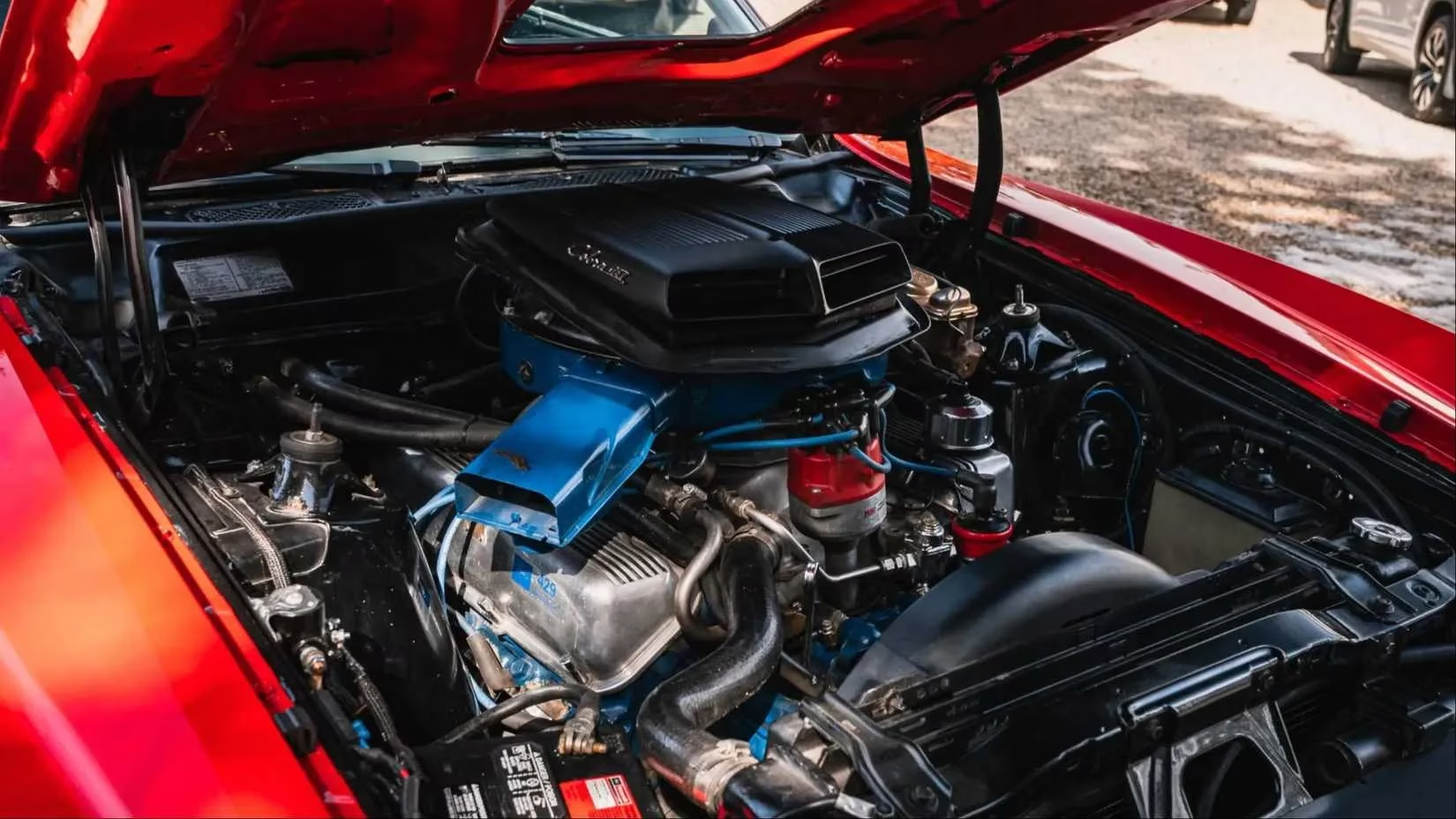
The engine lineup was a feast for power-hungry gearheads. Ford introduced a 351 cu-in Cleveland V8 and a monstrous 429 cu-in 385 Series V8 available in three flavors:
-
429 Thunder Jet: Rated at 360 hp.
-
429 Cobra Jet (CJ): Bumped power to 370 hp, featuring a 715 CFM Rochester Quadrajet carburetor.
-
429 Super Cobra Jet (SCJ): The king of the hill at 375 hp. Part of the ‘Drag Pack,’ it included a four-bolt main block, forged pistons, solid lifters, an engine oil cooler, and a 780 CFM Holley carburetor. Ram Air induction added a shaking scoop protruding through the hood, making the car look absolutely menacing. 😈
Trim levels ranged from the entry-level Fairlane 500 to the top-dog Torino Cobra. The Cobra was only available as a two-door SportsRoof and packed a heavy-duty competition suspension and a flat black hood. The sporty Torino GT featured a non-functional hood scoop and honeycomb-effect taillights. For those who liked comfort with their muscle, the Torino Brougham offered hideaway lights and extra sound insulation.
A 1970 Torino entered the market at around $2,800 (roughly $24,000 today). While not as pricey as some top ‘70s muscle cars, finding a good one now requires a solid budget. Classic.com shows an average price of about $53,000. A 1970 Torino Cobra with the 375-hp 429 SCJ V8 commands a Hagerty valuation of $69,200 in good condition. However, a standard 1970-1971 Torino in good shape can still be found for as low as $10,000—a steal for a classic.
The Third Generation (1972-1976): Star of Screen and Street
The early ‘70s brought major safety and emission rule changes, and the third-generation Torino leaned hard into comfort, luxury, and mid-size utility. Moving from a unibody to a body-on-frame perimeter chassis, it gave a quieter and more isolated ride. While still using the ‘coke bottle’ styling, the new Torino had a narrower waist and more pronounced fender curves. The front fascia changed completely, with base models getting a full-width egg-crate grille while Gran Torinos sported a sizable grille inside an oval opening. The convertible was dropped, and the popular Cobra trim was, sadly, no more.
This generation is famous for its on-screen swagger. The 2008 film Gran Torino featured a 1972 Gran Torino Sport, but the real pop culture icon was the 1975 Gran Torino driven in the Starsky and Hutch television series and film adaptation. (⌐■_■)
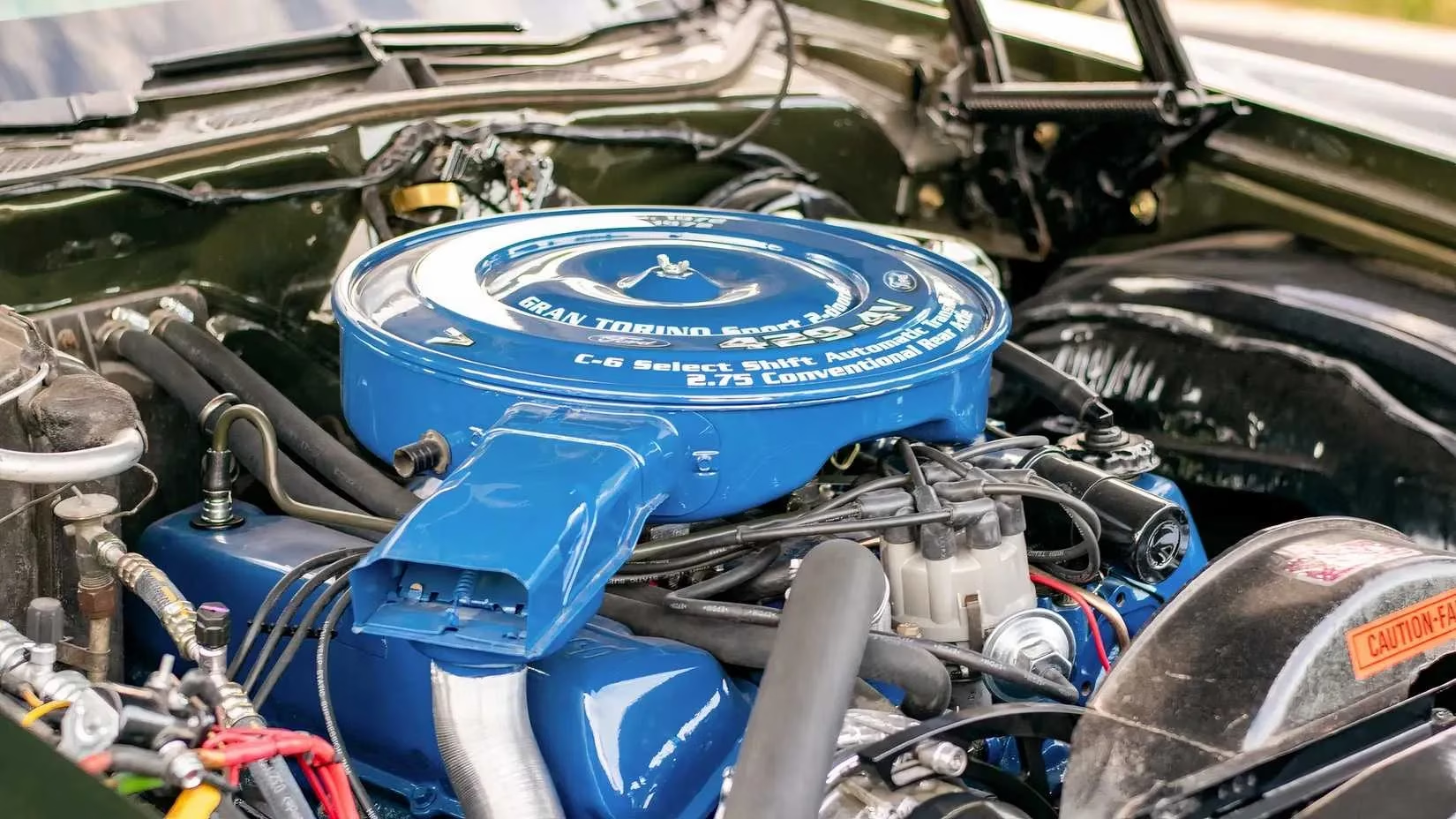
The model years saw rapid changes as regulations tightened:
-
1972: New chassis, design, and trim debuted.
-
1973: A new 5 mph front bumper replaced the sleek chrome unit, growing the car’s length by over an inch. Compression ratios dropped, sapping power.
-
1974: Another grille redesign and a 5 mph rear bumper were mandated. The beloved “SportsRoof” coupe was sadly axed. The luxury-oriented Gran Torino Elite with Thunderbird-inspired styling joined the lineup.
-
1975: The Gran Torino Elite became a standalone model, the Ford Elite.
-
1976: The Gran Torino Sport was discontinued, signaling the end was near.
The 1972 Ford Torino debuted at roughly $3,000 ($24,000 today). As the least desirable generation for collectors due to the gradual power loss and shift to luxury, prices are more accessible. Classic.com shows an average price of around $22,000 for a third-gen. The Gran Torino Sport (1972-1975) could be had with a 351 cu-in Cobra Jet V8 putting out 248 hp—respectable for the malaise era. The Gran Torino Elite entered the mid-size luxury market to battle the Chevrolet Monte Carlo, featuring a vinyl roof with twin opera windows and woodgrain trim. Nearly 100,000 units were produced in 1974 alone.
The Checkered Flag
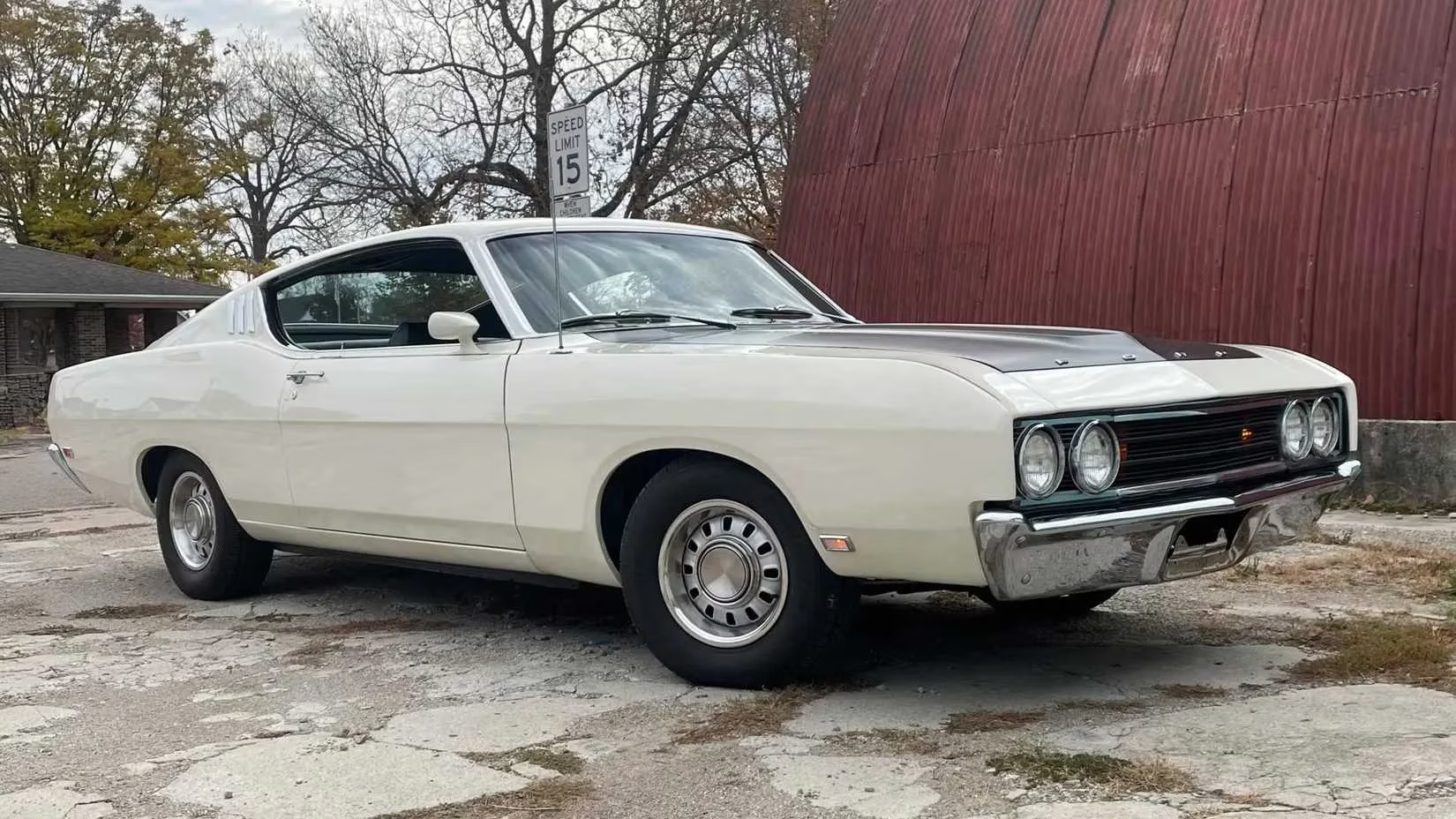
The Ford Torino’s story is a short but vital chapter in American automotive history. When asked which generation is the most important, the nod has to go to the first. More than just introducing the platform, it went head-to-head with Mopar in NASCAR. The result was a forced evolution that gave us the Talladega and Dodge’s Daytona—a collision course that showed the world what American cars were truly capable of. Had regulations not stopped them, cars today might look very different. While the second generation shines as the most desirable on average and the third holds its own in Hollywood, the first-gen represents Ford's raw, unfiltered might, forever placing it at the front of the pack. 🚗💨
For those considering adding a classic Ford Torino to their collection, understanding market trends and pricing is crucial. The costs of these iconic vehicles can vary significantly based on factors like condition, originality, and historical significance. Whether you're drawn to the high-performance allure of the Gran Torino Sport or the luxury vibe of the Gran Torino Elite, it's wise to explore various buying options to ensure you make an informed decision.
If you're ready to start your search or just curious about the current values in the classic car market, you can compare prices here. DealNest provides a platform where you can explore listings and gather valuable insights to guide your next automotive investment. With the right resources, you’ll be better prepared to find the perfect Torino that matches both your passion and budget. 🚙💼