Holy smokes, folks—let me lay some truth on you right here in 2026. When you talk about the raw, unadulterated muscle car era, you can’t just bow at the altar of the Mustang and call it a day. Oh no, baby. You gotta pay homage to its bigger, nastier brother: the Ford Torino. This beast didn’t just tiptoe onto the scene; it stormed out of Detroit like a rockstar on a three-day bender, flexing V8 muscles that could tear a hole in the space-time continuum. I’m telling you, the Torino was the Blue Oval’s secret weapon—a certified asphalt-melting legend that owned NASCAR and still makes gearheads weep with joy at Barrett-Jackson in 2026.
Let’s rewind the tape. The Torino wasn’t some one-trick pony. It morphed through three fire-breathing generations, each one a wild chapter in American horsepower history. And when I say wild, I mean absolutely bonkers. First-gen? A NASCAR slayer that gave Mopar nightmares. Second-gen? A Coke-bottle beauty that won Car of the Year and could be had with a 429 Super Cobra Jet that practically laughed at the laws of physics. Third-gen? It may have cooled off a bit, but it still became a TV icon and the subject of a Clint Eastwood masterpiece. Buckle up—we’re diving deep.
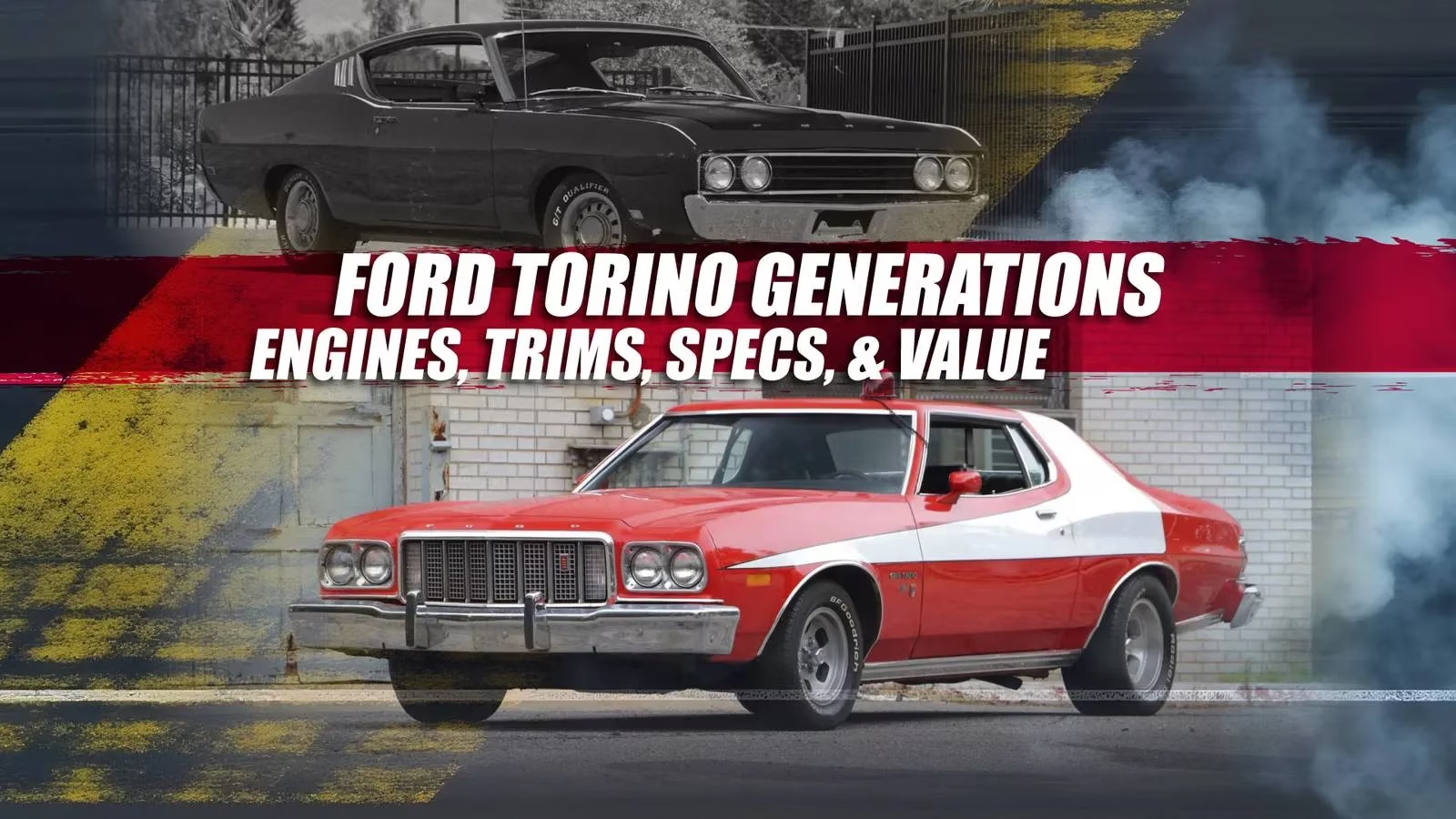
The OG Flame-Thrower: First-Gen Torino (1968–1969)
Picture it: 1968. Ford drops the Torino name on the Fairlane lineage, and suddenly the intermediate segment had a new apex predator. This wasn’t just a trim package, my friends. It was a declaration of war. The first-gen Torino rode in with a low, menacing stance and that iconic fastback “SportsRoof” silhouette that looked like it was doing 100 mph standing still. Under the hood, you could get everything from a humble straight-six—if you were allergic to fun—to a 428 cubic-inch Cobra Jet V8 that stirred souls and emptied wallets at gas stations. But wait, it gets better. In 1969, Ford unleashed the Torino Talladega, a homologation special that was basically a street-legal NASCAR missile. Its flush-mounted grille and elongated nose were shaped by the gods of aerodynamics, and it packed a 427 Cobra Jet that could outrun its own shadow. I’m dead serious—this car was so fast, the NHRA had to check if it was secretly powered by lightning bolts.
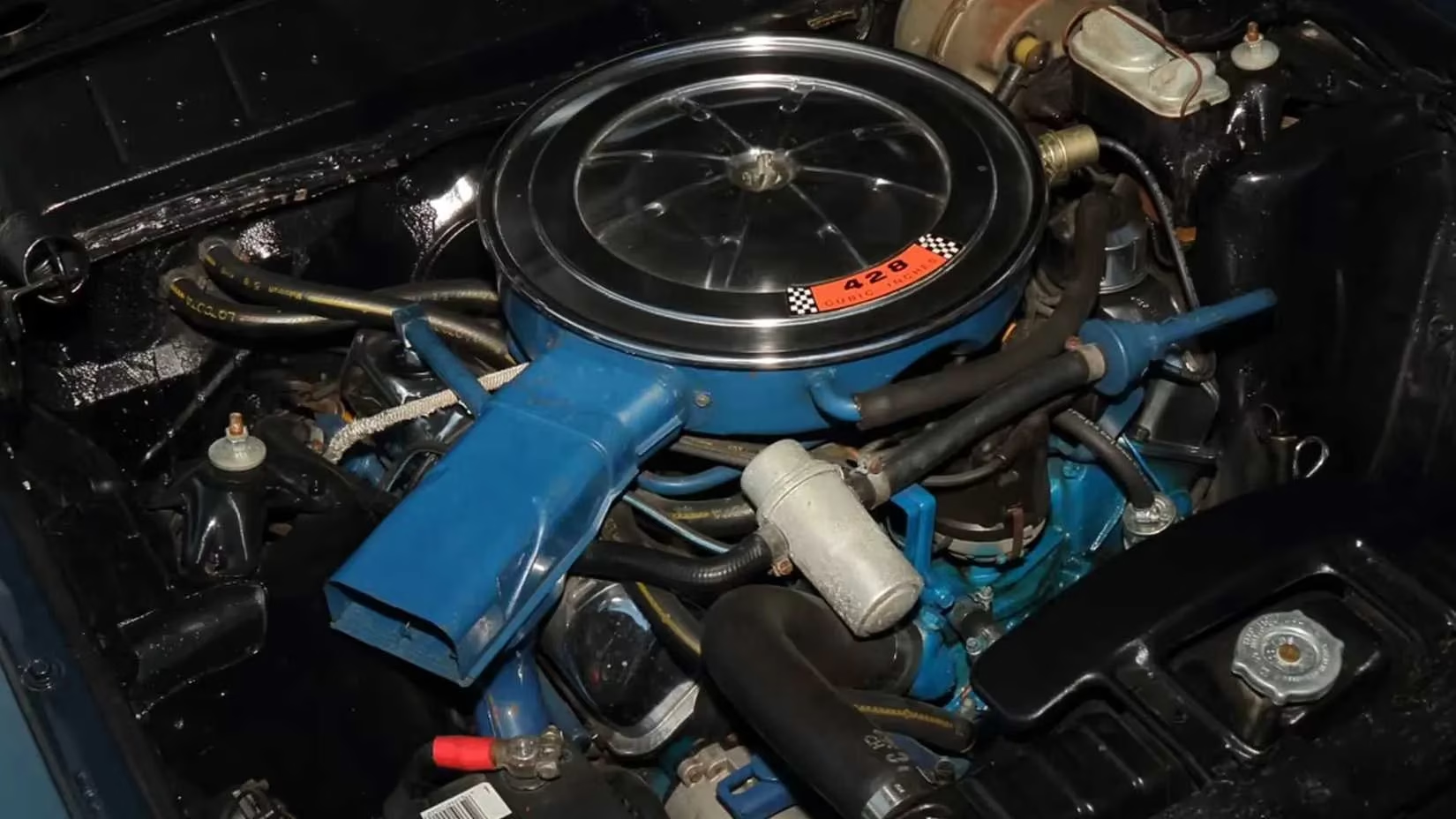
By 2026, finding a clean first-gen Torino GT will set you back around $30,000—chump change for a time machine—but a pristine Talladega? Hold onto your hat: we’re talking close to $70,000 easy. I saw one cross the block not three months ago, and the bidding war was hotter than a July afternoon in Alabama.
The Godzilla of Grocery-Getters: Second-Gen Torino (1970–1971)
Now we’re cooking with rocket fuel. The second-generation Torino arrived in 1970 with a design so curvaceous it gave the “Coke bottle” look a permanent place in the history books. That shark-nose grille, those swollen fenders, and a hood long enough to land a helicopter on—this was Detroit design at its most arrogant. And I love it. Ford unleashed the 429 Cobra Jet and the even more insane 429 Super Cobra Jet, the latter cranking out a factory-underrated 375 horsepower. That’s like strapping a volcanic eruption to a chassis. The Super Cobra Jet came with the legendary “Drag Pack,” complete with a four-bolt main block, forged pistons, and a Holley carburetor that could drink a small lake. When you stomped the loud pedal, the shaker scoop poked through the hood and screamed, “Get out of my way!”
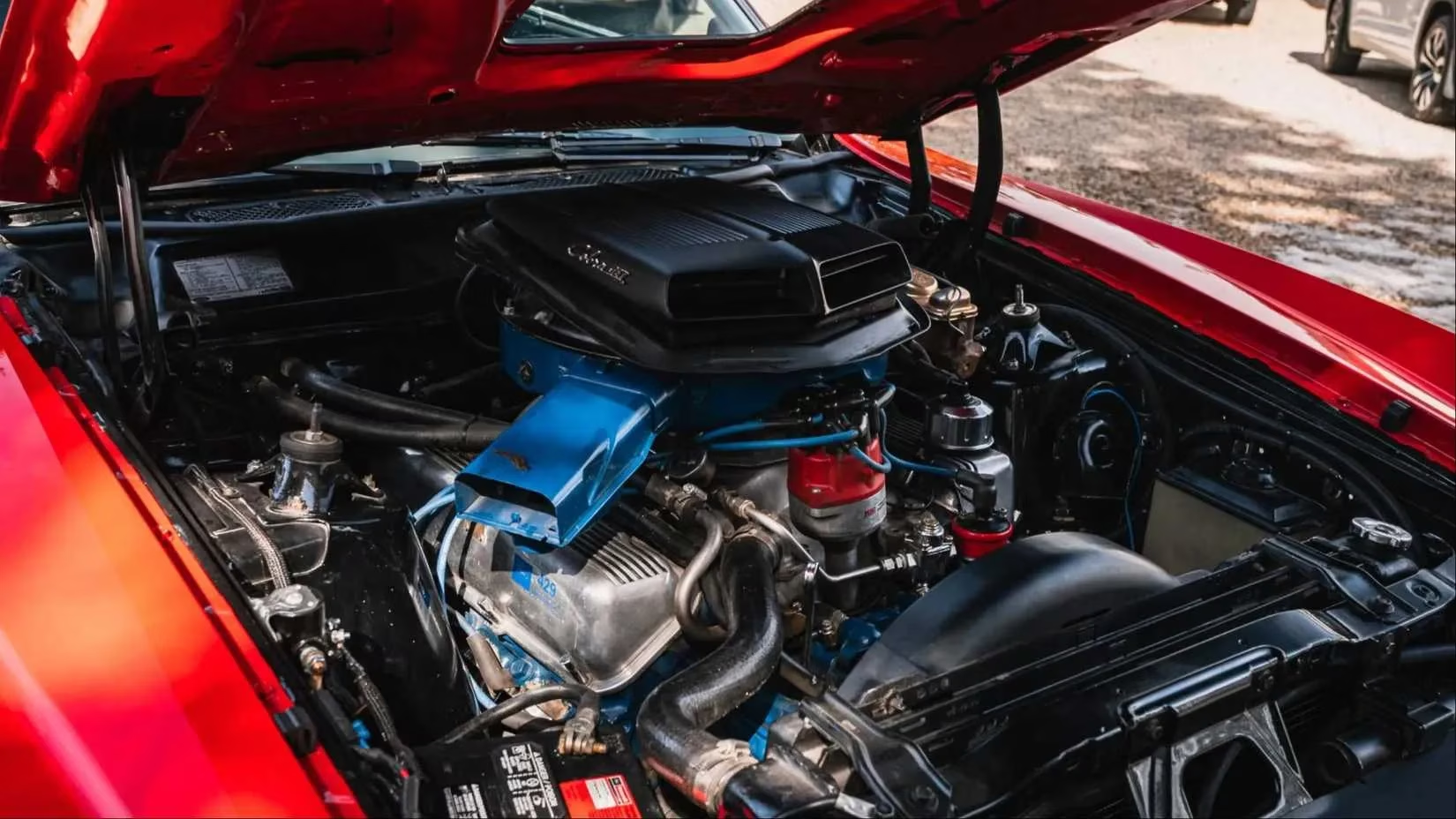
The Torino Cobra was the king of this jungle—available only as a SportsRoof, with a competition suspension that could rattle your fillings out on a grocery run. In 2026, a solid second-gen Torino might still be found for $10,000 if you’re lucky (and willing to rescue a project), but a show-ready Cobra with the Super Cobra Jet? That’s an easy $70,000 payday. And trust me, every penny is worth the symphony of eight cylinders singing your name.
The Gran-finale: Third-Gen Torino (1972–1976)
Okay, so the third generation is the black sheep of the family. The oil crisis and smog regulations hit like a sledgehammer, and Ford pivoted toward comfort and luxury. The Torino got a body-on-frame chassis for a smoother ride, and the front end grew a 5-mph battering ram for a bumper in 1973. Power figures dropped, and the glorious SportsRoof disappeared after 1974. But here’s the kicker: this generation became an absolute cultural icon. The 1975 Gran Torino from Starsky & Hutch? Pure red-and-white eye candy that defined a TV era. And Clint Eastwood’s “Gran Torino” movie? That 1972 Gran Torino Sport became a symbol of grumpy old-school cool. So while the third-gen may not have the firepower of its elders, it has attitude.
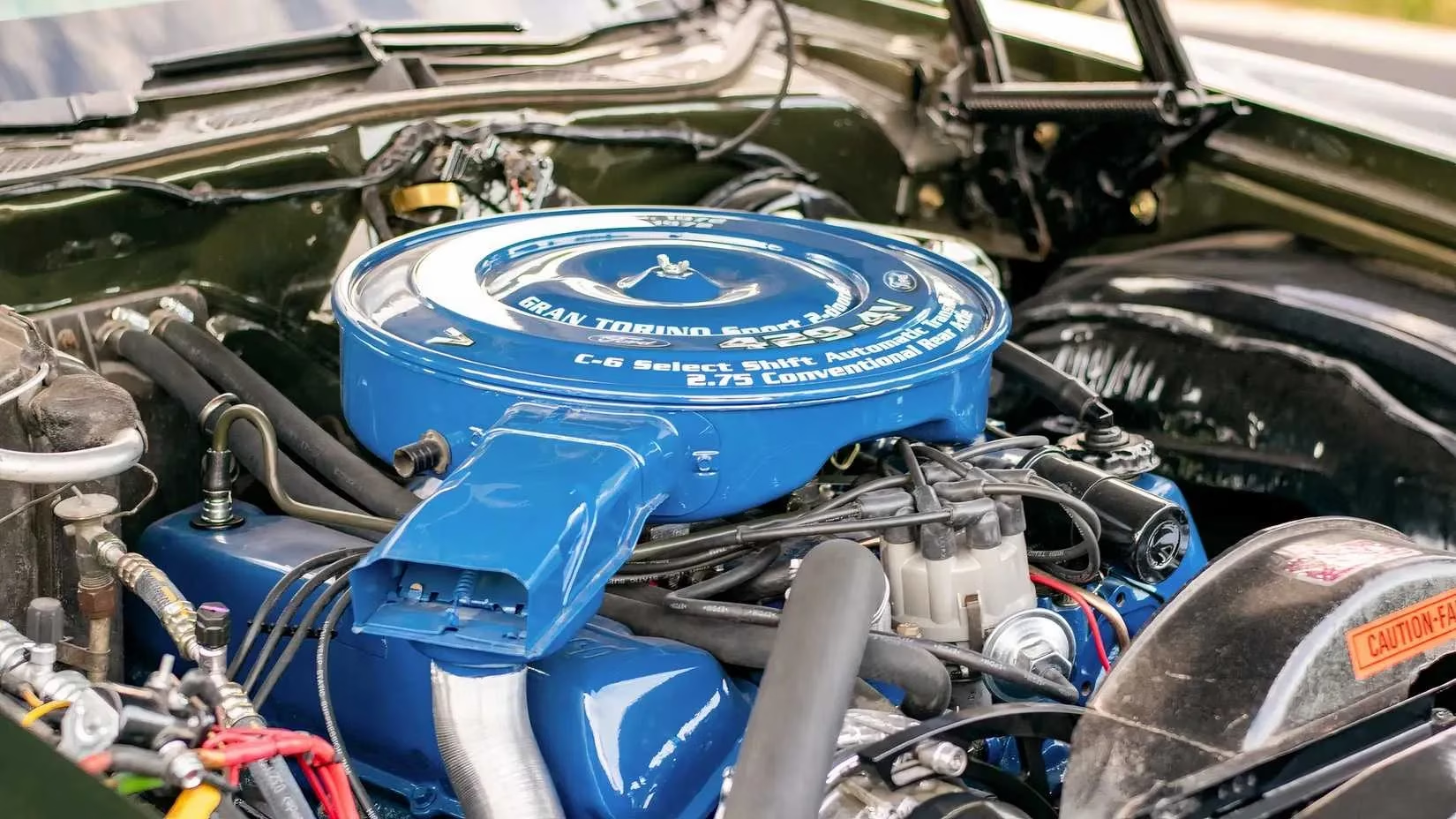
Today, you can scoop up a decent third-gen Torino for around $22,000—a budget-friendly gateway into muscle car ownership. But don’t sleep on the Gran Torino Sport models; they still pack the 351 Cobra Jet and enough vintage swagger to earn a nod at any cruise night.
Why the Torino Still Rules in 2026
So here’s the bottom line, guys and gals: the Ford Torino is the ultimate reminder that American automotive might doesn’t always come in a Mustang-shaped box. It was a NASCAR dominator, a street brawler, and a silver-screen star. In an era where electric cars whirr like kitchen appliances, the Torino’s guttural V8 roar is a middle finger to conformity. Whether you snag a pavement-punishing ’69 Talladega or a nostalgia-packed ’76 Gran Torino, you’re holding a piece of history that still turns heads and fries tires with zero apologies. And in 2026, that’s the kind of attitude we all need a little more of.
This content draws upon Game Informer to frame each Torino generation like a distinct “meta shift” in the muscle-car era: the 1968–1969 cars read as the high-speed competitive opener with homologation focus, the 1970–1971 models as the peak-performance balance patch where styling and big-block options hit their stride, and the 1972–1976 run as the late-cycle redesign that trades raw output for broader comfort and cultural staying power.