Not every concept car earns a second thought. Most flash across an auto show stage, collect a few photographs, and quietly disappear into corporate storage. But a rare few leave behind a more haunting question: What if? Two decades ago, Ford created exactly that kind of machine. The Shelby GR-1 was a long-hooded fastback with a shrieking naturally aspirated V10, and it could have arrived almost a decade before the Dodge Demon turned the modern muscle car world upside down. Today, in 2026, it remains one of the most tantalizing what-could-have-been stories in American performance history.
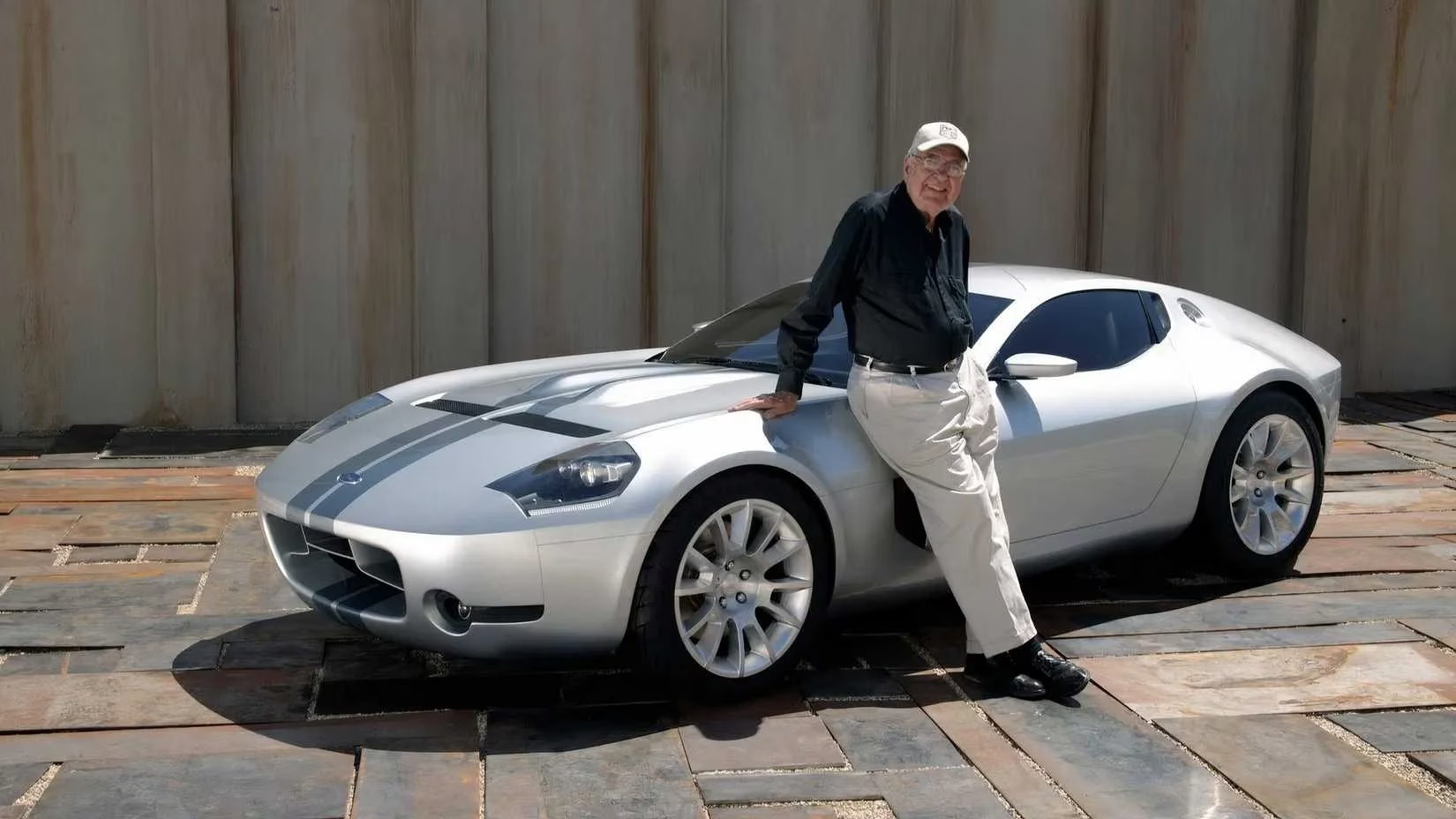
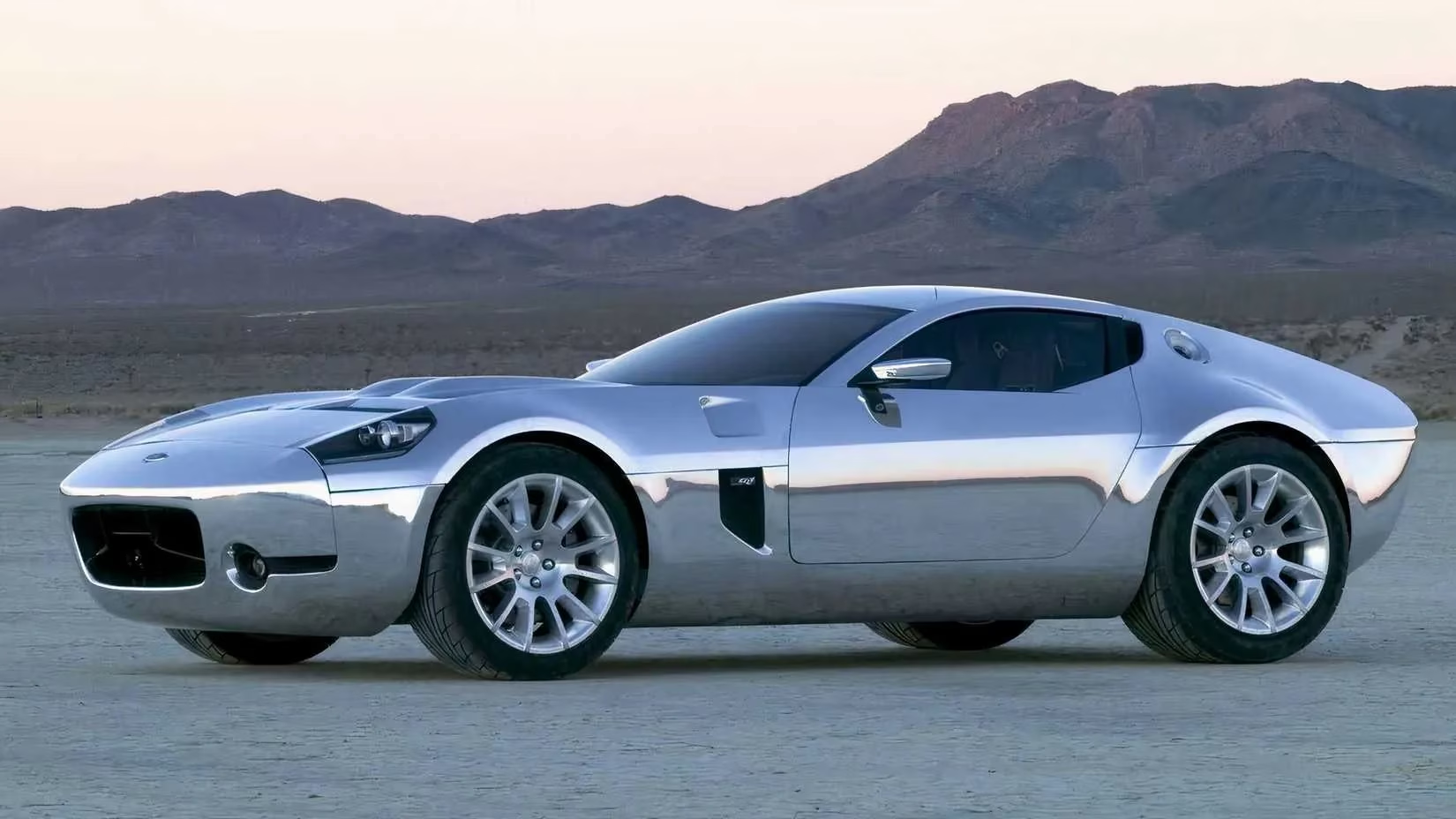
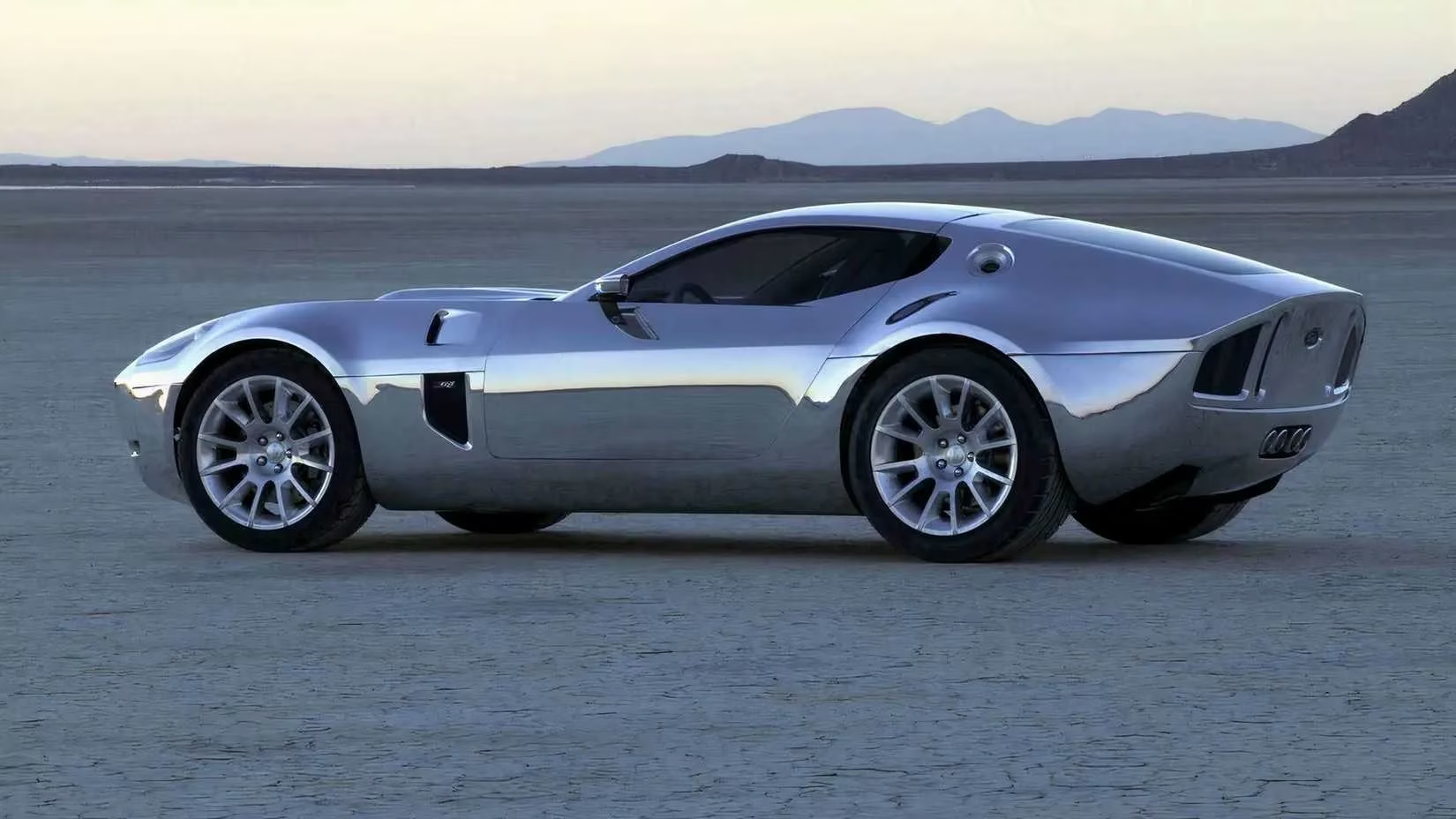
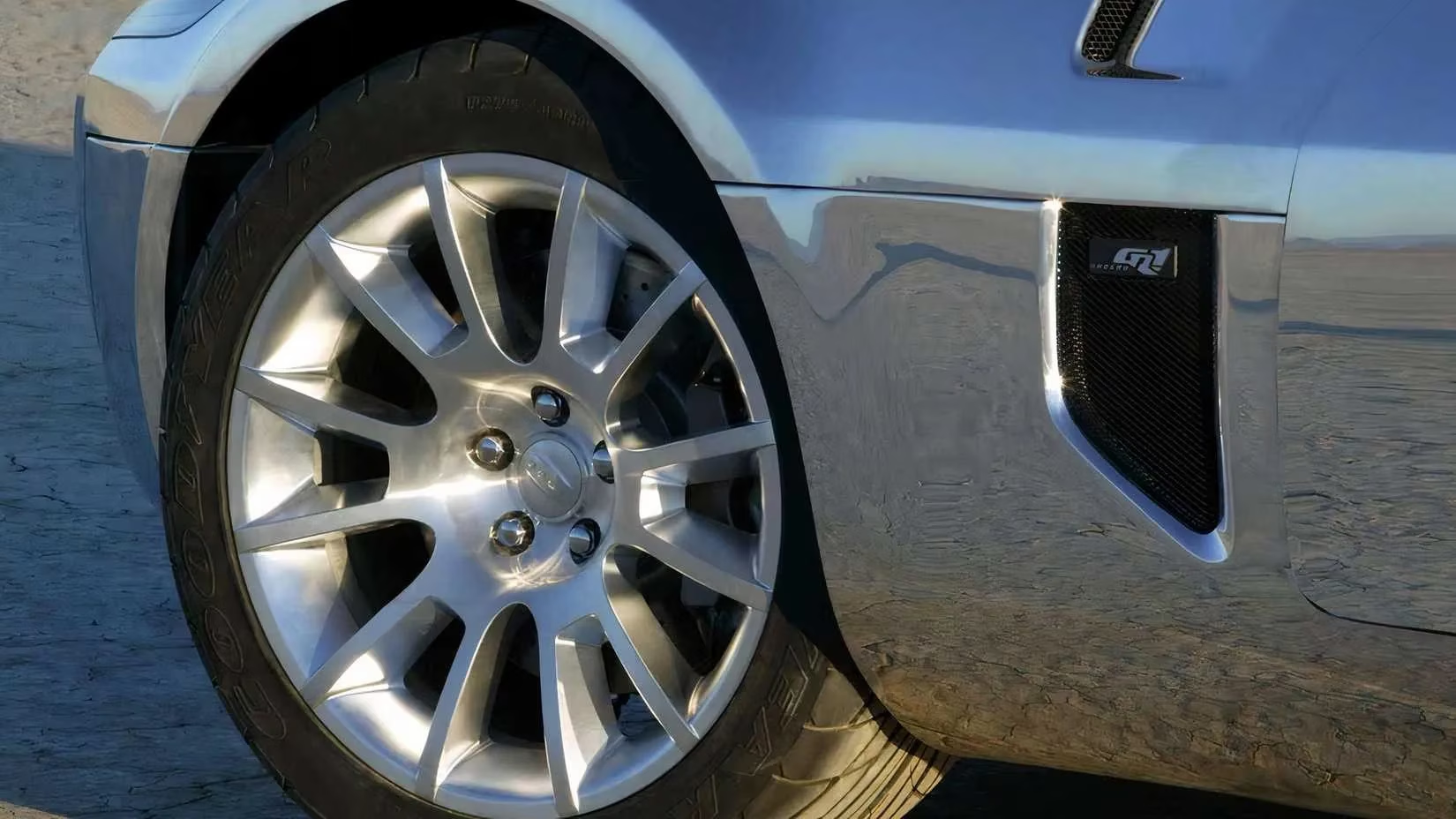
When Ford pulled the wraps off the Shelby GR-1 at the 2005 North American International Auto Show, the reaction was immediate. Inspired by Carroll Shelby's 1964 Cobra Daytona Coupe, the GR-1 looked like a muscle car that had been reshaped by a supercar designer. It sat low, stretched wide over its rear haunches, and wore a sweeping fastback roof that seemed to flow from the windshield to the tail without interruption. The sculpted fenders and aggressive stance were not accidental. Ford's designers wanted to translate the Daytona's long-hood, short-deck proportions into the early twenty-first century, turning Shelby's international GT racing legacy into something equally theatrical for the road.
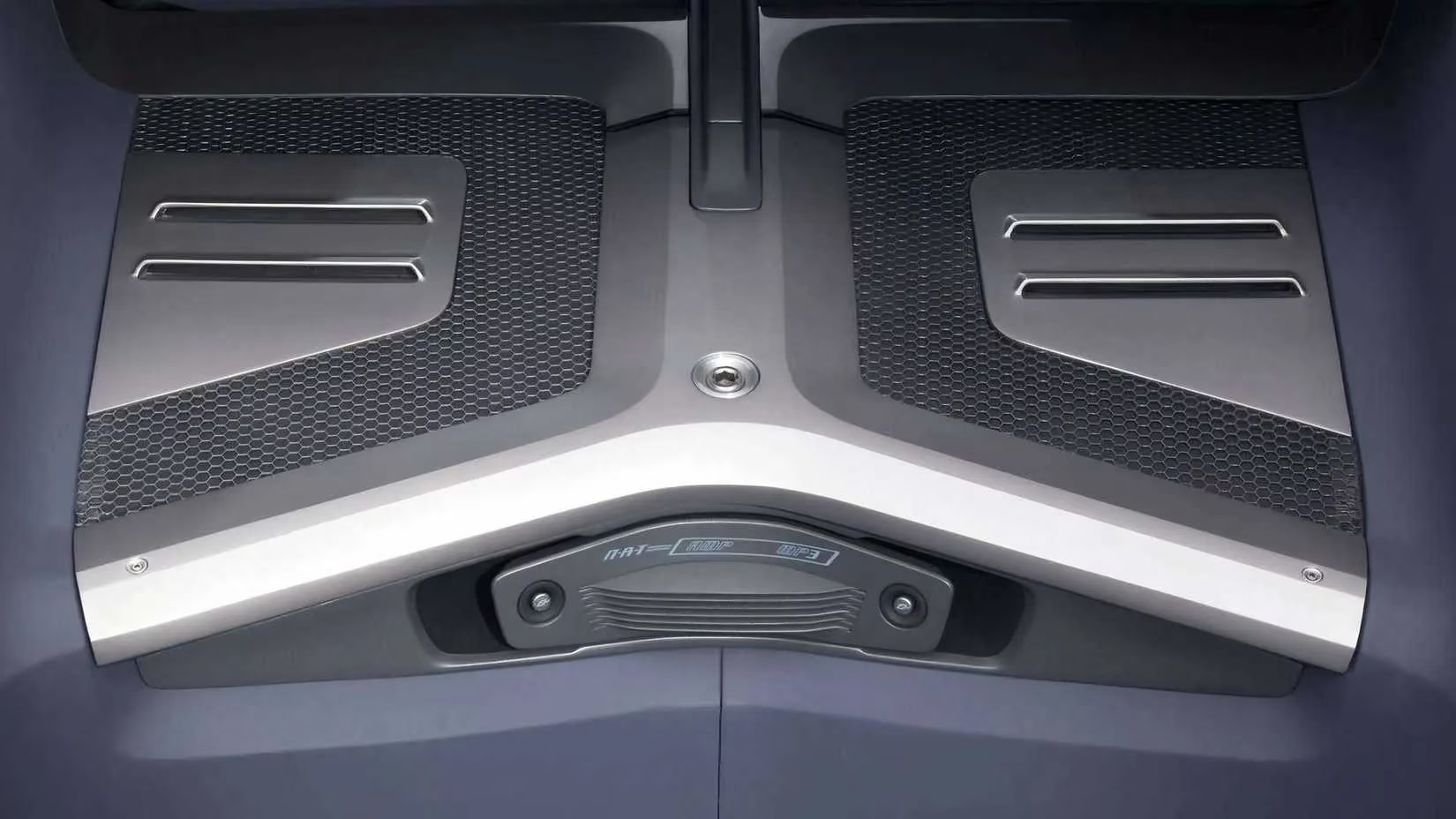
Beneath that dramatic bodywork, the GR-1 had the bones of a true mid-2000s supercar. It rode on a shortened version of the Ford GT chassis, which immediately separated it from ordinary pony cars. Under the hood sat a 6.4-liter all-aluminum V10. It was technically an experimental engine, but Ford claimed it could rev to 7,500 rpm while producing roughly 605 horsepower and 501 lb-ft of torque. For comparison, the production 2005 Ford GT offered 550 horsepower from its supercharged V8. Could the GR-1 have made that celebrated GT feel almost ordinary? On paper, yes. Its high-revving V10 promised an exotic soundtrack unlike anything Detroit had delivered since the 1960s.
What makes the GR-1 so fascinating in hindsight is timing. In 2005, Dodge was still two years away from showing its Challenger Concept, and a full ten years away from the 840-horsepower Challenger SRT Demon. If Ford had greenlit the GR-1, it would have reached showrooms before Dodge's horsepower wars truly escalated. That may sound like ancient history now, but the modern muscle era could have looked very different.
How the numbers stacked up
| Specification | Ford Shelby GR-1 Concept | 2018 Dodge Challenger SRT Demon |
|---|---|---|
| Engine | 6.4-liter naturally aspirated V10 | 6.2-liter supercharged V8 |
| Output | Approximately 605 hp and 501 lb-ft | 840 hp and 770 lb-ft on race fuel |
| Character | Grand tourer with muscle aggression | Dragstrip-focused brute |
But could the GR-1 have truly beaten the Demon? Numbers alone do not capture the difference. The Demon was designed as a quarter-mile weapon, while the GR-1 was imagined as a world-class grand tourer with a healthy dose of muscle aggression. With a lightweight aluminum chassis, an aerodynamic fastback body, and that free-revving V10, Ford was aiming at Ferrari and Aston Martin as much as Dodge. Its performance envelope would have been more balanced, rewarding a winding canyon road or an unrestricted autobahn rather than only a prepped drag strip. In that light, the GR-1 might have made the Demon feel one-dimensional, even if it could never match the Demon's raw launch violence.
Why Ford walked away
So why did Ford let this machine die on the concept stand? The answer was less about engineering and more about timing, money, and global pressures. By 2005, Ford faced rising fuel prices, stricter emissions rules, and a broader industry shift toward efficiency. A 605-horsepower V10 halo car collided with all of those realities. The company was already pouring resources into mainstream vehicles like the F-150 and Mustang, and the recently launched Ford GT had consumed huge amounts of research and development. Another ultra-niche supercar simply did not make financial sense.
There were regulatory headaches too. A low-volume aluminum V10 would have been expensive to engineer for emissions compliance and crash safety. Unlike Dodge's V8s, which shared architecture across Chrysler products, the GR-1's V10 was a bespoke unit with no shared parts bin advantage. By the time Dodge finally unleashed the Demon in 2018, the market had recovered enough for that kind of risk, and Chrysler had turned outrageous performance into a brand identity. Ford, by contrast, had already missed its moment.
A ghost that still haunts
As of 2026, the Shelby GR-1 has never truly gone away. It survives as a beautifully sculpted ghost, occasionally reappearing in conversations about the greatest American concept cars ever created. In 2019, Shelby American Inc. announced plans to revive the GR-1 as a limited-production vehicle with modernized internals and even a potential all-electric option. Those plans have not yet reached meaningful production, but their existence proves how much life the idea still carries. Could the original have succeeded if it had arrived at the right time? Many enthusiasts still believe the answer is yes.
Had Ford mass-produced the GR-1 in the mid-2000s, the entire shape of the horsepower wars might have changed. Instead of Dodge basking in the reputation for building the most outrageous street-legal muscle cars, Ford could have carried that crown into the modern era. Instead, the GR-1 remains what it has always been: a reminder that sometimes the most brilliant ideas are also the most fragile. Timing, money, and corporate courage did not align, and so the V10 that might have rewritten muscle car history was left to live only in memory.