In the late 1960s, European automakers like Jaguar and Porsche dominated the sports car scene, setting a high bar for elegance and performance. Enzo Ferrari himself reportedly called the Jaguar E-Type "the most beautiful car ever made," a testament to its allure that inspired global rivals. Yet, amidst this European reign, a Japanese underdog emerged with a bold mission: to create a car that matched the continent's best but remained accessible and reliable. For enthusiasts today, recalling this era feels like stepping into a time capsule, where the thrill of innovation was palpable, and the Datsun 240Z's arrival in 1970 wasn't just a product launch—it was a seismic shift that redefined automotive dreams. Imagine the excitement of American drivers back then, unboxing a machine that looked like it belonged on Monaco's streets but was built in Yokohama, offering exotic flair without the exorbitant price tag. It's a story that still resonates, reminding us how ambition can reshape an industry.
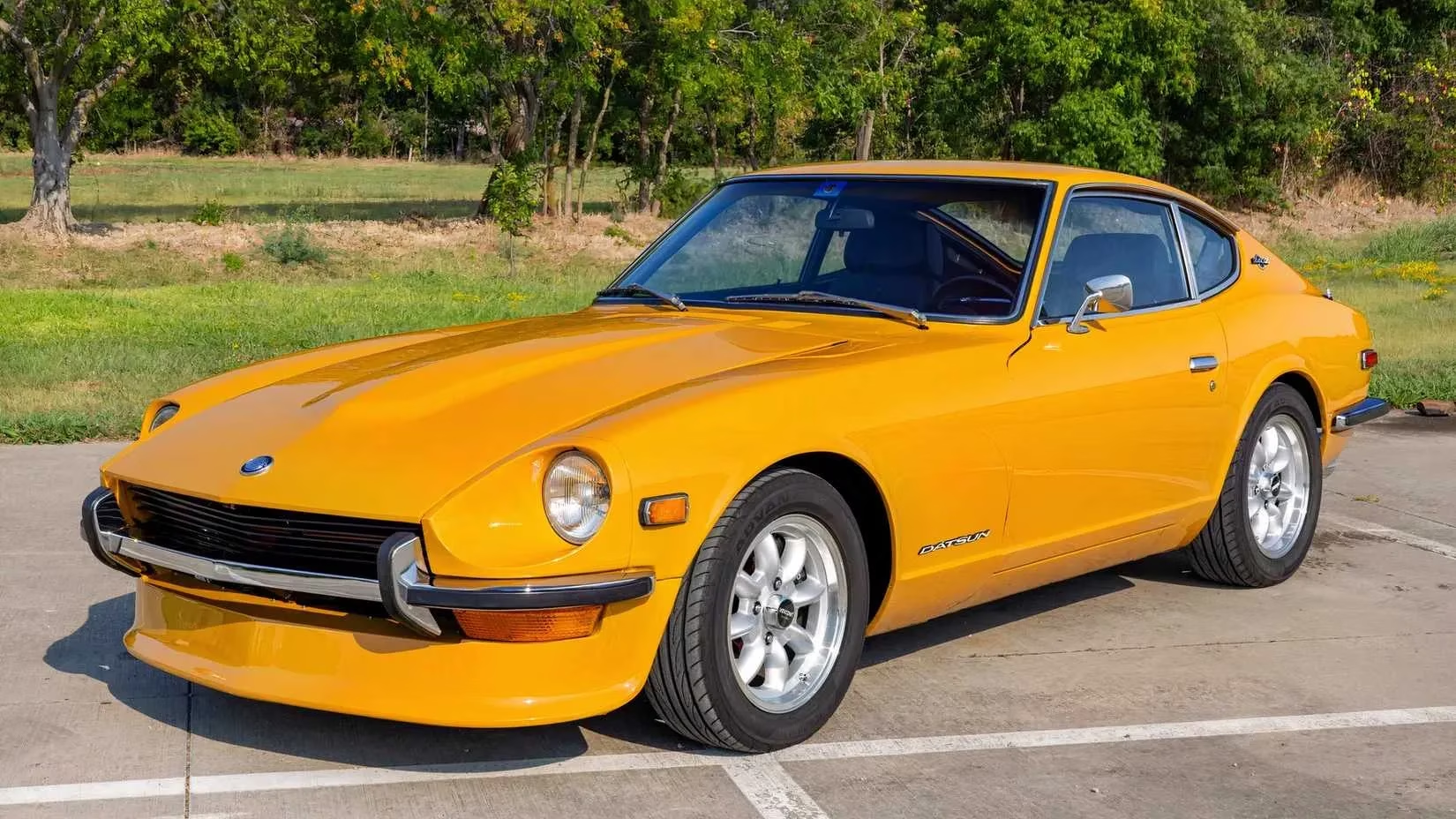
At the heart of this revolution was Yutaka Katayama, a visionary who believed Japan could craft a world-class sports car without mimicking Europe. His brainchild, the Datsun 240Z, blended a long hood and smooth fastback silhouette with Japanese precision, creating a design that felt both familiar and fresh. Driving one today, it's easy to sense how it hummed along like a well-tuned orchestra, each component—from the chassis to the engine—playing in perfect harmony, a rarity in an era when rivals often faltered. This wasn't just about looks; it was about democratizing performance. The 240Z was like a perfectly balanced samurai sword, elegant in form yet deadly in precision, slicing through preconceptions that only luxury badges could deliver true driving joy. For many, owning it felt like discovering a hidden gem in a sea of diamonds, rare and valuable without the ostentation, offering a raw connection to the road that modern cars often lack.
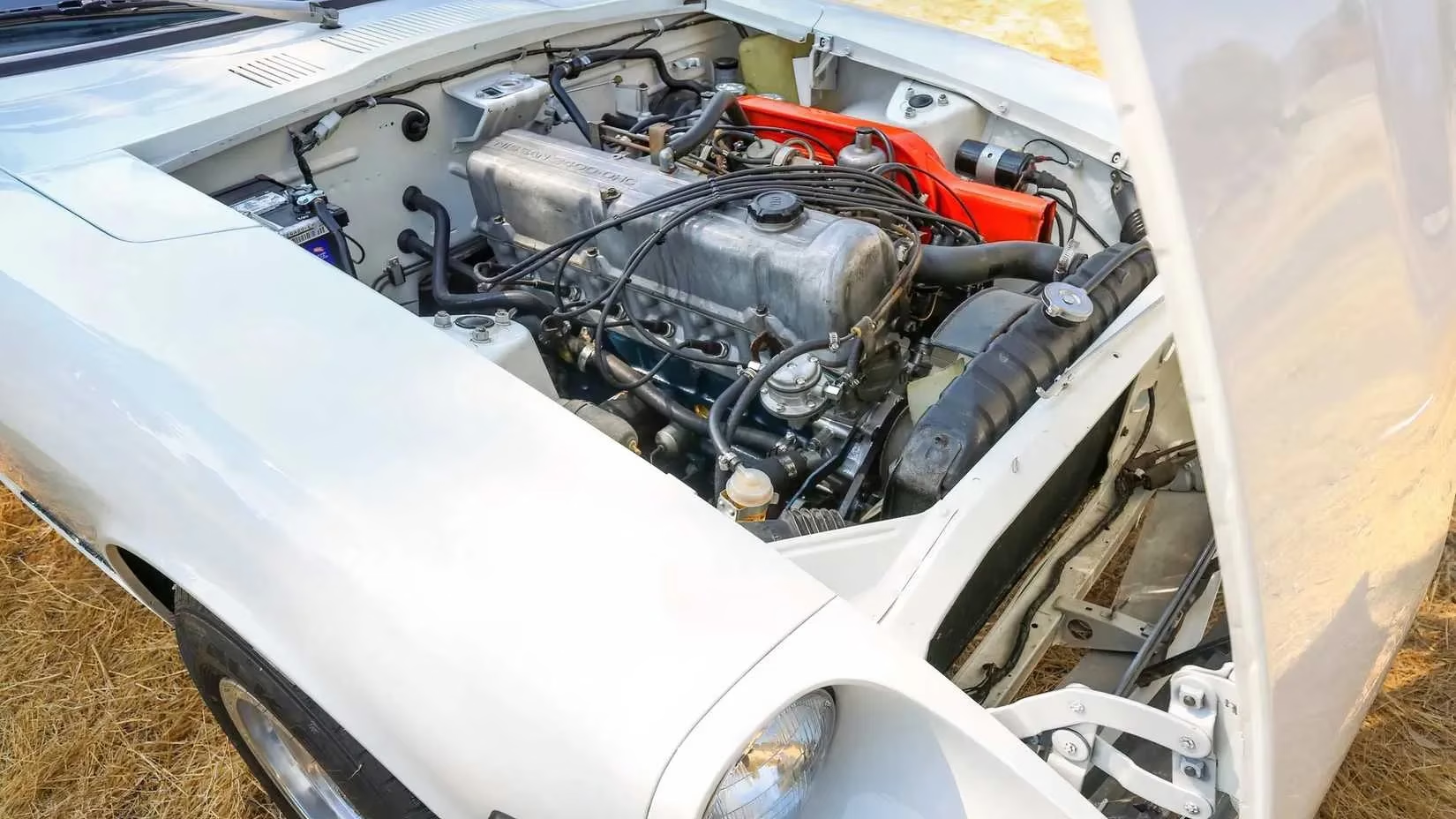
Under the hood lay the real magic: the L24 2.4L inline-six engine, producing 151 horsepower and 146 lb-ft of torque. Paired with dual SU-style carburetors, this setup propelled the lightweight Z to 120 mph and 0-60 mph in about 8.0 seconds. In 1970, these numbers rivaled Europe's finest, but the 240Z's reliability was its superpower. Unlike the Jaguar E-Type or Porsche 911, it didn't overheat or demand costly repairs, making it a practical choice for everyday adventurers. Today, enthusiasts might describe the engine's purr as a silent symphony, a mechanical ballet that transformed mundane commutes into exhilarating journeys. Performance-wise, the front-engine, rear-wheel-drive layout achieved near-perfect weight distribution, ensuring composed handling on winding roads—a trait that eluded many European models. It's no wonder that, decades later, the 240Z remains a benchmark for balance and accessibility.
Affordability was key to the 240Z's success. When it launched in the U.S. in 1970, its base price was a mere $3,526, compared to the Jaguar E-Type's $5,725 and Porsche 911's $8,675. This made it a steal for gearheads, offering exotic thrills at family sedan prices. Fast-forward to 2025, and the car's value has soared, reflecting its iconic status. According to recent data:
| Model Year | Average Price (2025) | Source |
|---|---|---|
| 1970 Datsun 240Z | $41,900 | J.D. Power |
| Auction Average | $46,799 | Classic.com |
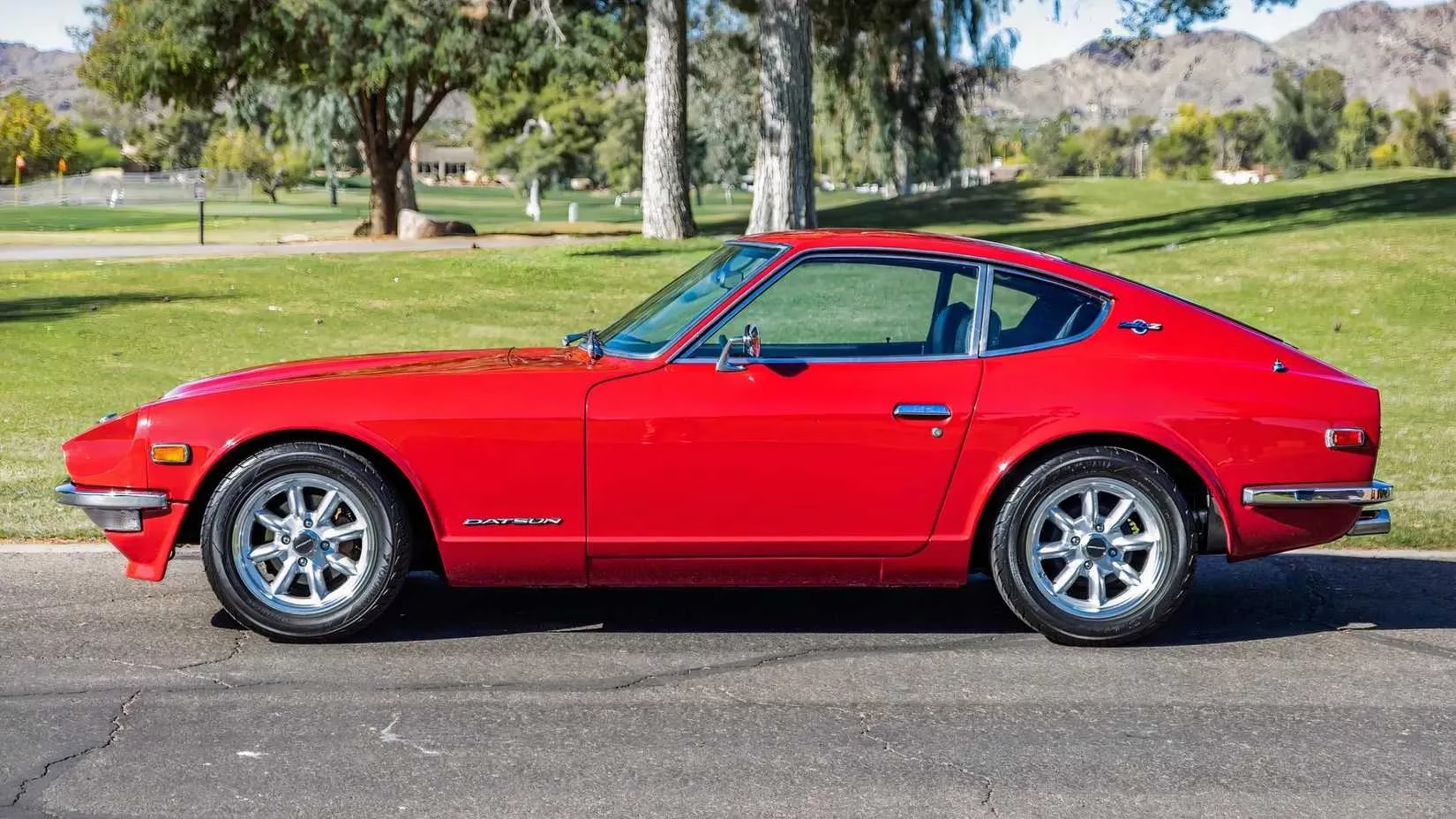
Pristine examples command even higher sums, like a yellow 1970 model with 4,152 miles listed at $49,990, or an orange one at $125,000. Yet, more affordable options exist, such as a red 240Z with 21,000 miles selling for $38,000. This price evolution isn't just about nostalgia; it's a testament to the car's enduring appeal. For collectors, the 240Z represents a pivotal moment—Japan's sports car revolution that paved the way for legends like the Toyota Supra and Mazda RX-7. Owning one today feels like holding a piece of history, where every drive evokes the raw, personal connection of a bygone era. But as we admire its legacy, one can't help but ponder: what innovations will define the next automotive revolution?
The 240Z didn't emerge in isolation; it built on earlier Japanese efforts like the Toyota 2000GT and Mazda Cosmo Sport. The 2000GT, produced from 1967-1970, was Japan's first supercar, with a 2L inline-six making 150 horsepower. Only 351 units were made, each a hand-crafted masterpiece. Meanwhile, the Mazda Cosmo Sport (1967-1972) debuted the world's first mass-produced rotary engine, offering 128 horsepower. Both cars hinted at Japan's potential, but the 240Z was the breakthrough that truly challenged Europe. Today, reflecting on this journey, it's clear the 240Z was more than metal and rubber—it was a cultural icon that proved performance could be both beautiful and attainable. 😊 As enthusiasts debate its impact, the question lingers: how will future generations interpret this automotive masterpiece?