The landscape of American automotive performance is shifting dramatically in 2026, and the catalyst can be traced back to significant regulatory changes. The relaxation of Corporate Average Fuel Economy (CAFE) standards has fundamentally altered the equation for automakers, creating a new era where raw power and simpler engineering are no longer at odds with government mandates. This pivotal shift has effectively rolled back the stringent 50.4 MPG fleet average target for 2031 to a far more attainable 34.5 MPG. For performance enthusiasts and fans of traditional American muscle, this isn't just a policy footnote—it's the starting flag for a renaissance of the iconic V8 engine. The core philosophy driving this change was a focus on reducing costs, with projections suggesting vehicle prices could drop by an average of $1,000, contributing to broader consumer savings. This, combined with the removal of penalties for non-compliance, has given manufacturers a clear signal: build what the people want.
🚗 A New Lease on Life for American Muscle
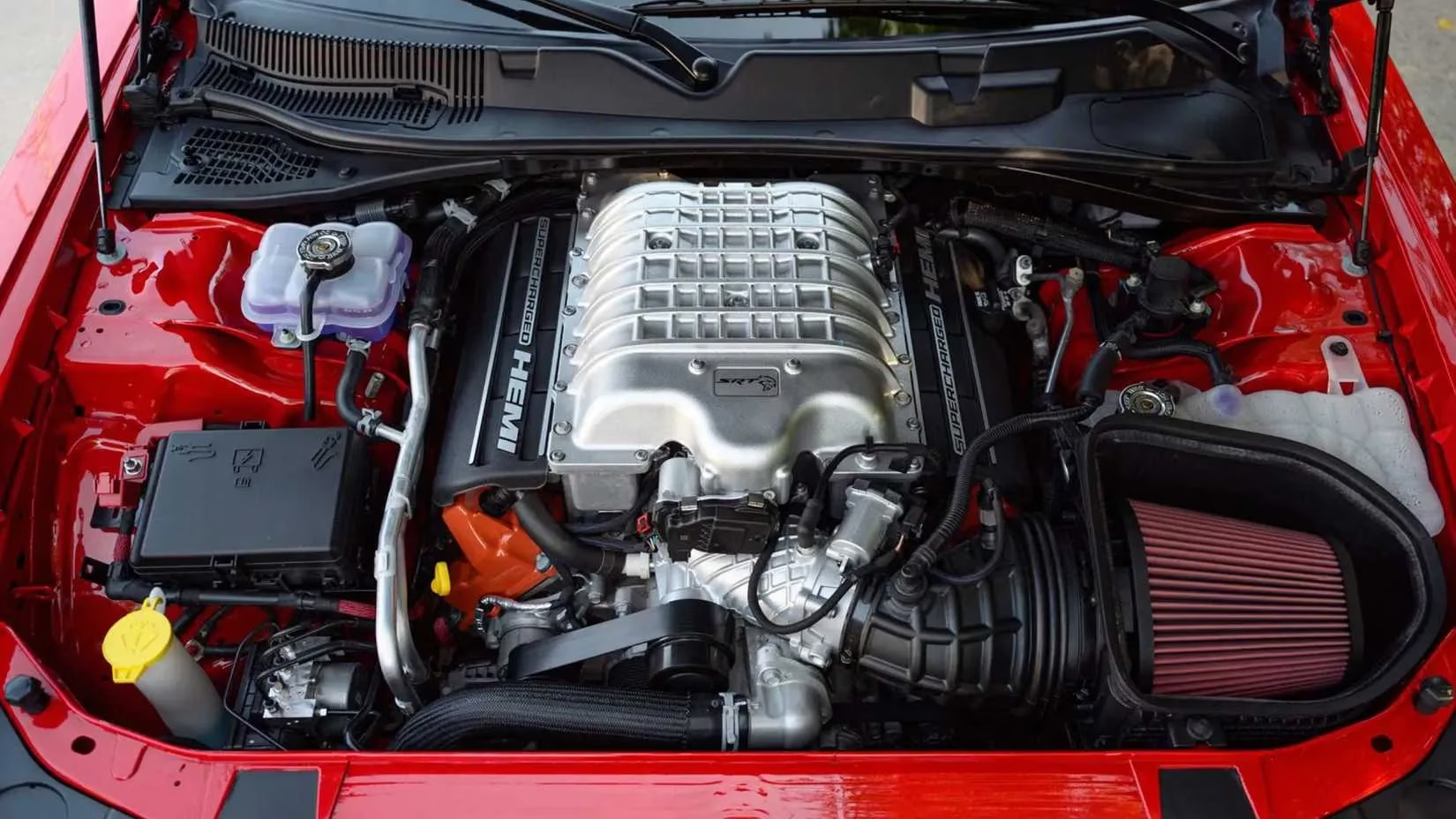
The immediate and most thrilling implication of the relaxed standards is the potential resurgence of V8-powered muscle cars and trucks. For years, the push for higher fleet-wide fuel efficiency meant that powerful, less-efficient engines became a liability in an automaker's lineup. Now, that pressure has significantly eased. We've already seen a preview of the enduring demand with successes like Ram's decision to bring the Hemi V8 back to its 1500 models—a move met with overwhelming customer enthusiasm. This proves the appetite for eight-cylinder thunder never truly vanished; it was merely suppressed by regulatory constraints. With the green light now firmly illuminated, the path is clear for a new generation of roaring Mustangs, Camaros, Challengers, and performance trucks to hit the streets, unburdened by the need to offset their thirst with a fleet of ultra-efficient hybrids.
🔧 The Reliability Revolution: Simpler is Better
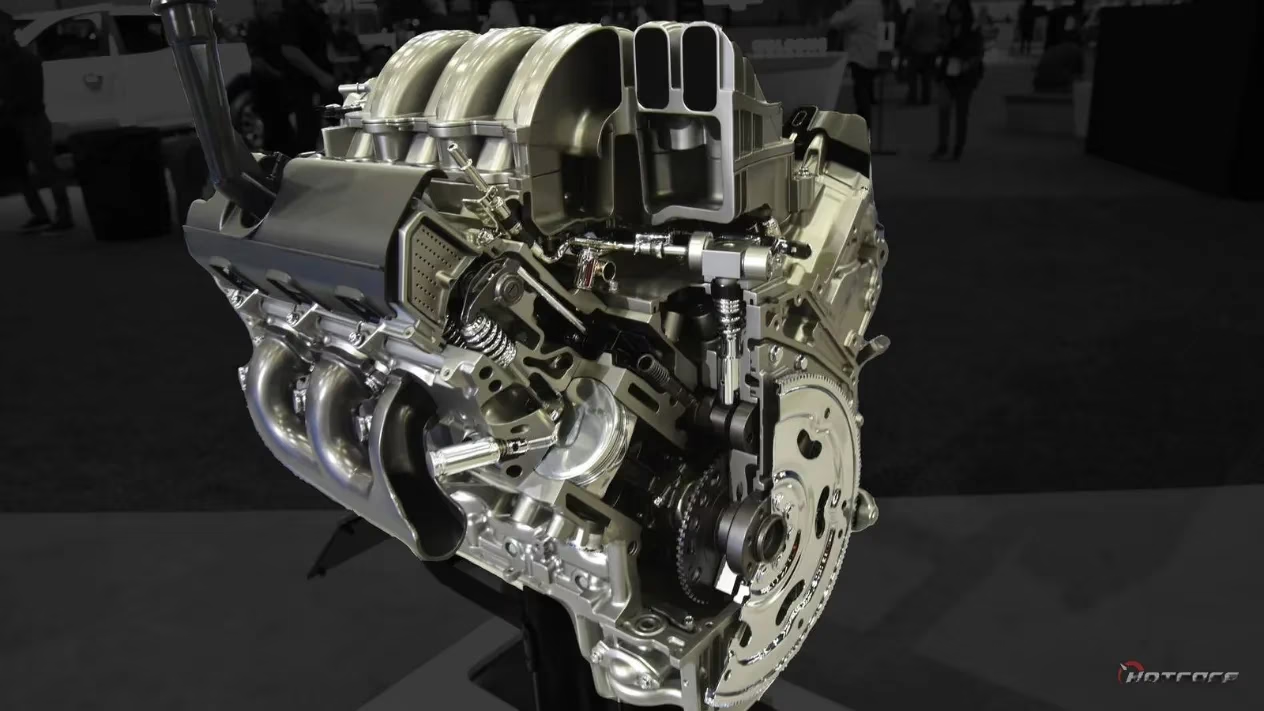
Perhaps the most profound long-term impact lies under the hood, in the very design of these modern V8s. In the quest for every last drop of fuel efficiency, manufacturers integrated complex systems like cylinder deactivation. General Motors called it Active Fuel Management (AFM), while Stellantis (Dodge/Ram) used Multi-Displacement System (MDS). These systems, which deactivate cylinders during light cruising, became notorious weak points. They have been directly linked to premature camshaft wear and catastrophic engine failures, often sending metal debris throughout the oil system and necessitating a complete rebuild.
For years, a common practice among knowledgeable owners has been the "delete"—removing or disabling these systems entirely to safeguard their engine's longevity, accepting a minor fuel economy penalty as a worthwhile trade-off. Now, with less regulatory pressure to maximize efficiency, automakers themselves have a unique opportunity. They could choose to offer more robust, simplified V8 variants without these failure-prone complexities right from the factory. Imagine a new truck or muscle car option: a pure, unadulterated V8 focused on power and durability. While not a certainty, the possibility for factory-backed, warranty-friendly simplicity is now on the table, promising a future where V8s are not only powerful but also famously reliable.
⚖️ Choice and Coexistence in the Modern Market
It's crucial to understand what this policy shift does not do: it doesn't eliminate fuel-efficient vehicles. The market for hybrids, EVs, and efficient compact cars remains strong and will continue to be served. The change simply removes a barrier, allowing a greater diversity of powertrains to coexist. Automakers now have the flexibility to cater to both ends of the spectrum without one sabotaging the other. Consumers win because they have a true choice—they can select a cutting-edge electric vehicle for daily commuting or a thunderous V8-powered cruiser for weekend joyrides, each built to excel in its own domain without compromise.
The Key Takeaways for 2026:
-
V8 Resurgence: Expect to see more V8 options returning to model lineups, especially in trucks and performance cars.
-
Potential for Greater Reliability: Simplified engine designs without mandatory complex efficiency systems could lead to more durable powertrains.
-
Consumer Empowerment: The market expands, offering genuine choice between high-efficiency and high-performance vehicles.
-
Cost Considerations: The reduced development and compliance costs for automakers may help keep vehicle prices in check.
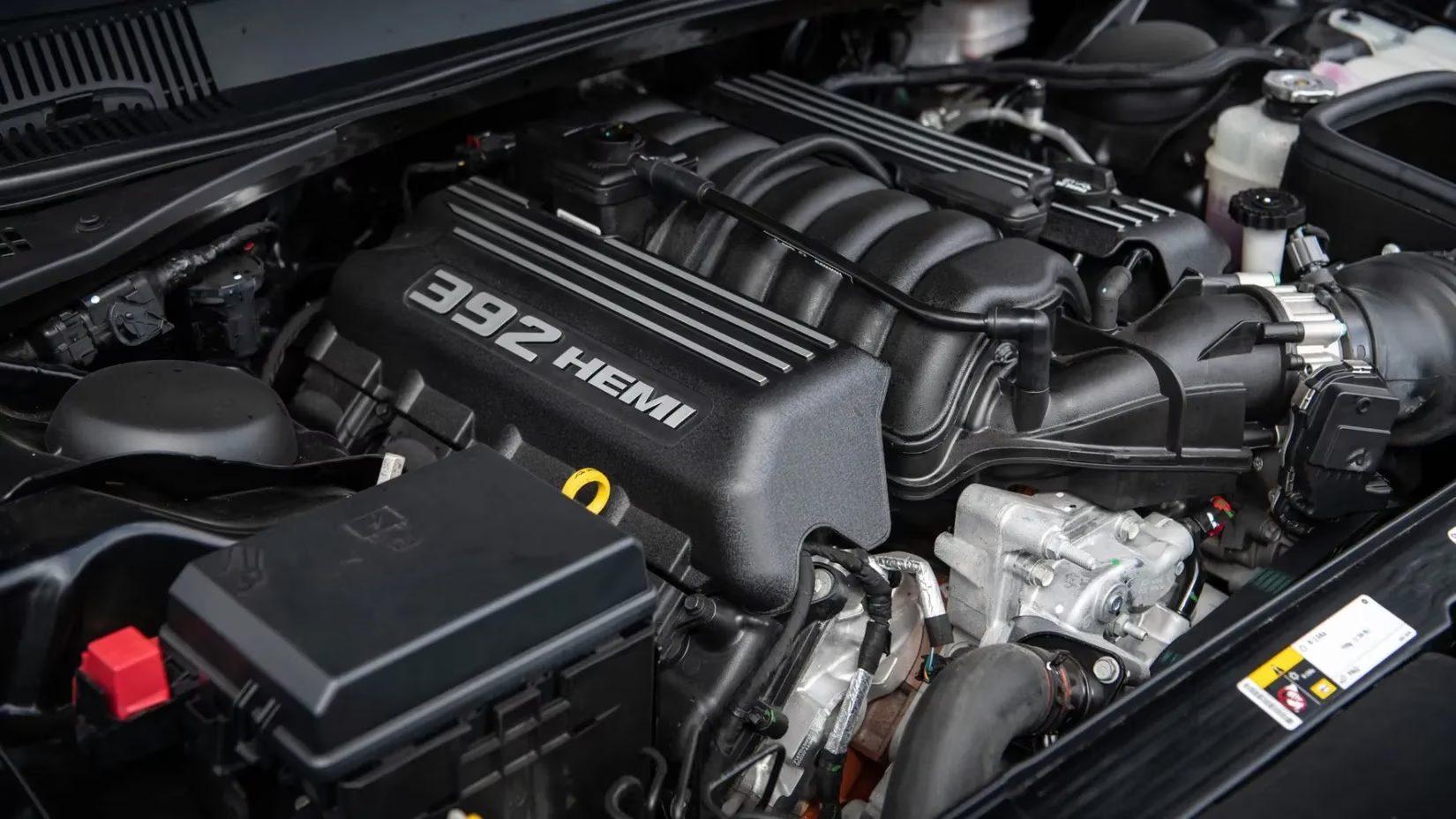
The era of the apologetic gas-guzzler is over. We are entering a period where the American V8 can be celebrated for what it has always been: a symbol of power, sound, and emotion. The updated CAFE standards have rewritten the rules of the game, turning regulatory hurdles into open roads. For those who cherish the rumble of a large-displacement engine, the future hasn't looked this bright in decades. The roar is coming back, and this time, it might just be built to last.