Not every rare Mustang is a 1960s fastback sealed away in a collector’s garage. In 2026, one of the most elusive machines wearing the galloping pony badge is the 2000 Saleen SR, a supercharged homologation special built in numbers so small that even devoted Ford fans may never see one in person. Saleen’s own historical data puts production at fewer than ten units, and some counts suggest as few as six. That is not a typo. It makes the SR rarer than the 2000 Mustang SVT Cobra R, which had a run of 300, and scarcer than many hand-built Italian exotics from the same era.
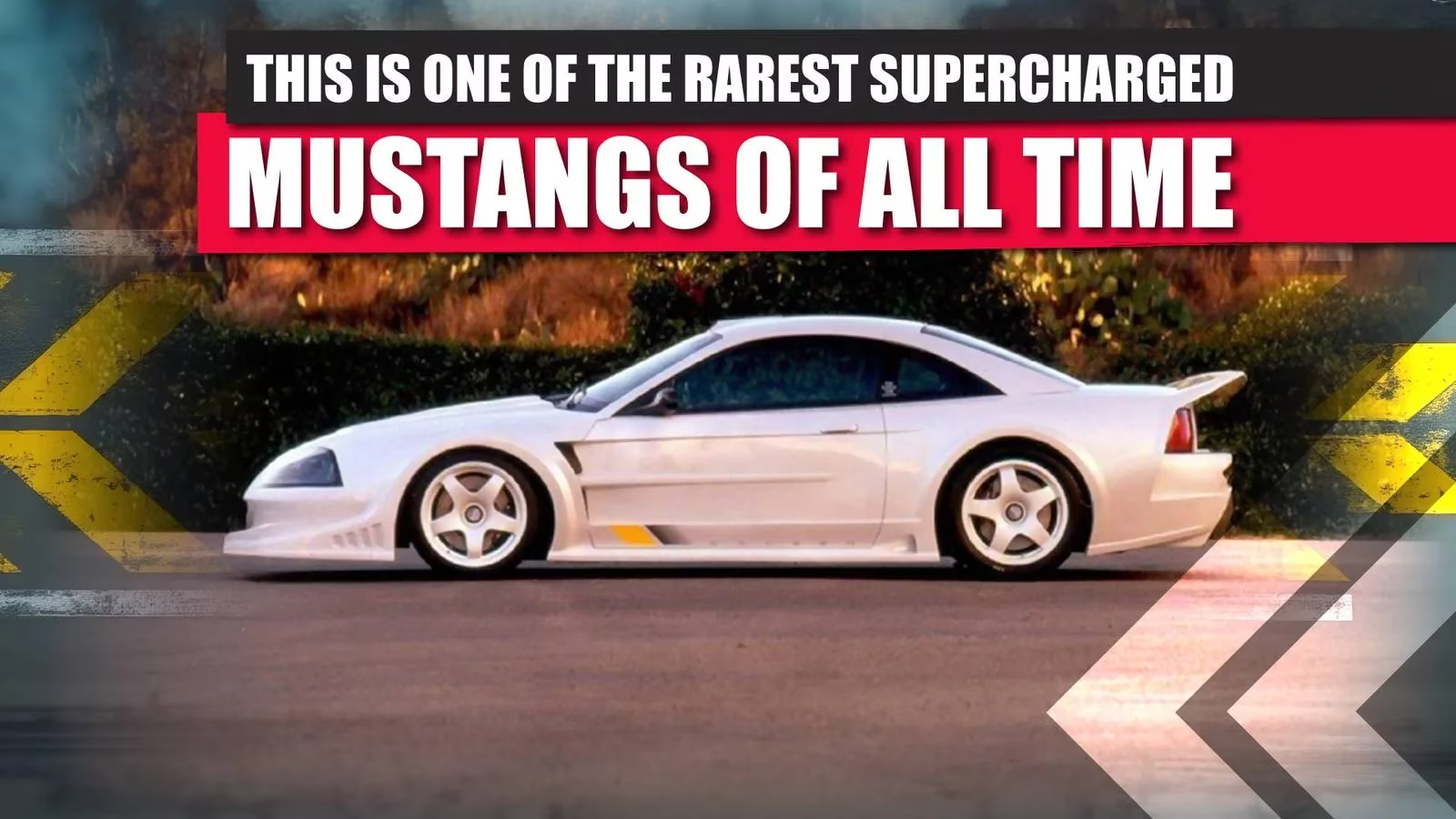
The SR did not emerge from a marketing department looking for a sticker package. It came from racing rules. In the late 1990s, Saleen’s widebody SCCA World Challenge GT cars were fighting factory-backed entries from Porsche and Chevrolet. Homologation required a road-going version, and the SR was that car. Its composite widebody panels, aggressive front fascia, and functional rear wing were shaped by the same aerodynamic work that fed the race chassis. Underneath, the suspension geometry and brake package mirrored the track setup. The result was a Mustang with a driving character closer to a competition car than any regular production pony car before it.
Racing Rules, Not Marketing, Built the SR
The SR was a re-engineered SN95 fourth-generation Mustang from the unibody outwards. Every exterior panel was unique to the SR except the glass. The widebody stance housed 18-inch wheels wrapped in Pirelli P-Zero tires, while Lockheed-Martin’s full-scale wind tunnel shaped the underbody tunnel and rear diffuser. That is race-car engineering translated into a street-legal shape, not a cosmetic exercise.
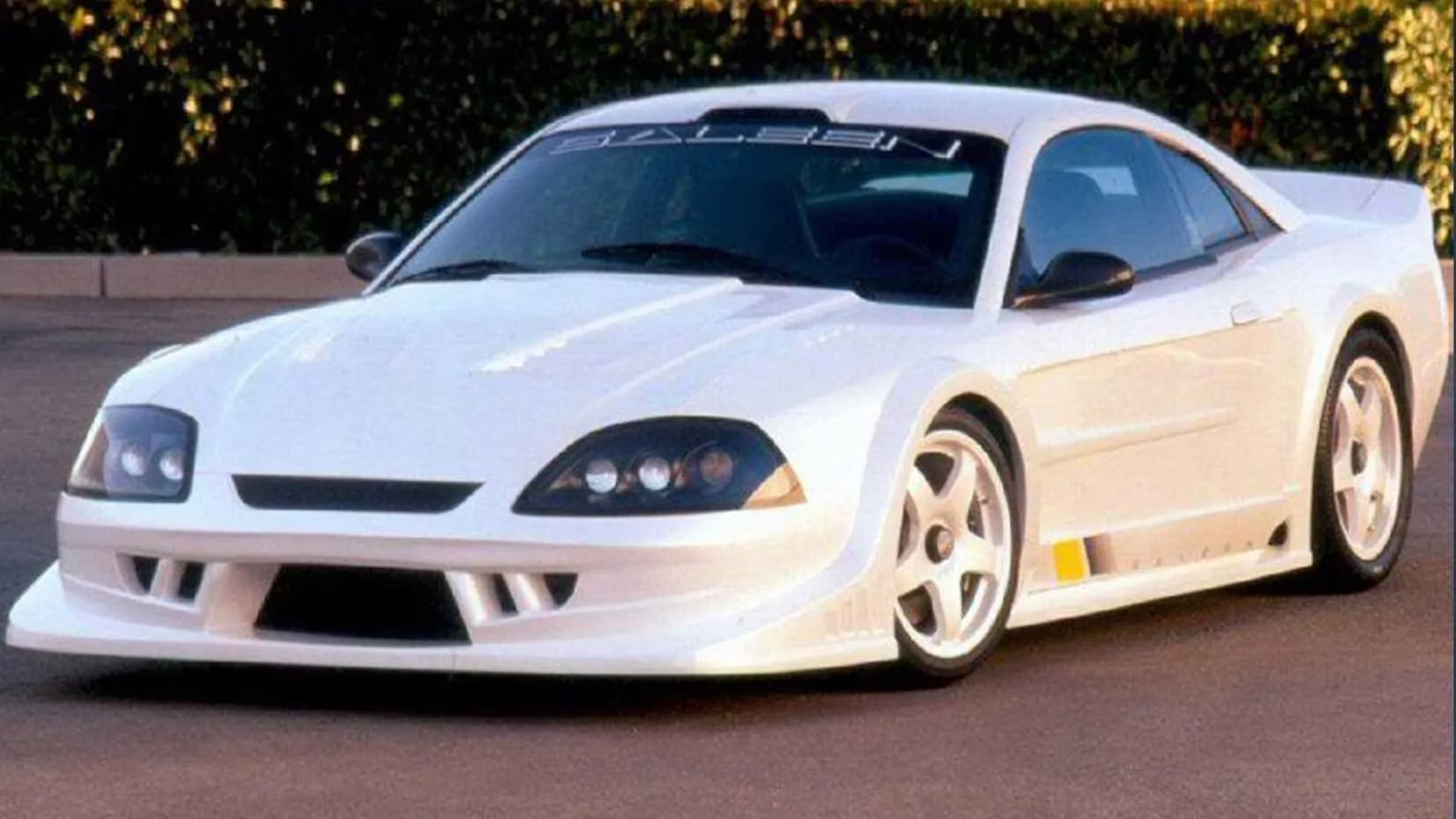
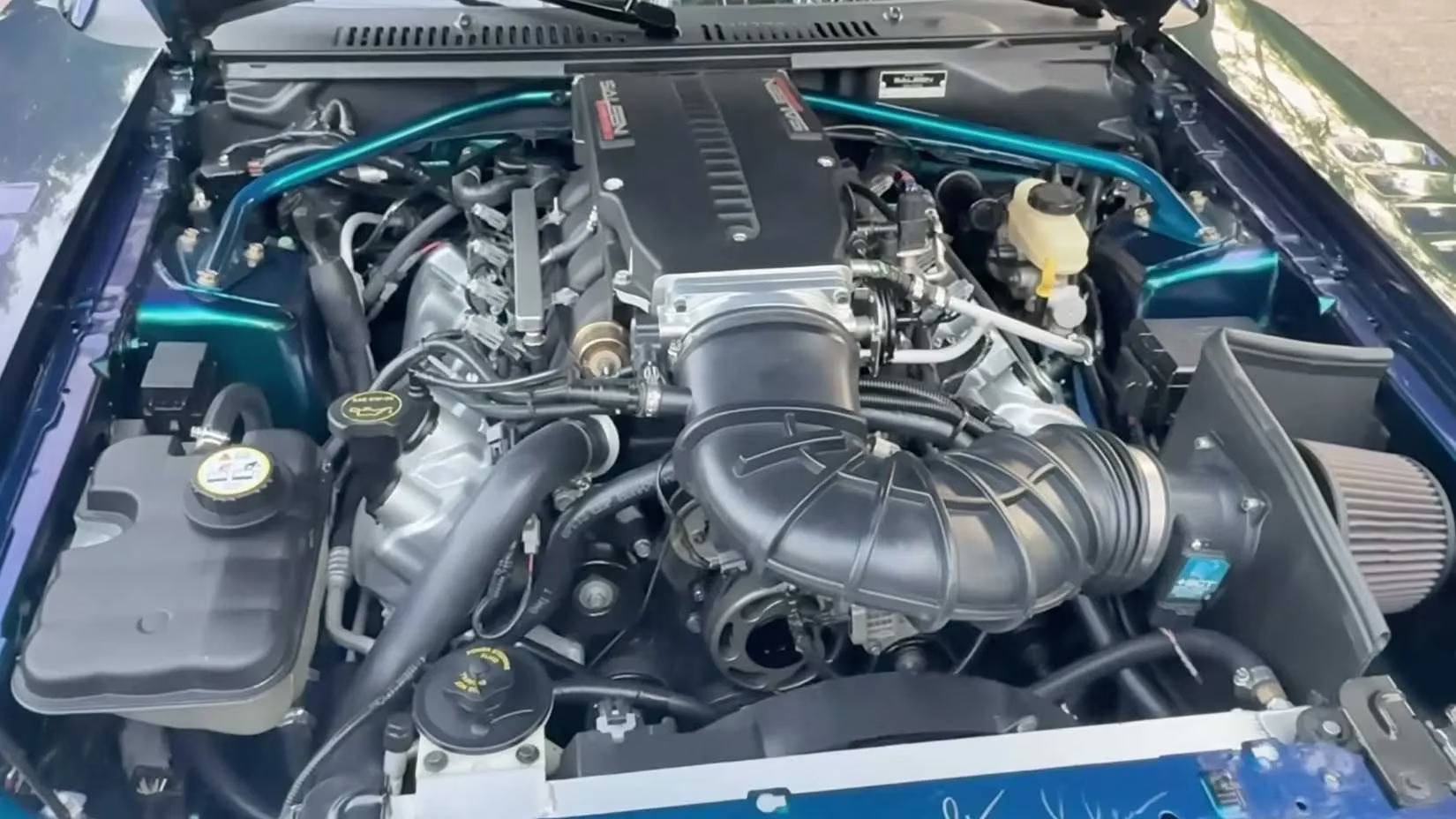
Rarity is only part of the story. The SR wears its racing DNA on its sleeve, and its spec sheet explains why collectors still pay attention decades later. Under the hood sat a 5.8-liter Ford-based V8 topped with a Saleen centrifugal supercharger, officially rated at around 505 hp and 500 lb-ft of torque. Power ran through a six-speed manual to a custom driveshaft and a Saleen-designed live rear axle. Brembo four-piston calipers clamped 14.4-inch rotors up front and 13-inch discs at the rear. The SR weighed roughly 3,350 pounds, giving it a power-to-weight ratio in the neighborhood of a Ferrari 360 Modena, though its torque curve was far wider.
| Specification | 2000 Saleen SR |
|---|---|
| Engine | 5.8-liter supercharged V8 |
| Power | About 505 hp |
| Torque | About 500 lb-ft |
| Transmission | Six-speed manual |
| Weight | Roughly 3,350 pounds |
| 0–60 mph | About 4.0 seconds |
| Quarter mile | About 11.8 seconds |
| Top speed | Around 200 mph |
| Brakes | Brembo four-piston, 14.4-inch front rotors |
| Tires | 18-inch Pirelli P-Zero |
A 505-HP SN95 With a Split Personality
Steve Saleen described the SR as a street performance vehicle shaped by race experience, saying it went from 0–60 mph very quickly and hit quarter-mile speed very fast. The numbers support the claim. Supercharged torque arrived low in the rev range and stayed strong, so the car surged forward in any gear without needing to be wrung out. The supercharger whines like it has a point to prove, and the chassis talks back over broken pavement. Not comfort. Not convenience. Speed.
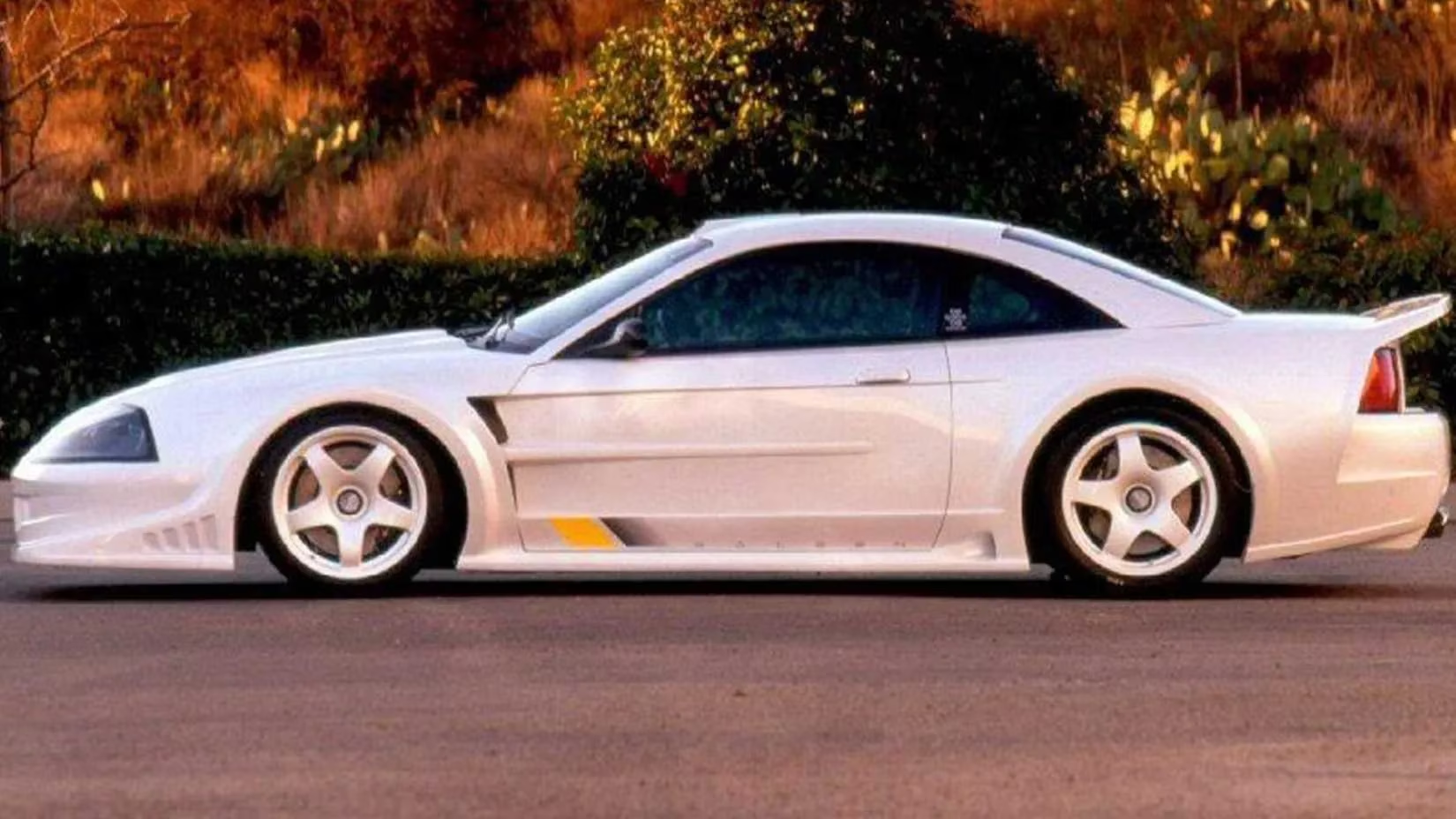
Compared with the 2000 Mustang SVT Cobra R, the SR occupied a different performance bracket. The Cobra R’s naturally aspirated 5.4-liter V8 made 385 hp and 385 lb-ft, and while it was sharp for its time, it lacked the SR’s relentless mid-range shove. The SR delivered 120 hp more while weighing roughly the same. On a straight, the Saleen would pull away decisively. To put it plainly, the Cobra R was a serious track tool, but the SR was a race car wearing plates.
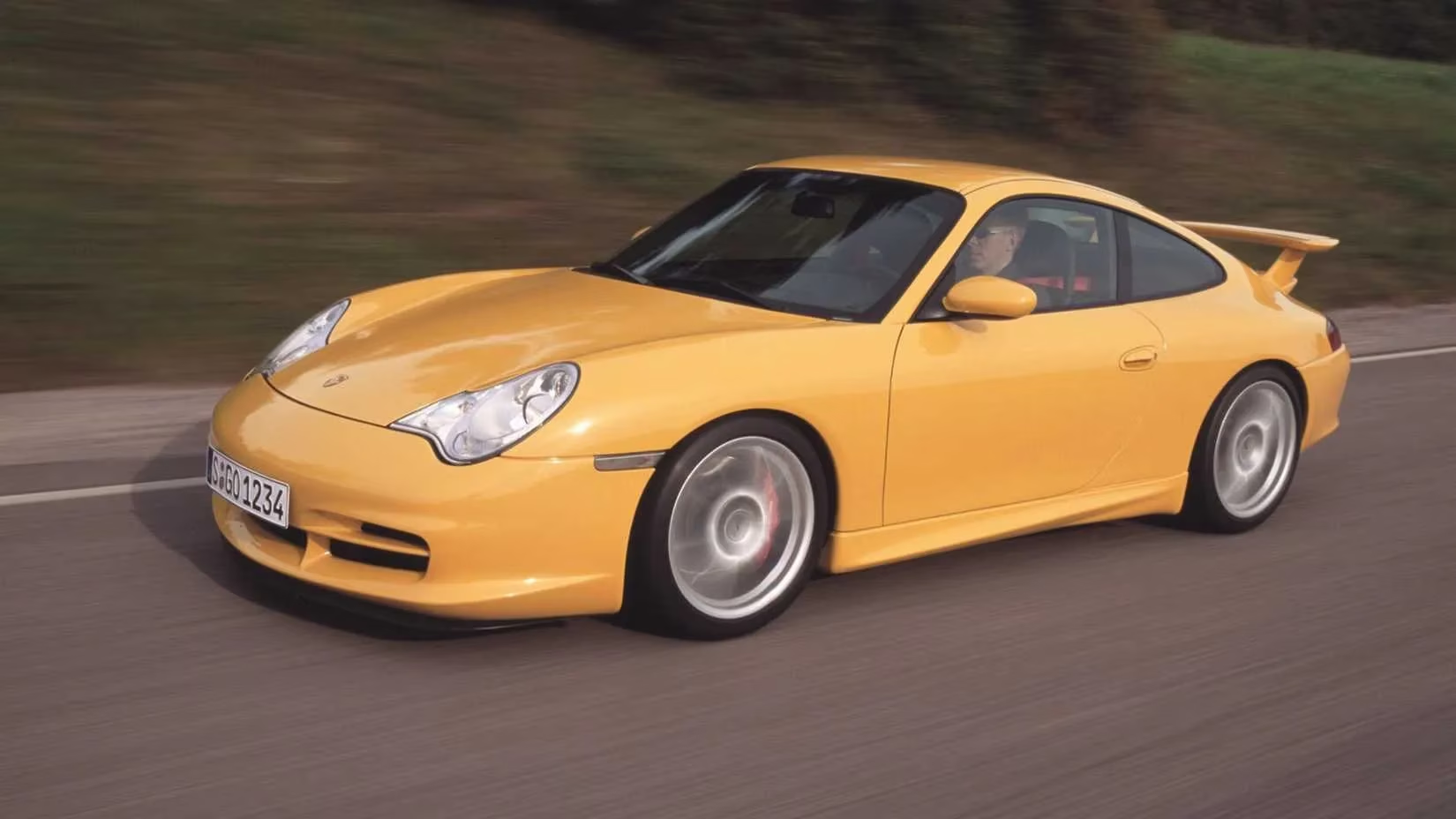
Against Europe’s benchmark, the 996-generation Porsche 911 GT3, the differences were just as stark. The GT3’s naturally aspirated flat-six made 355 hp and 273 lb-ft. It relied on revs for speed and offered sublime steering and balance. The SR countered with explosive acceleration and more mechanical grip from its wide Pirelli P-Zeros. The Porsche was refined; the Saleen was raw. On a track, the SR’s adjustable suspension, aero, and live rear axle let it rotate predictably at high speed. On the street, that same race-bred setup made it loud, stiff, and happiest when driven hard.
Why Collectors Still Talk About It in 2026
Owning an SR means accepting those quirks in exchange for the rarest supercharged Mustang ever to leave Saleen’s facility. It was not built to blend in with traffic or pamper its driver. It was built to turn every straight into a drag strip, every corner into a test of nerve, and every drive into a reminder that the driver was sitting in a race car with license plates.
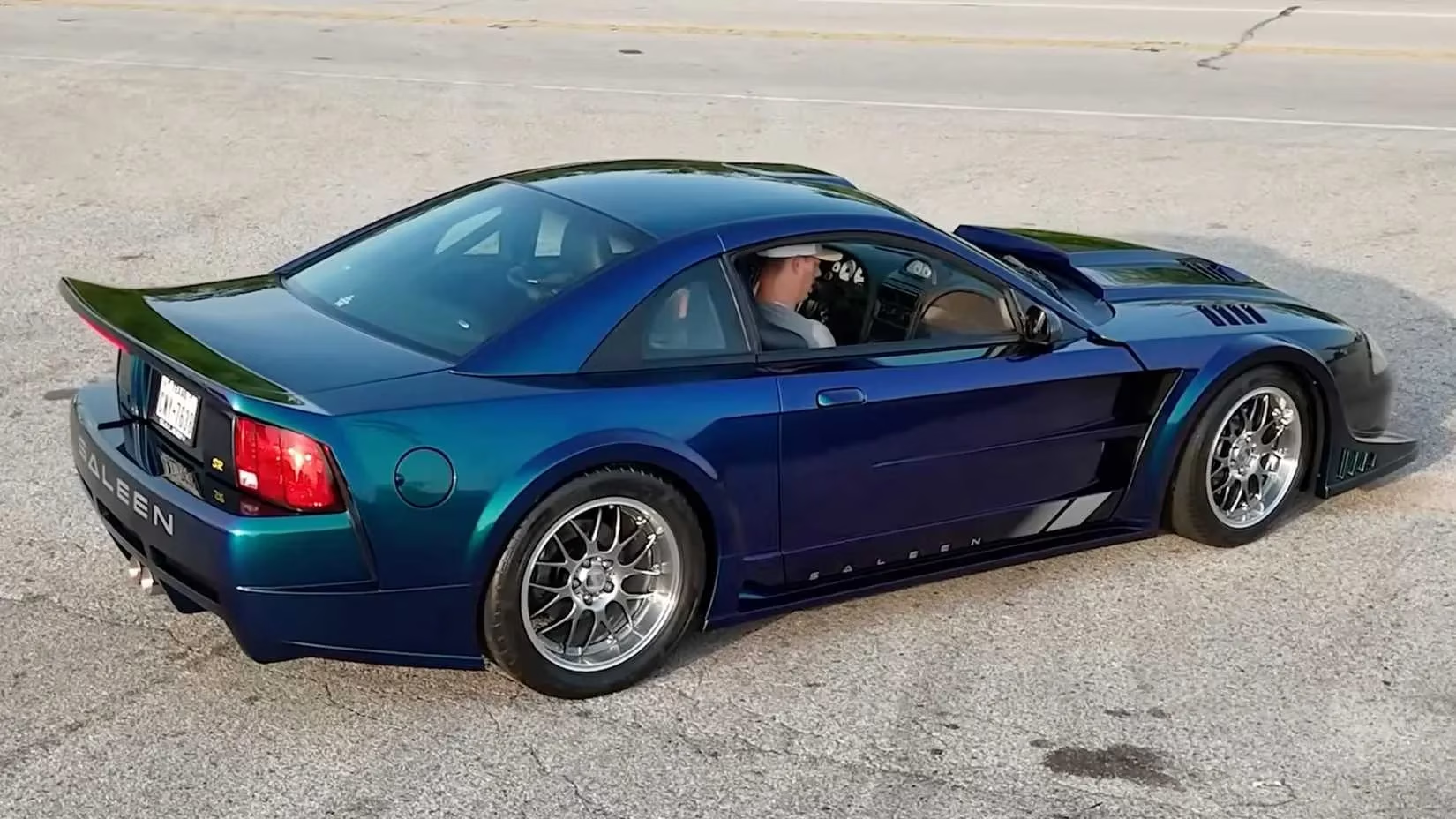
Make no mistake, the SR’s appeal goes beyond production numbers. It represents a moment when a small American manufacturer built a car to win races first, with customer satisfaction arriving as a byproduct. That reversal of priorities produced something almost mythical in Mustang circles: a supercharged pony car with genuine racing DNA, limited production, and a presence that still makes modern muscle look tame. Even in 2026, with 500-hp Mustang Dark Horse models in showrooms, the SR’s 505-hp rating and race-derived chassis keep it in a separate conversation. It is not simply rare. It is a reminder that the wildest Mustangs were sometimes built by hand, in tiny batches, for reasons that had nothing to do with showroom traffic.