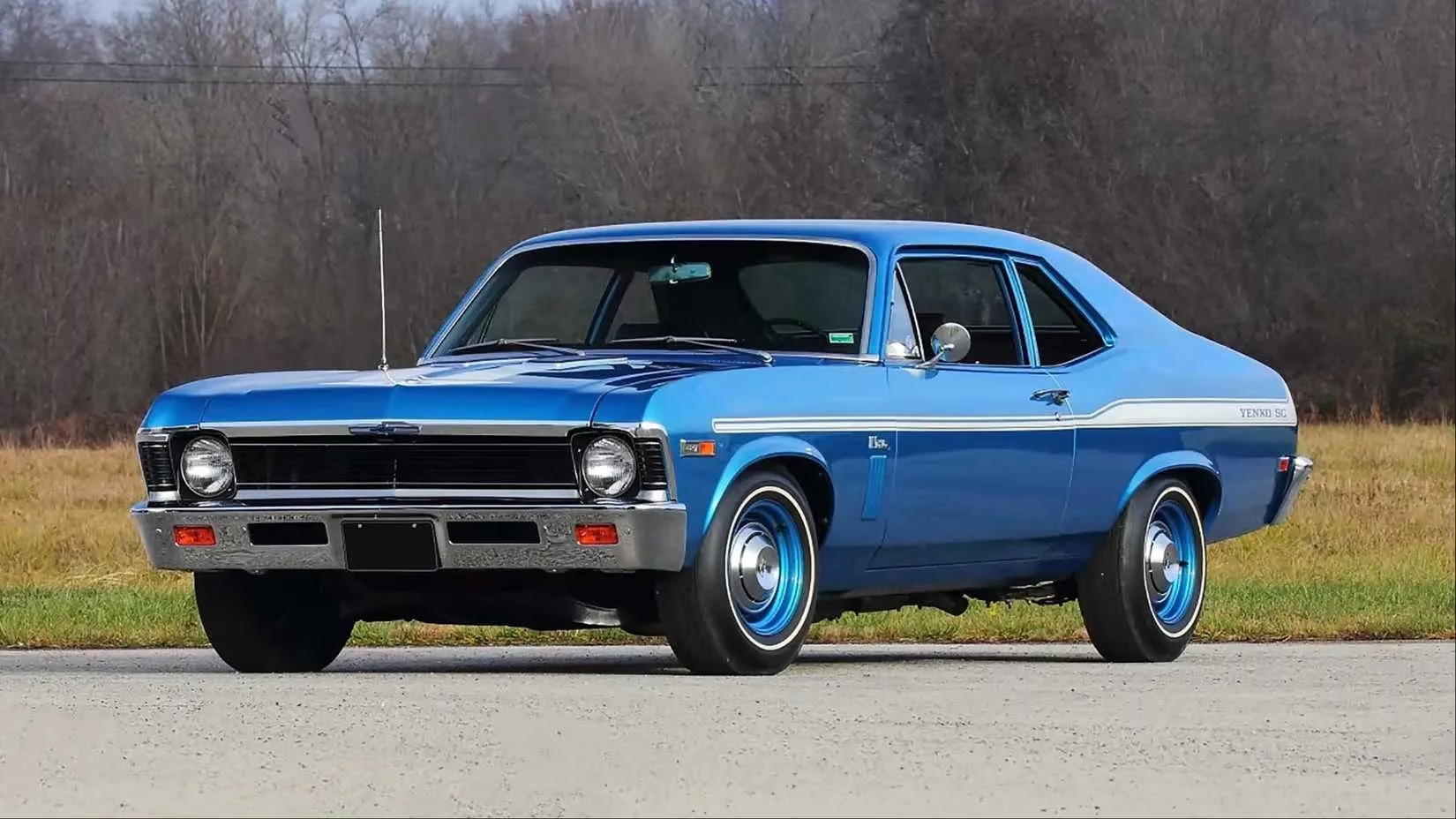
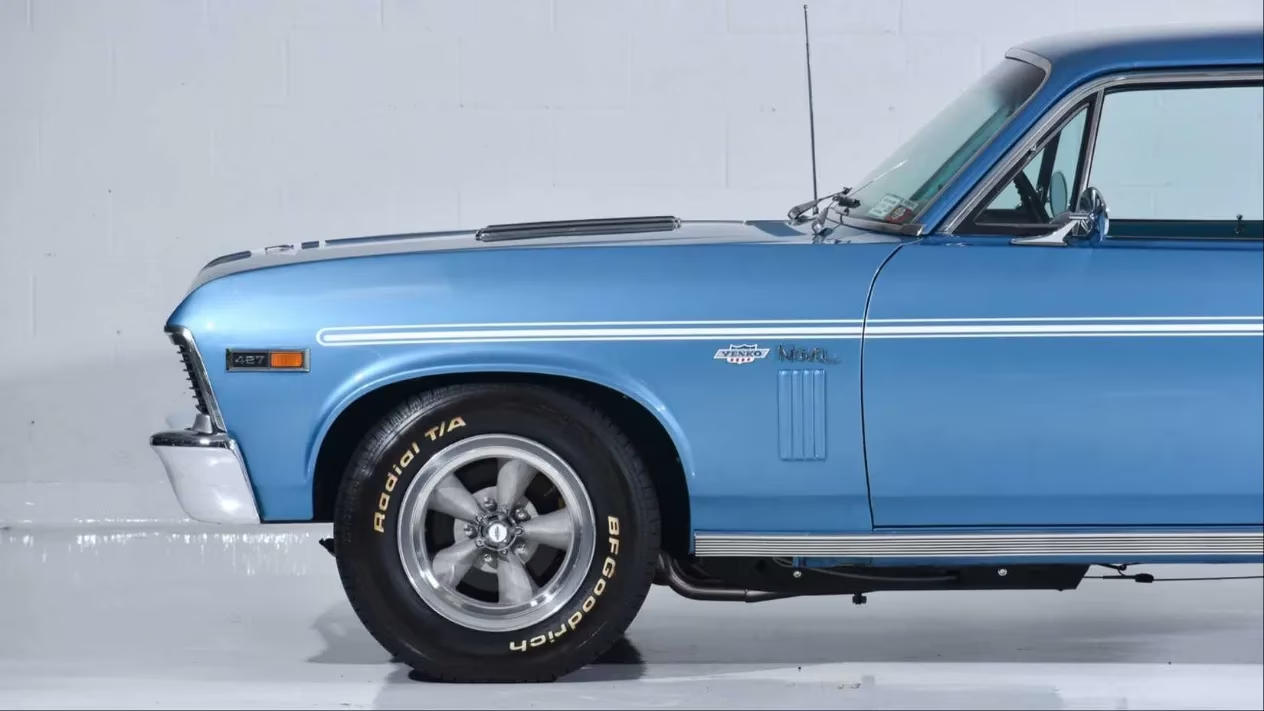
Let me tell you, folks, in the year 2026, I finally laid my eyes on a piece of automotive history so rare, so utterly unhinged, that it felt like staring at a ghost that could outrun a demon. We're talking about the 1969 Chevrolet Yenko Nova S/C 427. Picture this: the late 60s, a time of pure, unadulterated horsepower madness. Chevrolet, bless their corporate hearts, sort of winked and nodded at a project that pushed the very limits of what was legal, what was sane, and what was physically possible on a public street. This wasn't some polished, factory-sanctioned special. Oh no. This was a back-alley brawler, a compact car that was fed a steady diet of raw, terrifying power and then unleashed on an unsuspecting world. I'm telling you, this thing had enough attitude to make insurance agents break out in a cold sweat just looking at a picture of it.
The Unholy Trinity: Rarity, Rebellion, and Risk
Now, the numbers alone will make your head spin. Only 37 of these monsters were ever built in 1969. And get this—only one of those had an automatic transmission. Why? Because Chevrolet, in a moment of corporate caution, refused to officially drop the massive big-block engine into a compact Nova shell. So, what did the legendary Don Yenko do? He basically said, "Watch this." He had to order base COPO Nova SS396 models (already rare birds) and then, at his dealership in Pennsylvania, perform the engine swap himself. Talk about a DIY project from hell! This wasn't just a tune-up; this was major surgery. That level of non-standard, off-the-books customization is what made it so incredibly exclusive. It also, let's be real, made it a legal nightmare waiting to happen. It was the muscle car equivalent of a moonshine runner's car—built for one purpose, and definitely not for following the rules.
Today, in 2026, it's believed that fewer than ten of the original cars are still documented and accounted for. That kind of scarcity is just... mind-blowing. This extreme rarity has rocketed their value into the stratosphere. We're talking solid six-figure territory, with one pristine example reportedly fetching around $380,000 at auction a few years back. With so few cars and such a powerful, almost mythical identity, the Yenko Nova SC 427 isn't just rare; it's Chevrolet's ultimate forbidden fruit from the golden age of muscle.
The Creator's Confession: "A Beast, Almost Lethal"
The most telling part of this whole wild story? Don Yenko himself. The man who built it reportedly called the Nova "a beast, almost lethal" and admitted it was "barely legal at best." Can you imagine? The guy who created this rolling thunderstorm of horsepower looked at his own creation and basically said, "Yep, this thing is dangerous." That raw, honest acknowledgment from its creator tells you everything you need to know about the sheer, unbridled performance that was crammed into a chassis that was never designed to handle it. It's like Frankenstein admitting his monster was a bit too good at smashing things.
The Heart of the Hurricane: Pure, Unfiltered Power
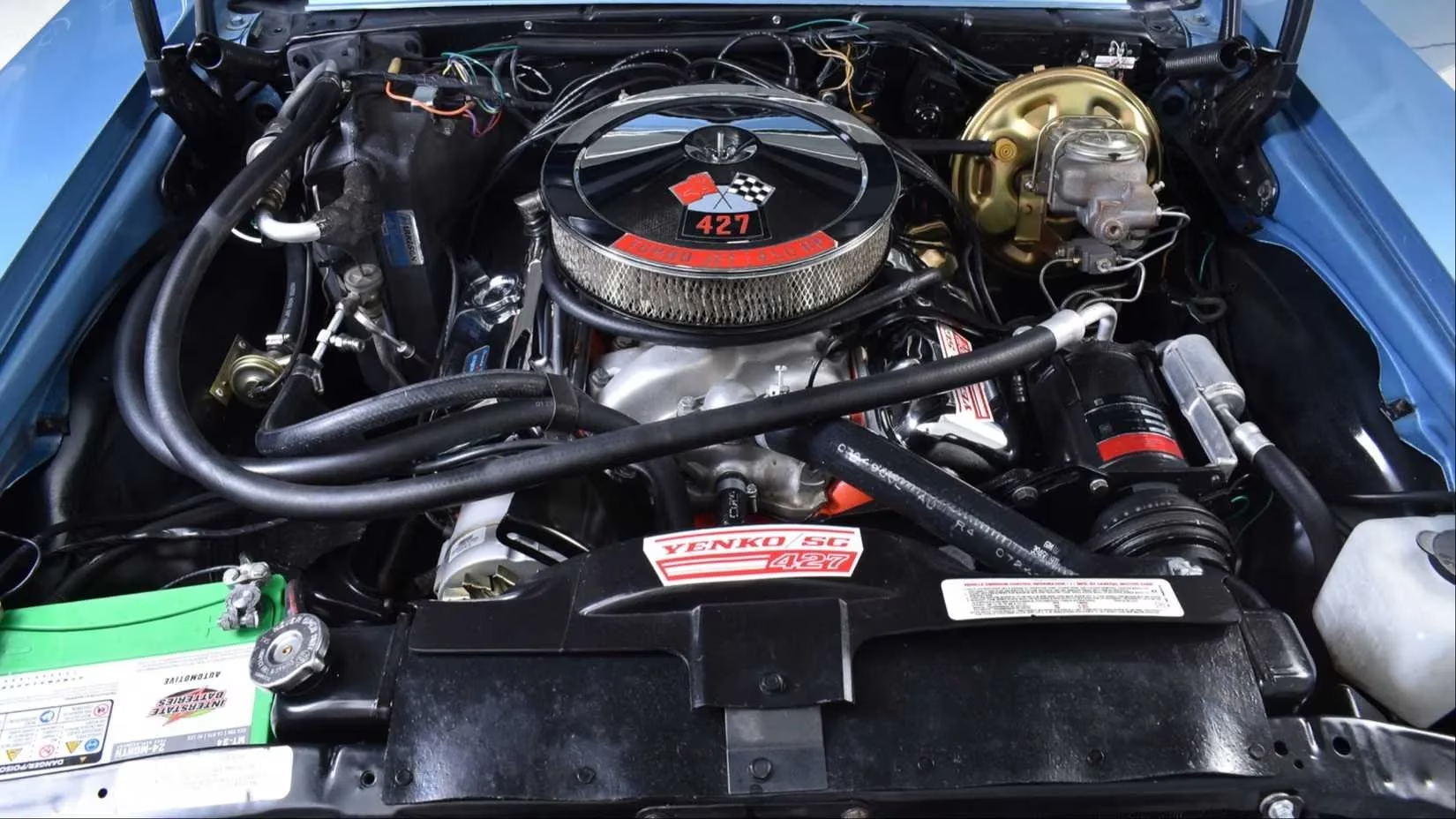
Let's pop the hood on this beast, shall we? Sitting in there wasn't your average V8. It was Chevrolet's legendary L72 427 cubic-inch V8, factory-rated at a respectable 425 horsepower and 460 lb-ft of torque. But here's the kicker—after Yenko's team got their hands on it, that number likely crept closer to a jaw-dropping 450 horsepower. This nuclear reactor of an engine sent all that fury through a rugged Muncie M21 four-speed manual transmission, a gnarly 4.10 Posi-traction rear end, and a heavy-duty SS suspension system. They basically took braking and handling components that would make a European sports car blush and brute-forced them into the lightweight, unassuming shell of a Chevy Nova. The result? Absolute chaos on wheels.
Performance figures for its time were nothing short of apocalyptic:
-
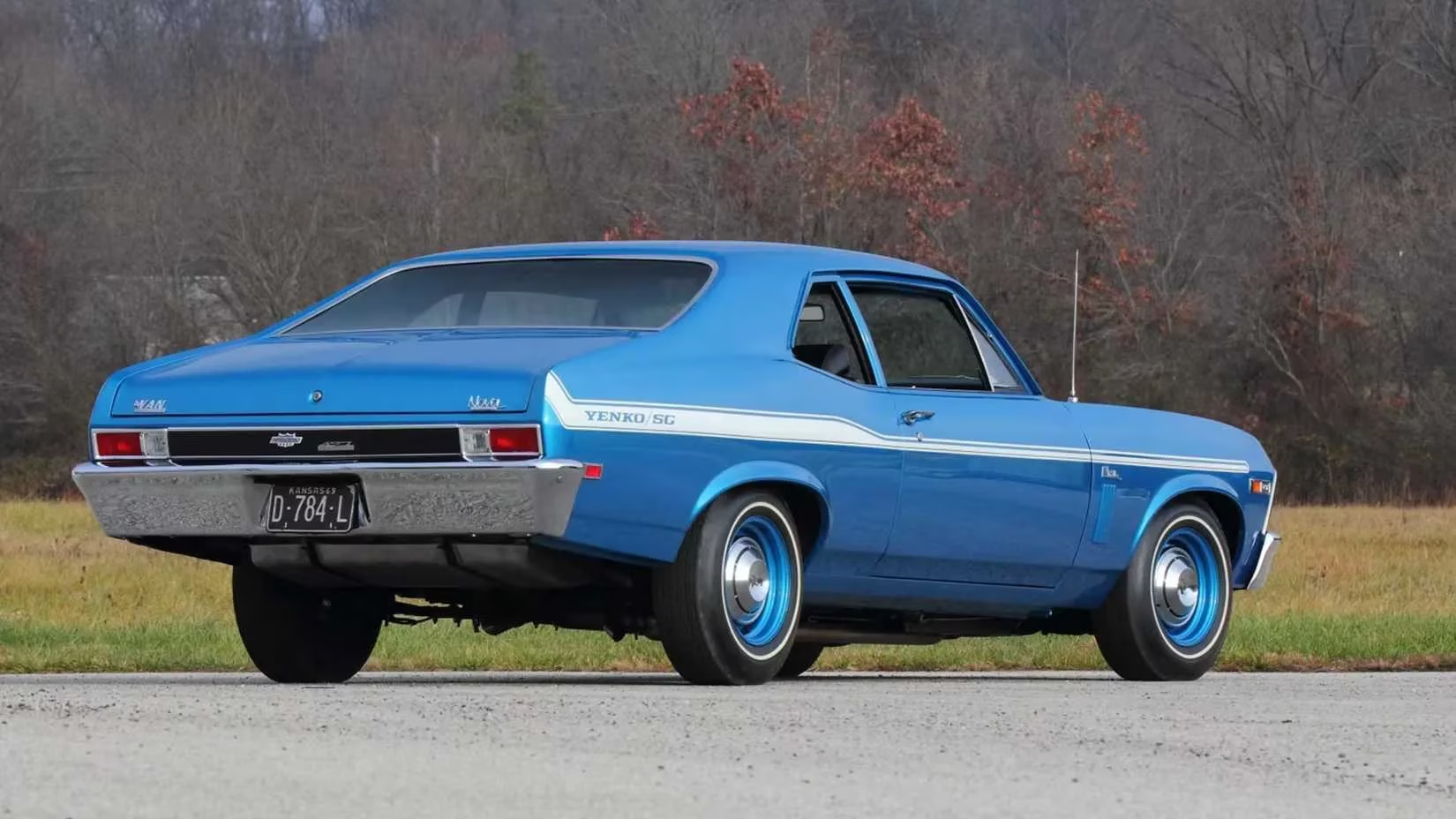
0-60 mph: Around 5 seconds. In 1969! That's supercar territory, even by today's standards.
-
Quarter-mile: Well under 11 seconds when fitted with proper slicks. It could humble cars with much bigger reputations.
This kind of speed was comparable to the absolute top-tier muscle cars and sports cars of the era, but it was all packaged in a compact, unsuspecting format. It was a wolf in, well, a wolf's clothing that just happened to look like a sheep from a distance.
A Driving Experience Not for the Faint of Heart
Now, driving this thing? Buckle up, buttercup, because it was an exercise in controlled terror. The handling was... let's call it "unforgiving." The lightweight body combined with the immense, neck-snapping torque meant finding traction was a constant battle, even on smooth, dry pavement. The interior was stripped down to the bare essentials to save weight: rubber mats instead of carpet, a basic bench seat, and minimal trim. This wasn't a luxury cruiser; it was a purpose-built drag strip assassin that you could, technically, drive on the street. Driving a Yenko Nova required:
-
Skill: You had to know how to handle raw power.
-
Nerve: You needed the courage to actually use that power.
-
Respect: A deep, healthy fear of the envelope this car was designed to push right through.
It was the perfect vehicle if you wanted to make absolutely sure no one else would dare to drive it when you weren't looking. Seriously, who would be crazy enough?
The Legacy of an Outlaw
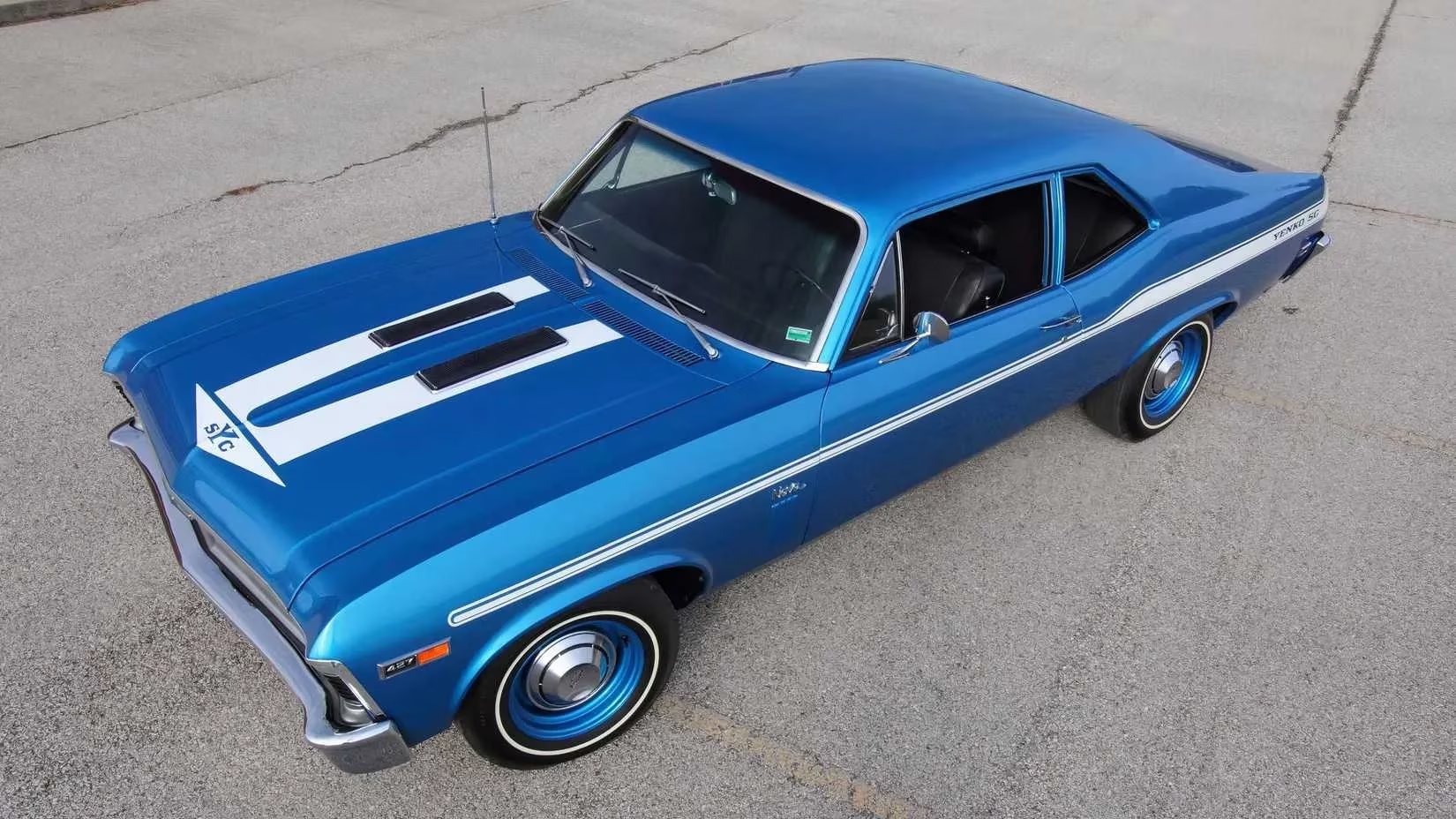
What makes the Yenko Nova SC 427 even more special is its origin story. Unlike most of Don Yenko's other creations, which used GM's Central Office Production Order (COPO) system, the Nova was a true outsider. Chevrolet's refusal to officially support the build meant Yenko had to go it alone, elevating its exclusivity and cementing its rebellious, outlaw character. This wasn't a corporate project; it was a passion project that broke the rules. It's one of car culture's coolest "stick-it-to-the-man" stories.
Later models, like the Yenko Deuce, came with more sensible engines like the LT1 350 and tried to play nicer with insurance companies and new emissions regulations. But let's be honest—none of them packed the same shock-and-awe, earth-shattering punch as the original 427. That makes the 1969 Nova SC 427 not just mechanically rare, but culturally distinct in the entire Yenko family tree.
The Myth Lives On in 2026
In today's collector circles, these cars are prized like holy relics. It's not just about the horsepower or the scarcity—it's about the sheer audacity of the build. In muscle car mythology, owning a functioning Yenko Nova SC 427 is like being the guardian of a lost legend. The math is brutal: few were ever made, even fewer survived the decades, and I'd bet good money that fewer still have owners brave enough to actually drive them the way they were meant to be driven.
The 1969 Yenko Nova S/C 427 remains a legend not for what it was allowed to be, but for what it defiantly refused to be: compliant, safe, or sensible. It was 37 examples of pure automotive anarchy. Power that outraced its own limitations, a creator who admitted it skirted liability, and a legacy built entirely on audacity. As I stood there looking at it, I realized Chevrolet's rarest muscle car was, and forever will be, a ride too hot for normal roads and too coveted for the world to ever forget. It's a snapshot of a time when madness ruled the asphalt, and I, for one, am so glad it exists.