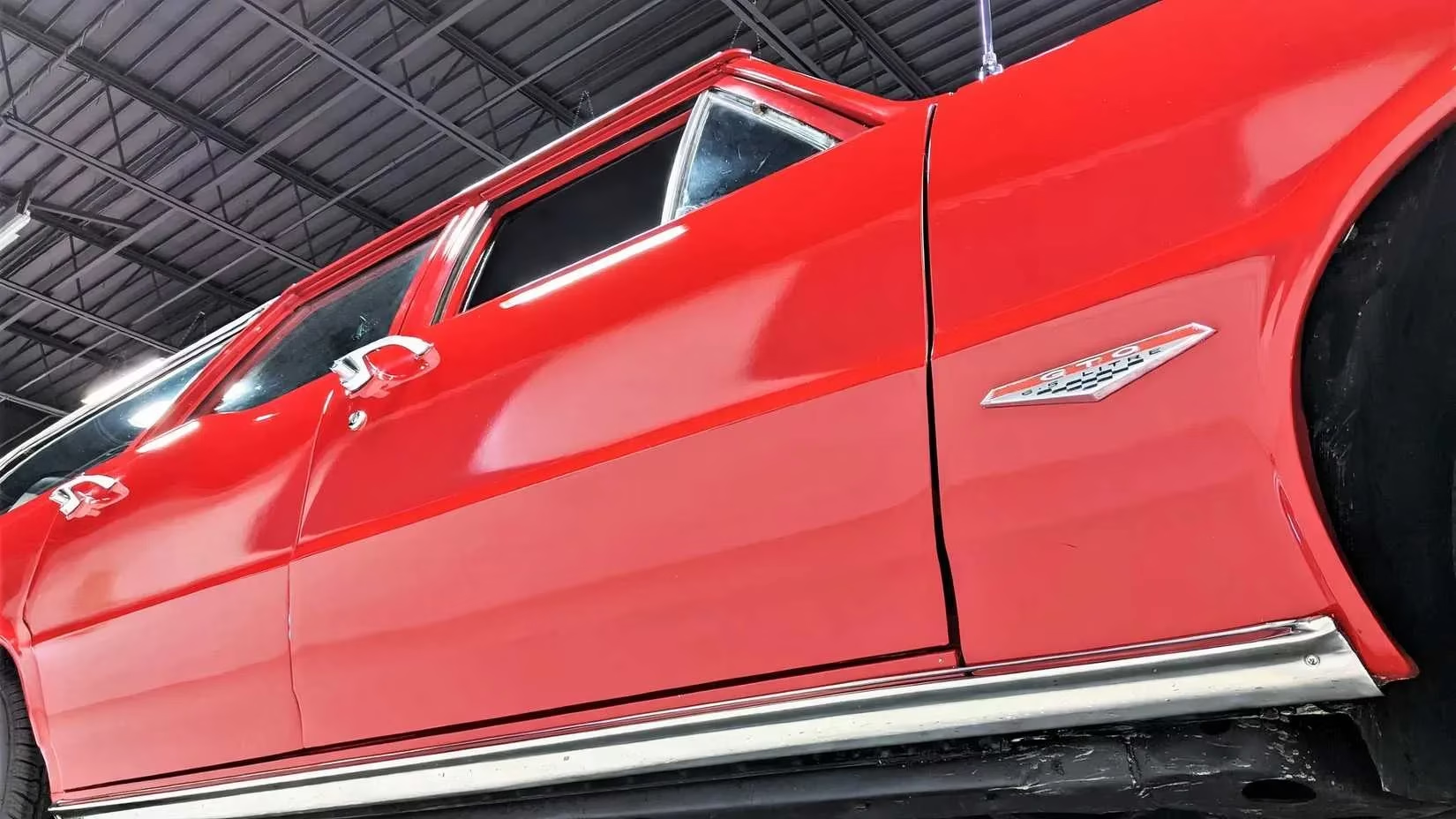
Back in the early 1960s, the automotive world was neatly divided. On one side, you had the raw, untamed muscle cars, built for drag strips and showing off. On the other, you had the sensible, practical station wagons, designed for school runs and grocery hauls. The two were like a librarian and a rockstar—never meant to share the same stage. That was, until 1964, when Pontiac decided to do the unthinkable. They took the heart of a legend—the GTO's 389 cubic inch V8—and dropped it into the unassuming body of a family station wagon. The result? The birth of the muscle wagon, a glorious contradiction that was as fast as it was practical. Let me tell you, as a gearhead, this wasn't just a car; it was a declaration of war on boring. 🚀
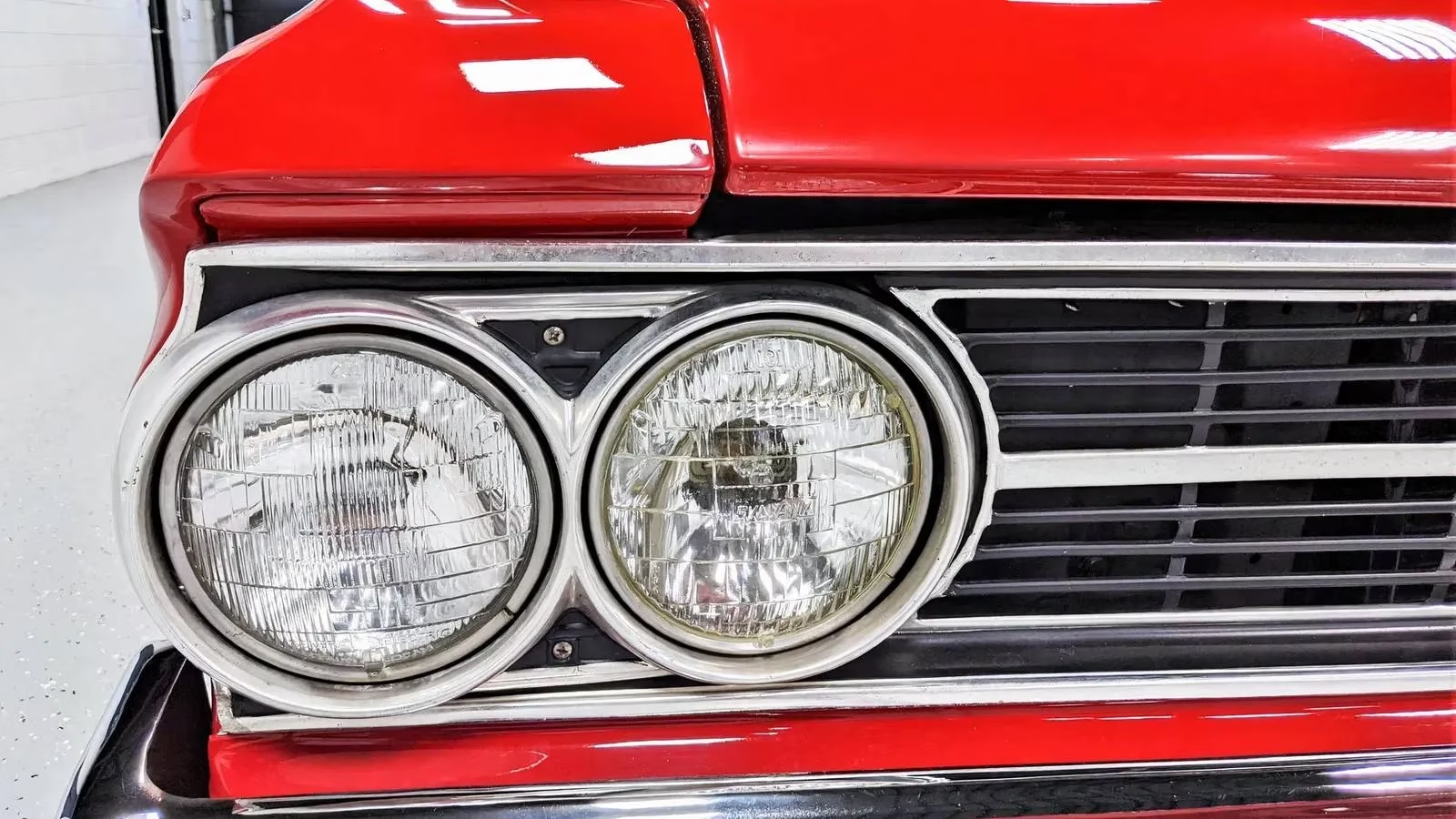
The Unholy Alliance: GTO Power in a Wagon Shell
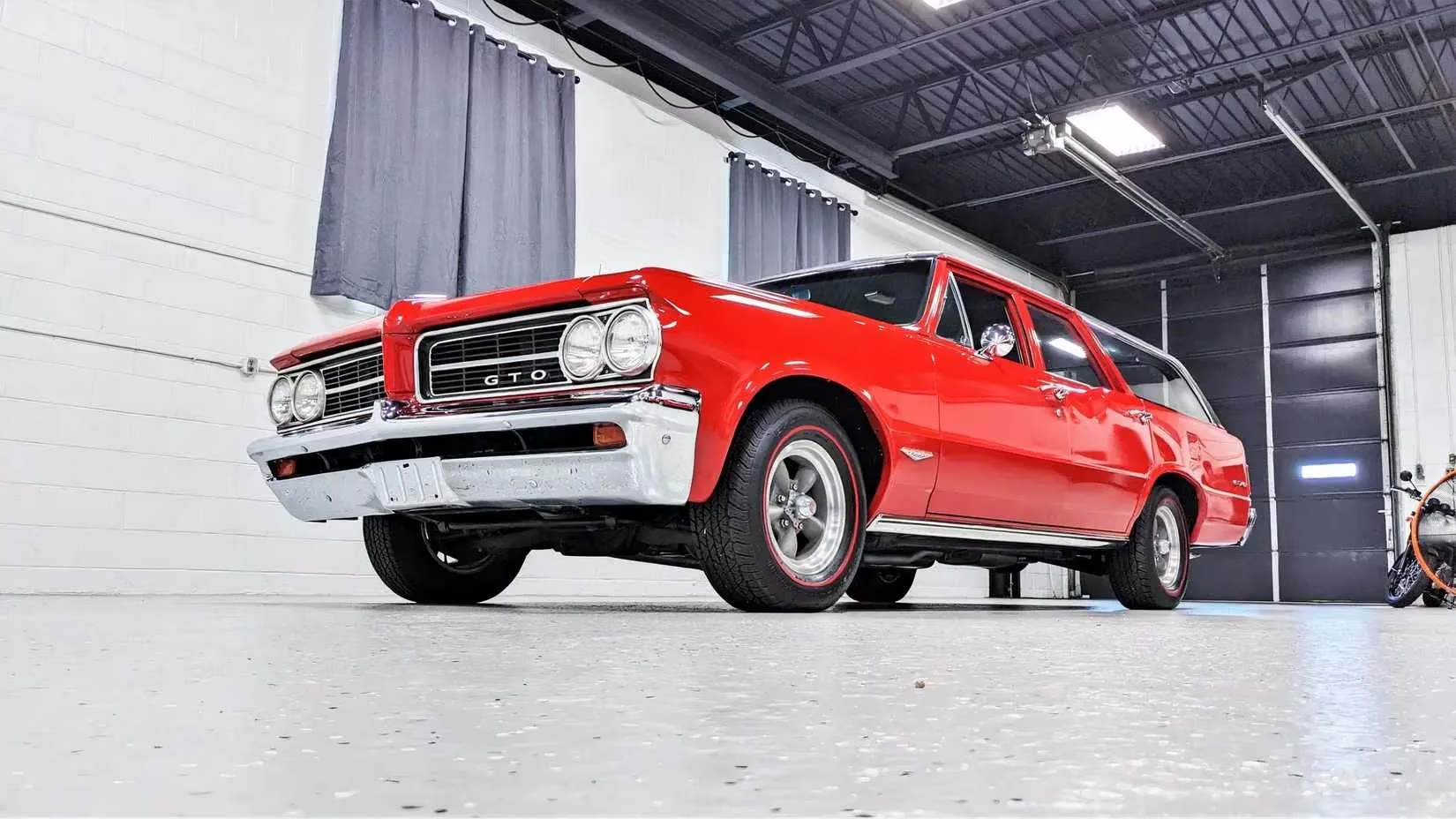
Pontiac was already riding high on the success of the GTO, the car that practically invented the muscle car segment. But someone in their engineering department had a moment of pure, unadulterated genius (or madness, depending on who you ask). They looked at the humble Tempest LeMans Safari Wagon, a vehicle built on the same A-body platform as the GTO, and saw not just a hauler of kids and dogs, but a blank canvas for performance.
They proceeded to cram the legendary 389 V8 under that long, wagon hood. This wasn't some anemic, detuned version. We're talking:
-
Base Power: 325 horsepower.
-
Tri-Power Option: A staggering 348 horsepower from three two-barrel carburetors.
Imagine that for a second. In 2026, we're used to fast SUVs, but in 1964, this was like putting a jet engine in a school bus. The powerplant was a sleeping volcano under the sheet metal, waiting to erupt.
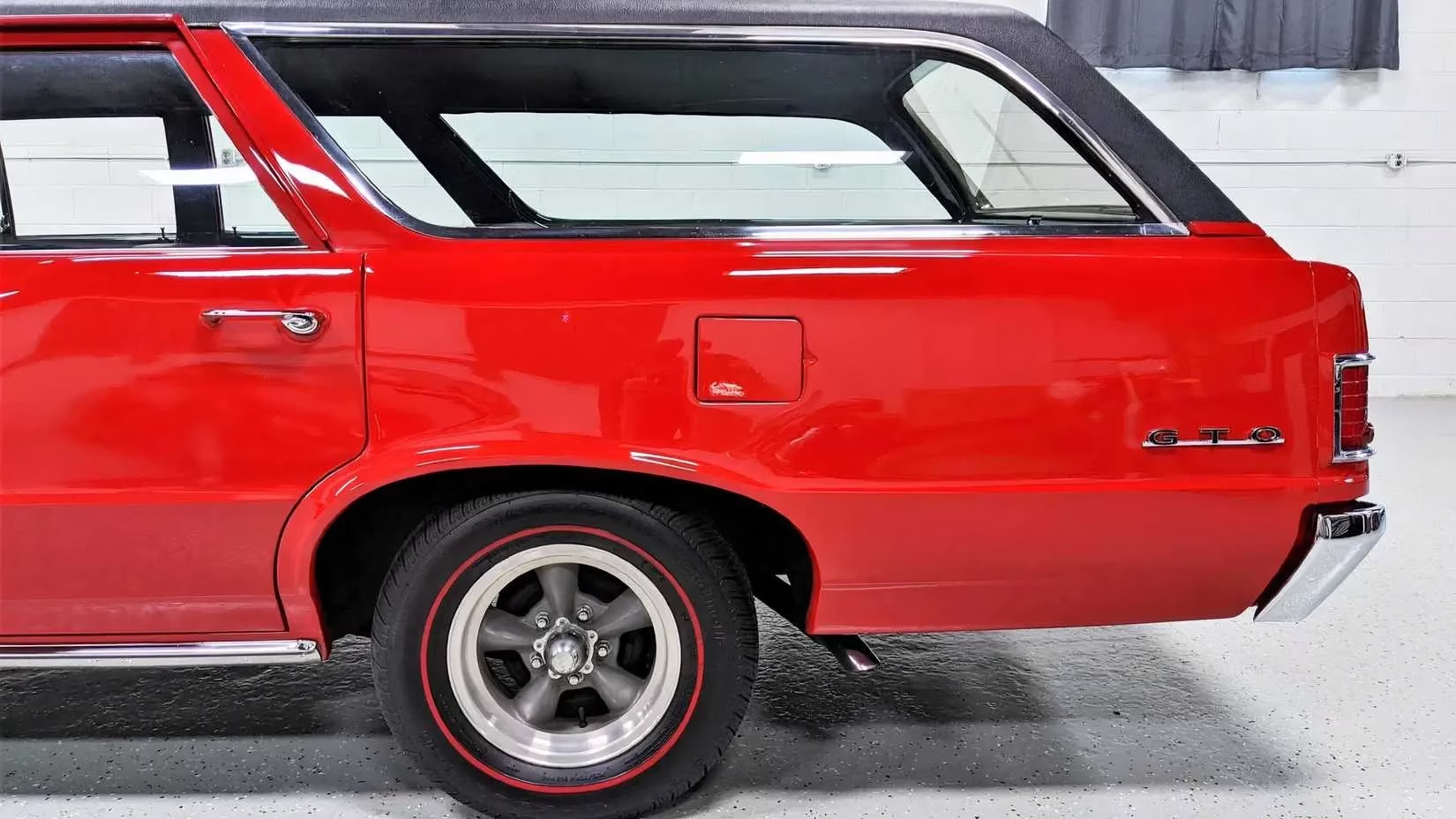
The Ultimate Sleeper: Looks That Deceive
This wagon was the automotive equivalent of a wolf in sheep's clothing, or better yet, a grandmaster chess player disguised as a tourist. On the outside, it had all the classic wagon hallmarks:
-
A long, practical roofline.
-
A roof rack for luggage (or more likely, a canoe).
-
A massive, family-friendly cargo area.
But Pontiac wasn't about to let it look too sensible. They sprinkled it with performance DNA:
-
That aggressive, signature Pontiac split grille up front.
-
Sharp, muscular body lines that hinted at its potential.
-
Available chrome trim and sporty rally wheels.
You could even option it with bucket seats, a center console, and a floor-mounted shifter, making the driver's seat feel less like a minivan and more like the cockpit of a proper muscle car. Its stance was confident, planted on wide tires, ready to convert all that V8 power into forward motion—and tire smoke.
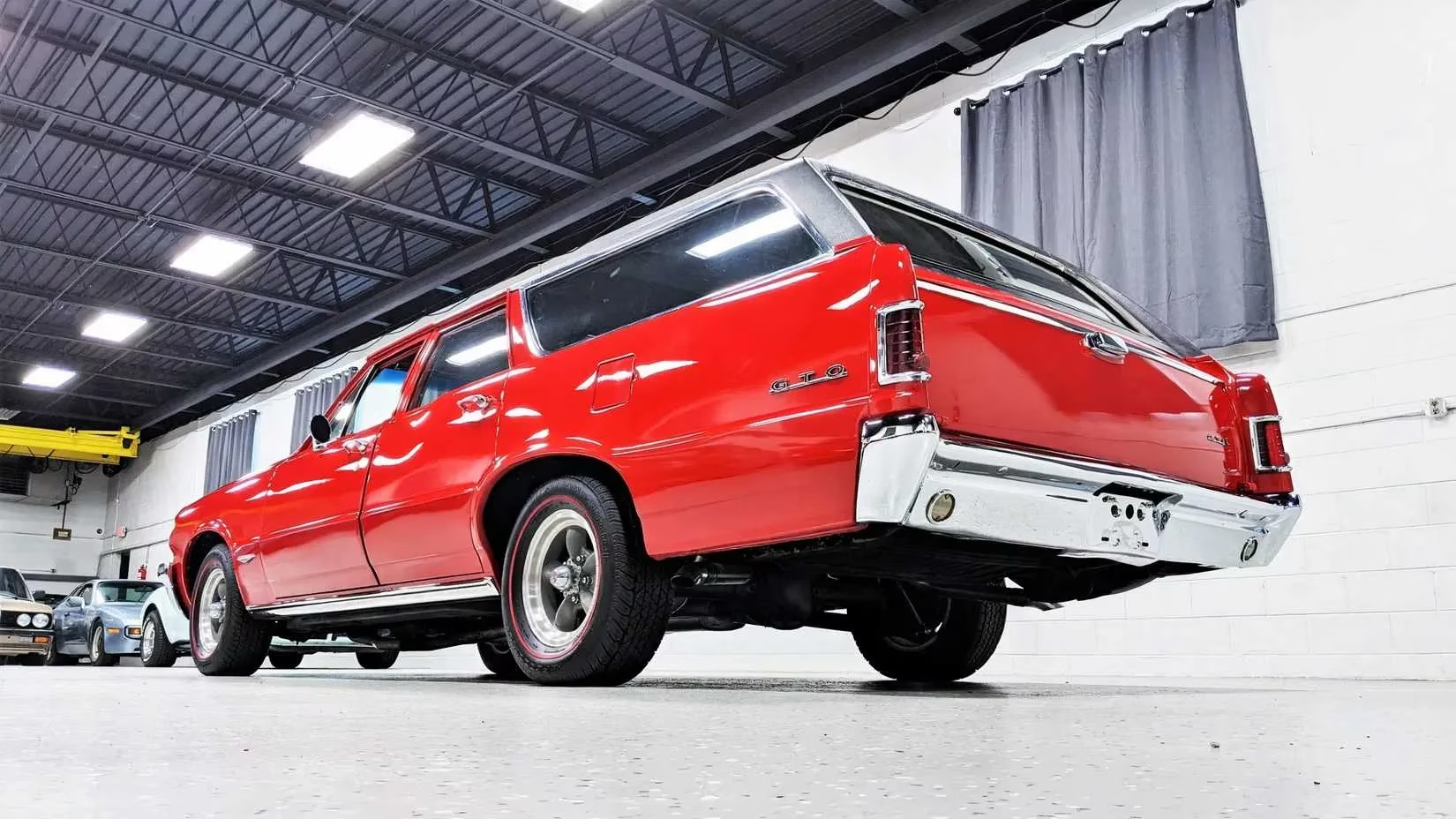
Performance: More Than Just a Straight-Line Wonder
Now, let's talk about how this beast moved. With the Tri-Power 389, the Tempest wagon wasn't just fast for a wagon; it was fast, period. It could embarrass many dedicated two-door "performance" cars of its era. The driving experience was transformed:
-
Throttle Response: Aggressive and immediate, like a startled cat.
-
Exhaust Note: A deep, throaty rumble that was completely at odds with its body shape.
-
Acceleration: Forceful enough to make passengers instinctively grab the "oh crap" handles.
But here's the kicker—it wasn't a one-trick pony. Pontiac tuned the suspension, borrowing from their sportier models, so it handled twisty roads with a grace that belied its size. It wasn't a sports car, but it was far from the wallowing "land yacht" you'd expect. With optional power steering and brakes, you could actually enjoy driving it, not just point it in a straight line and hold on.
Legacy and Collectibility: The Rare Unicorn
Pontiac's gamble created more than just a cool car; it created a new category and a lasting legacy. The Tempest LeMans Safari Wagon 389 was a proof of concept that performance and practicality weren't mutually exclusive. It paved the way for every high-performance wagon and SUV that followed, right up to the monsters we see on roads today.
Fast forward to 2026, and finding one of these is like finding a perfectly preserved fossil of a mythical creature. They are incredibly rare. While many standard Tempest wagons were made, very few left the factory with the big V8. This scarcity has made them highly prized by collectors.
The Market Today (2026 Context):
| Aspect | Detail |
|---|---|
| Average Market Value | Nearly $30,000 for a good example. |
| Record Sale | A stunning $43,150 at a premier auction. |
| The "Holy Grail" | An original, unmodified, numbers-matching 389 V8 wagon. |
Many of these wagons were driven hard, modified by enthusiasts, or simply worn out. A factory-correct survivor is a true piece of automotive history. If one pops up at an auction today, expect a fierce bidding war. It's not just a car; it's a symbol of an era when automakers dared to be different, blending raw power with everyday life in a way that still feels revolutionary. This wagon wasn't just a mode of transport; it was a middle finger to convention, wrapped in woodgrain and chrome. A true icon. ✨