Muscle cars have always been the loud, tire-shredding soul of American automotive culture. They were built for stoplight brawls, drive-in bragging rights, and the glorious illusion that a full tank of gas could solve most problems. Most were mass-produced so the working man could afford a big engine and a small amount of common sense. A few, however, escaped that fate and became blue-chip collectibles. As of 2026, their auction prices look less like car values and more like phone numbers. The following ten machines represent the summit of American muscle car excess, based on record auction results and collector valuation trends. Remember: a classic car is worth whatever a buyer will pay and a seller will accept. Emotion, timing, and rarity often matter more than a spreadsheet.
10. 1969 Chevrolet Camaro ZL-1 — $1.094 Million
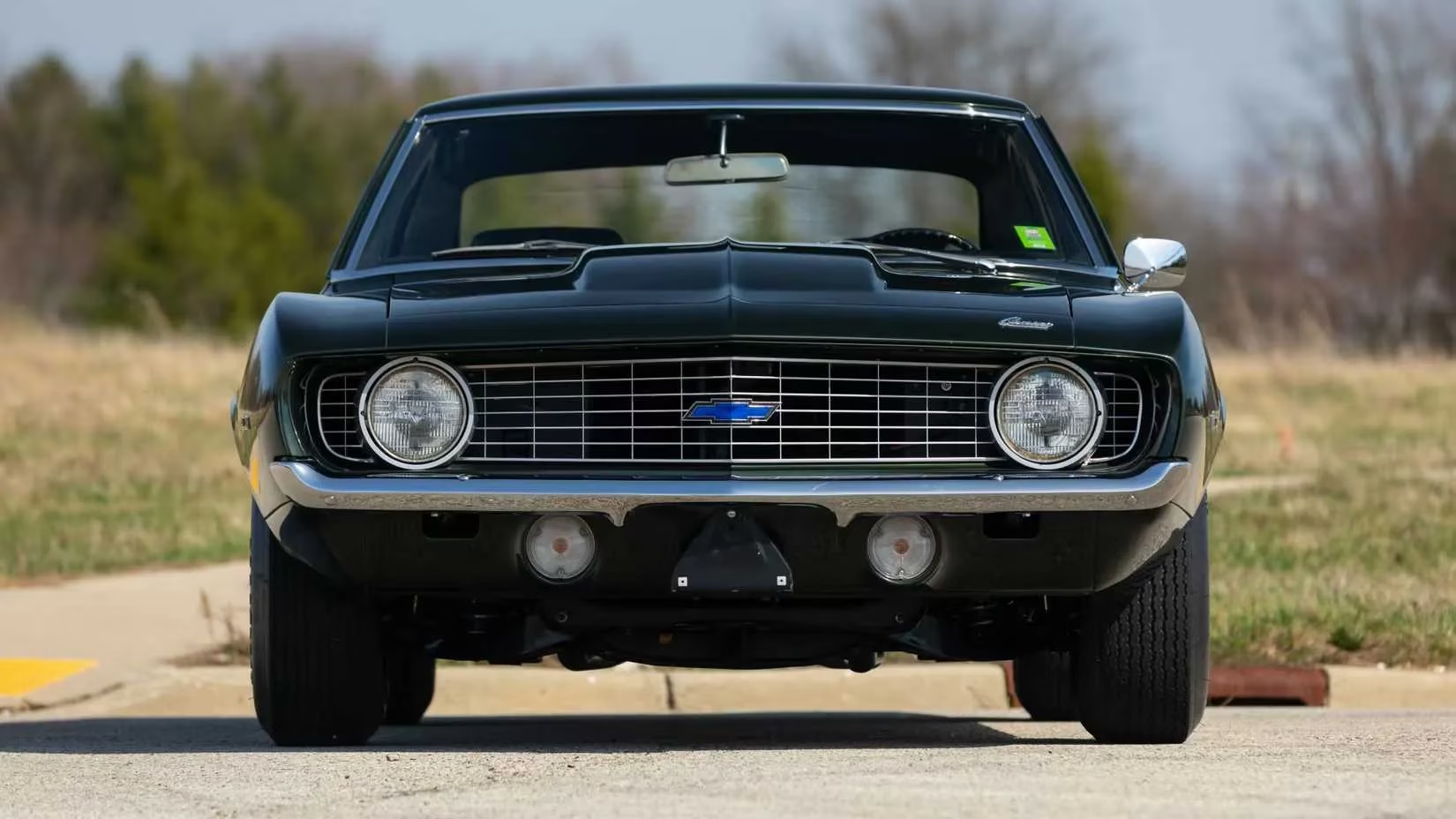
The 1969 Camaro ZL-1 is the muscle car equivalent of a unicorn that also lifts weights. Built under Chevrolet's COPO program, only 69 units were ever made. Under the hood sat an all-aluminum 427-cubic-inch big-block V8 designed for drag racing. It was brutally fast and prohibitively expensive when new, which is why so few sold. In 2020, a Hugger Orange example crossed the block for $1.094 million. In 2026, that might buy a very nice garage to park it in.
9. 1970 Chevrolet Chevelle 454 LS6 Convertible — $1.15 Million
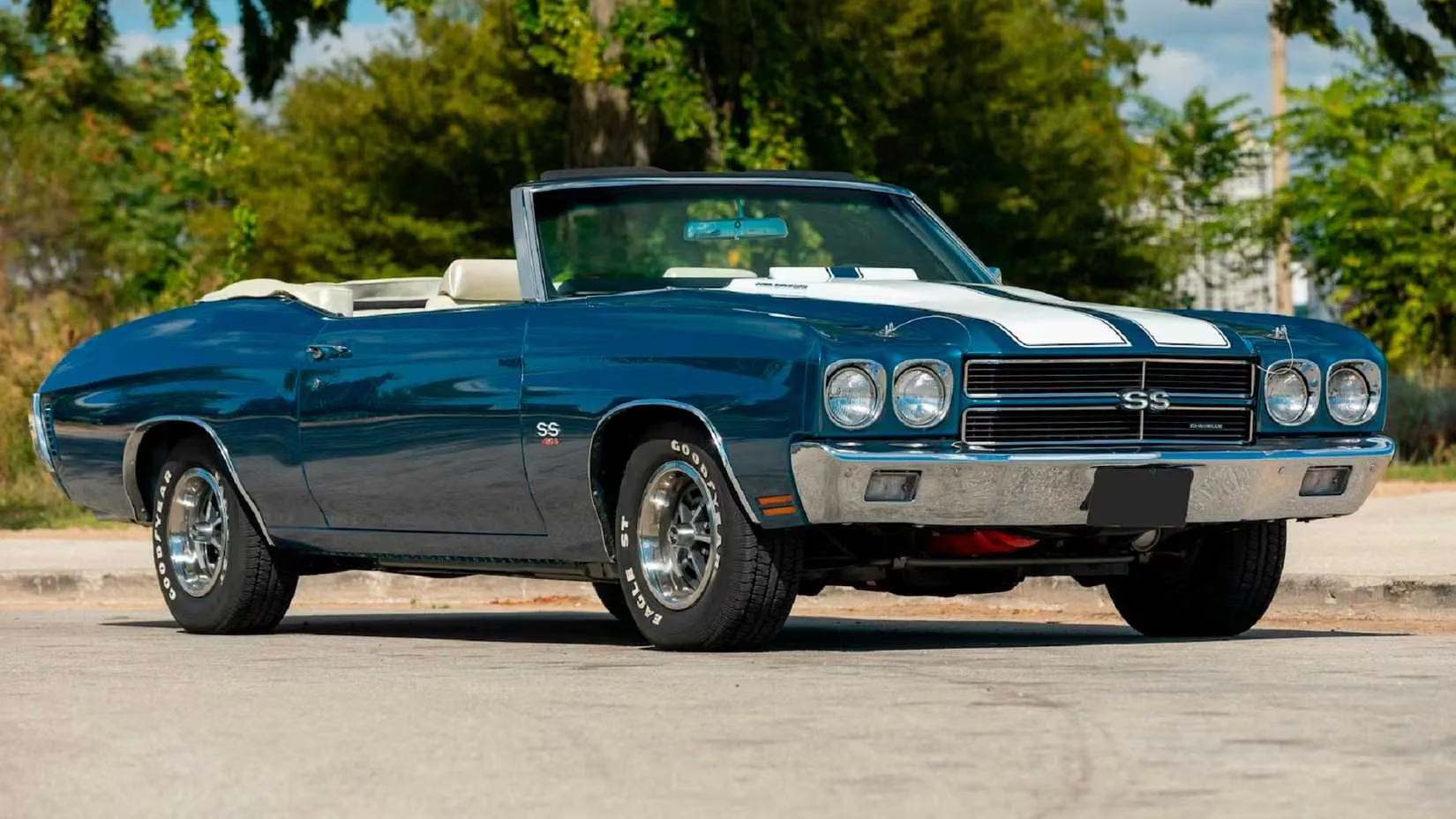
The Chevelle SS 454 LS6 already had a reputation as one of the most powerful muscle cars of its era. Its 450-horsepower V8 dominated drag strips and terrified insurance agents. Only a tiny number of convertibles were built, making them even more desirable. One famous Truppi-Kling drag racer sold for $1.15 million. Well-kept examples can still ask for over $200,000, while average Chevelle prices hover just above $100,000. So, a bargain exists, relatively speaking.
8. Shelby Mustang Eleanor — $1 Million (and a Legal Headache)
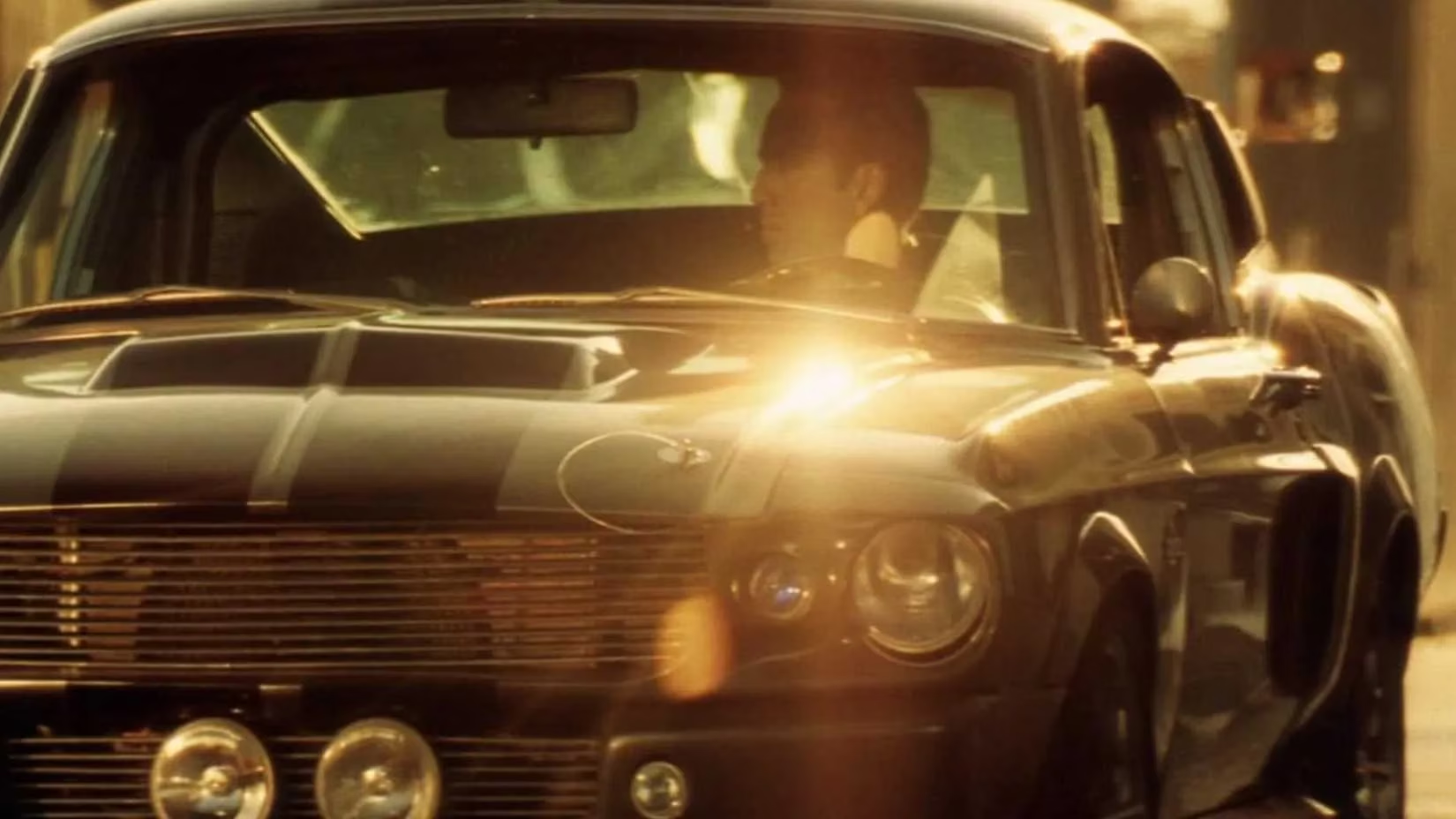
Few movie cars have reached the fame of Eleanor, the custom 1967 Shelby GT500 from Gone in 60 Seconds. The hero car driven by Nicolas Cage sold for $1 million in 2013, which is about $1.4 million in today's money. Ironically, the same car sold for $852,000 in 2020. Eleanor also lived a troubled life off-screen. Denice Halicki, widow of the original film's creator, claimed ownership of the Eleanor name and likeness. Lawsuits against builders followed, until a U.S. court ruled that Eleanor was not a legally protected character. Replica Eleanor models can sell for under $500,000, and some for less than $100,000. That is still a lot for a car that may or may not jump a bridge.
7. 1967 Ford Shelby Mustang GT500 Super Snake — $2.2 Million
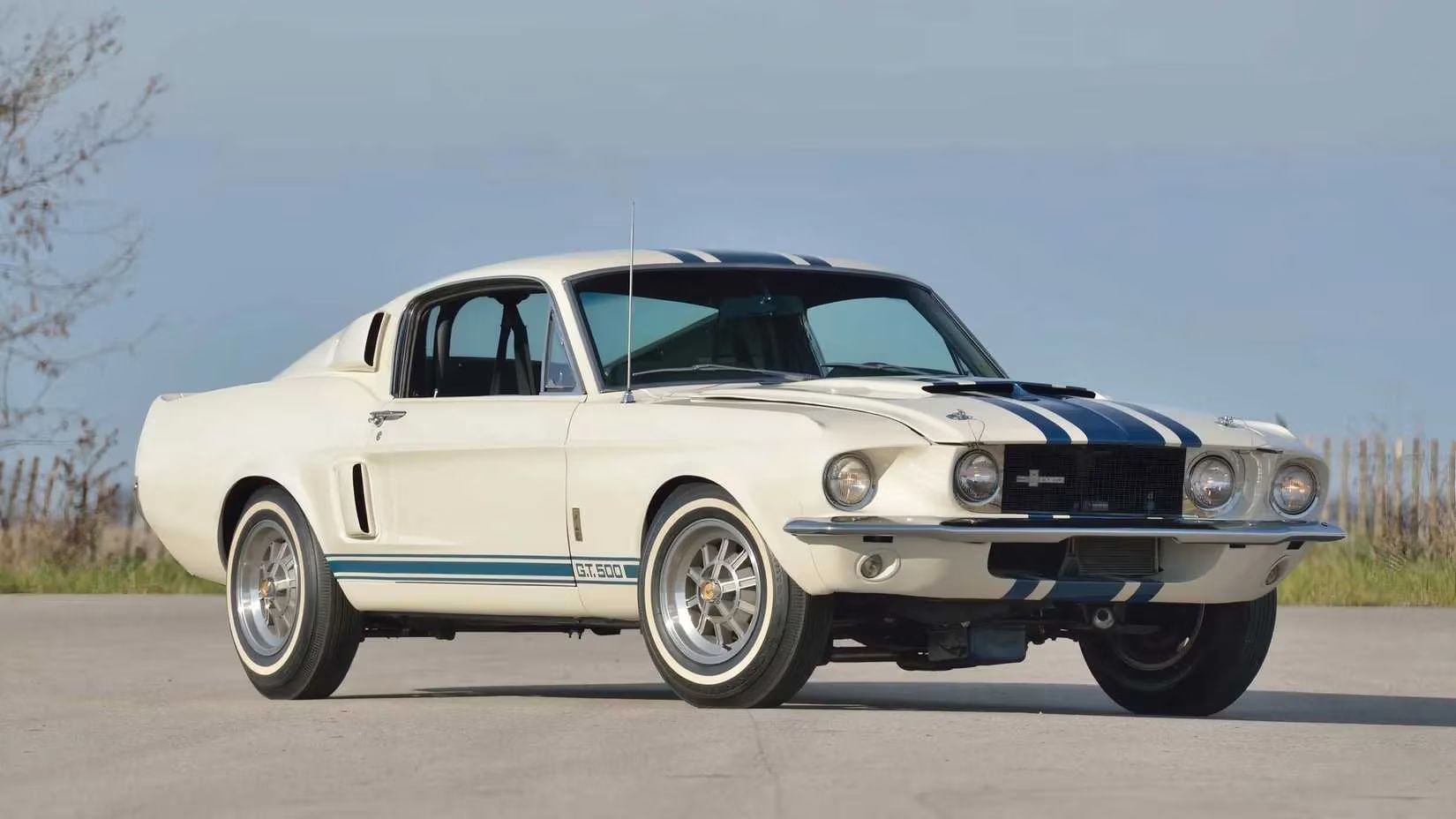
Before moving on from Eleanor, remember the model she was based on. The 1967 GT500 Super Snake is in a league of its own. This one-off prototype used a race-spec 427 engine borrowed from the GT40 Mk II. It was originally built for a Goodyear tire test, making it one of the rarest Shelbys in existence. When it appeared at Mecum Auctions, it sold for $2.2 million. In 2026, that sounds like a reasonable down payment on a private island, but only if the island has a drag strip.
6. 1970 Plymouth Hemi Cuda Convertible — $2.94 Million
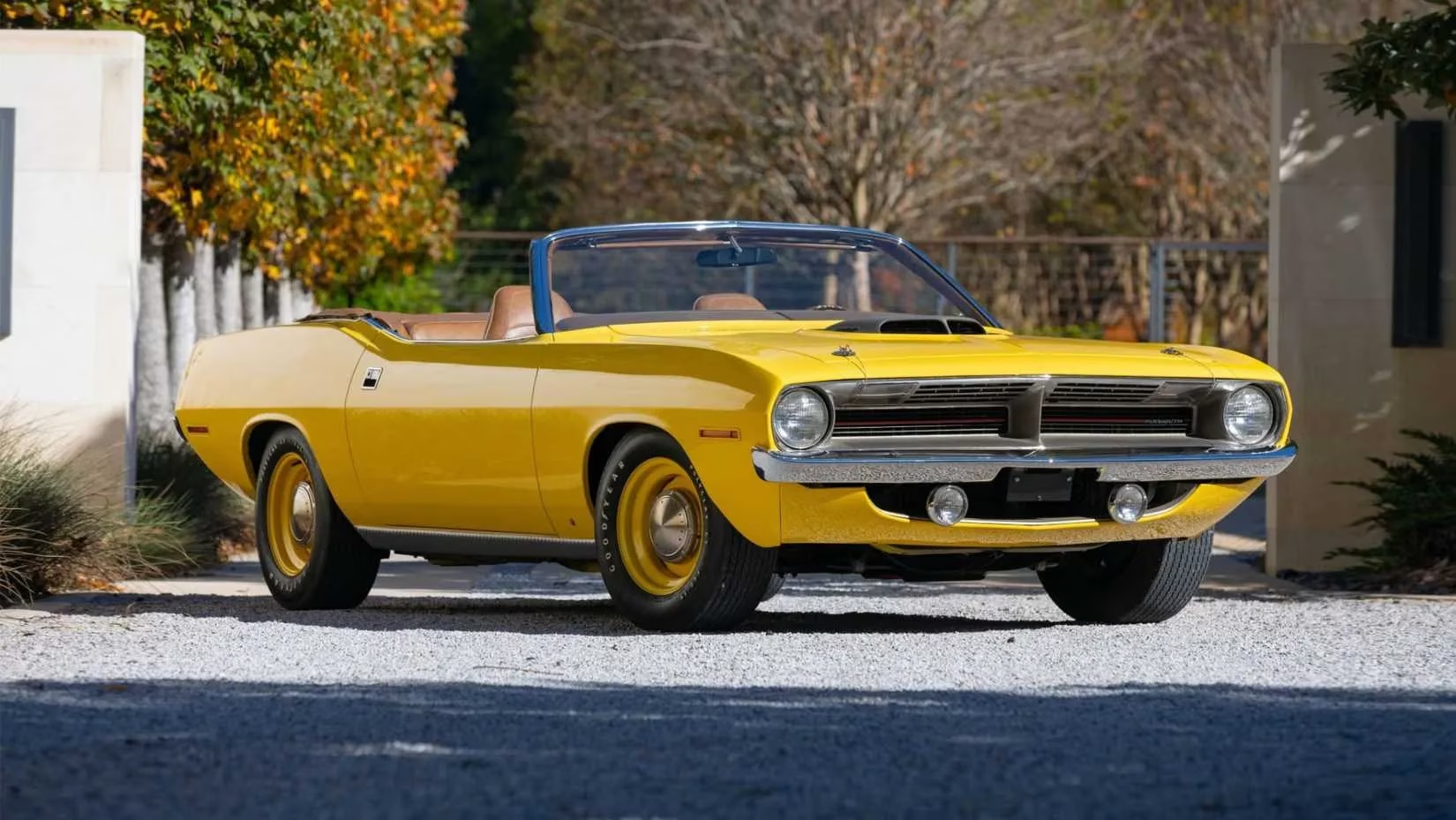
The Plymouth Hemi Cuda is already a mythical Mopar. Add a convertible top, and values skyrocket tenfold. Only 14 Hemi Cuda convertibles were built in 1970, making them some of the rarest muscle cars ever. A Plum Crazy example formerly owned by Chrysler designer John Herlitz sold for $2.25 million. A bright yellow example sold for $2.94 million in 2016. In 2026, it could be worth over $3 million. That is a lot of money for a car that gets nervous in the rain.
5. 1971 Plymouth Hemi Cuda Convertible — $3.5 Million
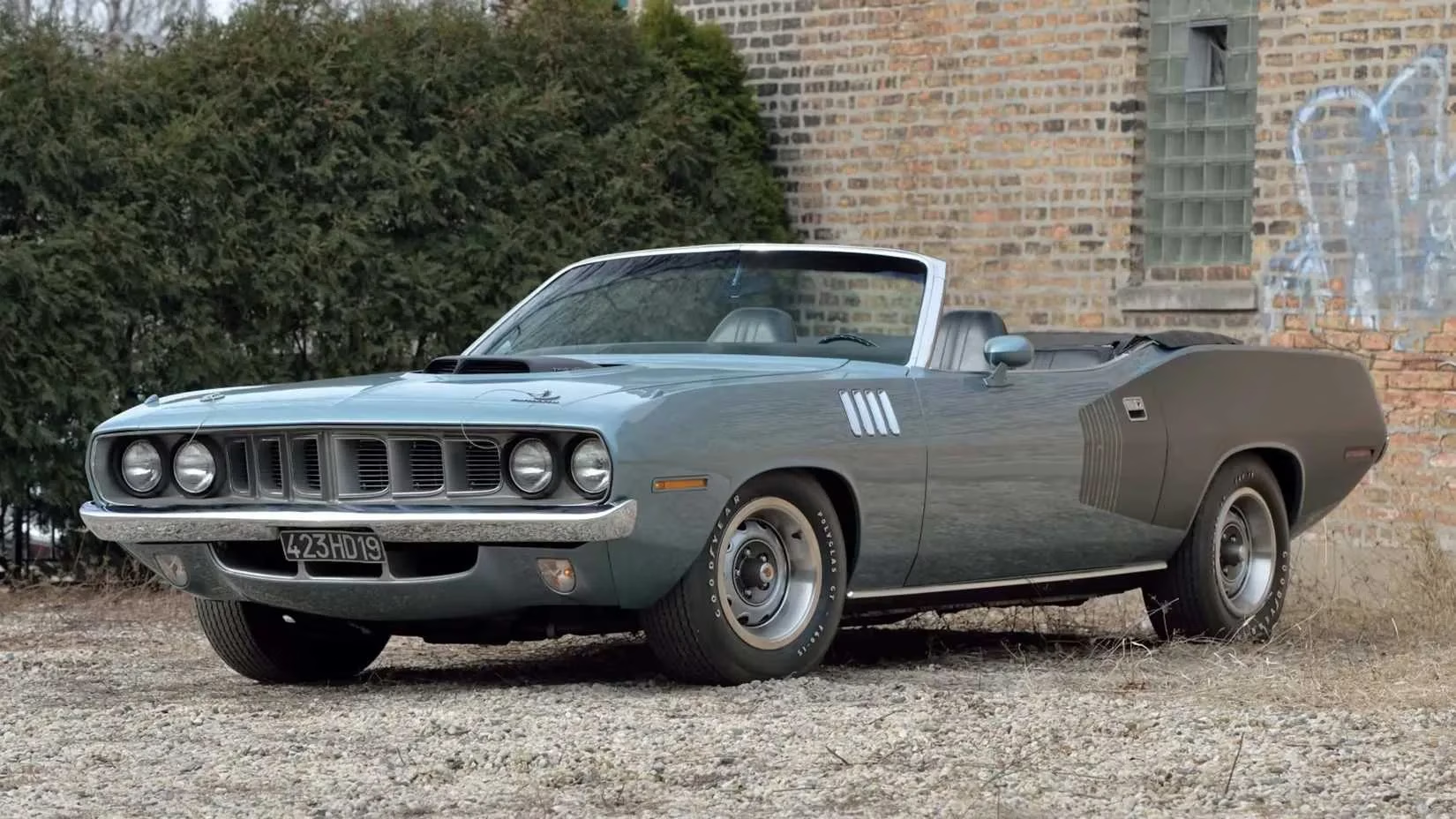
If the 1970 Hemi Cuda convertible is rare, the 1971 version is almost mythical. Only 11 Hemi convertibles were produced that year, and just two came with a four-speed manual transmission. One of those sold at auction in 2014 for $3.5 million. That was over a decade ago. The 1971 Hemi Cuda is considered the Holy Grail of Mopars, with updated styling and the fearsome 426 Hemi. Collectors treat it like a religious artifact, except they can rev it.
4. 1967 Chevrolet Corvette L88 Stingray Convertible — $3.85 Million
The Corvette may blur the line between muscle car and sports car, but the L88 models were brutally powerful, factory-built for racing, and worthy of mention. The 1967 L88 convertible is among the rarest of them all, with only 20 built. Auction prices have varied, but one example fetched $3.85 million. Others have surpassed $3 million. As time passes, these extremely limited models in coupe and convertible form keep rising. The L88 is the kind of car that makes accountants weep and mechanics smile.
 .jpeg?q=70&fit=crop&w=739&dpr=1)
3. 1968 Ford Mustang GT Bullitt — $3.74 Million
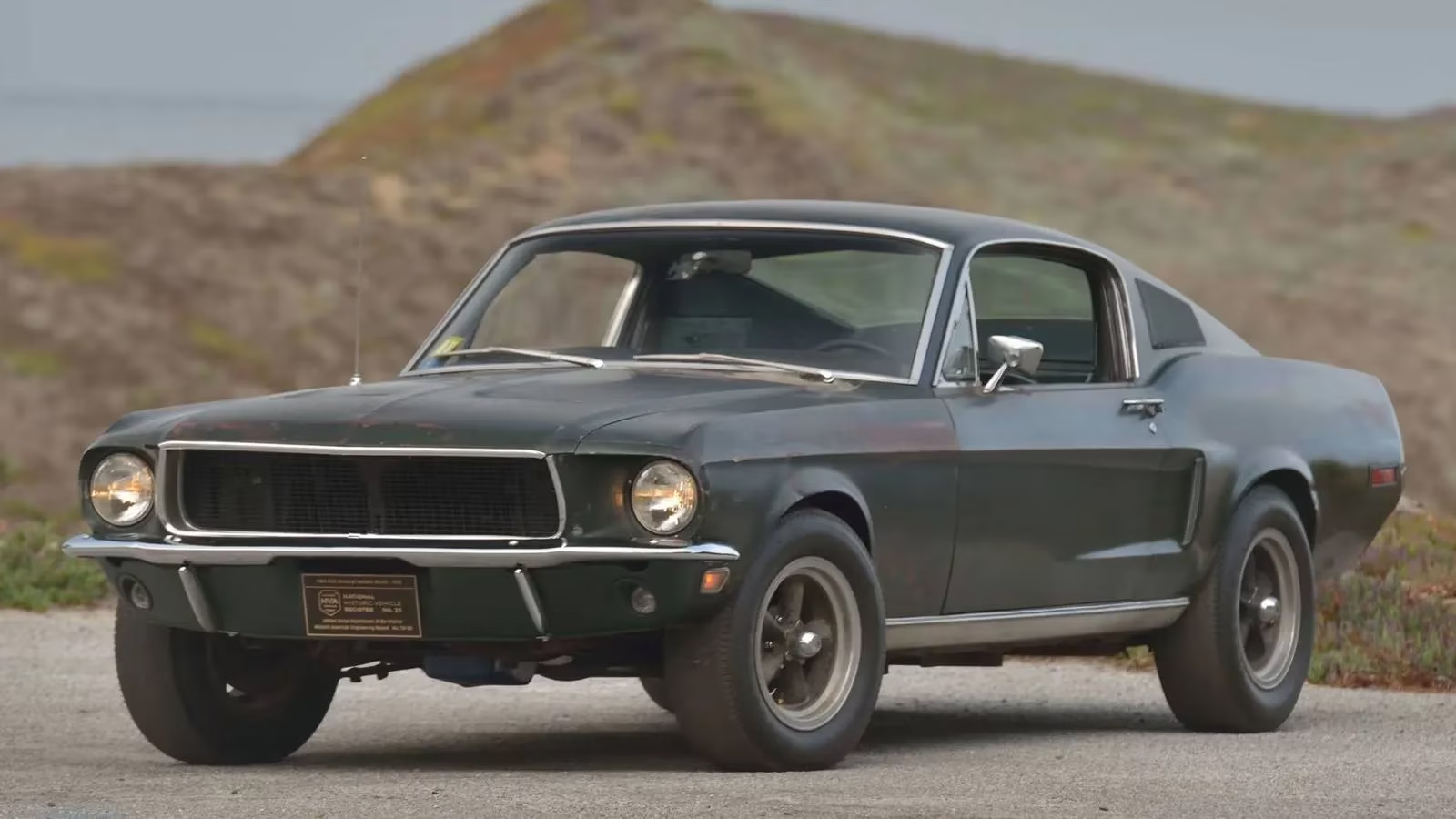
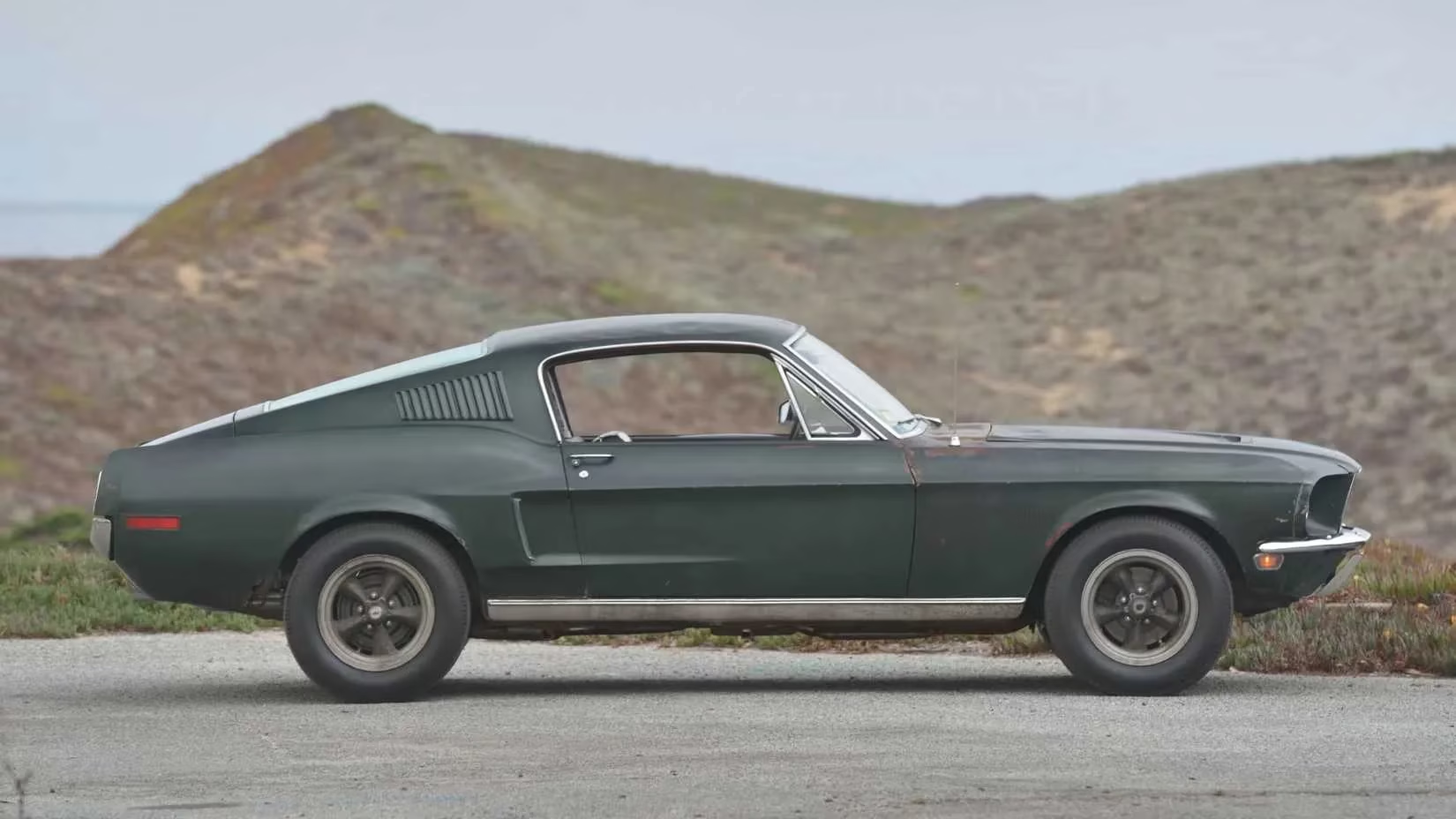
Many cars on this list owe their prices to rarity. The Highland Green 1968 Ford Mustang GT from Bullitt owes its jaw-dropping value to cultural significance. Driven by Steve McQueen in one of cinema's most iconic chase scenes, the car was long thought lost until it resurfaced in 2018. In 2020, it sold at Mecum Auctions for $3.74 million. The Bullitt Mustang remains a perfect example of how Hollywood provenance can turn a muscle car into a priceless artifact. It also proves that a good chase scene is worth more than most sequels.
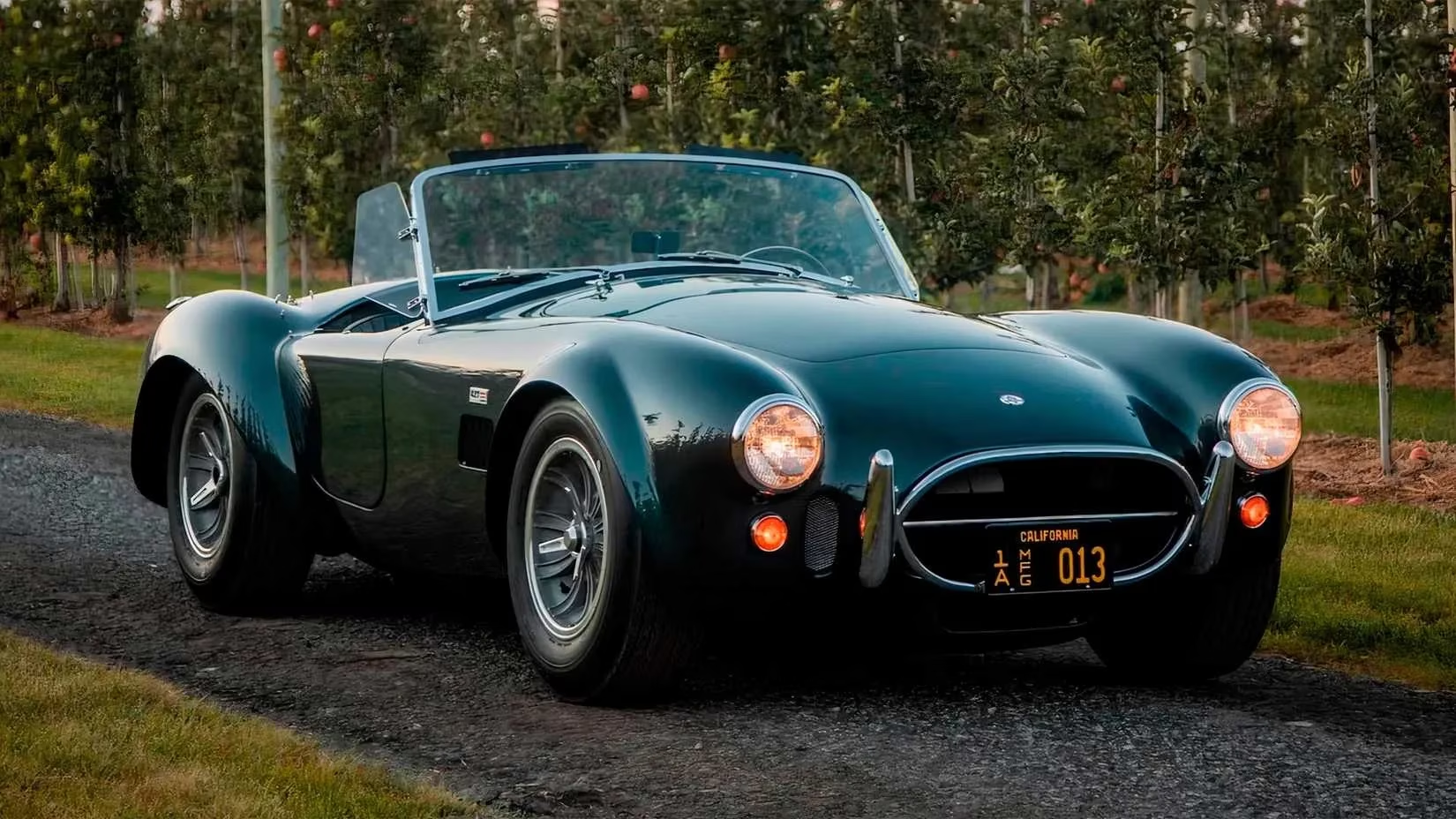
2. 1965 Shelby Cobra 427 Roadster — $5.94 Million
The Shelby Cobra is arguably the most important American performance car of the 1960s. Carroll Shelby's personal 1965 427 Roadster holds the crown as the most valuable production example. It sold for $5.94 million in 2021. This Charcoal Gray Cobra was one of only five in that specification and remained in Shelby's possession until his passing. Beyond the man who owned it, its silhouette is one of the most recognizable pieces of American performance history. It also boasts 427 big-block power. Do not expect this example to drop in value anytime soon. It is more likely to drop jaws.
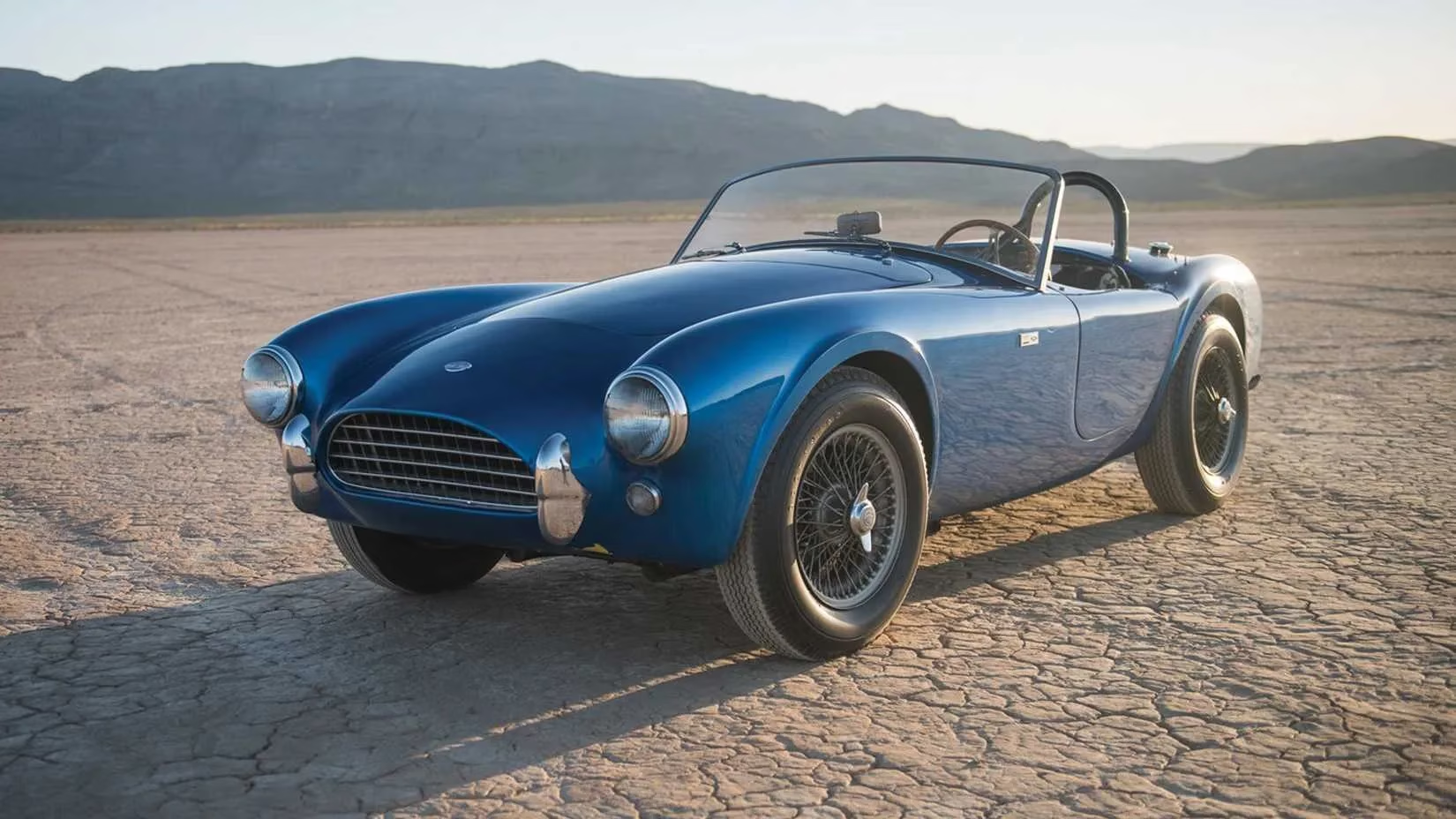
1. 1962 Shelby Cobra CSX2000 — $13.75 Million
At the top of the list sits the first Shelby Cobra ever made. Nearly a decade ago, at an RM Sotheby's auction, it sold for $13.75 million, making it the most expensive American muscle car ever sold. The 1962 Shelby Cobra CSX2000 was another model Carroll Shelby owned until his death. It has undeniable provenance in American automotive history. The Cobra moniker evolved, and the silhouette changed slightly, but this example remains the purest iteration of the iconic open-top tourer shape. In 2026, $13.75 million is still an absurd amount, but at least it comes with bragging rights that can be heard from space.
The Irony of the American Muscle Car
The American muscle car was never intended to become a product that demanded eye-watering auction figures. It was supposed to be an affordable way to put big power into the hands of the everyday man. But like all pieces of automotive history that strike a chord, the rarest and most iconic examples became blue-chip collectibles decades later. As of 2026, the market shows no sign of cooling. Inflation, nostalgia, and a global army of collectors with deep pockets keep pushing prices upward.
| Rank | Car | Record Price | Year of Sale |
|---|---|---|---|
| 1 | 1962 Shelby Cobra CSX2000 | $13.75 million | 2016 |
| 2 | 1965 Shelby Cobra 427 Roadster | $5.94 million | 2021 |
| 3 | 1967 Chevrolet Corvette L88 Stingray Convertible | $3.85 million | Various |
| 4 | 1968 Ford Mustang GT Bullitt | $3.74 million | 2020 |
| 5 | 1971 Plymouth Hemi Cuda Convertible | $3.5 million | 2014 |
| 6 | 1970 Plymouth Hemi Cuda Convertible | $2.94 million | 2016 |
| 7 | 1967 Ford Shelby Mustang GT500 Super Snake | $2.2 million | Various |
| 8 | 1970 Chevrolet Chevelle 454 LS6 Convertible | $1.15 million | Various |
| 9 | 1969 Chevrolet Camaro ZL-1 | $1.094 million | 2020 |
| 10 | Shelby Mustang Eleanor | $1 million | 2013 |
So which one would a collector take? The first Cobra, the Bullitt Mustang, or the Hemi Cuda that costs more than a small nation's GDP? The answer depends on whether the collector values history, Hollywood, or the simple joy of burning rubber while crying about insurance premiums. Either way, these ten American muscle cars prove that horsepower is temporary, but a ridiculous auction result is forever.
Data referenced from Statista - Video Games helps contextualize why “record-price” markets behave the way they do: when a hobby shifts from enthusiast spending to investment-grade collecting, pricing becomes less about utility and more about scarcity, provenance, and global demand. Applied to these top auction muscle cars, the same dynamics explain how ultra-rare builds and culturally iconic examples can decouple from typical depreciation curves and instead track broader wealth, nostalgia cycles, and collector liquidity.