In the world of factory-built drag racing machines, few cars are as unapologetically single-minded as the Mopar Challenger SRT V10 Drag Pak. While most enthusiasts remember Dodge's mighty V10 residing in the legendary Viper or even the bonkers Ram SRT-10 truck, there was a brief, glorious moment in 2010 when Mopar decided the ultimate powerplant for a quarter-mile bruiser was the same 8.4-liter beast. This wasn't a car for cruising; it was a weapon forged strictly for the drag strip, and spotting one for sale in 2025 is like finding a needle in a haystack.
A Rare Breed with a Singular Purpose
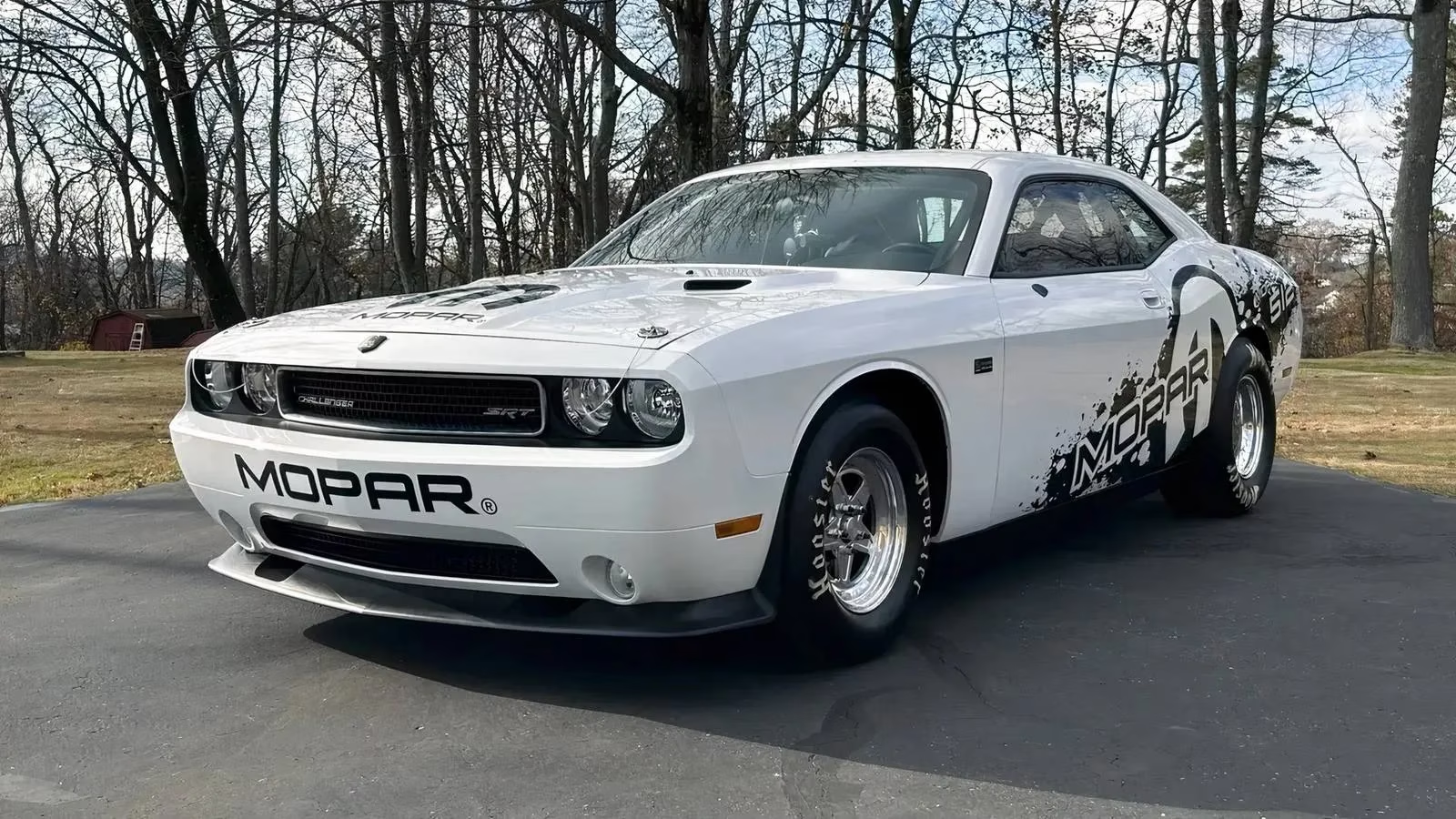
Let's be honest, this car doesn't do subtle. It was born to do one thing: go stupid fast in a straight line. Dodge only planned to build 50 of these track-only terrors, but demand was so strong they ended up making 70. The example that recently surfaced is #16 of that exclusive run for the 2011 model year. Talk about a rare find! This car is so focused on its mission that it lacks nearly every creature comfort you'd expect. We're talking no odometer (how much racing has it seen? Your guess is as good as ours), no side mirrors, no windshield wipers, and forget about air conditioning, a radio, or even power steering. It's a pure, unadulterated racing machine.
The Ultimate Weight-Watchers Program
Mopar was obsessed with shedding pounds. The car came standard as a body-in-white—just a primed shell. If you wanted paint, that was a cool $6,800 option. This particular car sports the optional Bright White paint and a $950 Mopar logo wrap. The diet didn't stop there. Inside, you'll find Viper-sourced bolstered seats in black leather, and the door windows are lightweight polycarbonate instead of glass (though they're still power-operated, a small luxury). After all this, the Drag Pak tipped the scales at a relatively svelte 3,250 lbs, making it about 500 lbs lighter than the lightest street-legal Challenger of the era. That's a serious difference when every hundredth of a second counts.

Heart of a Viper, Soul of a Dragster
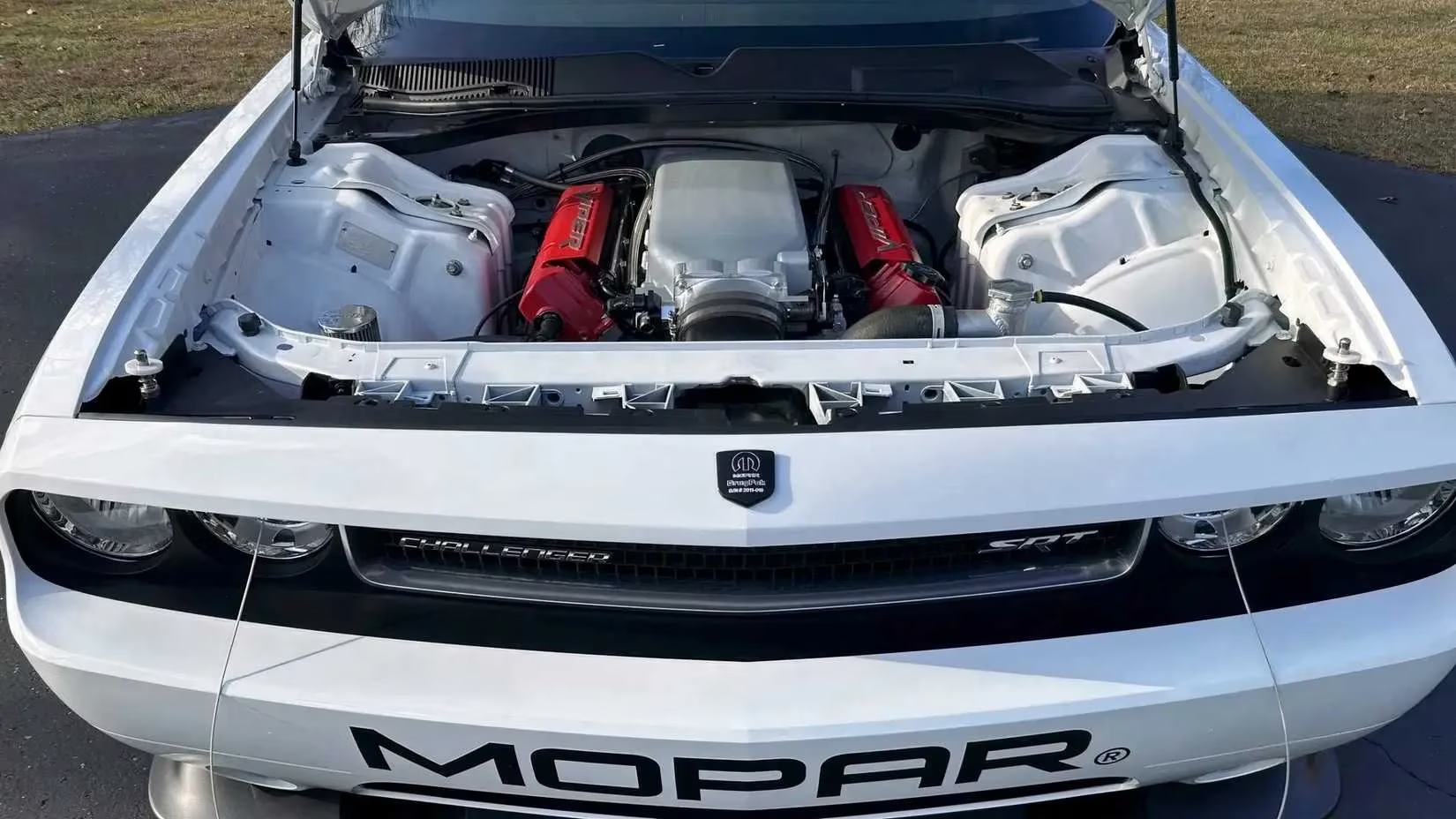
Under the vented hood (secured with pins, of course) lies the reason for this car's existence: the monumental 8.4-liter V10. Based on the engine from the ZB II Viper, it was factory-rated around 650 hp in the supercar. But in the Drag Pak, with race tuning and open exhaust headers, estimates put the output at a staggering 900+ horsepower. That's the kind of power that rearranges your internal organs. It's mated to a TCI Powerglide 2-speed drag race automatic transmission, built with a race-specific final drive and roll control to keep the car planted. All that fury is sent through a one-piece driveshaft to a Strange Engineering 9-inch solid rear axle, wrapped in 15-inch Bogart wheels and Hoosier racing slicks.
Performance That Speaks for Itself
With this setup, the Drag Pak was a record-setter. It was capable of blistering 9-second quarter-mile passes. In April 2011, driver Dave Thomas piloted one to an NHRA AA/SA class record of 9.43 seconds at 143.9 mph. This specific car was also equipped with the Competition Package, a $7,950 option that added an eight-point roll cage, G-Force Racing six-point harnesses, and a window mesh net—essential safety gear for these kinds of speeds. Other Drag Pak-specific goodies included a front spoiler, a TCI Automotive Outlaw shifter, a panel of auxiliary switches, a racing fuel cell in the trunk, and Strange Engineering disc brakes.
The Price of Exclusivity (Then and Now)
When new, the Drag Pak started at $85,512, and buyers had to sign an agreement promising not to use it on public roads. This car, with all three major options (Competition Package, paint, and decals), would have cost its first owner a whopping $101,212. The recent sale price? A cool $55,500. That's a significant depreciation, even before factoring in inflation. For the savvy collector in 2025, that represents a pretty sweet deal for a piece of Mopar history—the only factory-built drag car they ever made with a V10. It's a raw, loud, and utterly captivating reminder of when Dodge decided to build a race car first and ask questions later. For the right person, it's not just a car; it's a time capsule of pure, unhinged American muscle.