Few cars in American muscle history have mastered the art of arriving loudly while standing completely still. The Plymouth Superbird is one of them. With a nose that looks borrowed from a fighter jet and a rear wing tall enough to require its own ZIP code, it is less a car than a rolling argument that aerodynamics should be allowed to wear a race suit. Poorly executed clones aside, there are no bad Superbirds. Plymouth built the thing for NASCAR’s golden age, where Mopar wanted to be first on Sunday and legendary on Monday. It worked. The Superbird’s track dominance gave it a street presence that has never really been matched, and it still makes modern supercars look like they forgot to finish their homework.
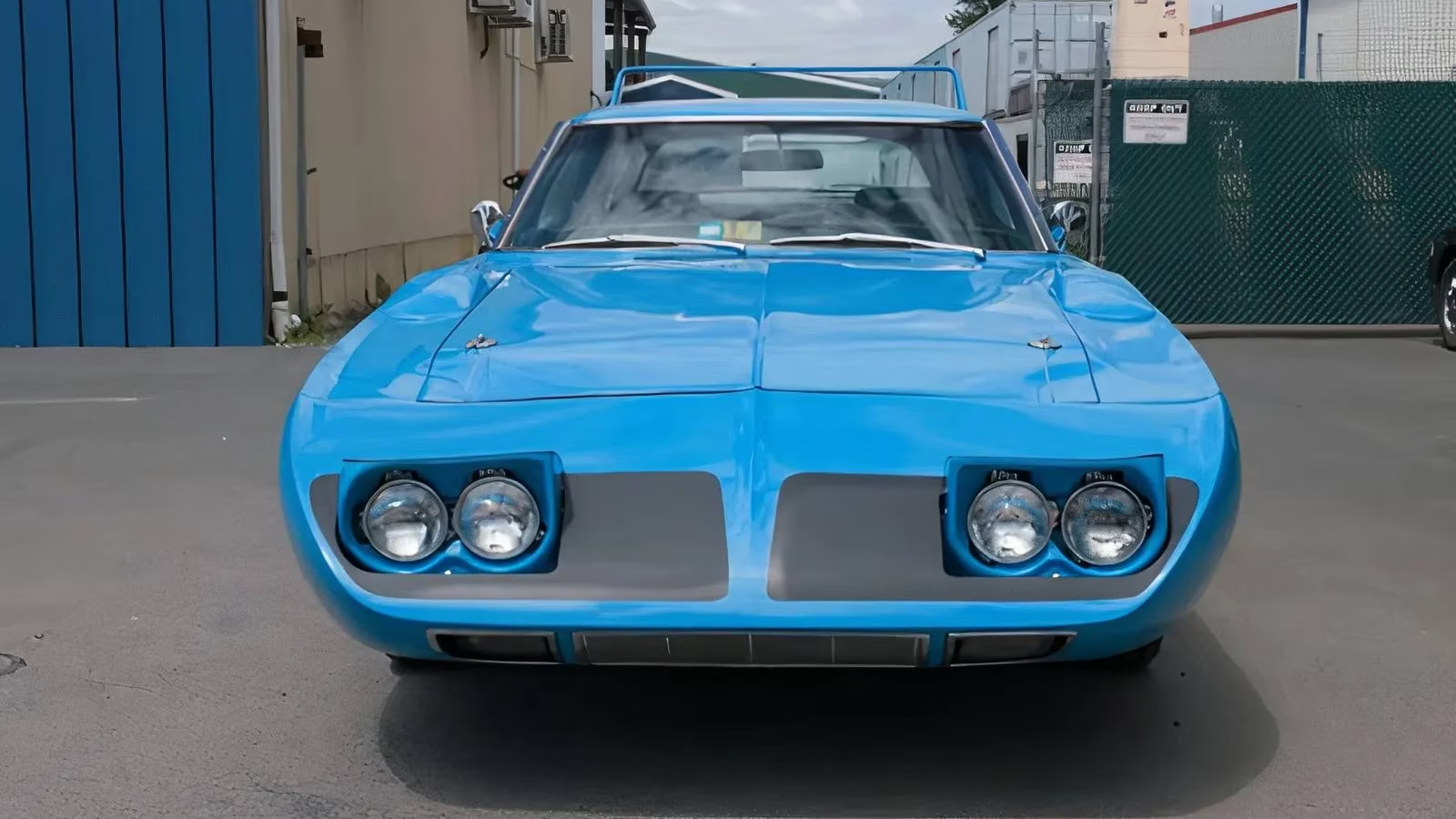
Homologation: The Paperwork That Built a Legend
NASCAR rules in the Superbird’s era were not written for dreamers. To race the winged machine, Plymouth had to sell at least 500 examples to the public. The company went well past the minimum and built roughly 1,900 homologation cars. That is already a tiny number by muscle-car standards, but the story gets sharper. Only 43 of those cars wore the legendary Petty Blue paint. The number was not random. It was a tribute to Richard Petty, the driver whose name is practically welded to the Superbird’s reputation, and 43 was “The King’s” number. The result is a car that was already cool before it was rare, and then became rare enough to make grown adults whisper at car shows.
| Superbird detail | The short version |
|---|---|
| Built for | NASCAR homologation |
| Minimum required | 500 street cars |
| Total homologation production | Roughly 1,900 |
| Petty Blue examples | 43 |
| This car’s engine | 440 four-barrel |
| This car’s transmission | 727 three-speed automatic |
Richard Petty famously drove the Superbird for the one season it was permitted to compete. After that, NASCAR’s rule makers effectively slammed the door: the Superbird and the Daytona Chargers were banned unless they ran a 305 cubic inch engine. The racing career was short, but the street car’s legend had already escaped the cage. Plymouth’s 43 Petty Blue street cars turned a homologation special into a rolling tribute, and the fact that the number matched the King’s car made the whole package feel like a wink from history.
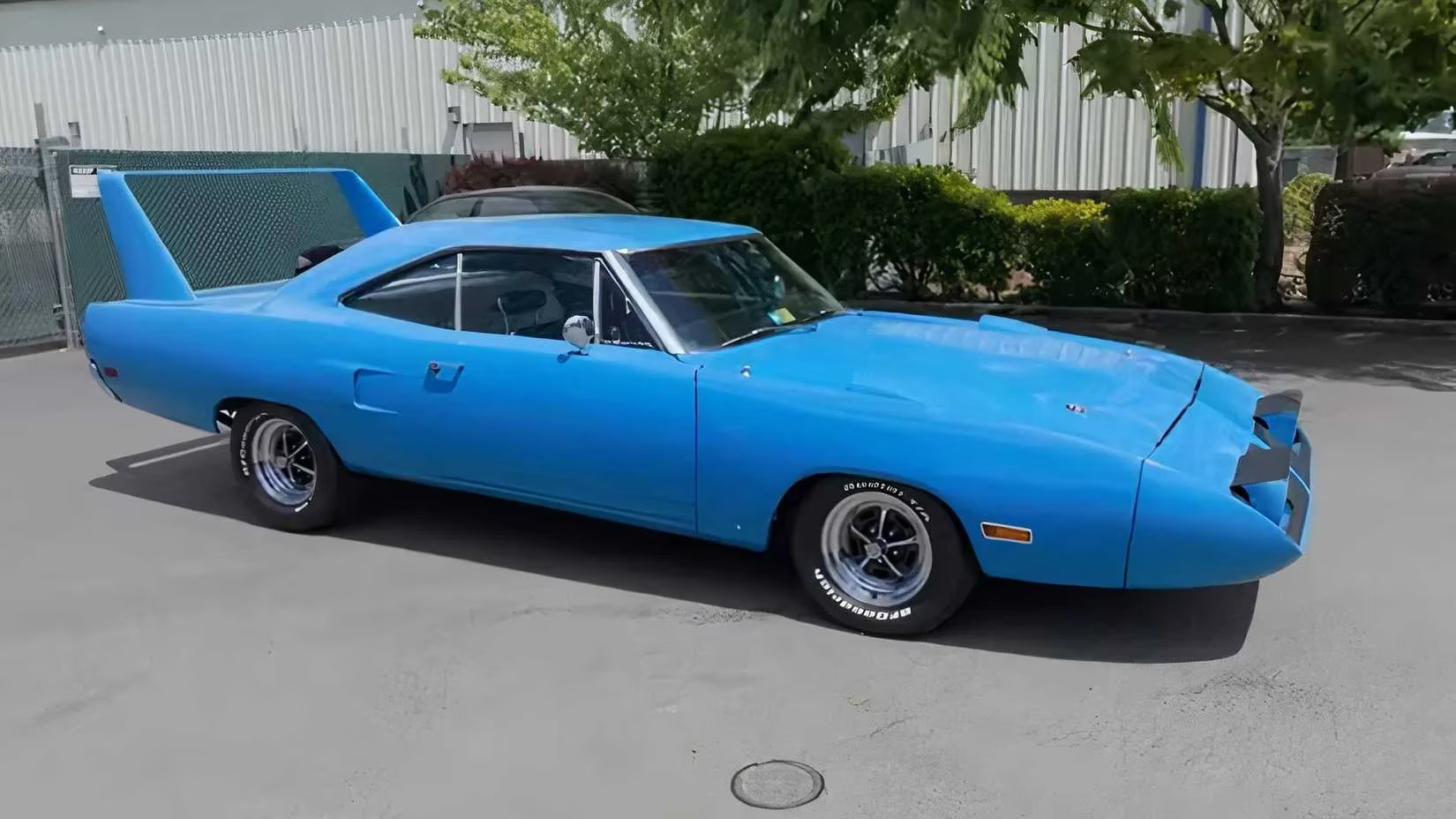
A Twenty-Footer With Concourse Ambitions
Graveyard Carz recently got its hands on one of those rare Petty Blue Superbirds after its new owner decided the car deserved a refresh. On camera, the machine looks excellent. In person, Mark Worman calls it a “twenty-footer.” That is shop talk for a car that looks great from twenty feet away and starts revealing flaws as the observer gets closer. The Superbird had been restored before, but Worman considers the previous work subpar. The plan is to take it to concourse standard, which is a polite way of saying the car is about to receive the full white-glove, flashlight-and-magnifying-glass treatment.
The car arrived in non-running condition, which is never the ideal way to make an entrance. The crew installed a new fuel tank, a new fuel pump, and fresh lines. After that, the Superbird roared right back to life, and the team even took it for a ride around town. It is hard to decide which part is funnier: a 1970s aero warrior waking up like a sleepy uncle after a long nap, or the sight of a giant rear wing cruising through ordinary traffic like it owns the municipal zoning code.

The Case for Leaving Well Enough Alone
Graveyard Carz has a reputation for classic Dodge and Plymouth muscle from the 1960s and 1970s, and the shop regularly produces some of the best restorations in the business. The crew does not put together bad Mopars. That reputation is exactly why this particular Superbird creates a small philosophical crisis. The owner called in the professionals, which is understandable. But this car was already the pinnacle of a perfect driver. It is the real deal, with a 440 four-barrel and a 727 three-speed automatic. Nothing about that combination needs a velvet rope.
A concourse restoration will make the car sharper, rarer, and more precious. It may also make it less fun. There is a special kind of freedom in a car that is good enough for date night but not so clean that it feels sterile. A machine that can be torn up the way Plymouth intended is a machine that gets used, and used cars make better stories than garage queens. As of 2026, the Petty Blue Superbird remains a blue-chip collectible, and the 43-car club is still the coolest corner of an already legendary model line. The only real debate is whether this one should be polished into a museum piece or left just rough enough to remind everyone that the wing was built for war, not for wallpaper. 🏁