Let me tell you a story. As a gearhead who's spent years digging through automotive history, I've always had a soft spot for the underdogs—the cars that history books often gloss over in favor of the more famous icons. When I set out to find the most underrated Pontiac muscle car ever, I knew I wasn't looking for a GTO or a Firebird Trans Am. Those are legends, sure, but everyone knows about them. I was on the hunt for the hidden gems, the sleepers that packed a punch while flying under the radar. And let me tell you, the journey led me to two incredible machines from Pontiac's past that, even in 2026, deserve way more recognition than they get.
My first stop was the golden age of muscle cars, the mid-1960s. Right in the heart of that era, from 1964 to 1967, Pontiac built the Catalina 2+2. Now, don't let the 'Catalina' name fool you into thinking this was just a cushy family cruiser. This was a full-on performance package for the full-size Catalina coupe, and it was, in my humble opinion, Pontiac's best-kept secret. It was the GTO's 'big brother,' a phrase Pontiac themselves used, and it had the chops to back it up.
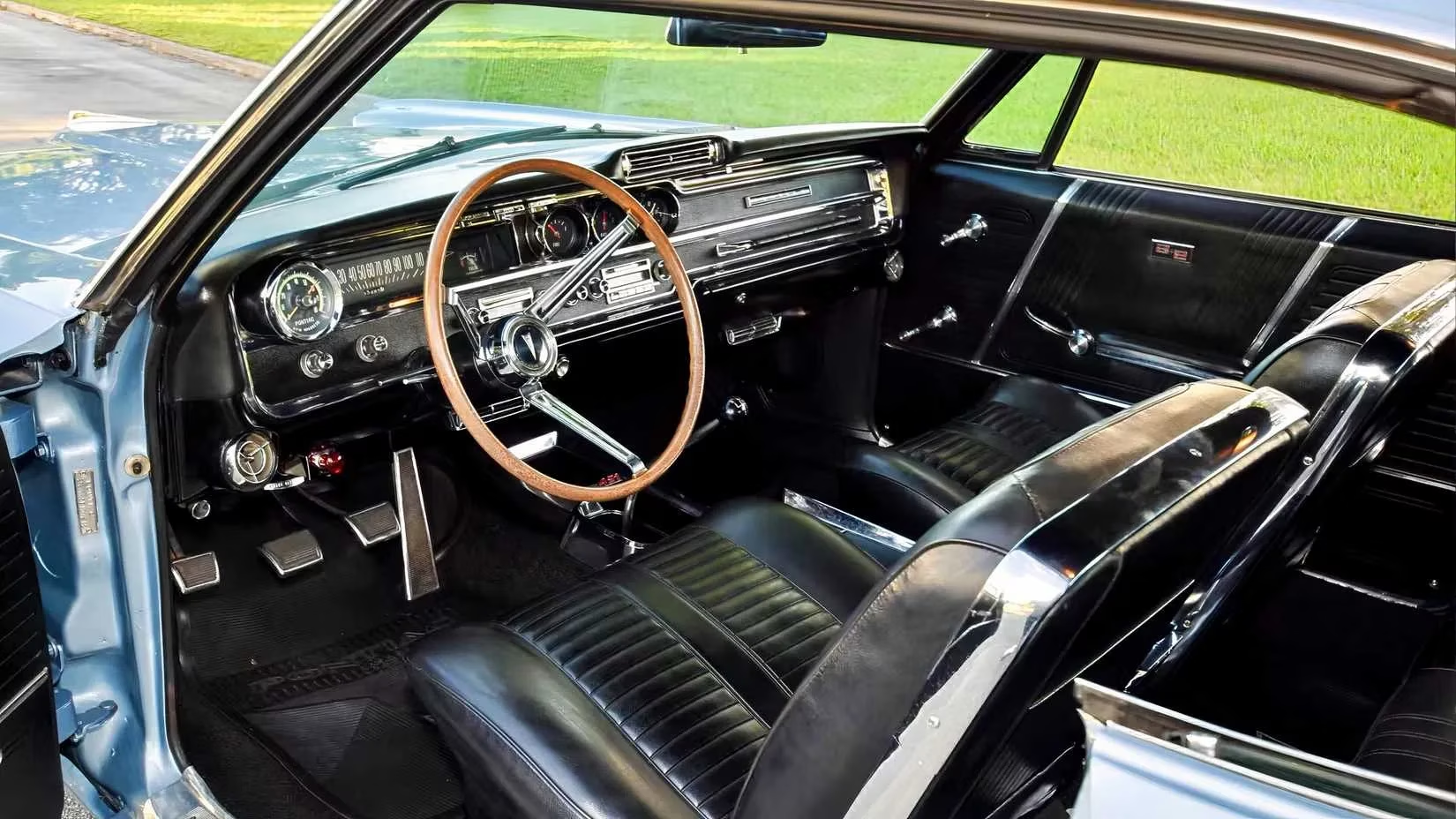
For the 1964 model year, the 2+2 package was a serious upgrade. We're talking:
-
Front and rear bucket seats (a 2+2 seating arrangement, hence the name)
-
A full-length center console
-
A tachometer and vacuum gauge
-
Heavy-duty springs and shocks
-
Unique badging
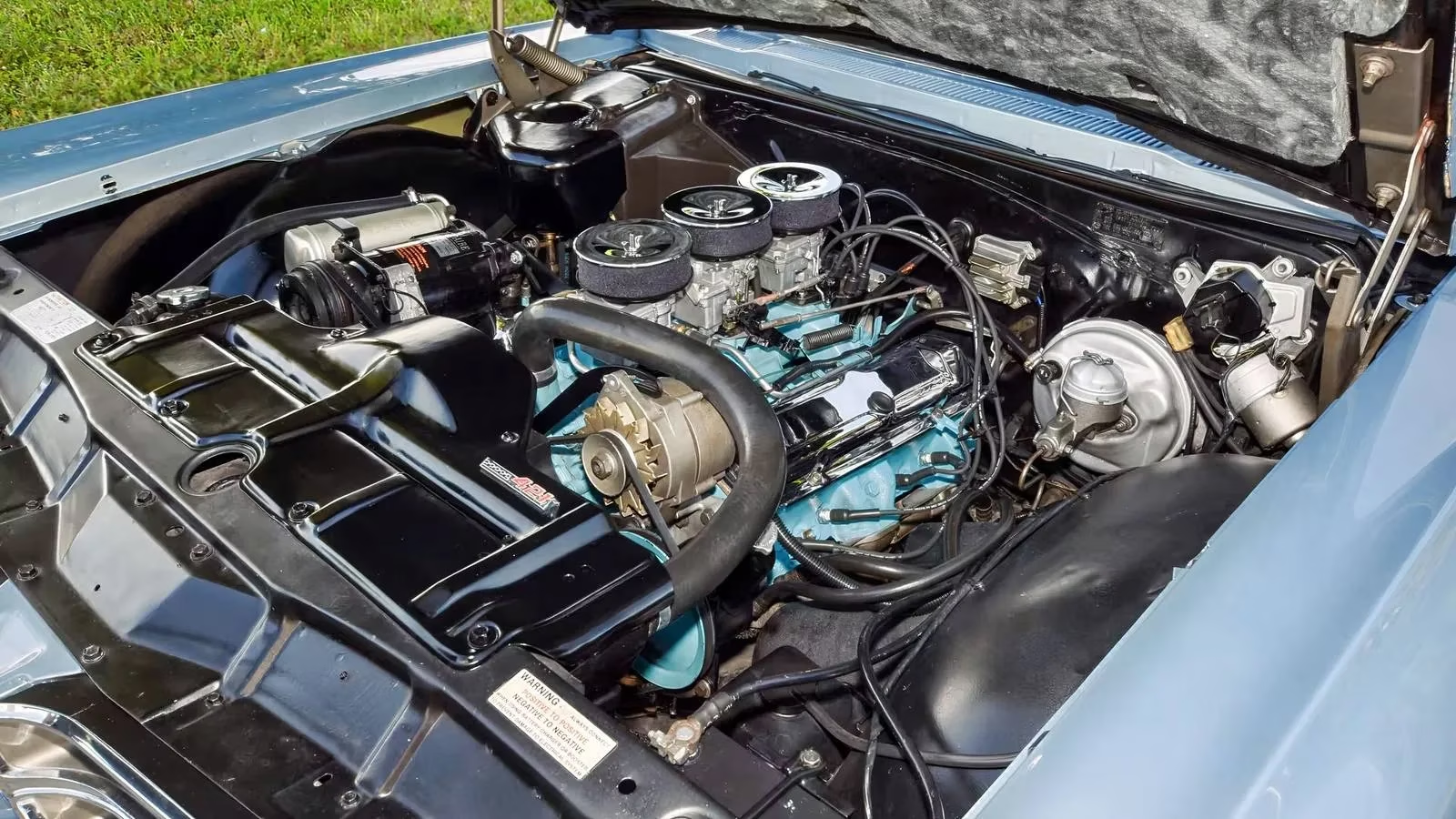
The base engine was the 389 cubic-inch V8, but things got really interesting in 1965. Pontiac decided to go all-in and made the massive 421 cubic-inch V8 the standard engine. This beast put out 338 horsepower. But for those who wanted to go the extra mile—and I mean really go—there were the legendary Tri-Power options.
| Engine Option | Configuration | Horsepower |
|---|---|---|
| Base 421 V8 | Single 4-barrel carb | 338 hp |
| Tri-Power 421 | Three 2-barrel carbs | 356 hp |
| Tri-Power 421 H.O. | Three 2-barrel carbs, high-lift cam | 376 hp |
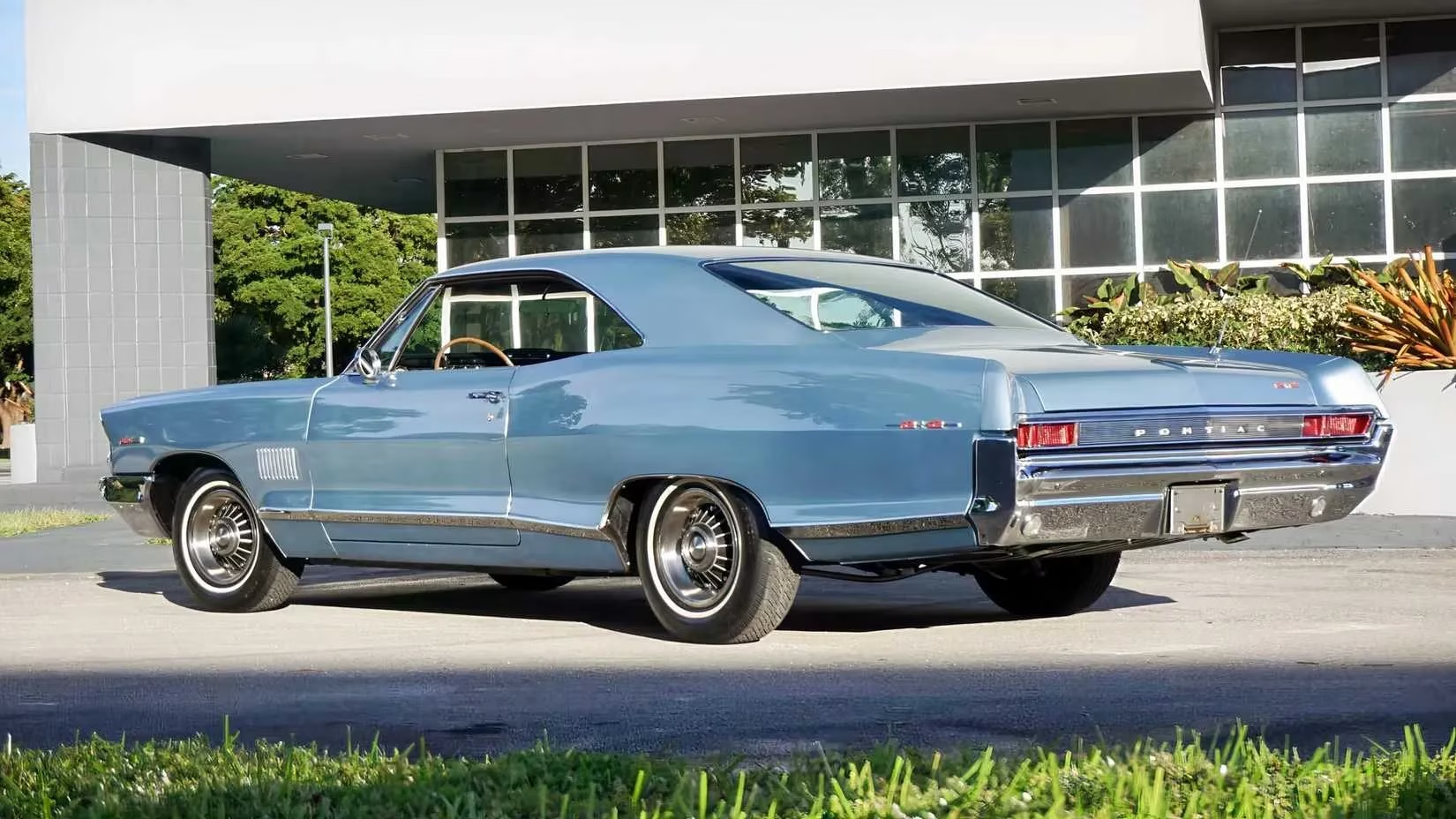
Now, you're probably thinking, 'Okay, big engine in a big car, so what?' Here's the kicker: this nearly 4,000-pound land yacht could move. The top-tier Tri-Power model could hit 60 mph in about 7 seconds and run the quarter-mile in the mid-15s. For a car this size in the mid-60s, that was nothing to sneeze at. It was a proper sleeper; nobody expected a car that looked like a comfortable cruiser to have that kind of get-up-and-go.
The magic wasn't just under the hood. Pontiac gave the 2+2 a wider track, stiffer springs, and a heavy-duty front sway bar. Compared to the standard Catalina, it handled like a dream—well, as much of a dream as a car this size could. It had presence, too. Sharing styling cues with the GTO, like the stacked quad headlights and fastback roofline, it looked every bit the muscular patriarch of the Pontiac family.
The 1965 model year was its peak, with over 11,500 sold. But as the market shifted towards smaller muscle cars, the 2+2's run ended after 1967. Its relative affordability compared to a loaded GTO was a major plus back then. Today, it's a collector's darling. Finding a good one won't be cheap—prices have been climbing steadily, with pristine examples fetching well over $70,000. It's a true hidden gem that has finally started getting its due.
But wait, the plot thickens! Just when I thought the Catalina 2+2 had the 'most underrated' title locked up, I stumbled upon another contender from the early 1970s. This one is even more of a ghost in the machine: the Pontiac GT-37.
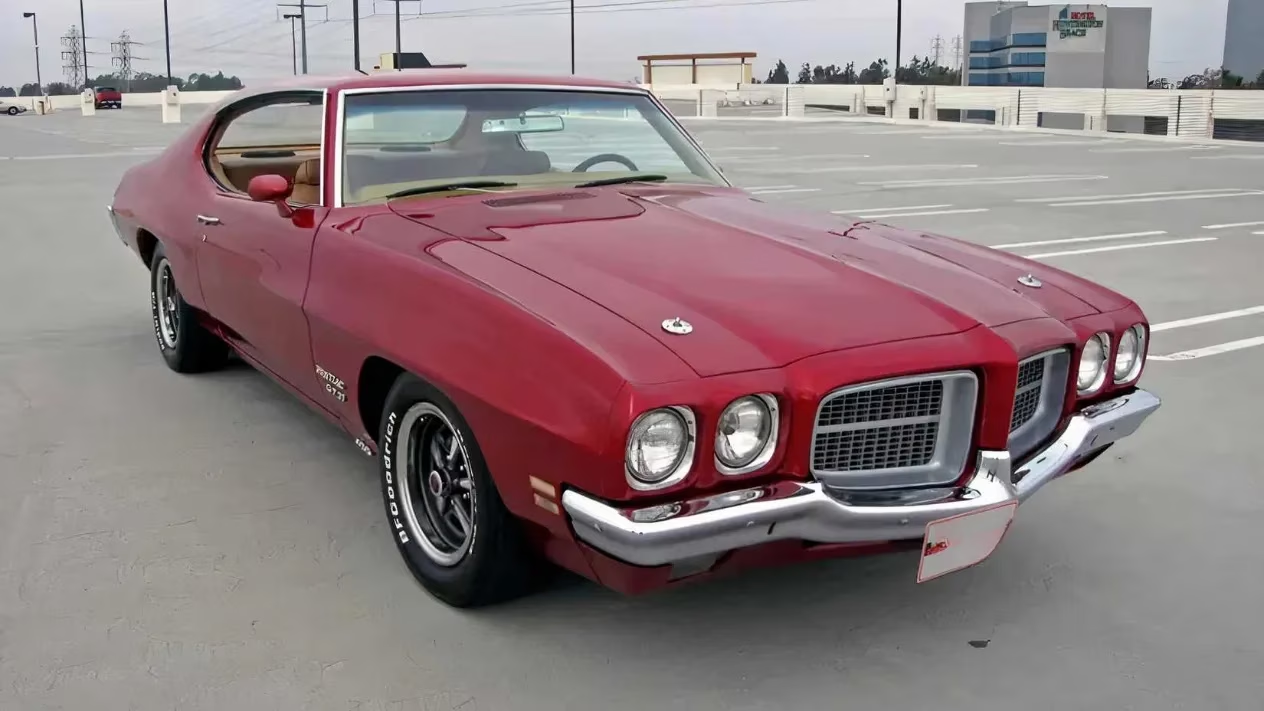
If the Catalina 2+2 was a discreet heavyweight, the GT-37 was a wolf in sheep's clothing—a total sleeper. Produced only for the 1970 and 1971 model years in very low numbers (around 8,000 total), it was Pontiac's answer for the budget-minded performance fan. Think of it this way: if you wanted a GTO but the price tag and insurance costs gave you sticker shock, the GT-37 was your Hail Mary.
It was based on the bare-bones, low-cost Pontiac T-37. The genius was in the option sheet. You could build a surprisingly potent car without the flashy GTO badges. Most had a 350 V8, but a tiny handful—and I mean only 15 cars in 1971—were equipped with the monstrous 455 High-Output V8. This engine cranked out 335 horsepower and a earth-moving 500 lb-ft of torque.
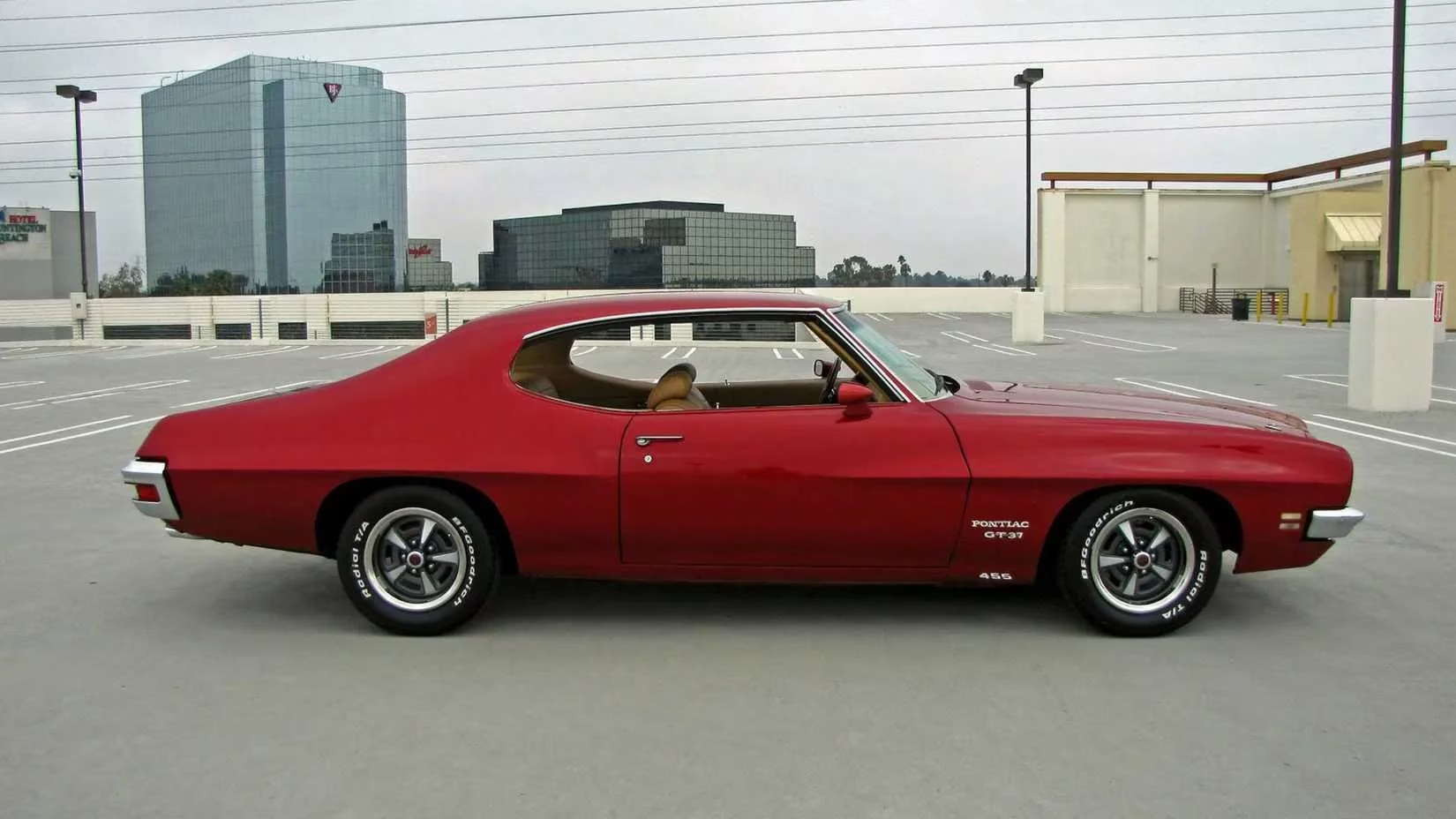
Let that sink in. A car that looked like a basic Pontiac sedan, but with a 455 H.O. under the hood, could rocket from 0 to 60 mph in about 6 seconds with a 4-speed manual. That's seriously fast for 1971, a time when performance was starting to wane due to emissions regulations. It was the definition of a Q-ship—a car with unassuming looks that hides devastating performance. You could blow the doors off far more expensive and flashy cars, and the other driver would just be left wondering what the heck happened.
So, which one takes the crown? It's a tough call, and honestly, it depends on your style.
-
The 1965-67 Catalina 2+2 is for the connoisseur who appreciates full-size, luxury-infused muscle. It's a grand tourer with a brutal side, a car that says, 'I have style and substance.' Its rarity and growing classic status make it a blue-chip underdog.
-
The 1971 GT-37 455 H.O. is the ultimate sleeper. It's the car for the purist who wants maximum performance with minimum attention. Its extreme rarity (those 15 cars!) and its 'hidden in plain sight' character make it arguably the most underrated Pontiac of all time. It's the muscle car equivalent of a secret handshake.
For me, the Catalina 2+2 wins on presence and that quintessential 60s muscle vibe. But the GT-37 455 H.O. wins on sheer, shocking sleeper appeal. Both are phenomenal machines that represent Pontiac's clever engineering and understanding of different kinds of performance enthusiasts. They prove that you didn't need a GTO badge to have a hell of a good time. In today's world of hypercars and digital dashboards, rediscovering these analog legends is a powerful reminder of an era when horsepower had character and understatement was its own kind of cool. Finding and driving either one today would be an absolute blast from the past.