There’s something about slipping behind the wheel of a car that was assembled before I was even a glint in my father’s eye—especially when that car is credited with sparking an entire genre of performance automobiles. Last year, I had the opportunity to examine one of the most historically significant Pontiacs in existence, and I still can’t shake the feeling of awe. The machine I’m talking about is a 1964 Pontiac Tempest GTO, and it isn’t just any early Goat. It’s the fourth GTO to roll off the assembly line at the Pontiac, Michigan factory in September 1963, bearing VIN 824P8954. If you’re hunting for the roots of the muscle car movement, you’re looking right at them.
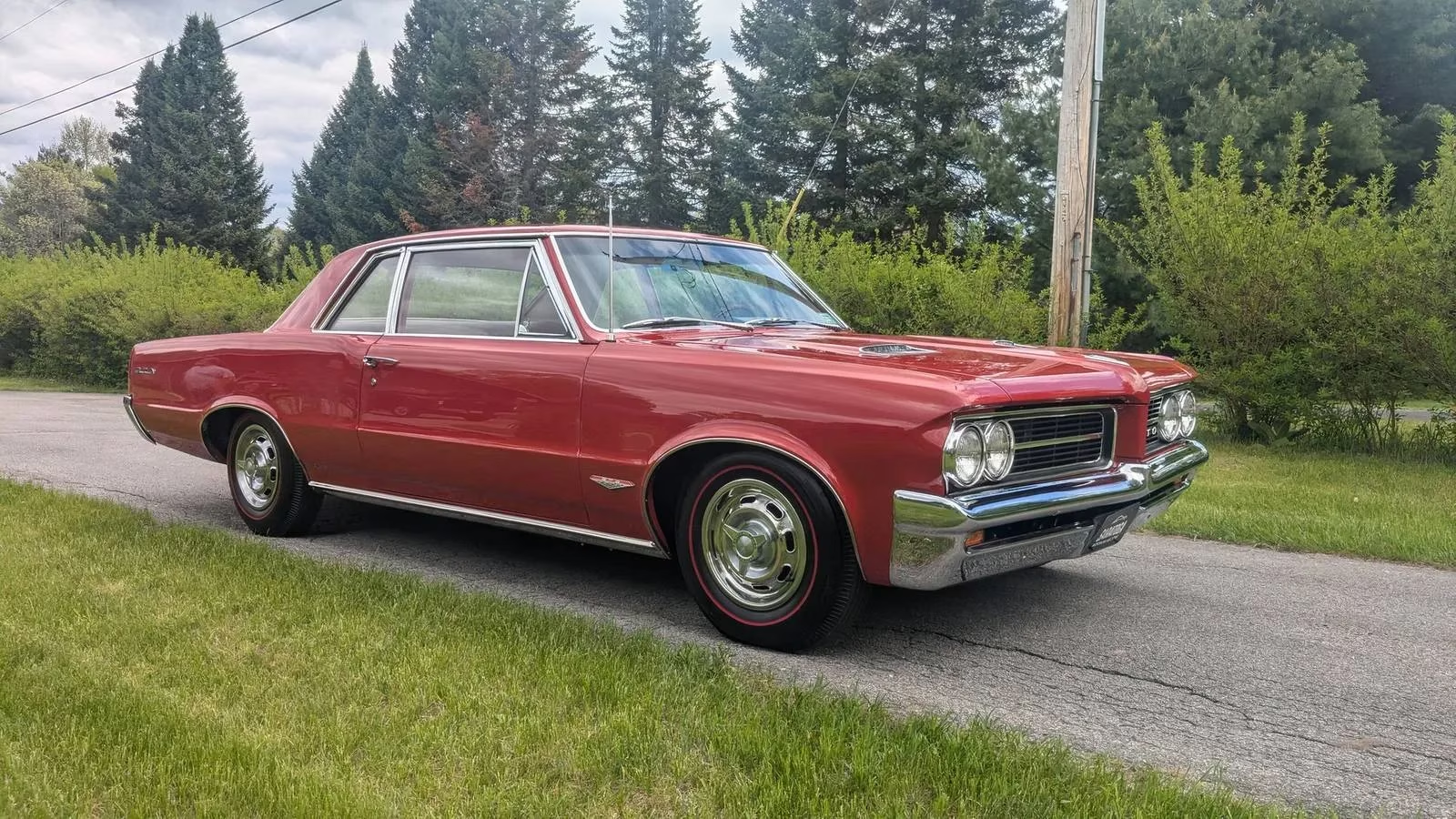
What makes this particular GTO so spine-tingling? Consider its dual pedigree. Not only does it belong to the legendary first-generation lineup that ran from 1964 to 1967, but it is also—by a comfortable margin—the earliest known example of the breed. That double-whammy rarity is enough to make any collector’s heart race. Can you imagine being the person who ticked the $295.90 "Gran Turismo Omologato" option box on a Tempest order form back in the fall of 1963? You’d be buying a car with no track record, no mythology, just a clever name borrowed from a Ferrari. And yet that single choice ignited a revolution.
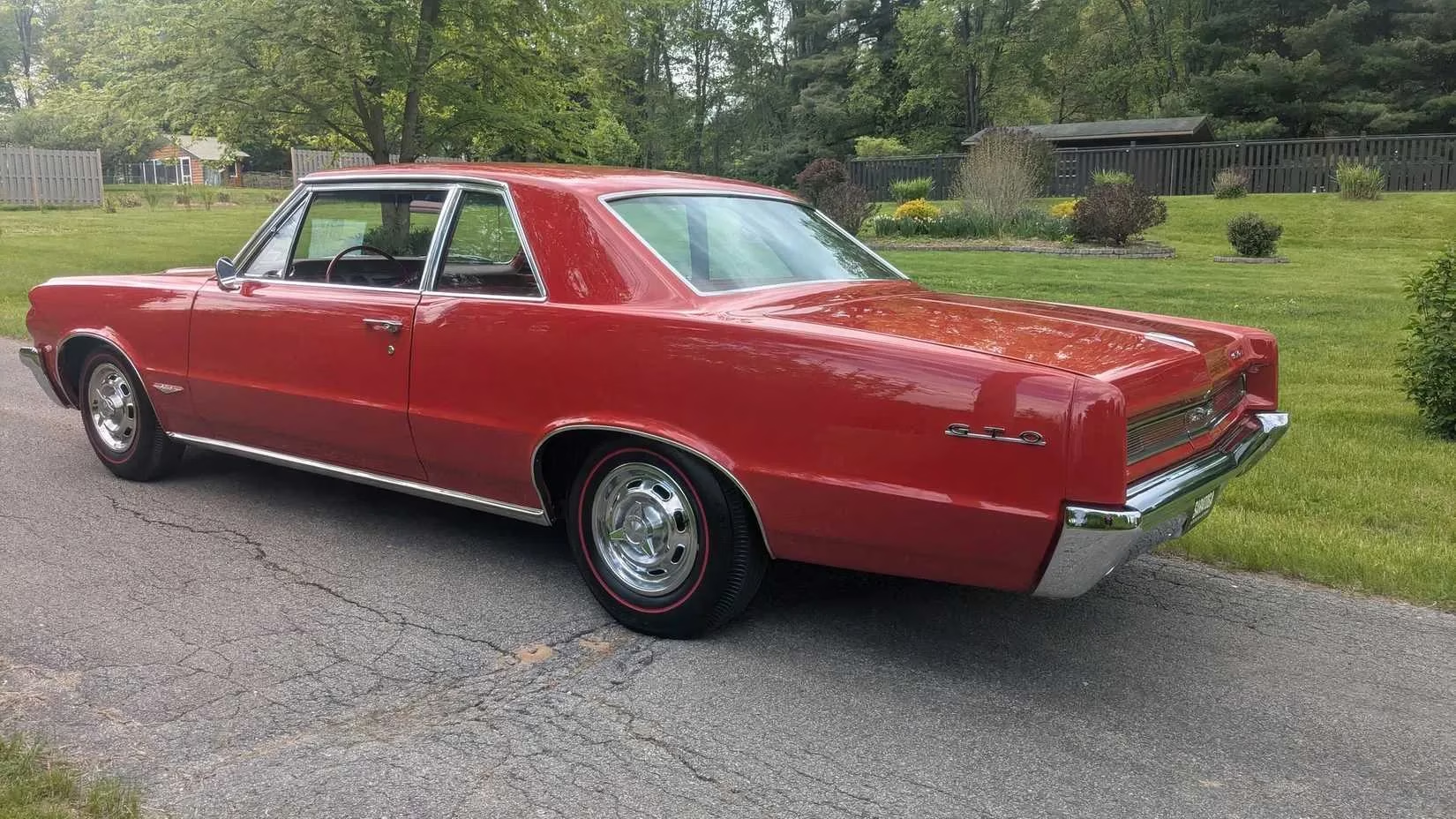
When I first laid eyes on this GTO at the 2025 Saratoga Motorcar Auction, the world promptly melted away. The car presents in a spotless red finish that seems to pull the surrounding light into its lacquer depths. Chrome bumpers, grille inserts, and window trim gleam with a warmth that modern chrome simply doesn’t replicate. This is not a survivor patina car; it has undergone a rotisserie restoration, one of the most painstaking rejuvenation methods in the classic car world. The entire body was lifted from the frame and mounted on a rotating stand so that every square inch of metal could be stripped, repaired, primed, and painted with obsessive precision. The result is a machine that looks like it just teleported from a 1964 showroom, even though its odometer reads 75,360 miles.
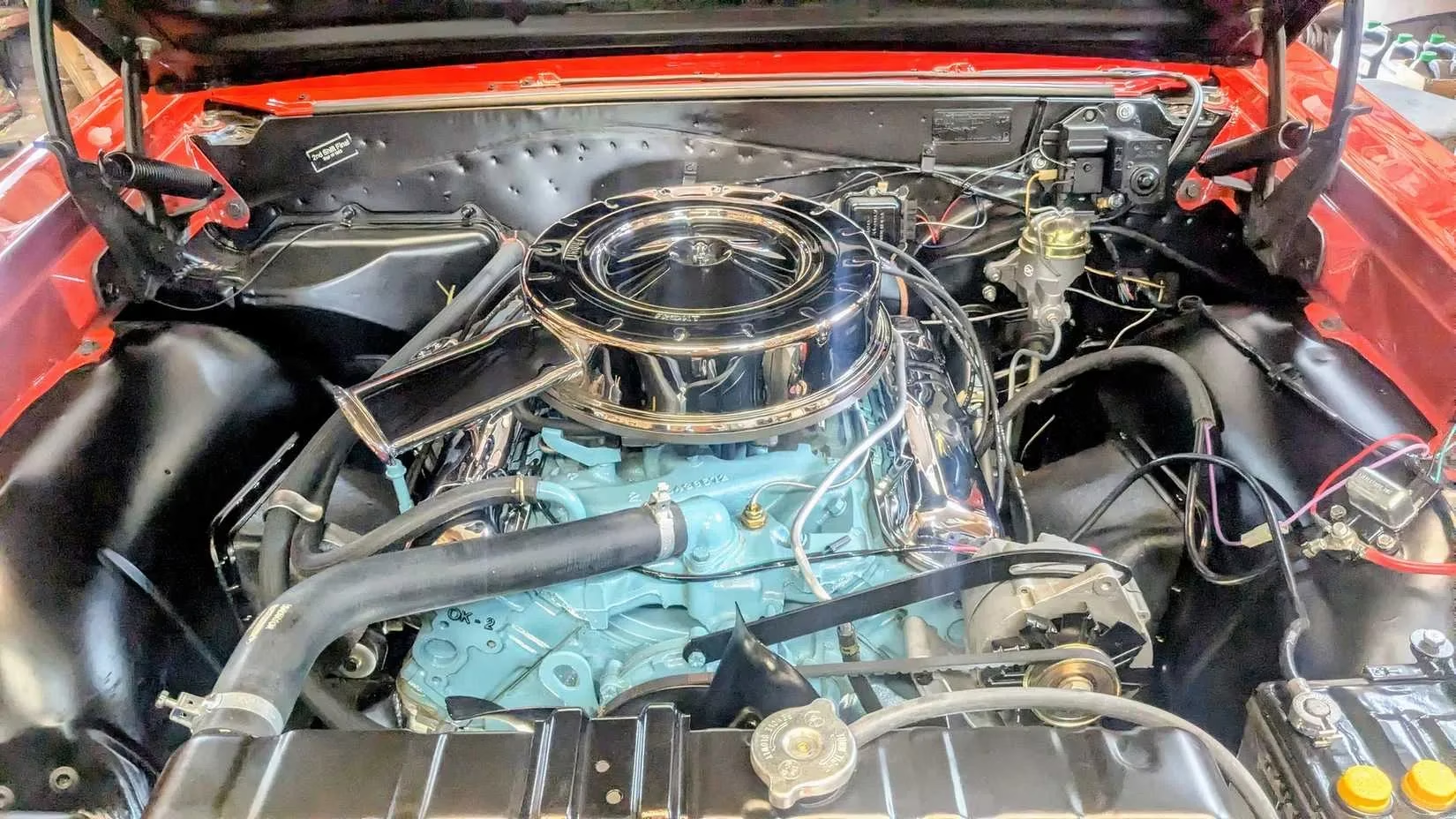
Slide into the cockpit and you’re greeted by factory-fresh red vinyl. The standard front bucket seats, the Deluxe Steering Wheel, the chrome-trimmed gear lever—each detail whispers of an era when driving was a full-sensory ritual. Pop the hood and the 389 cubic-inch V8 dominates the engine bay with its polished valve covers and massive four-barrel carburetor. From the factory, this base GTO powerplant delivered 325 hp at 4,800 rpm and a stump-pulling 428 lb-ft of torque at just 3,200 rpm. In 1964, those numbers were simply staggering. Even by 2026 standards, the torque figure suggests a readiness to pin you to the seat the moment you breathe on the throttle. Is it any wonder the GTO earned its title as the first true muscle car?
Peeling back the layers of this car’s story, the original window sticker provides a fascinating time capsule of automotive economics. Below is a breakdown of the major options and their 1964 prices:
| Option | Original Price (1964) |
|---|---|
| Gran Turismo Omologato Package (389 V8, Hurst shifter, dual exhaust, redline tires, badges) | $295.90 |
| All-Synchro 4-Speed Manual Transmission | $188.30 |
| Tachometer | $53.80 |
| Push-Button Radio | $62.41 |
| Center Console | $48.15 |
| Safe-T-Track Limited-Slip Differential | $37.66 |
| Handling and Ride Package (stiffer springs, larger sway bar, special wheels & tires) | $3.82 |
| Total Vehicle Cost | $3,368.74 |
Total cost of $3,368.74 in 1964 money. Adjusted for inflation, that’s roughly equivalent to $35,000—36,000 in 2025. What does that tell us? Either the official inflation calculators lag reality, or buying a factory-hot-rodded Pontiac was an extraordinary value. Frankly, I lean toward the latter. For less than the price of a well-equipped Camry today, you could own a car that ran mid-low 14-second quarter miles and embarrassed everything short of a dedicated race machine. The four-speed manual, with its Hurst shifter sprouting from the transmission tunnel, stands as a reminder that driver engagement was non-negotiable. No flappy paddles, no launch control—just your right foot and your left arm.
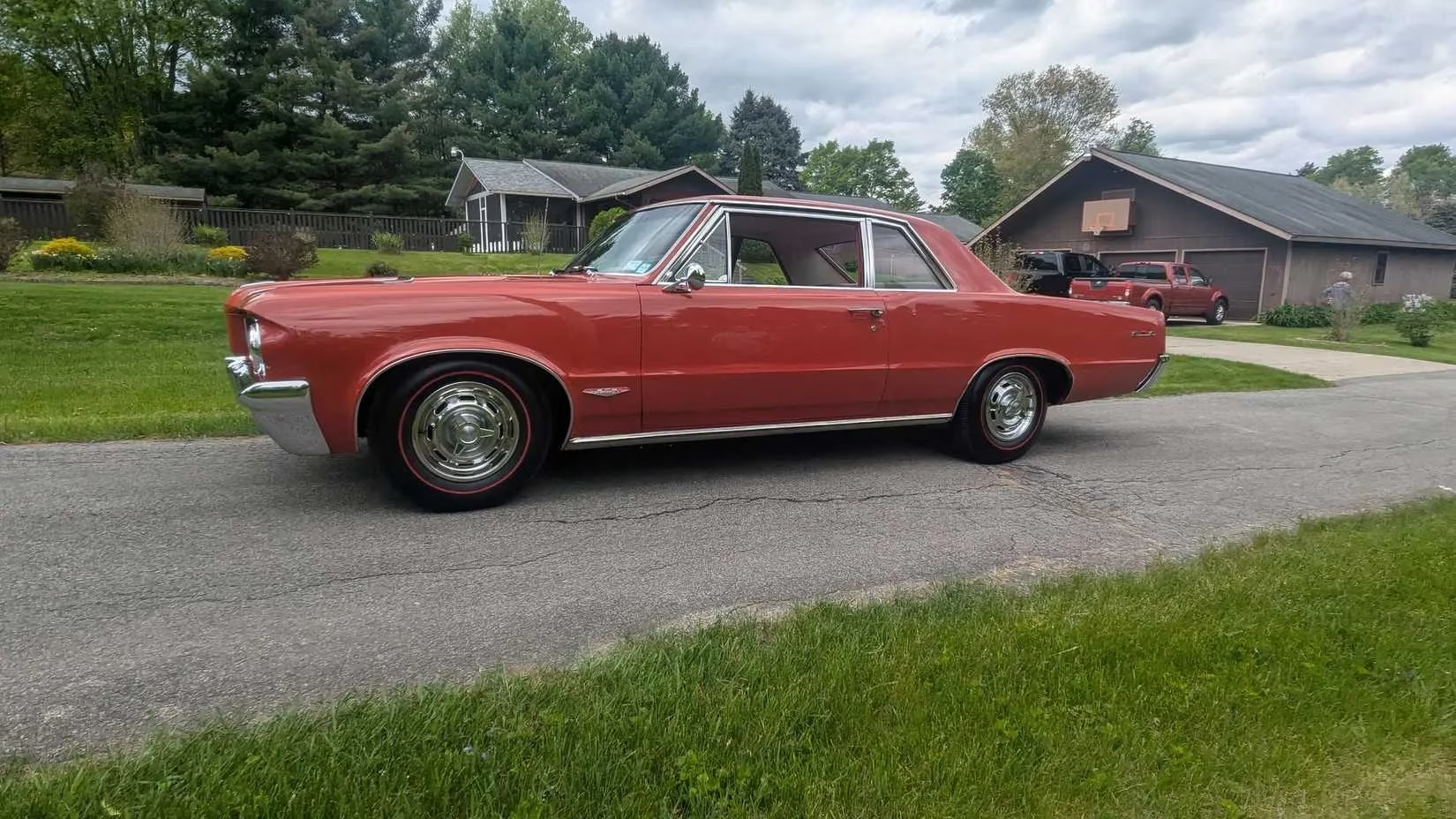
The restoration of this car deserves a paragraph of its own, because rotisserie jobs are not for the faint of heart. Every nut, bolt, and bracket is cataloged and removed. The bare body is blasted to eliminate any hidden corrosion that’s accumulated over six decades. Minor dents and imperfections are metal-finished, not simply slathered in filler. Then comes the primer-sealer and multiple coats of single-stage paint (or modern base-coat/clear-coat, depending on restorer preference), wet-sanding between each layer until the panels reflect like mirrors. Meanwhile, the frame is powdercoated, the suspension rebuilt, the engine blueprinted, the wiring replaced. The process can take years and cost as much as a new luxury car. What you get in return is perfection—a car that drives and presents at a level the Pontiac factory could only dream of achieving. This GTO’s restoration was clearly done by artisans who respected its VIN.
At the 2025 Saratoga Motorcar Auction, the stakes were appropriately high. While the average transaction price for a 1964 GTO hardtop hovers around $63,000, low-mileage, historically significant examples routinely breach the $100,000 ceiling. When the hammer fell on VIN 824P8954, the final bid soared well into six figures—a reflection not only of the car’s condition but of its role as an automotive pioneer. As I watched the gavel drop, I couldn’t help but think: here is a machine that didn’t just observe history; it created it. The fourth GTO ever made, restored to flawless glory, now holds court in a collection where its story will be told for generations.
Why do cars like this captivate me so completely? It’s not merely about speed or styling. It’s about the audacity of an automaker to wrap a massive engine in an intermediate body and sell it to anyone with a driver’s license. It’s about the engineers and product planners—John DeLorean, Bill Collins, Russ Gee—who bypassed corporate restrictions to create a performance icon. It’s about the teenage driver in 1964 who climbed into his red GTO for the first time, fired up the 389, and felt the world shrink. When you stand next to the fourth GTO ever built, you can sense those echoes. And you realize that this isn’t just a collectible; it’s a cornerstone of American motoring culture, waiting for the next lucky caretaker to turn the key and let the dual exhausts sing their unrestrained song.