In rural Pennsylvania, Gerald’s property has become a quiet time capsule for one of the most surprising Mopar collections still in private hands. Gerald, a lifelong Chrysler loyalist whose father once worked at a Plymouth dealership, has spent decades gathering muscle cars that most enthusiasts now see only in photographs. Some are former high-school drivers, some were drag-strip regulars, and a few are genuine rarities that rarely surface in 2026. The collection is not a museum display. It is a weathered, honest snapshot of Mopar history, complete with rust, fading paint, and factory details that still carry weight.
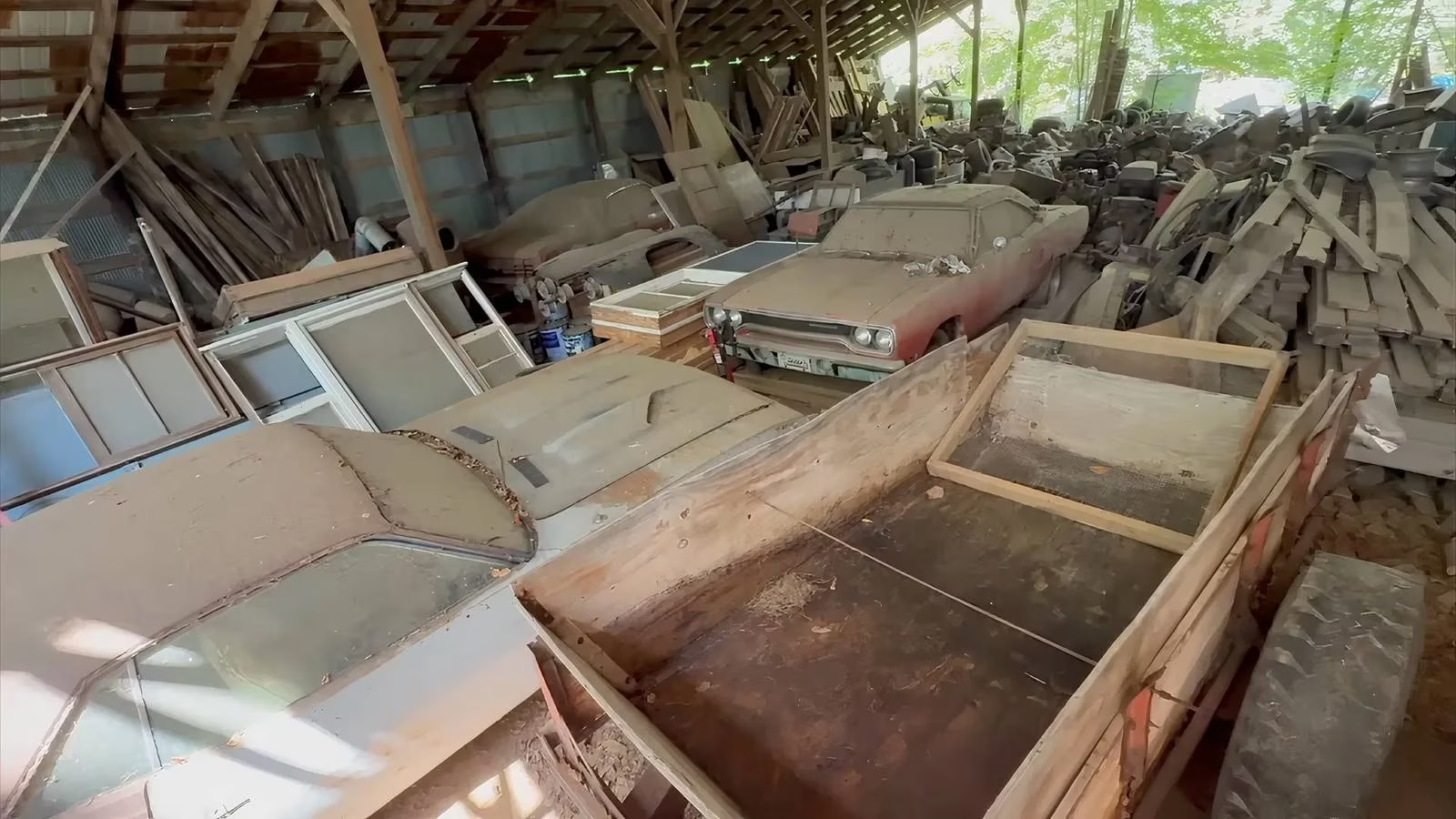
The tour begins with a bright orange 1970 Cuda that has sat outside for nearly 30 years. It is far from a pristine showpiece, yet its presence is undeniable. Rust and faded paint have taken a toll, but the car still holds a slapstick automatic shifter, a small reminder of the era when Chrysler was building some of Detroit’s most memorable machines. For Mopar fans, that detail matters. It is the kind of factory touch that separates a true survivor from a generic old car.
🏁 High-School History and Honest Survivors
Next to the Cuda is Gerald’s personal high-school ride, a 1973 Barracuda that he converted into a 340 pistol-grip four-speed car. It still wears the scars of its teenage years, but that is part of its charm. The car is not trying to be perfect. It is trying to be real, and for many Mopar enthusiasts, that authenticity is more valuable than a flawless restoration.
Beside it sits a 1972 340 Duster with the distinctive shark-tooth grille and original tags. Like the Barracuda, it is an honest barn find rather than a museum piece. These cars carry decades of local history in every dent and scratch. They also raise a question that resonates in 2026: what keeps a rough, well-used muscle car compelling when so many examples have been restored beyond recognition?
🔎 The V-Code Road Runner Steals the Show
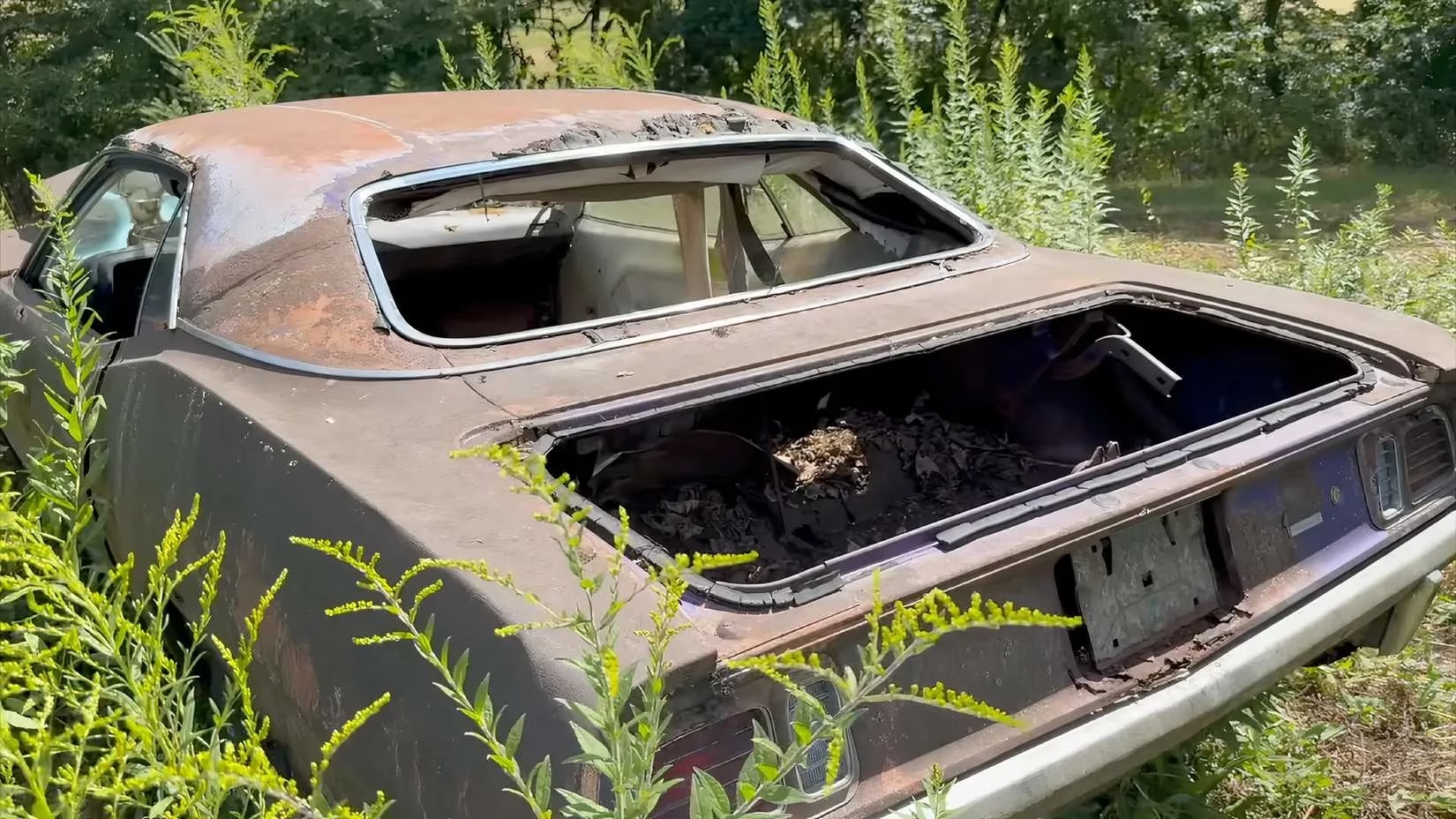
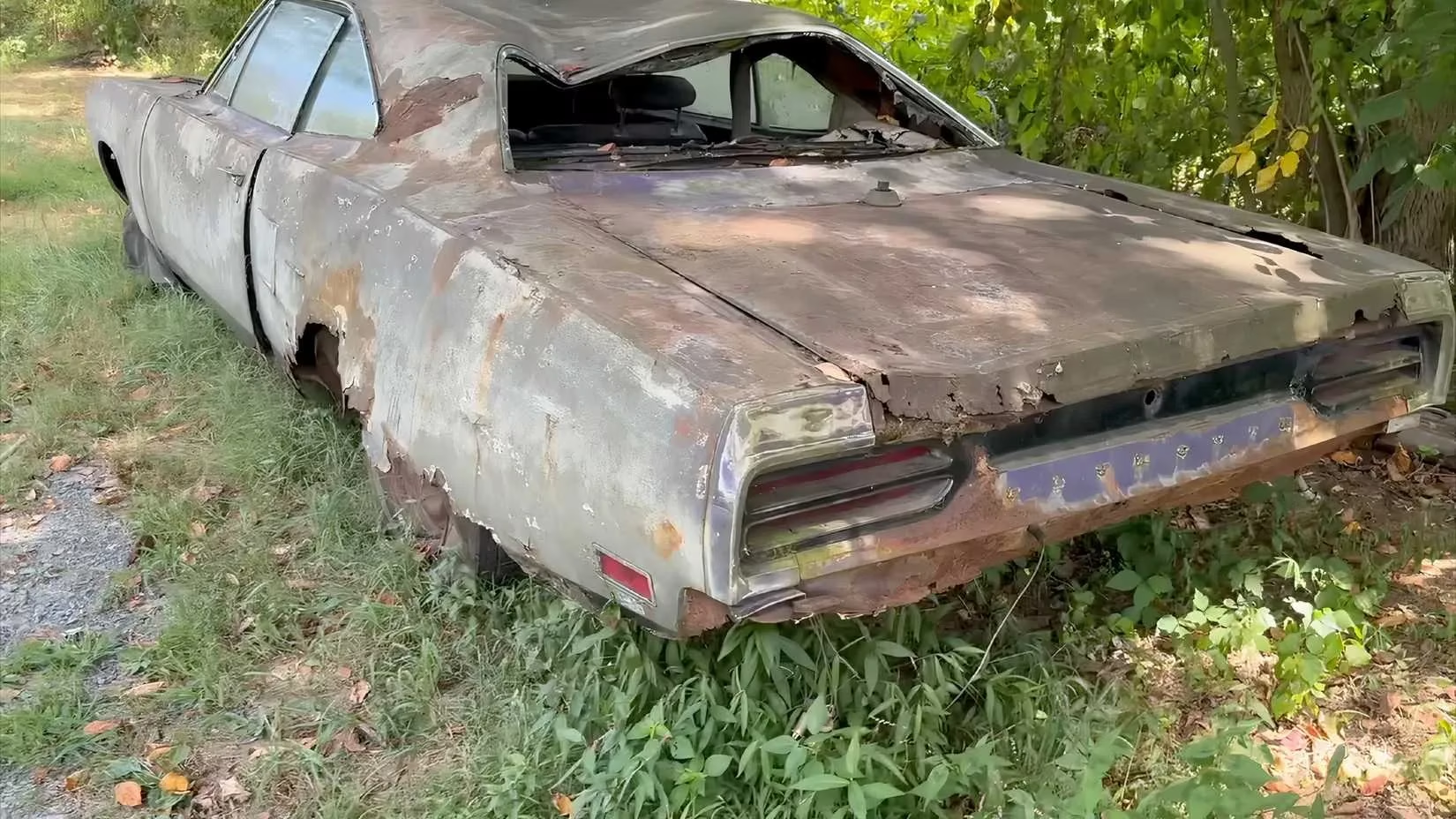
The centerpiece of Gerald’s collection is a 1970 Plymouth Road Runner painted In Violet, the legendary Mopar color that Dodge fans know as Plum Crazy. What makes this car especially significant is the V stamped into its VIN, marking it as a factory 440 Six Barrel machine. Only around 1,300 Road Runner hardtops were built in this configuration, making it one of the rarest Mopar setups of the muscle-car era.
Its original engine is long gone, but the car still carries its fender tag and the unmistakable cues of a genuine V-Code Mopar. That combination is enough to keep collectors talking. Auction records have shown similar cars trading in six-figure territory, yet Gerald reportedly let this one go for just $5,000. Even in rough condition, that is an extraordinary deal for a car with this pedigree. Can a barn find with a missing engine still command serious respect? In the Mopar world, the answer is often yes when the documentation and factory identity are strong.
📊 A Collection Built on Mopar DNA
| Car | Year | Key Detail | Condition |
|---|---|---|---|
| Plymouth Cuda | 1970 | Bright orange, slapstick automatic shifter | Outside for nearly 30 years |
| Plymouth Barracuda | 1973 | Gerald’s high-school ride, 340 pistol-grip four-speed conversion | Teenage scars and honest wear |
| Plymouth Duster 340 | 1972 | Shark-tooth grille, original tags | Weathered barn find |
| Plymouth Road Runner | 1970 | V-Code 440 Six Barrel, In Violet | Rough, original engine gone |
As of 2026, genuine barn finds have become increasingly difficult to verify. The market is crowded with restored cars, continuation models, and carefully curated collector pieces. Against that backdrop, Gerald’s collection stands out because it preserves something less polished but more personal. These cars were driven, modified, stored, and sometimes neglected. They survived. That survival is the story.
For Mopar loyalists, the appeal is not simply rarity. It is the connection to a time when Plymouth and Dodge were locked in the muscle-car wars, building machines with bold colors, aggressive graphics, and powertrains that made no apologies. The Cuda, Barracuda, Duster, and Road Runner each represent a different slice of that era. Together, they show how broad and strange the Mopar story can be.
What makes this Pennsylvania stash so memorable is its refusal to pretend. The cars are rough, but they are not anonymous. They carry VIN stamps, fender tags, original trim, and the kind of local history that cannot be manufactured in a restoration shop. Gerald may not have a showroom-ready collection, but he has something rarer in 2026: a group of survivors that still tell the truth about Mopar’s muscle-car past. After all, if a V-Code Road Runner can still hide in rural Pennsylvania, what else might be waiting behind a barn door?