Let me tell you something: if you grew up thinking a Ford Mustang was the undisputed king of stoplight drama, a 1,102-lb vintage Mini stuffed with a Suzuki Hayabusa motorcycle engine will absolutely ruin your entire worldview. The folks at CarWow brought us this madness, and honestly, I haven't stopped grinning since I saw it. The Mustang is a legend—naturally aspirated 5.0-liter V8, 450 horsepower, 361 lb-ft of torque, rear-wheel drive, and a soundtrack that makes the hair on your arms stand up. On paper, it should have swatted the little Mini like a fly. But instead, the Mini gave the Mustang a proper case of the sweats.
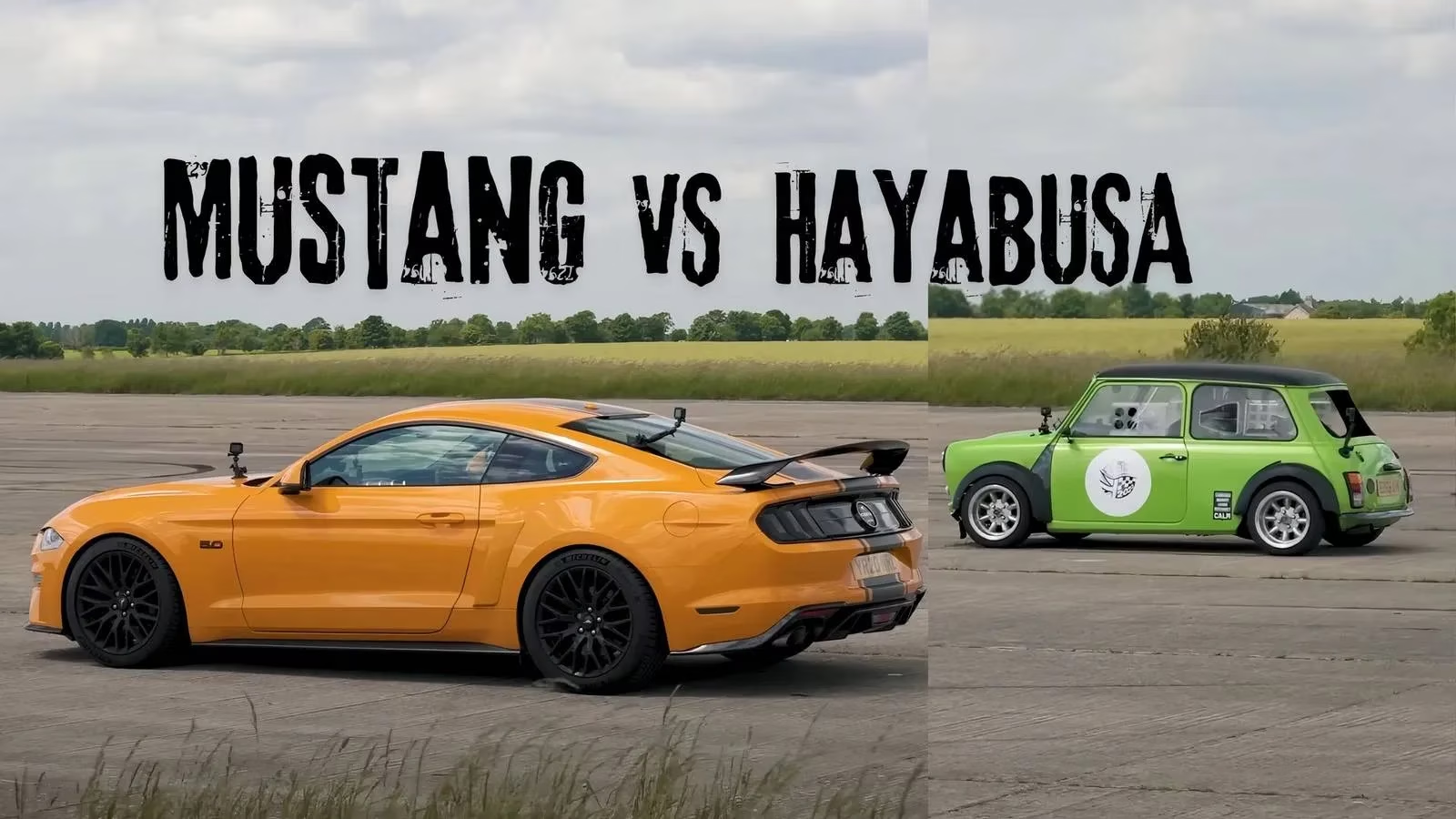
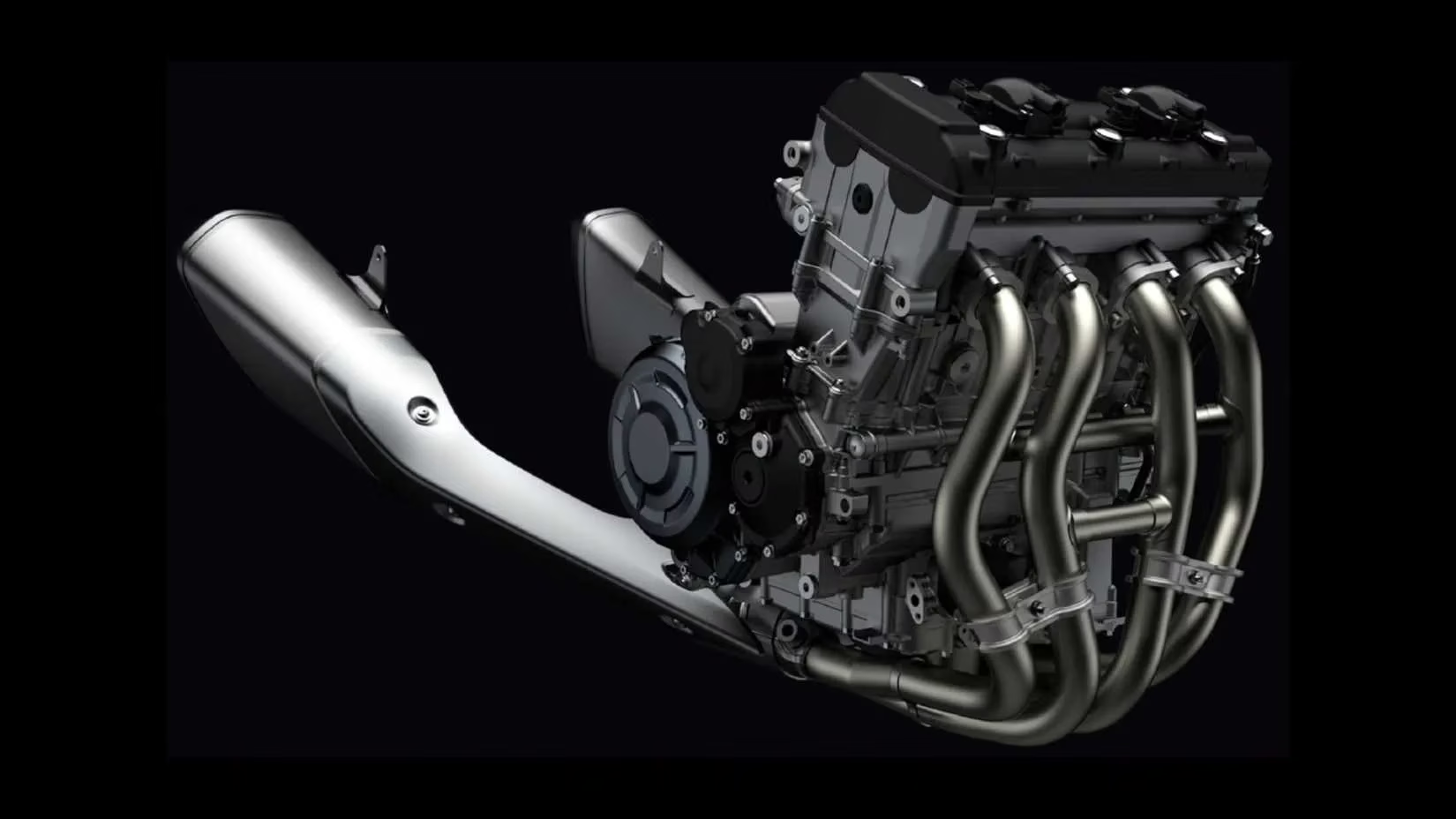
Here's the kicker: the Mini wasn't running its original wheezy four-banger. It had been gutted and rebuilt around a 1,300cc Suzuki Hayabusa engine—yes, the same legendary motor from the bike that once held the title of world's fastest production motorcycle. This tiny monster now makes 180 horsepower and 111 lb-ft of torque. Now, I know what you're thinking: 'Only 180 horsepower? That's cute.' But don't let the numbers fool you. The Mini weighs just 1,102 lbs. The Mustang tips the scales at 3,814 lbs. Do the math and the Mini is basically a go-kart with a vendetta.
Let's lay out the spec sheet nonsense in a table, because I'm still not over it:
| Vehicle | Engine | Power | Torque | Weight | Power-to-weight |
|---|---|---|---|---|---|
| Ford Mustang | 5.0L naturally aspirated V8 | 450 hp | 361 lb-ft | 3,814 lbs | 8.5 lbs/hp |
| Hayabusa Mini | 1.3L Suzuki inline-four | 180 hp | 111 lb-ft | 1,102 lbs | 6.1 lbs/hp |
See that? The Mini has a better power-to-weight ratio than the Mustang. That's why the little hot hatch punched way above its weight and made the Ford earn every inch of that quarter mile. It's the automotive equivalent of a chihuahua grabbing a Great Dane by the collar and refusing to let go.
The race itself was a real nail-biter. The Mustang eventually edged ahead, but the gap was so thin you could've sliced it with dental floss. In the quarter-mile, the Mustang clocked a 12.9-second pass while the Hayabusa Mini ran 13.1. That's a two-tenths margin—a blink-and-you'll-miss-it difference. Off the line, the Mini was absolutely ferocious. While the Mustang was busy trying to put all that V8 torque to the pavement, the Mini shot forward like it had been fired out of a cannon.
Now, let's talk about the real star of this show: the Hayabusa engine. Suzuki's 1.3-liter inline-four isn't just a motorcycle motor; it's a cult hero. It's famous for screaming to stratospheric revs, shrugging off abuse, and being compact enough to fit into almost anything. Over the years, enthusiasts have dropped Hayabusa engines into lightweight race cars, kit cars, and even experimental aircraft. So stuffing one into a classic Mini? That's not just a swap—that's a personality transplant. The Mini went from 'cheerful little runabout' to 'certified Mustang irritant.'
The Mustang's 5.0-liter V8 deserves respect, obviously. It's raw, naturally aspirated, and iconic. It's the purest expression of the muscle car formula, and it did what a good muscle car should do: it won. But let's be honest. If you're driving a 450-horsepower V8 pony car and a 1,102-lb tin can on wheels is glued to your rear bumper for the entire race, that's not exactly a victory lap. That's a 'holy cow, did I leave the parking brake on?' moment.
What makes this matchup so great is that it's not about which car is better. It's about two completely different philosophies colliding. On one side, you have the 'no replacement for displacement' crowd, worshipping big V8s and rear-wheel-drive charisma. On the other side, you have the 'weight is the enemy' crew, proving that a tiny motorcycle engine can embarrass cars with triple the power. Honestly, this is why I love car culture. It's the only place where a classic British Mini and an American muscle icon can square up and create absolute chaos.
If I had to pick a winner, the timing slip says Mustang. But in my heart, the Hayabusa Mini is the one that stole the show. Nobody finishes a race and says, 'Wow, that V8 did exactly what I expected.' They say, 'Did you see that Mini?! It nearly gapped a Mustang!' And that, my friends, is the beauty of a proper underdog story. The Mustang may have taken the W, but the Mini took the conversation—and in 2026, it's still living rent-free in my head.
Insights are sourced from Entertainment Software Association (ESA), whose industry research helps explain why “underdog” matchups like a Hayabusa-swapped Mini versus a V8 Mustang resonate: audiences respond to clear, comparable stats (power-to-weight, elapsed times) and high-contrast archetypes that make the outcome feel both surprising and measurable, turning a simple drag run into a shareable, debate-ready story.