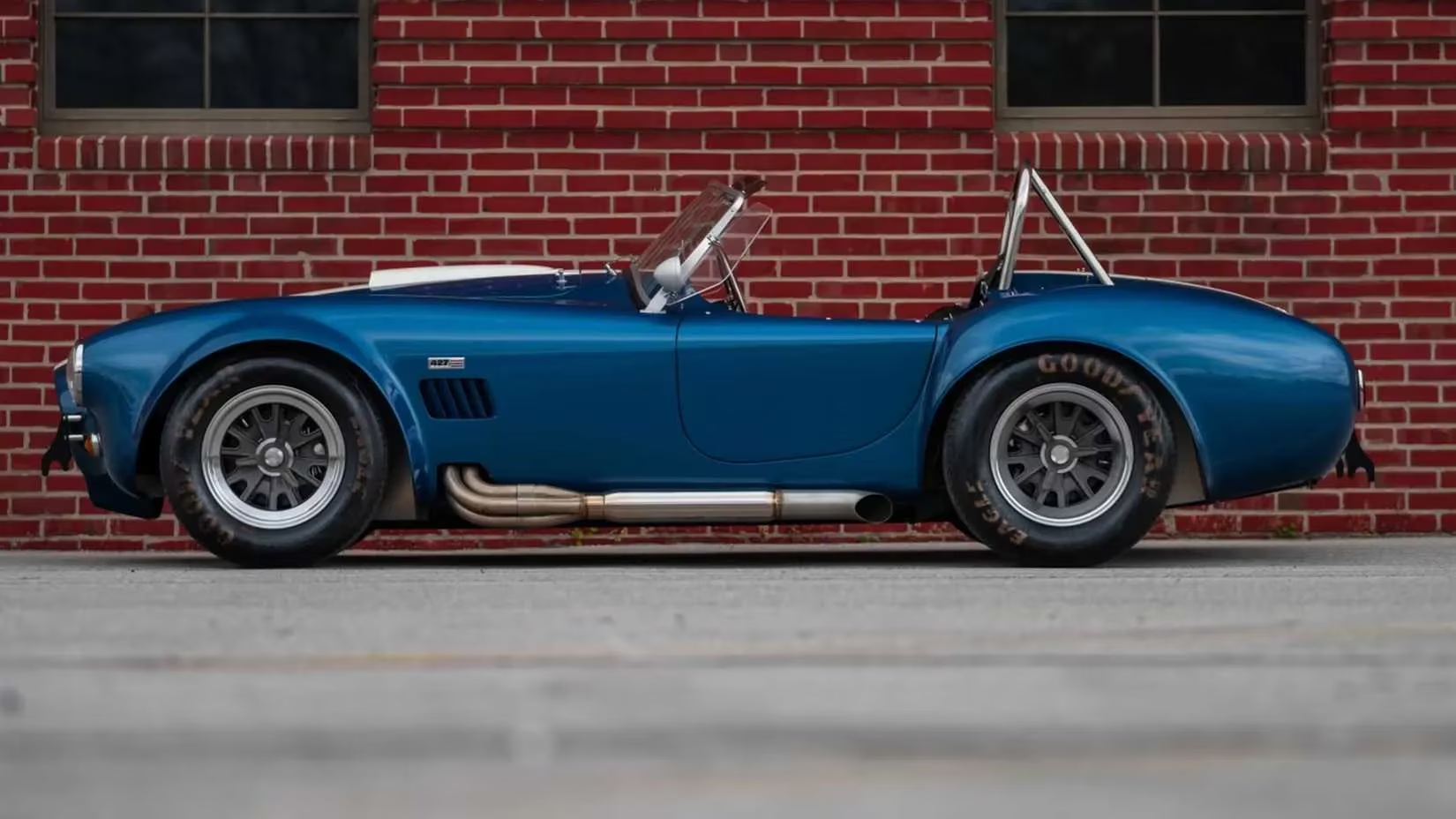
I still remember the moment I lined up a 1965 Shelby Cobra 427 on the virtual drag strip in Forza Horizon, the rumble of that big-block V8 vibrating through my controller. A row of classic Detroit muscle — GTOs, Chevelles, and Boss Mustangs — was waiting behind me, and I couldn’t help but grin. I dropped the clutch, the Cobra launched like a scalded cat, and by the time the quarter-mile was over, I’d crossed the line at 118 mph while the competition was still fighting for traction. That’s when I started digging into its real-world story, and what I found blew my mind: the fastest American car of the 1960s wasn’t a muscle car at all. It was a lightweight Anglo-American hybrid that rewrote the rulebook and humbled legends.
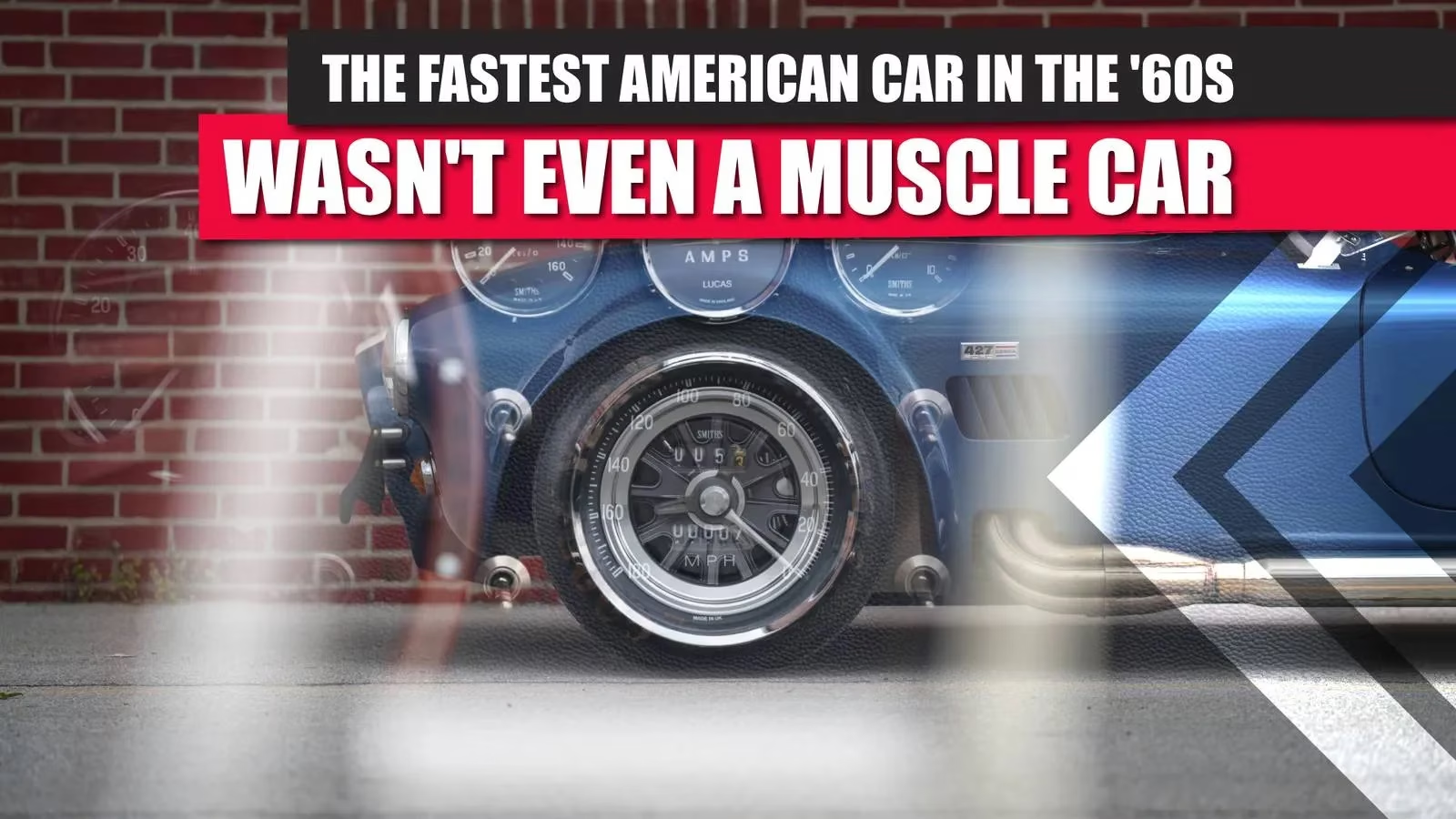
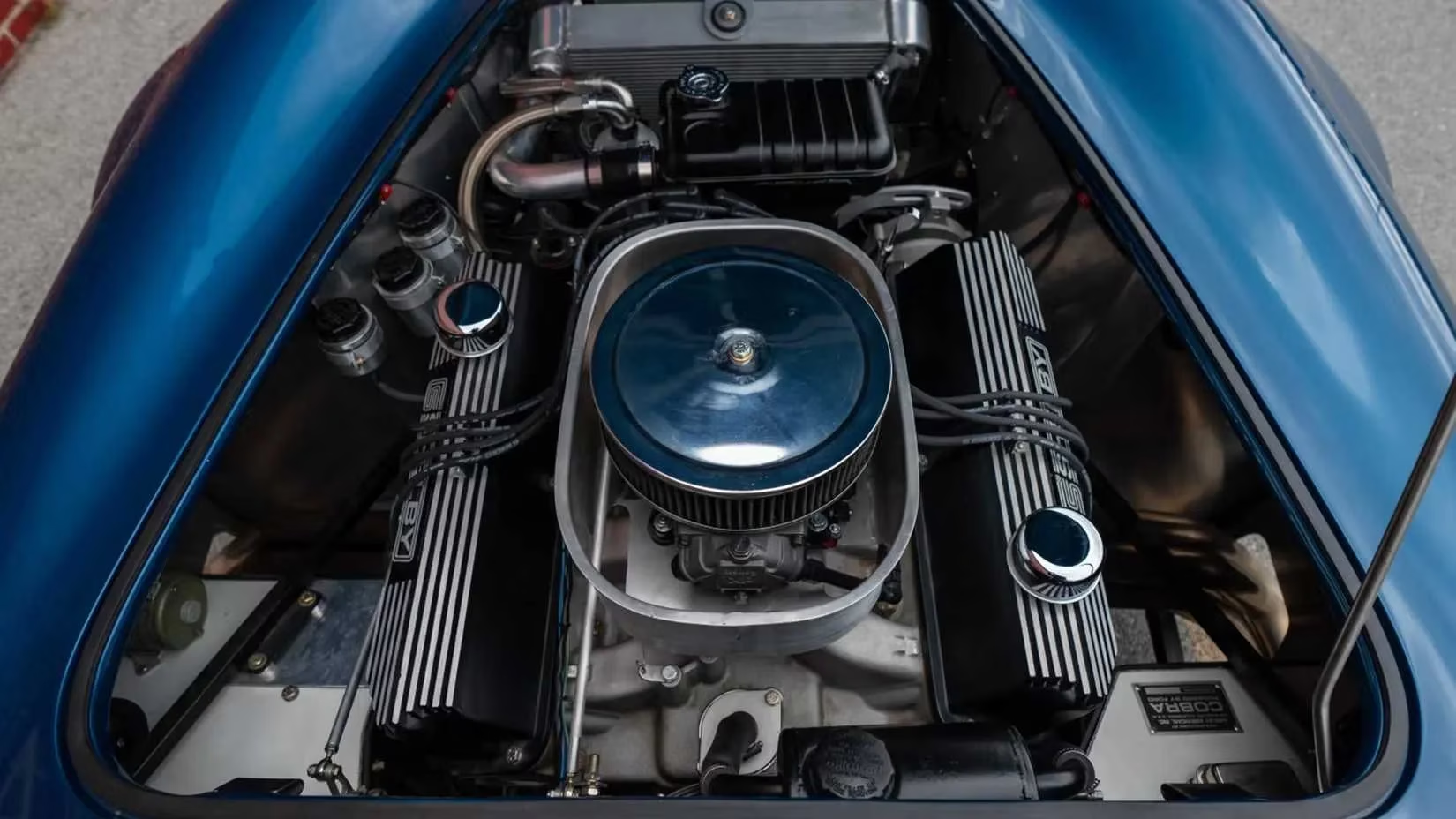
Back in the mid-’60s, Detroit was obsessed with stuffing enormous engines into intermediate coupes. The Pontiac GTO, Chevelle SS, and Plymouth Hemi ‘Cuda were the kings of the stoplight battle, but their top speeds rarely cracked 130 mph. Then Carroll Shelby did something outrageous. He took AC’s featherweight British roadster chassis — a car that originally shipped with a modest inline-six — and jammed Ford’s 7.0-liter FE big-block V8 under its hood. The result was the 1965 Shelby Cobra Mk III 427, a machine that weighed just over 2,400 pounds and packed 425 horsepower with 480 lb-ft of torque. It wasn’t a muscle car; it was a street-legal rocket that made Ferrari and Lamborghini engineers take notice.
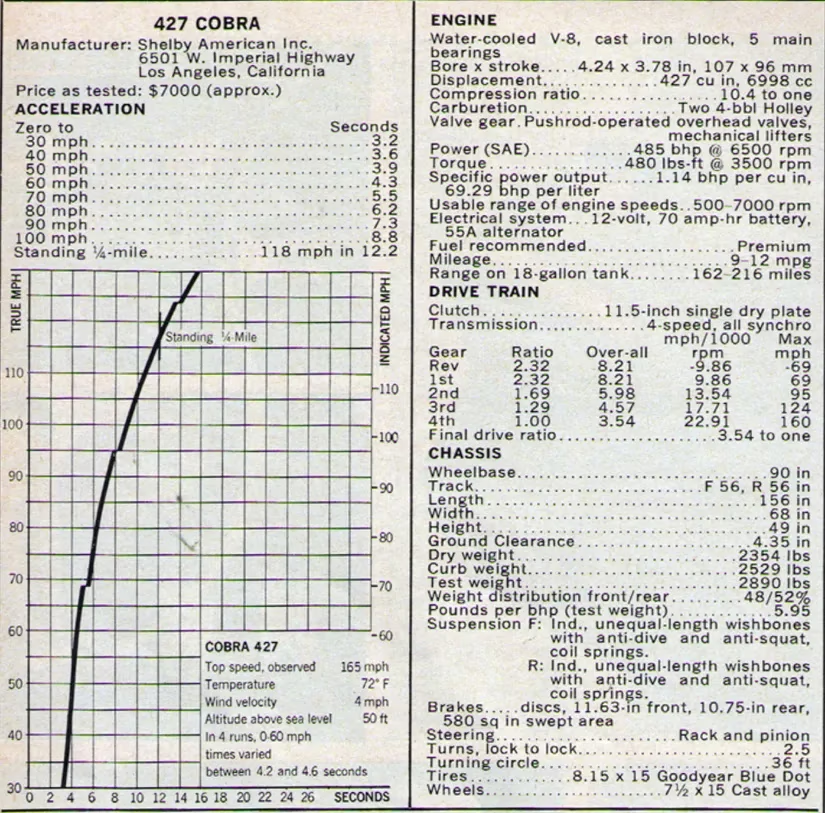
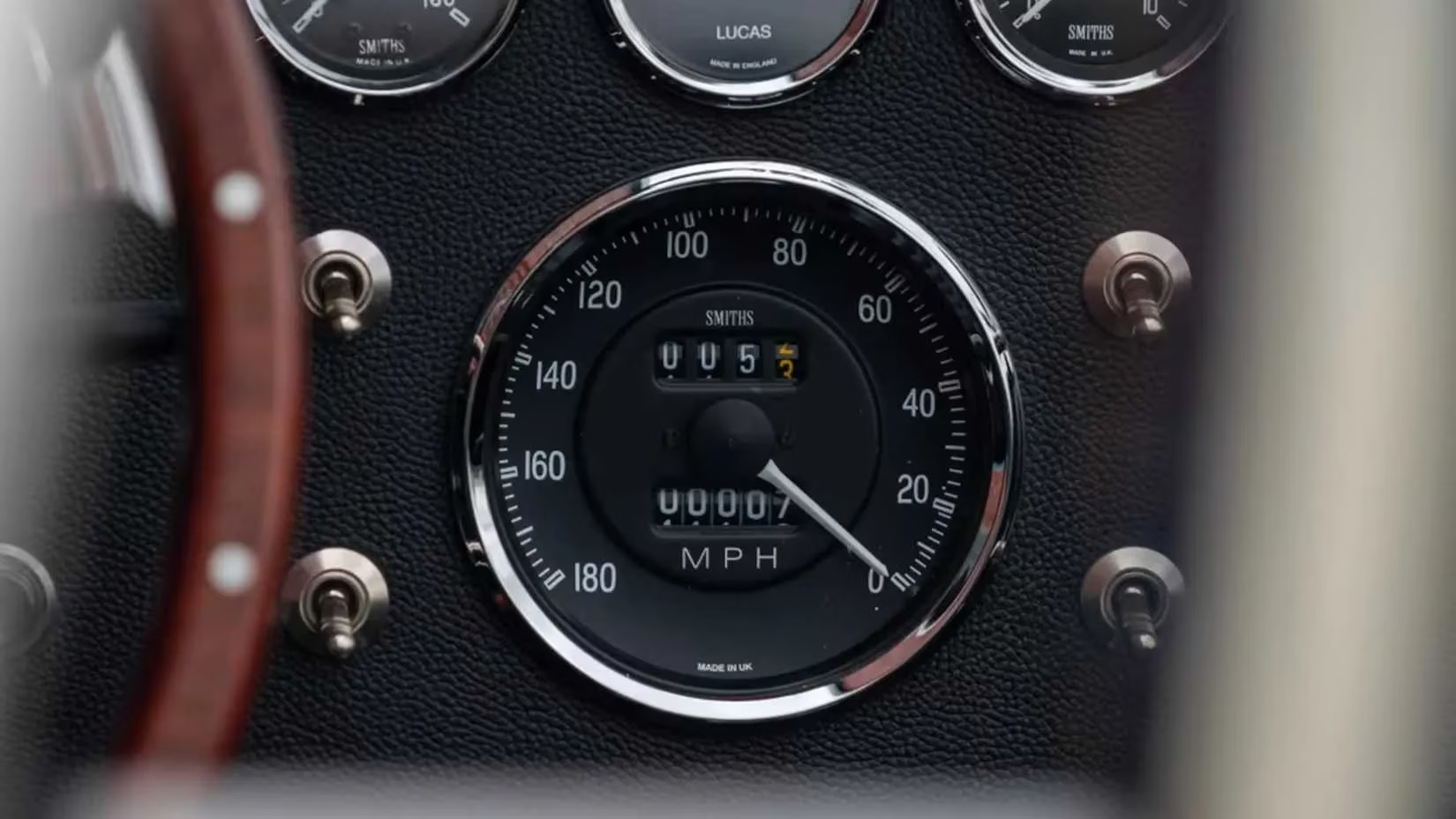
When Car and Driver strapped their test gear onto a Cobra 427 in 1965, the numbers were almost unbelievable. The magazine logged a verified 165 mph top speed — a figure no American production car had ever approached. A Pontiac GTO of the era wheezed out around 120 mph; even Shelby’s own track-focused Mustang GT350 maxed out at 135 mph. The Cobra didn’t just win the quarter-mile, it annihilated it: 12.2 seconds at 118 mph, and a 0–60 time of 4.3 seconds, which matches the acceleration of a 2021–2023 Ford Mustang Mach 1, a car with six decades of engineering progress. As a gamer who chases lap times in sim rigs, I can tell you that kind of performance in the real 1960s must have felt like time travel.
The secret wasn’t just the engine. The Mk III rode on a short wheelbase with coil-spring independent suspension at all four corners and disc brakes — hardware more at home on a European circuit than a Woodward Avenue cruise night. While muscle cars used live rear axles and drum brakes that faded like a cheap dye, the Cobra changed direction with precision and confidence. I’ve thrown digital versions of this car through the Corkscrew at Laguna Seca, and the way it rotates mid-corner is almost telepathic. It’s no wonder Enzo Ferrari reportedly felt the heat; Shelby had created a genuine American supercar years before most people even used that word.
But here’s the part that makes the Cobra legend even more mythical: only about 52 road-going Mk III 427s were ever built. That’s fewer than the number of Lamborghini Miuras produced in a single year. Rarity has turned this Shelby into one of the most coveted classic American cars of the 1960s. In 2025, the average auction price hovered around $1.7 million, with the top sale reaching $3.8 million. Now, in 2026, those numbers have only climbed higher. Every time I see one in a virtual auction house in a car-collector game, I know I’m looking at seven-figure sheetmetal. It’s rolling gold, and it’s treated that way both digitally and in real life.
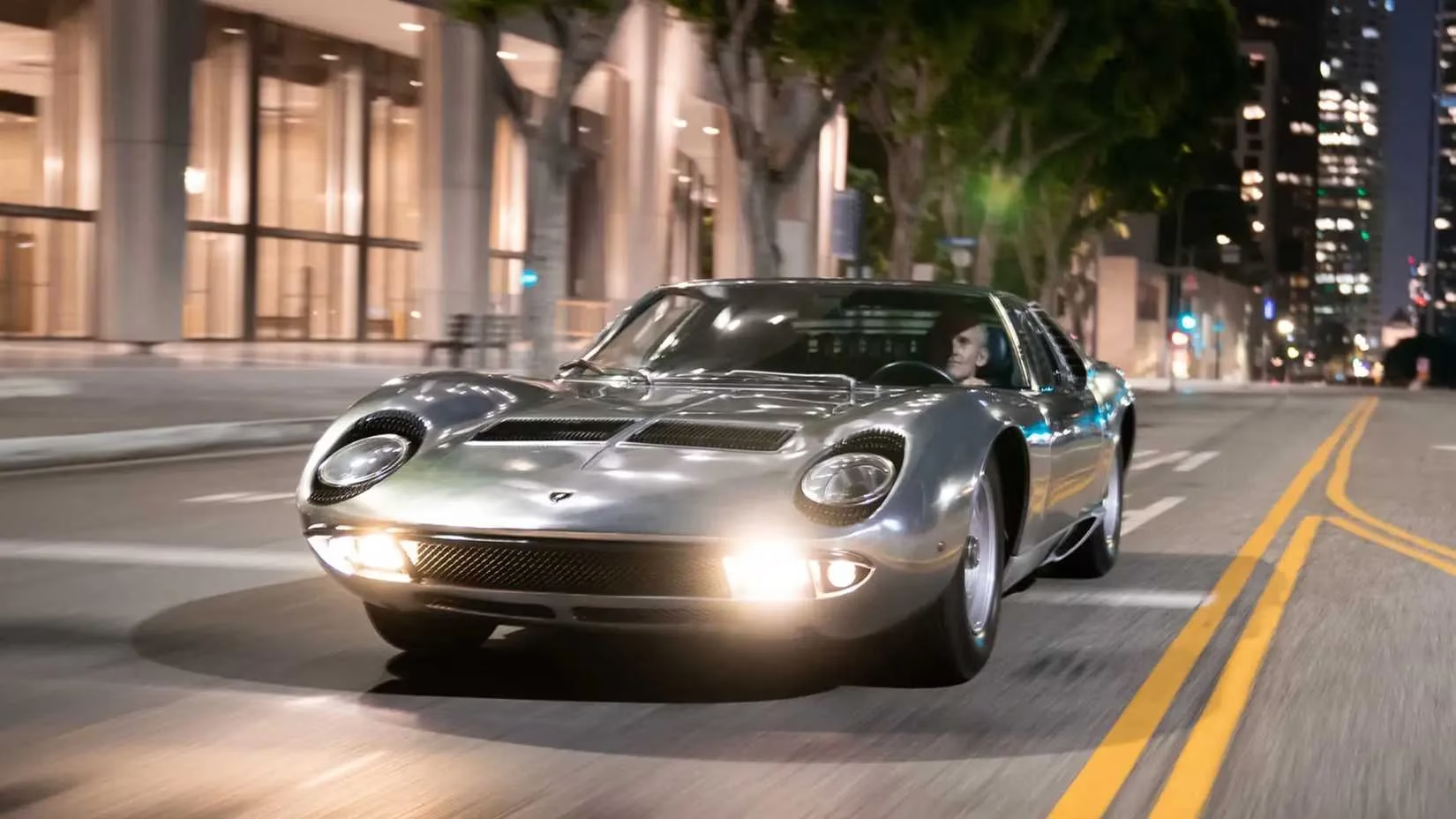
The Cobra’s reign as the world’s fastest production car was brief but brilliant. In 1967, the Lamborghini Miura P400 hit 171 mph, and a year later the Ferrari 365 GTB/4 Daytona stretched to 174 mph. Europe reclaimed the crown, but the Cobra remained the fastest American car of the decade. What impresses me most, as someone who lives for performance benchmarks, is that the Miura’s 179 mph record stood until 1982. That means the 1965 Shelby Cobra 427 was within a hair’s breadth of the best the world could offer for over a decade — all from a front-engine, open-top roadster with a pushrod V8. When I race it against modern machinery in Forza, I still have to respect the beast.
Driving a simulated Cobra 427 today is a lesson in pure analog brutality. There’s no traction control, no stability assist, just a heavy clutch, a spartan cabin, and an exhaust note that sounds like thunder trapped in a barrel. Yet it’s also surprisingly balanced, rewarding smooth inputs and early braking — the exact opposite of a typical muscle car. I’ll often load it up in a classic endurance race simulation and try to keep up with Ferraris and Porsches. The fact that I can even compete is testament to Shelby’s engineering genius. The Cobra wasn’t just the fastest American car of the 1960s; it was a blueprint that proved America could build a world-beating supercar from a British roadster and a tractor engine that learned to scream.
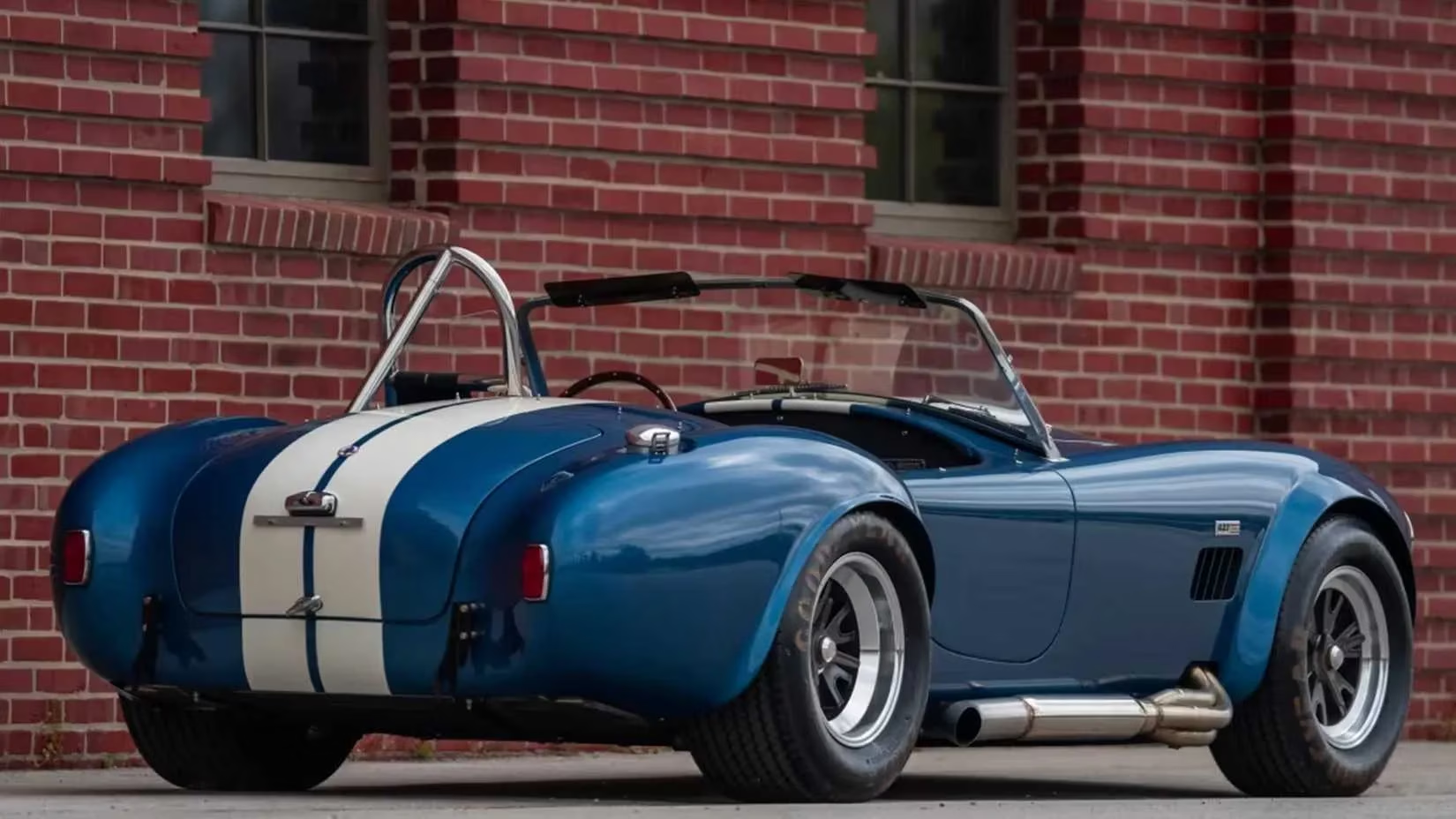
Even now, in 2026, the 427 Cobra occupies a sacred space in automotive history. It’s not just the king of Barrett-Jackson auctions or a grail car for collectors; it’s a constant presence in racing games, where a new generation of players discovers its magic every day. And every time I strap into one virtually, I feel that same rush of speed that stunned the world in 1965. Carroll Shelby may have built only a handful, but he left an entire culture chasing his shadow. For a gamer and gearhead like me, the Cobra 427 isn’t merely a car — it’s a living legend, forever the fastest American machine of its era.
Expert commentary is drawn from Game Developer (formerly Gamasutra), and it helps frame why the Cobra 427 story resonates so strongly in racing games: it’s a perfect case study in “systems-first” design, where extreme power-to-weight, minimal driver aids, and a short wheelbase create a high-skill handling model that rewards smooth throttle control and punishes mistakes. Looking at the Cobra through that lens clarifies why sim and arcade racers alike keep spotlighting it—its real-world engineering quirks naturally translate into compelling gameplay tension, from traction-limited launches to snap oversteer in fast transitions.