Let me tell you a story about the ultimate automotive underdog. Picture this: it's the late 1980s. American carmakers are sweating bullets over emissions laws and getting their lunch eaten by slick Japanese imports. What's the solution? If you're Buick, you take a seemingly boring, V6-powered family sedan, strap a turbocharger to it, paint it all black, and accidentally create a legend. That's the Buick Regal GNX for you—a car that looked like a banker's daily driver but ran like it was late for a bank heist. I still can't believe this boxy, sinister-looking machine didn't just dominate American drag strips; it crossed an ocean and became a cult obsession in Japan, one of the most sophisticated car cultures on the planet.
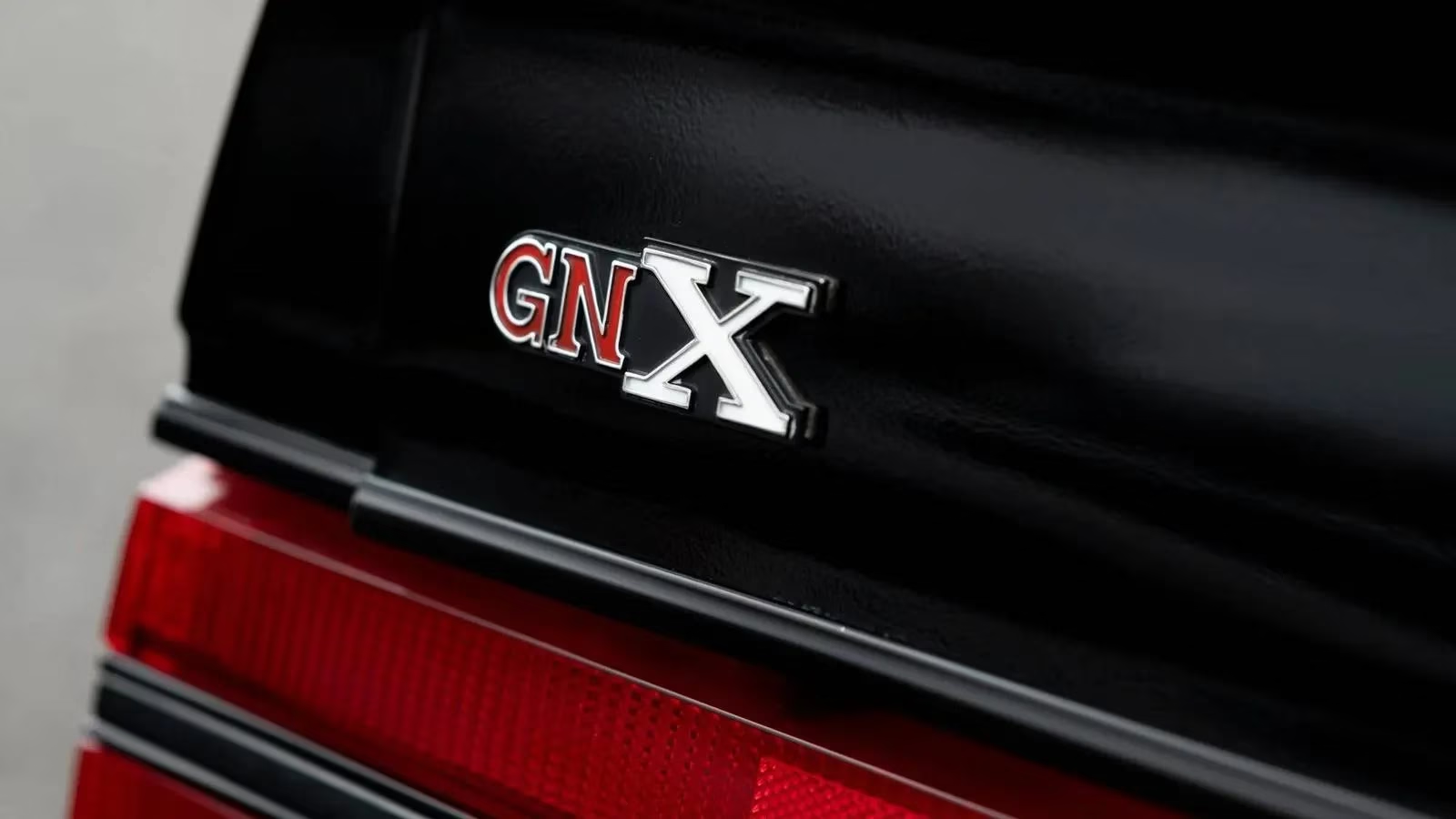
Back in its day, the GNX's specs were basically science fiction for a Buick. Officially, it had a turbocharged 3.8-liter V6 pumping out 276 horsepower and 360 lb-ft of torque. 🚀 But here's the open secret every gearhead knew: Buick was being incredibly modest. The real-world dyno figures were closer to over 300 horsepower and a mind-bending 400+ lb-ft of torque. This wasn't just fast; it was the fastest American production car of the entire 1980s, hitting 0-60 mph in a blistering 4.6 seconds. In an era of mullets and synth-pop, this thing was a silent assassin on the street.
Its secret sauce? A masterclass in collaboration. Buick didn't do this alone. They teamed up with McLaren Performance Technologies (yes, that McLaren) and ASC (American Sunroof Corporation) to forge this beast. The heart of the monster was a Garrett T-3 turbocharger, an intercooler, and a beefed-up automatic transmission designed to handle the abuse. With only 547 units ever made, it was rare from birth. I often think about how the engineers at Buick must have chuckled, knowing they'd just built a wolf in sheep's clothing, completely unaware it would become a global phenomenon.
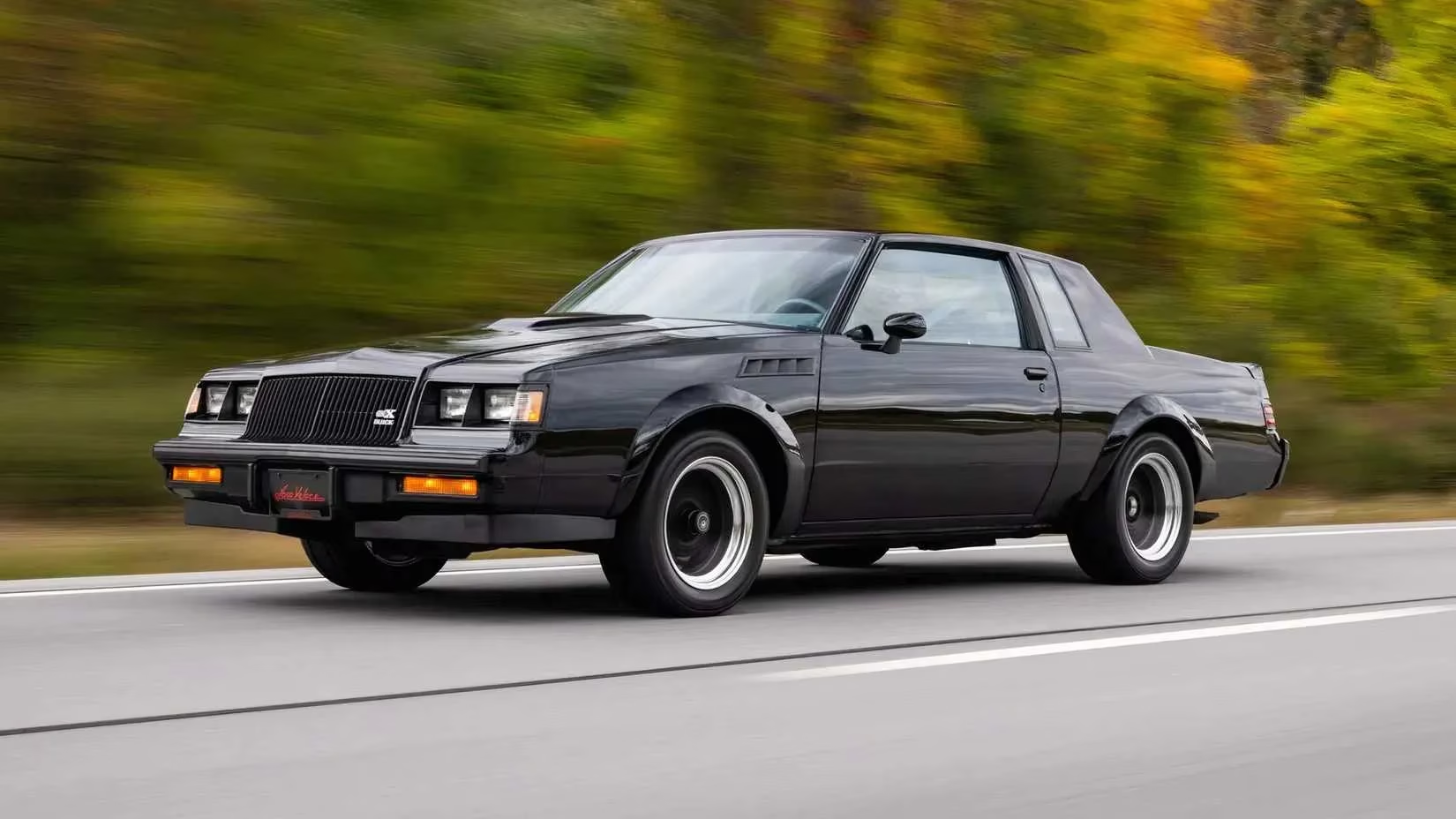
So, how did this all-American bruiser find a second home in Japan? 🤔 Japanese car culture has always had a thing for the unconventional, the wabi-sabi of machines. The GNX, with its boxy, aggressive lines, actually fit right in. It looked like it could be a long-lost cousin to the Nissan Skyline R31, but with a uniquely American soul: rear-wheel drive and that glorious turbo V6. For Japanese tuners, it was a blank canvas that screamed "potential." They saw past its drag-racing roots and envisioned something more.
The modifications they performed were nothing short of legendary. We're talking about a level of dedication that borders on fanatical:
-
Upgraded Turbochargers: Pushing boost levels into the stratosphere.
-
Custom Suspension: Transforming it from a straight-line hero to a corner-carving machine.
-
Drift Modifications: Yes, they turned this land missile into a sideways spectacle.
-
Engine Swaps: The ultimate fusion—dropping in high-revving Japanese legends like the Toyota 2JZ-GTE to create cultural hybrids of insane power.
From the neon-lit streets of Tokyo to underground car meets in Osaka, the GNX was revered. It wasn't just an imported car; it was a symbol of raw, unadulterated American power, reimagined through a Japanese lens. It became a trophy, a statement piece for collectors and tuners who wanted to celebrate muscle in a distinctly JDM way.
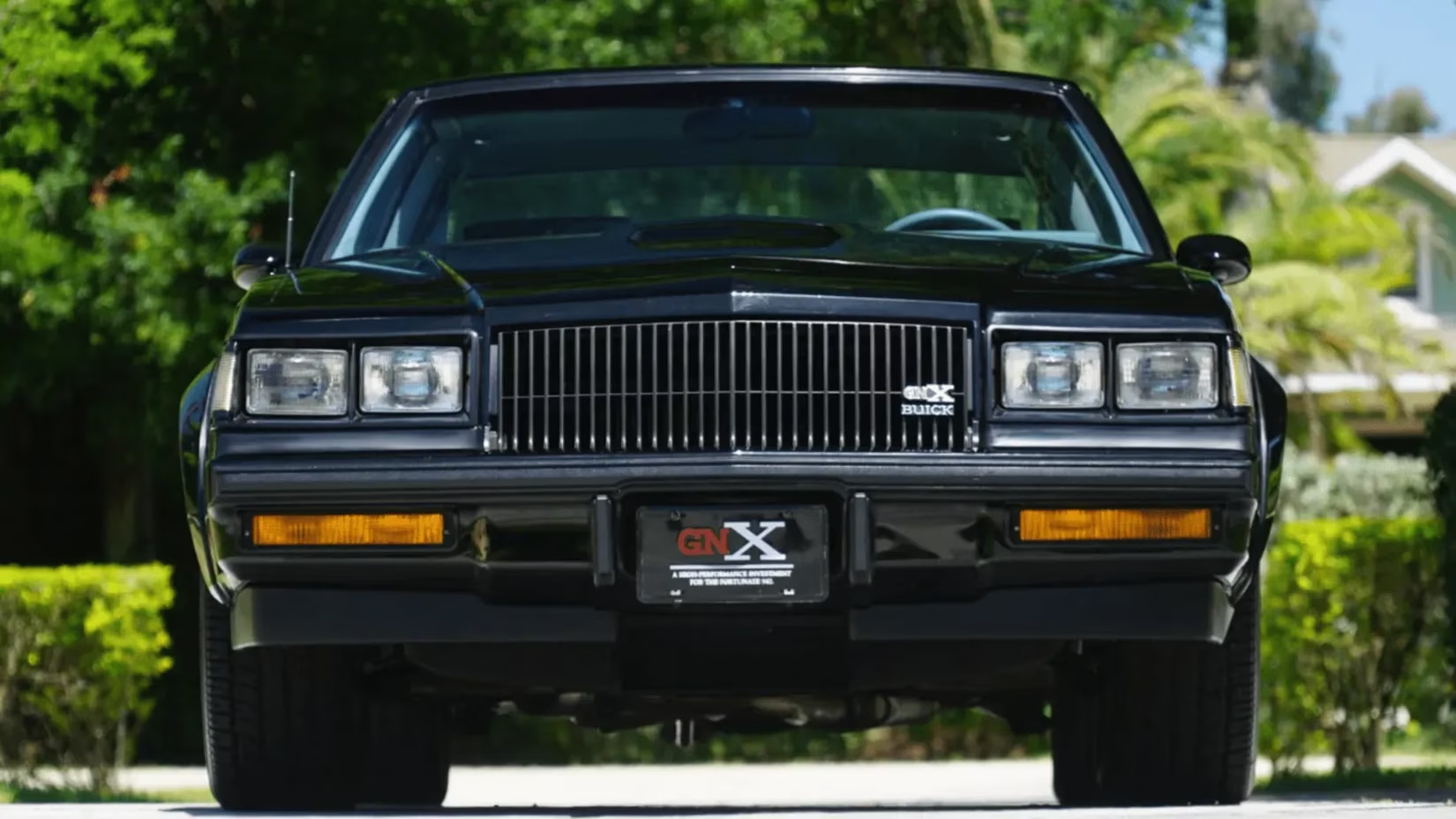
Fast forward to 2026, and the GNX's legend has only solidified, especially in the collector market. Let's talk numbers, because they're absolutely staggering. Forget about depreciation; this car has experienced financial levitation.
| Metric | Value |
|---|---|
| Original 1987 MSRP | ~$29,000 |
| 2026 Average Selling Price | $177,000 |
| Highest Recorded Sale | $308,000 |
The value isn't just about rarity (though 547 cars certainly helps). It's about heritage, performance, and that timeless, menacingly beautiful all-black aesthetic. In Japan, the story is even crazier. Between import costs, tariffs, and their sheer scarcity, GNXs command a massive premium. Japanese collectors are known to pay well above market value just for the privilege of parking one in their garage. It's not just an investment; it's a piece of living history that continues to grow in both value and street cred.
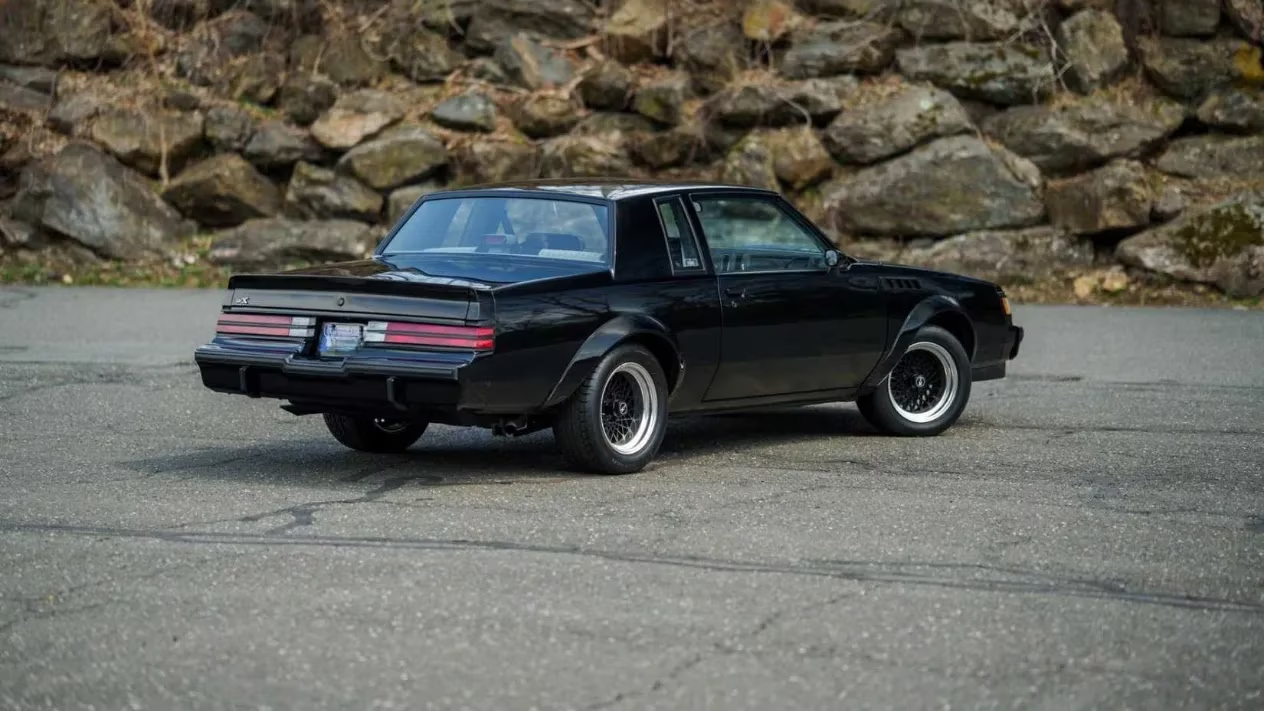
So, what's the magic formula? Why does this car resonate from California to Kyoto? First, it wasn't just brute force. It had a sophisticated, engineering-led soul that appealed to tech-savvy enthusiasts everywhere. Second, its pop culture status is untouchable. Dubbed "Darth Vader's Car" for its sinister looks and grille that resembled the Sith Lord's helmet, it's been in movies, TV shows, and video games, inspiring new generations. Even mega-celebrities like Kendrick Lamar have been spotted with one, proving its timeless cool.
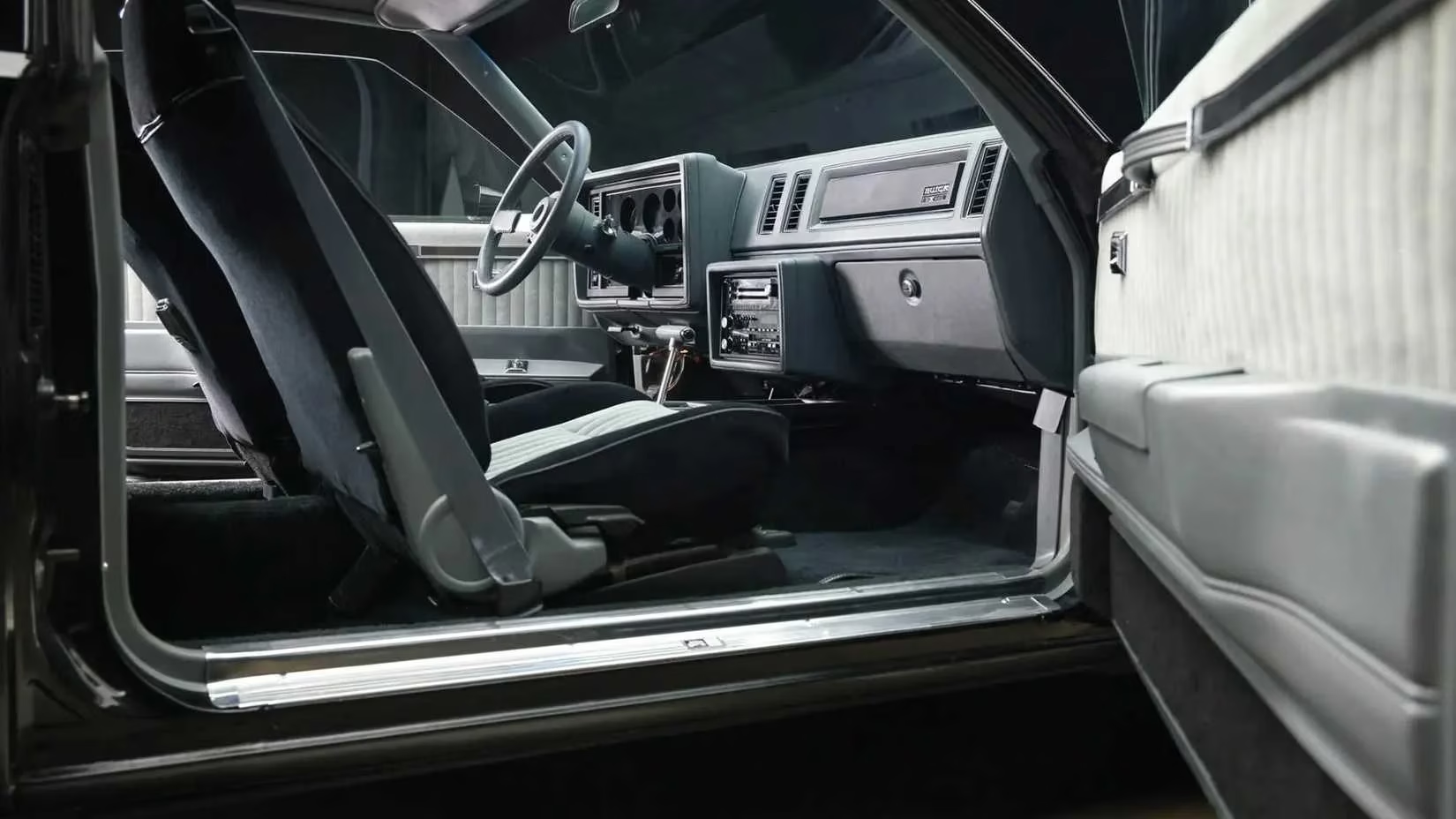
Reflecting on it now, the GNX's journey is a perfect automotive fairy tale. It's the story of a car that was built for one very specific purpose—to be the ultimate American muscle car of its time—and ended up becoming so much more. It broke the mold, crossed cultural boundaries, and proved that true icon status isn't about the loudest engine or the wildest looks. Sometimes, it's about a perfect storm of understated aggression, clever engineering, and a dash of rebellious spirit. The Buick GNX wasn't just a car for the 80s; it's a legend for the ages, and its story, from Detroit drag strip to Tokyo tuner shop, is one I never get tired of telling. It reminds me that in the world of cars, the most unlikely heroes often leave the longest shadows.