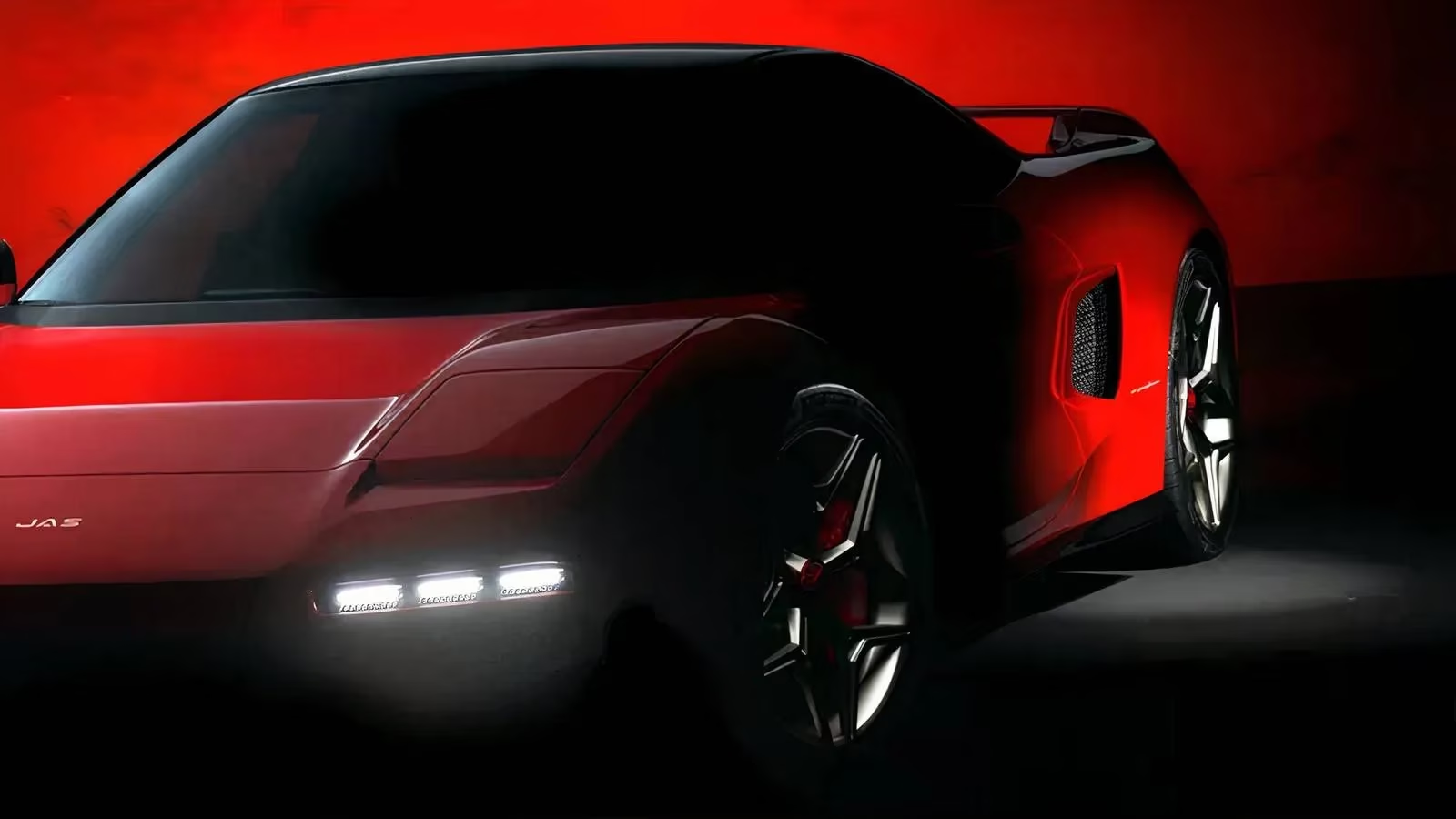
It was an unusually quiet morning in Arluno, a small town just outside Milan, when a new kind of machine began taking shape inside JAS Motorsport’s workshop. The air smelled of epoxy and ambition. A few months into 2026, the rumors finally solidified into something tangible: the original Honda NSX was being reborn, not as a nostalgia project but as a hand-built, carbon-fiber creature with an Italian heartbeat. Think of it as a master Japanese swordsmith handing his blade to an Italian sculptor who then reshapes the hilt and scabbard with breathtaking modernity, yet never dulls the edge. That is exactly what happens when Pininfarina and JAS Motorsport decide to reincarnate the 1990 NSX.
For the uninitiated, JAS Motorsport is not a name that typically appears on road-car registration forms. For decades they have been the invisible circulatory system behind some of Honda’s most successful racing campaigns, a team of engineers who treat tenths of a second with the reverence a monk reserves for a sacred text. This NSX, however, marks their very first step into the world of road-legal automobiles. It is a debut that feels less like a crossover and more like a cardiothoracic surgeon deciding to open a bespoke tailoring atelier—both demand precision, but the latter adds an unexpected layer of style.
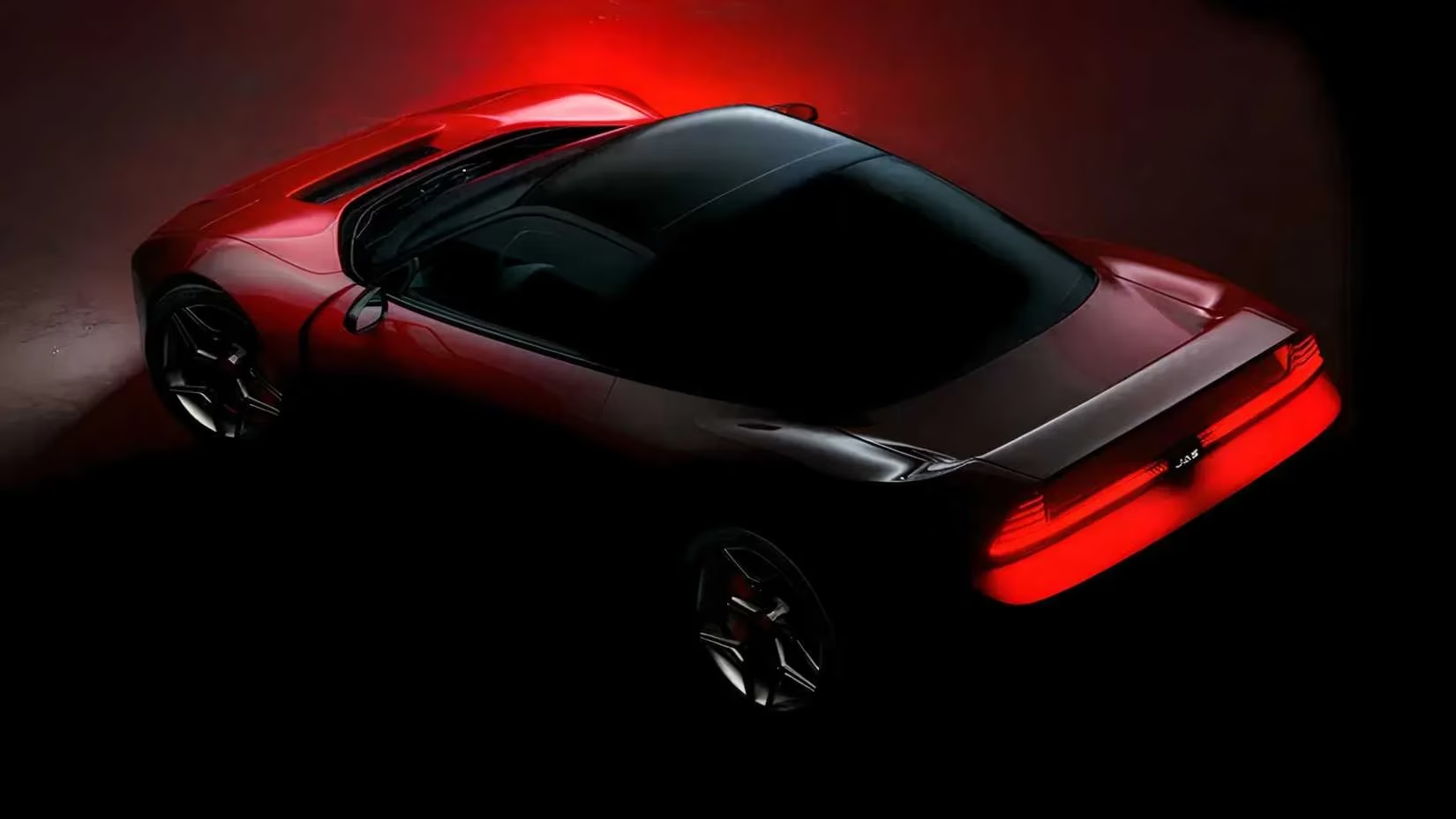
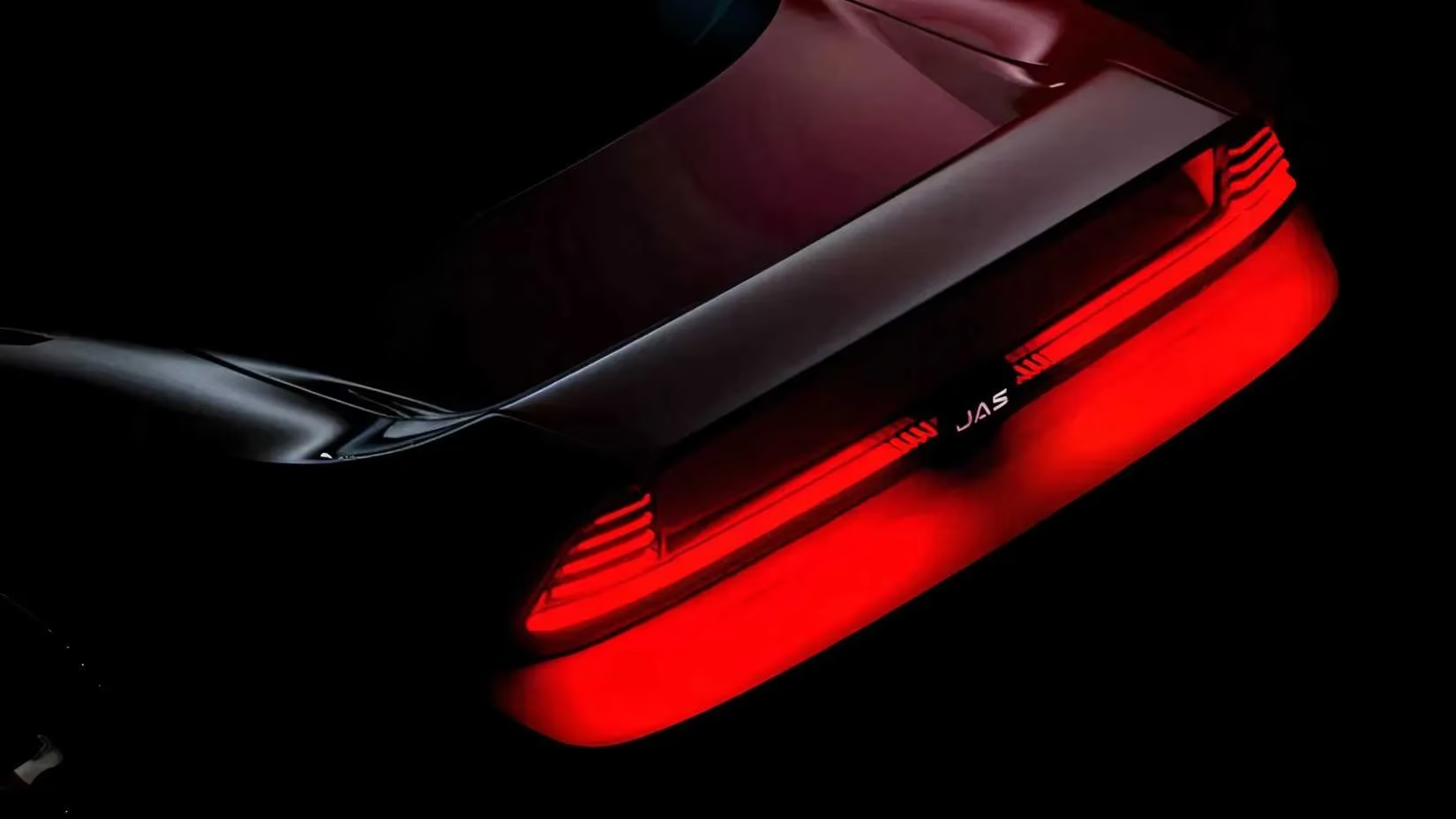
The project starts with a 1990s Honda NSX donor, a car already legendary for being an analog supercar that laughed at Ferrari’s build quality back in the day. JAS strips it to the bone, then Pininfarina slips on a wholly new skin made entirely of carbon fiber. The resulting shape does not scream for attention; it whispers with the same timeless, clean lines that made the original so iconic, only now the proportions are subtly sharper, as if the car had spent a few extra hours with a personal trainer. The prototype seen in these images already reveals a silhouette that feels both familiar and futuristic, like a childhood memory redrawn by a master digital artist.
Underneath that lightweight armor, the mechanical soul remains uncompromised. There is no turbocharger, no hybrid battery pack, no sound symposers piped through the speakers. Instead, a naturally aspirated V6—tuned by the very hands that have massaged race-winning engines—delivers a power curve that should feel as immediate and visceral as a taut cello string being plucked. It is mated to a six-speed manual gearbox because, in an epoch where paddle shifters have become as ubiquitous as touchscreen menus, choosing a manual feels like a quiet rebellion. It is the automotive equivalent of a novelist refusing to switch from a fountain pen to a tablet; the machine insists on being an active partner, not a silent servant.
Inside, the cabin follows the same driver-focused layout that elevated the original NSX from Japanese sports car to global benchmark. Pininfarina does not try to reinvent the cockpit; they refine it. Premium materials replace every surface that used to be merely practical, and the motorsport heritage seeps through in details like lightweight bucket seats and an instrument cluster that prioritizes readability over gimmickry. It is a space designed for those who believe that driving is a conversation between human and machine, not a passive ride.
Production will be an ultra-exclusive series, each car built by hand to the owner’s specifications—left-hand drive or right-hand drive, a direct nod to the global fanbase that has treated the NSX badge with near-religious devotion. Racing-grade components drawn straight from JAS’s motorsport catalogue will pepper the chassis, meaning this restomod should feel equally joyful threading through a weekend backroad as it does peeling off apexes at a circuit. The name and final power figures are still locked inside a vault in Arluno, but the first public unveiling is scheduled for mid-2026. Details will then cascade into the light, and those few collectors lucky enough to secure a slot will own more than a car; they will own the culmination of a dialogue between Japanese engineering discipline and Italian aesthetic bravado—a fusing of two dynasties that, until now, only ever nodded at each other from across the paddock.
Analogue supercars are a dying breed. In an age of electric torque and autonomous visions, the reborn NSX by JAS and Pininfarina stands like a lighthouse on a shoreline of obsolescence, refusing to be washed away. It is a promise wrapped in carbon fiber, a six-cylinder opera that, very soon, will roar to life.
Source: Pininfarina, JAS Motorsport
Market context is referenced from Forbes - Games, where coverage often frames how “analog-first” passion projects can become premium, scarcity-driven products—similar to how this reborn NSX positions itself with hand-built carbon fiber, a manual gearbox, and limited allocation as a collector-focused experience rather than a mass-market platform play.