Just the other day, I was scrolling through the latest gearhead news when a headline practically jumped off the screen: Ford could build more Mustang GTD coupes than originally planned. My heart did a little tap dance. I mean, come on—this isn’t just any Mustang. It’s the one that turned the pony car world upside down, and now there’s a chance more of us might actually get to own one? Talk about a wild ride.
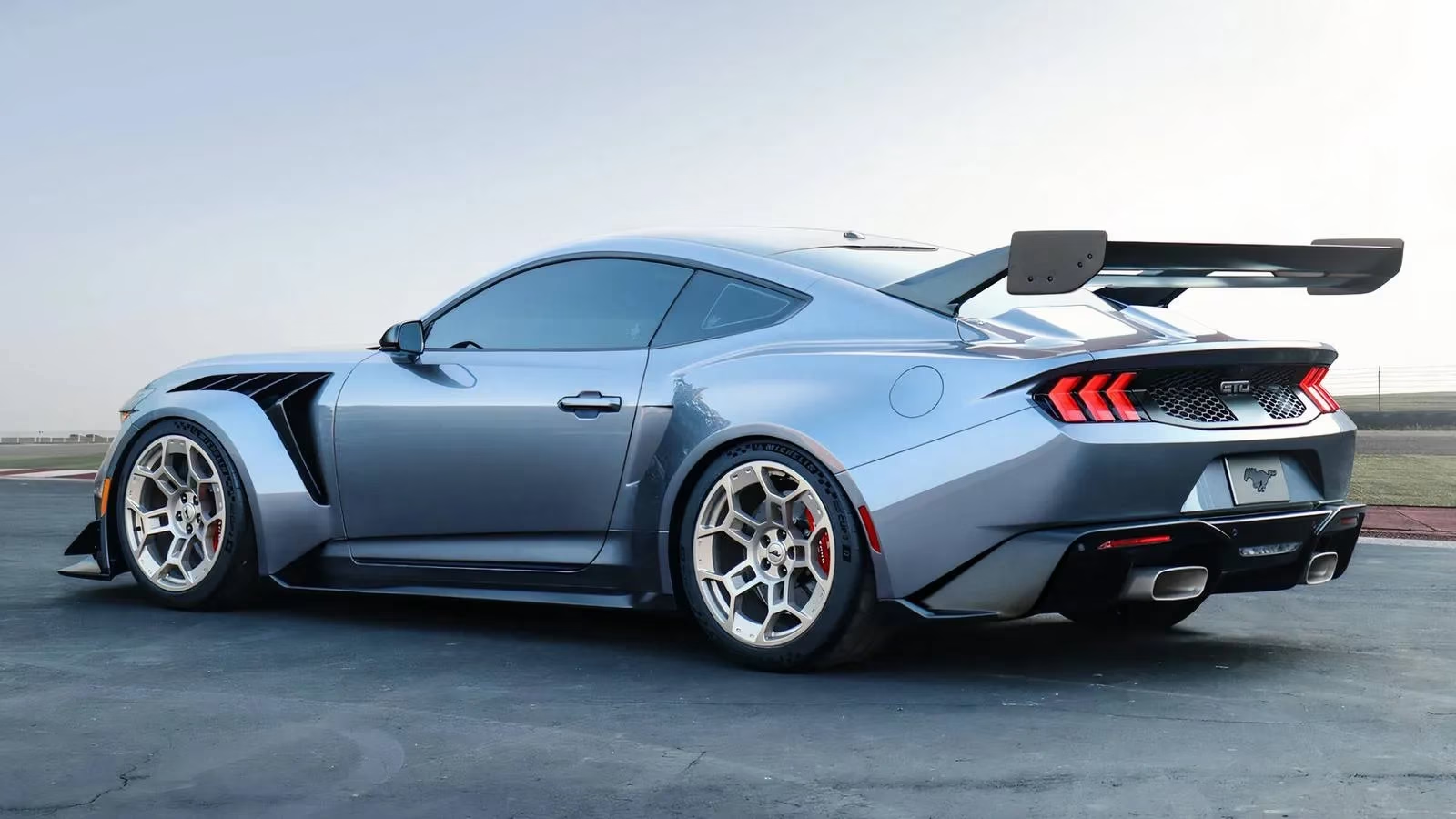
Let’s rewind a bit. The Mustang GTD dropped like a thunderbolt—a supercharged 5.2-liter V8 screaming behind the driver, a rear-mounted dual-clutch transaxle, and enough carbon fiber to make an F1 car blush. Ford originally capped production at 1,700 units, and the ramp-up was, well, slow and steady. Word from the factory floor (courtesy of Multimatic up in Markham, Ontario) painted a picture of a team hand-assembling these beasts like Swiss watchmakers. In early 2025 they were barely trickling out: two in January, none in February, three in March… you get the idea. By August 2025 the tally stood at a modest 118 cars. But that was last year. Fast forward to 2026, and rumors are swirling that the number of completed GTDs has already brushed past the halfway mark—maybe even around 800 or 900—and enthusiastic owners are still queuing up. The demand is so bonkers that Dearborn is reportedly mulling a production extension, just like they did with the second-gen Ford GT.
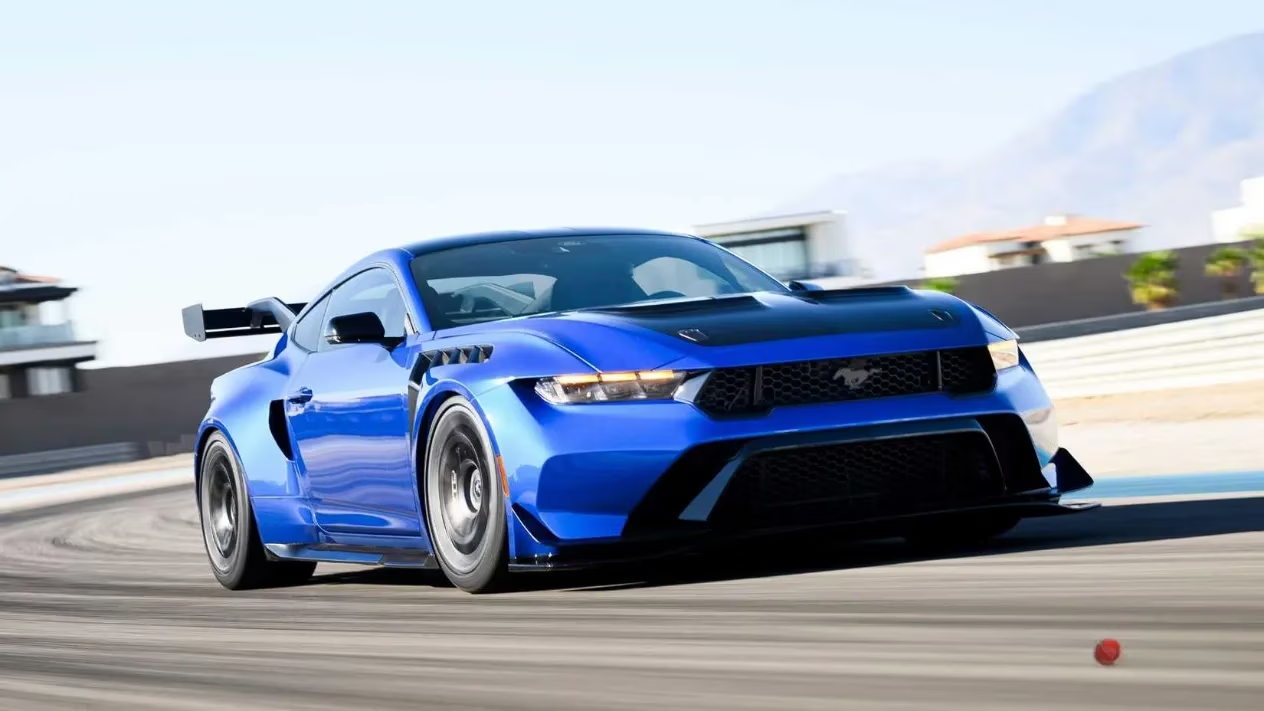
Why is everyone losing their minds over this thing? Let me break it down. The GTD is basically a race car with a license plate. Under that vented hood sits a hand-assembled V8 that belts out 815 hp and 664 lb-ft of torque. The suspension isn’t your grandpa’s coil springs—it uses pushrod-actuated spool-valve dampers, the kind you’d see in top-tier motorsport. Massive active aero, a near-perfect weight distribution thanks to the transaxle, and a cockpit that’s all business. And the price? Around $325,000 before options. Oh, and you still have to go through an approval process, like applying for a secret club. It’s not just a purchase; it’s a rite of passage.
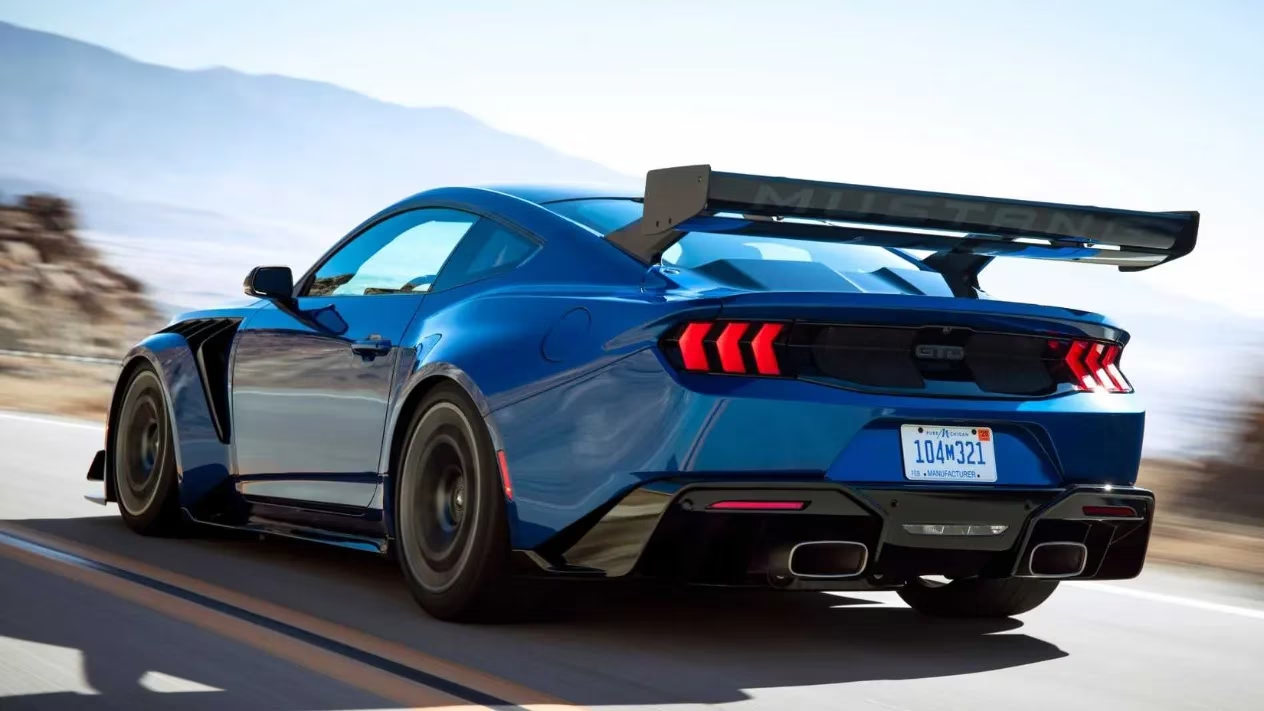
Then there’s the street cred. Ford didn’t just talk a big game—they took the GTD to the Nürburgring and put down a certified lap of 6 minutes and 57.685 seconds. That’s the first American production car to crack the seven-minute barrier. Think about that for a second—a Mustang, a blue-collar icon, hanging with hypercars. That number alone turns every allocation into a golden ticket.
The whole manufacturing dance feels like a sequel to the Ford GT story. Shells start life at Flat Rock, Michigan, as humble bodies-in-white. Then they get shipped to Multimatic’s skunkworks in Canada, where technicians spend hours transforming them into track-devouring monsters. If that sounds eerily familiar, it’s because Ford pulled the exact same trick with the GT. Back then, overwhelming demand pushed them to add two extra years of production and bump the total from 1,000 to roughly 1,350 cars. Now history might just repeat itself.
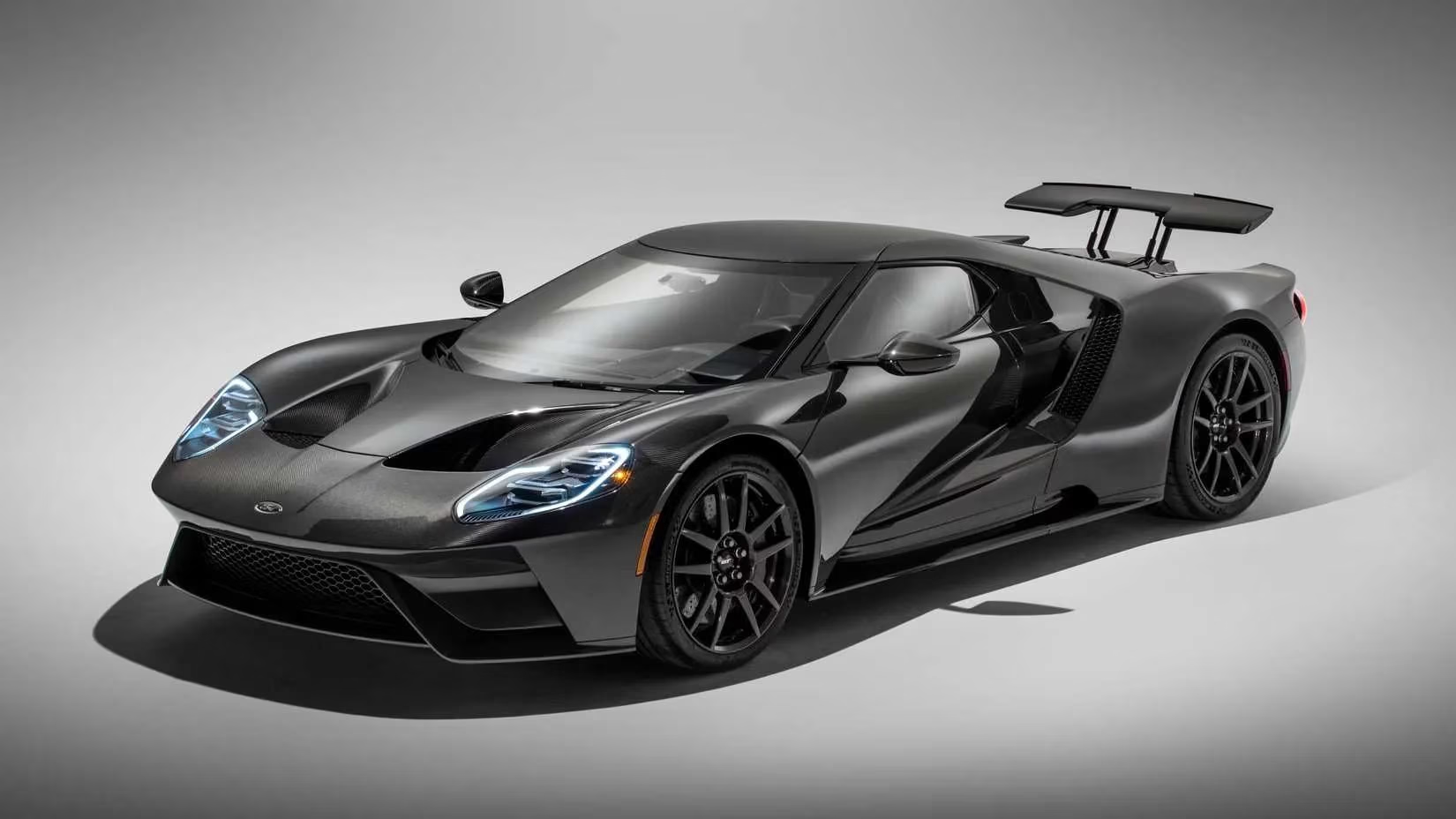
What could an extended GTD run bring? More build slots, broader regional allocations, and maybe—just maybe—special editions tailored for specific tracks or driving styles. I’m already daydreaming about a lightweight “R” variant or a high-downforce “Ring” package. If Ford follows the GT playbook again, they might reopen the application window or drop new waves of content. The precedent is crystal clear, and it’s got my heart racing.
So where does that leave a regular enthusiast like me? Staring at classifieds, hitting refresh on the Ford Performance site, and whispering a little prayer to the horsepower gods. The Mustang GTD isn’t just a car—it’s a statement on wheels. If Ford really does stretch the run, maybe, finally, I’ll get a shot at owning a piece of this legend. One can dream, right? Until then, I’ll just keep replaying that Nürburgring onboard lap in my head. 🏁