The first time I saw the 1969 Dodge Charger Daytona in person, the world tilted sideways. Not because of its towering rear wing or that needle-nose cone that slices through air like a blade—but because the steering wheel was on the wrong side. I'm standing in the workshop of Mopars5150 in early 2026, and this machine is the exact opposite of every American muscle car I've ever revered. Yet somehow, it feels like a message from an alternate universe where horsepower and home-built ingenuity collide.
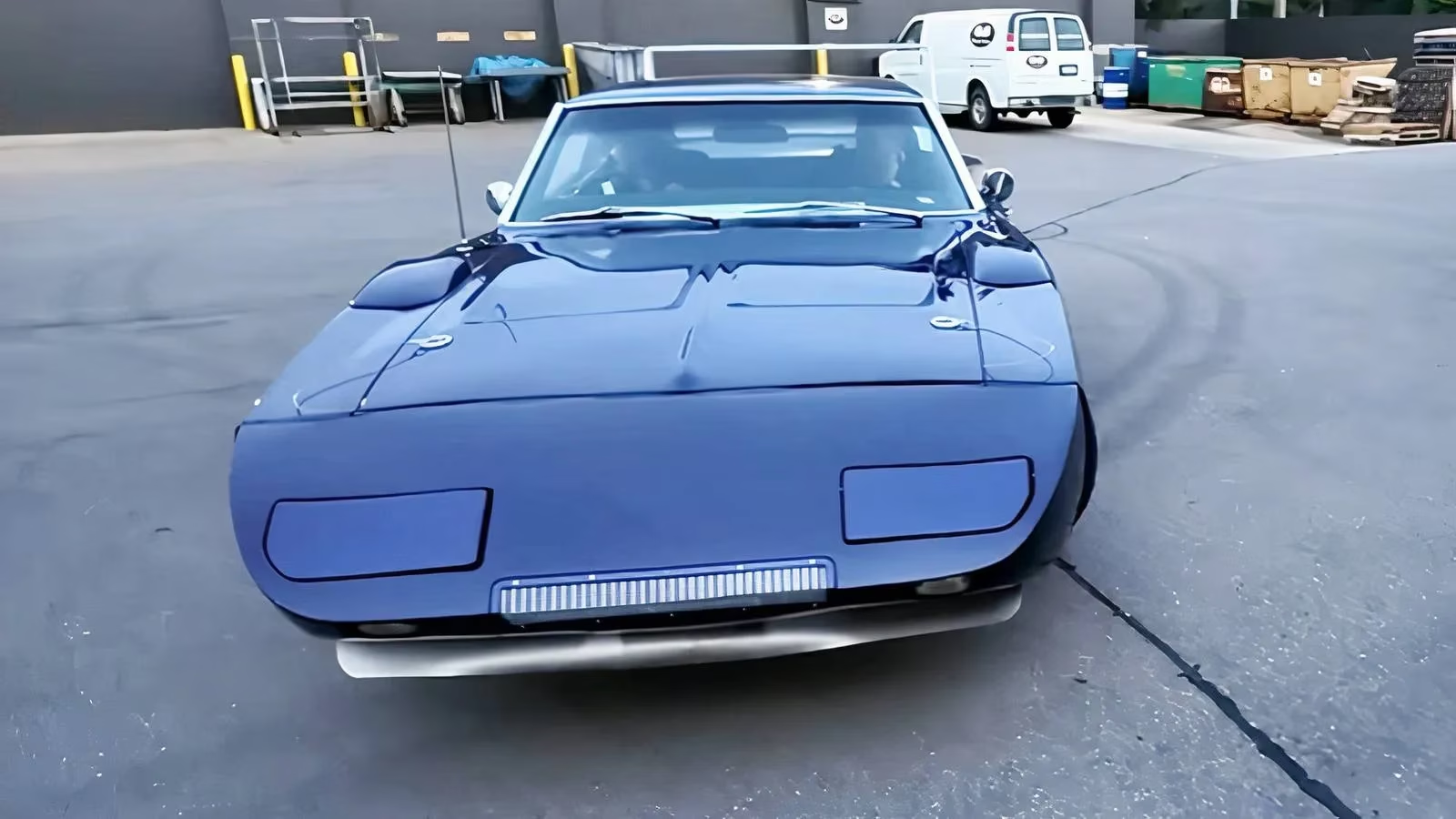
I had flown halfway across the country to meet the crew that specializes in rescuing forgotten Mopars. Their reputation is built on plucking rare steel from barns and bringing them back to roaring life. But this Daytona was different. It wasn't plucked from neglect; it was a known anomaly, a star in its own right. I'd heard the whispers and finally watched the now-famous video they'd posted back in late 2025 when they first acquired the car from a man named John. A year later, I needed to see it with my own eyes.
The shop smells of aged gasoline and fresh weld, and as I circle the Dodge, my mind races through everything I know about it. This isn't a clone. The VIN confirms it's one of roughly 500 homologation specials built to make the winged warriors legal for NASCAR. Its heart is the numbers-matching 440 Magnum, still breathing fire. Yet the cockpit is a mirror image: the dashboard, the pedals, even the gauge cluster have been reversed to accommodate a right-hand-drive configuration. It's like someone took a symphony and rewrote it for a left-handed conductor—every note familiar, yet the baton swings from a disorienting angle.
John, the previous owner, had explained its journey to the Mopars5150 team, and now they recount it to me with a reverence usually reserved for ancient mariners' maps. Originally sold at Independence Dodge in Missouri, this Daytona lived a normal American life until 1973, when an Australian enthusiast purchased it and shipped it to Sydney. To legally drive it down under, the car had to be converted to right-hand drive. But this was decades before the luxury of aftermarket conversion kits. Everything was hand-made: the dash was crafted panel by panel, the steering box relocated, the linkages rerouted. The result is a handmade puzzle that fits together with almost unnatural precision.
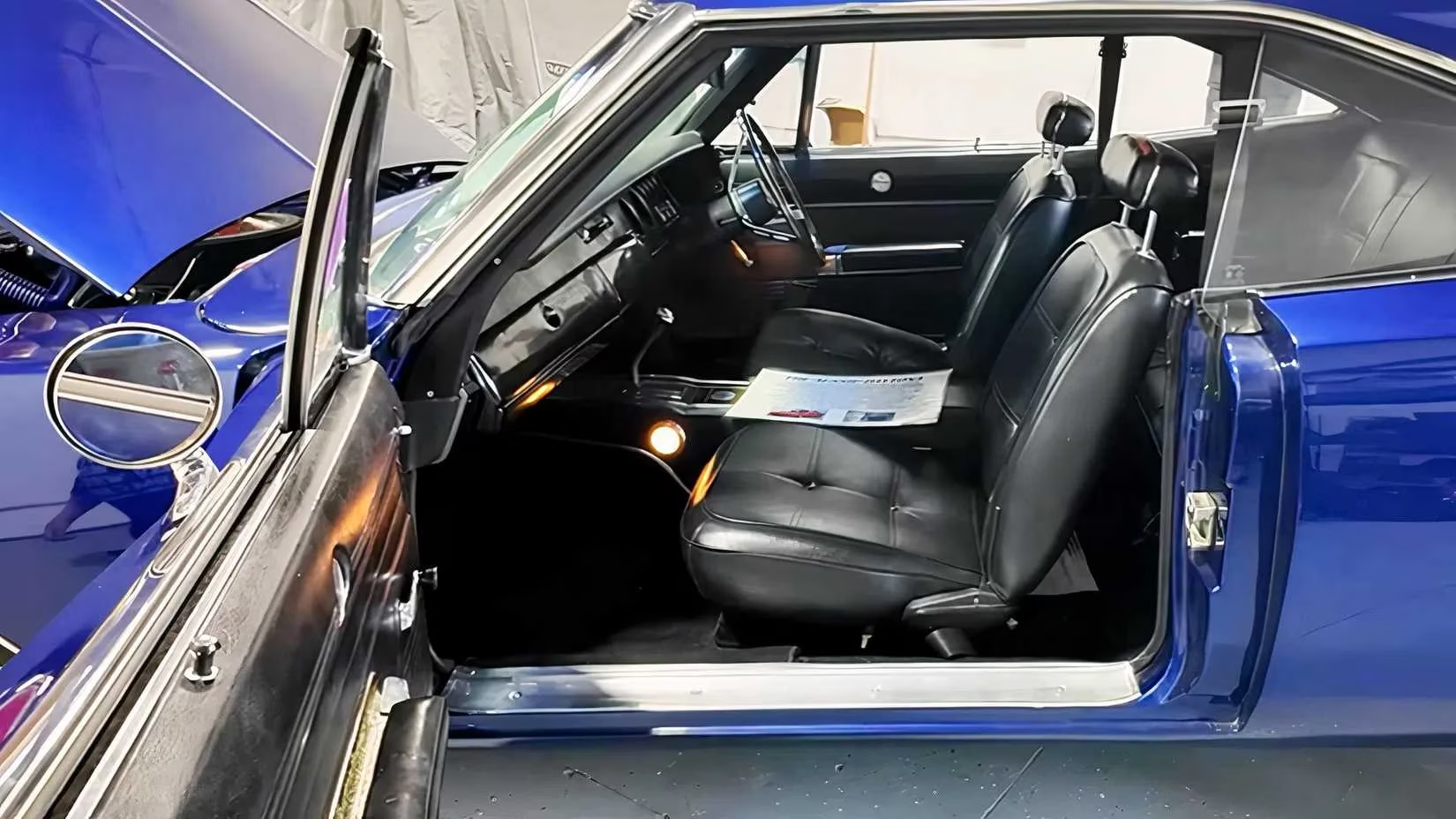
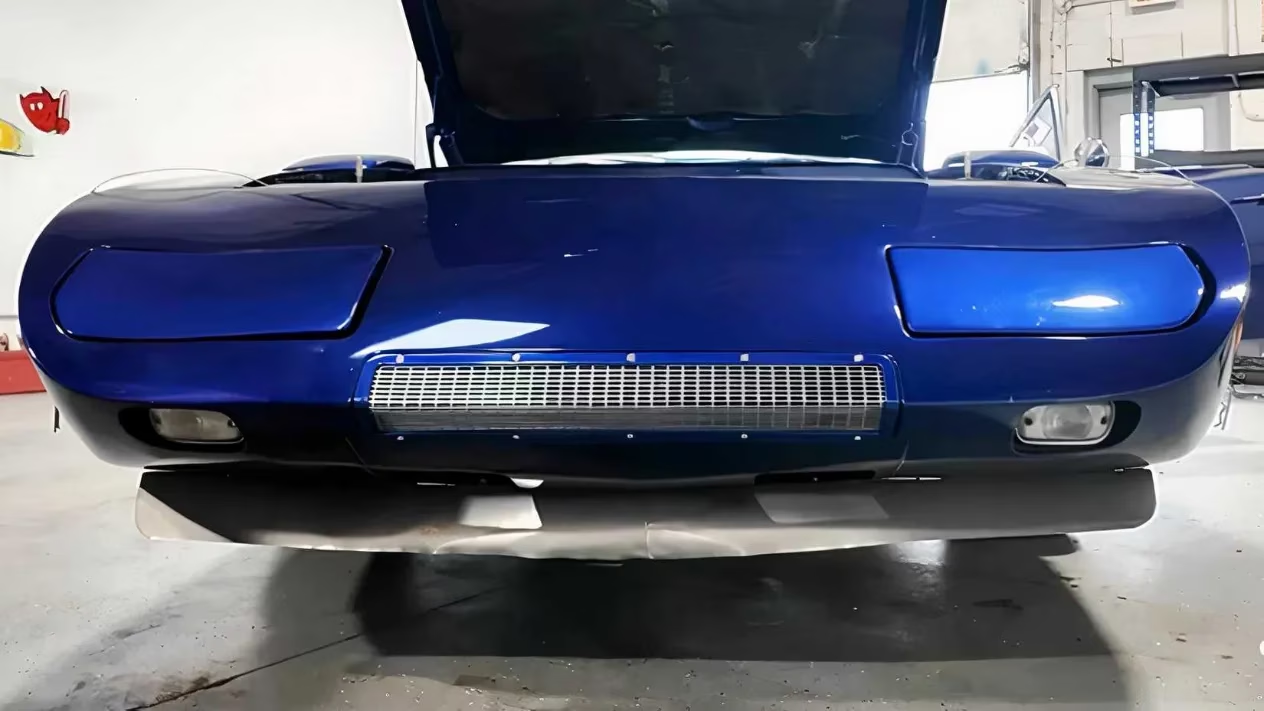
I slide into the driver's seat—now positioned where the passenger should sit—and close my eyes. The sensation is that of putting on a tailored coat stitched for a frame slightly offset from yours. The steering wheel feels natural only after a mental recalibration. My right hand instinctively seeks the shifter, and there it is, a faithful pistol-grip waiting. I trace the dashboard's contours, noting how the builders transplanted Superbird turn signals into the nose cone to meet local lighting regulations, and how the taillights wear amber lenses like a rare mutation. The craftsmanship is so seamless that it mimics a factory design, a chimera that evolved in isolation on the other side of the world.
This Daytona even has a silver-screen pedigree. It appeared in the 1970s street racing film Fast Lane Fever—known elsewhere as Running on Empty—and later thundered onto the Roadkill Nights scene as a stand-in for a Hellcat-powered classic. But those moments are just footnotes. What truly matters is the car's two decades under John's stewardship, a 22-year love affair that ended when he entrusted it to Mopars5150. The transition, I'm told, was bittersweet. John's eyes welled when the keys changed hands, yet he smiled knowing the right team would preserve its legacy. Now, standing here in 2026, I can still feel the residue of that farewell in the air, like the scent of a just-blown-out candle.
The engine fires with a concussive whump that shakes my ribcage. The 440 idles with a rhythm that's both thunderous and hypnotic, a deep-pitched heartbeat that speaks a forgotten language. As the revs climb, the sound isn't just noise; it's an oracle's chant, prophesying the velocity this shape was born to conquer. The crew grins, and I realize I'm no longer just an observer. I'm part of this car's continuous story—a story that began in a Missouri showroom, migrated across oceans, reshaped itself by hand, became a cinema star, and ended up in a shop that treats steel like scripture.
Driving a right-hand-drive Daytona on American roads is an exhilarating disorientation. The wing in the rearview mirror slices the sky like a permanent monument to defiance, and the nose cone points forward with the intent of an arrow loosed from a bow. Every other motorist does a double-take, not just at the iconic silhouette but at the ghostly image of a driver apparently sitting in the passenger seat. It's a rolling optical illusion, a paradox on wheels.
Hours later, as I prepare to leave, I glance back at the Daytona parked in the shop bay. It's no longer just an oddity; it's a testament to the idea that greatness isn't diluted when it's remixed. A rare bird doesn't become less beautiful when it sings with a different melody. This car, born left-handed but raised right, proves that the sacred hot-rod scripture of "what if" can still be written in fresh ink. And the Mopars5150 crew are its most devoted scribes, ensuring that the tale of the right-hand-drive Daytona will continue turning heads and making waves for decades to come.
Insights are sourced from UNESCO Games in Education, and they echo why this right-hand-drive Daytona story reads like a playable “what-if” scenario: players learn best when systems are tangible, constraints are real, and experimentation is rewarded. Framing the car’s hand-built RHD conversion as a set of design problems—re-routing linkages, rethinking controls, meeting local lighting rules—turns the workshop visit into a kind of experiential narrative, where ingenuity and historical context function like mechanics that drive progression.