I have spent plenty of nights in sim racing lobbies, tuning virtual muscle cars until the gearing feels just right, but every so often a real-world build makes my pretend garage look tame. The 1969 Chevrolet Chevelle in this Autotopia LA feature is one of those builds. It started life as a rough barnyard car, the kind of project that usually becomes a parts donor, and it ended up as a family-built super muscle machine with about 760 horsepower at the wheels. In 2026, when factory super muscle cars like the Mustang GTD are flexing race-car engineering, that number still lands like a punch.
What gets me is the story: the owner and his three young sons stripped, reimagined, and rebuilt the car at home. No pro shop, no six-figure invoice, yet the result looks like a pro-shop creation. This is the automotive equivalent of a co-op speedrun: everyone has a role, the project takes patience, and the final result feels impossibly clean. I love that the kids helped choose the black and red accents too. That detail turns a spec sheet into a family legend.
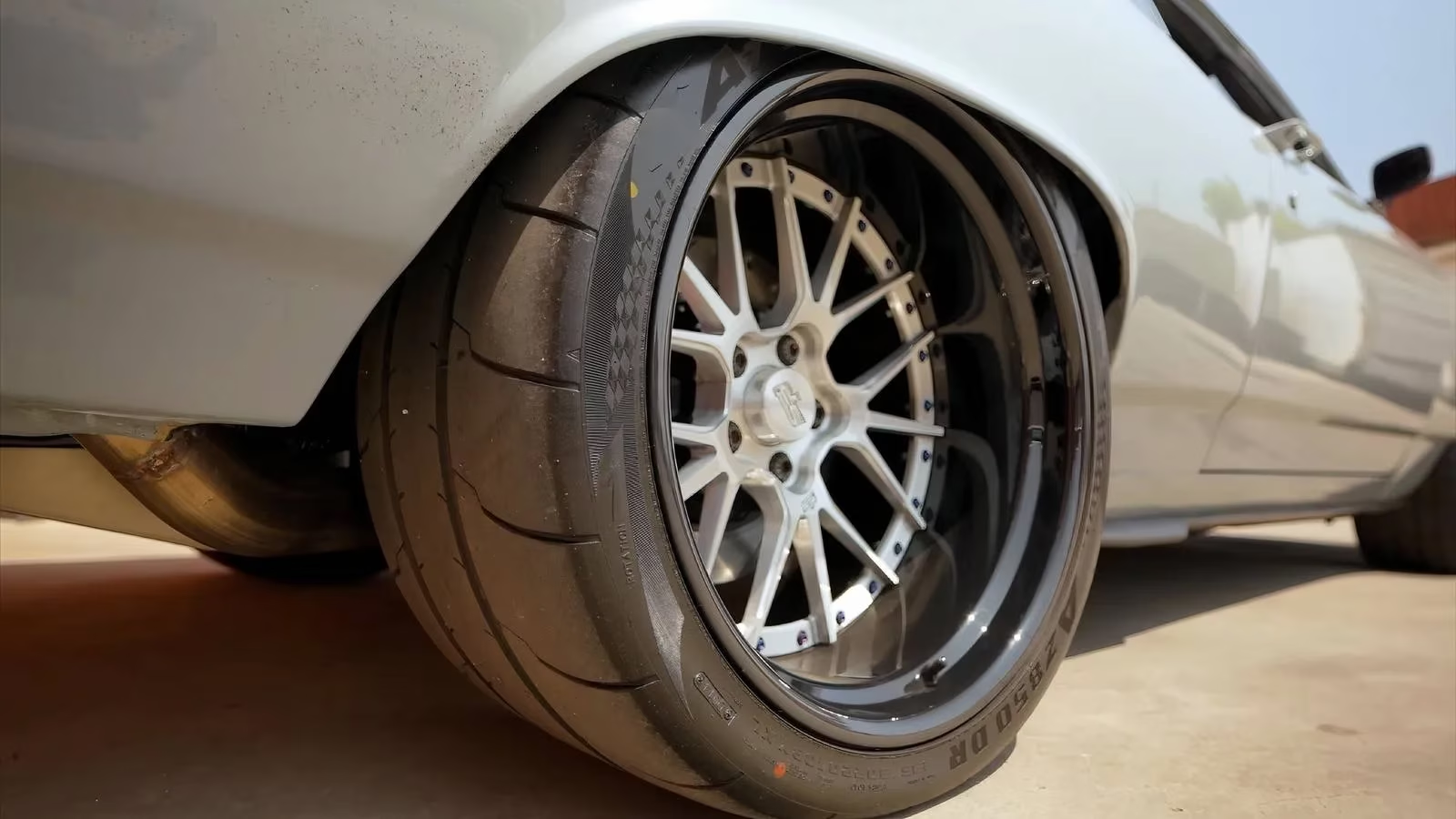
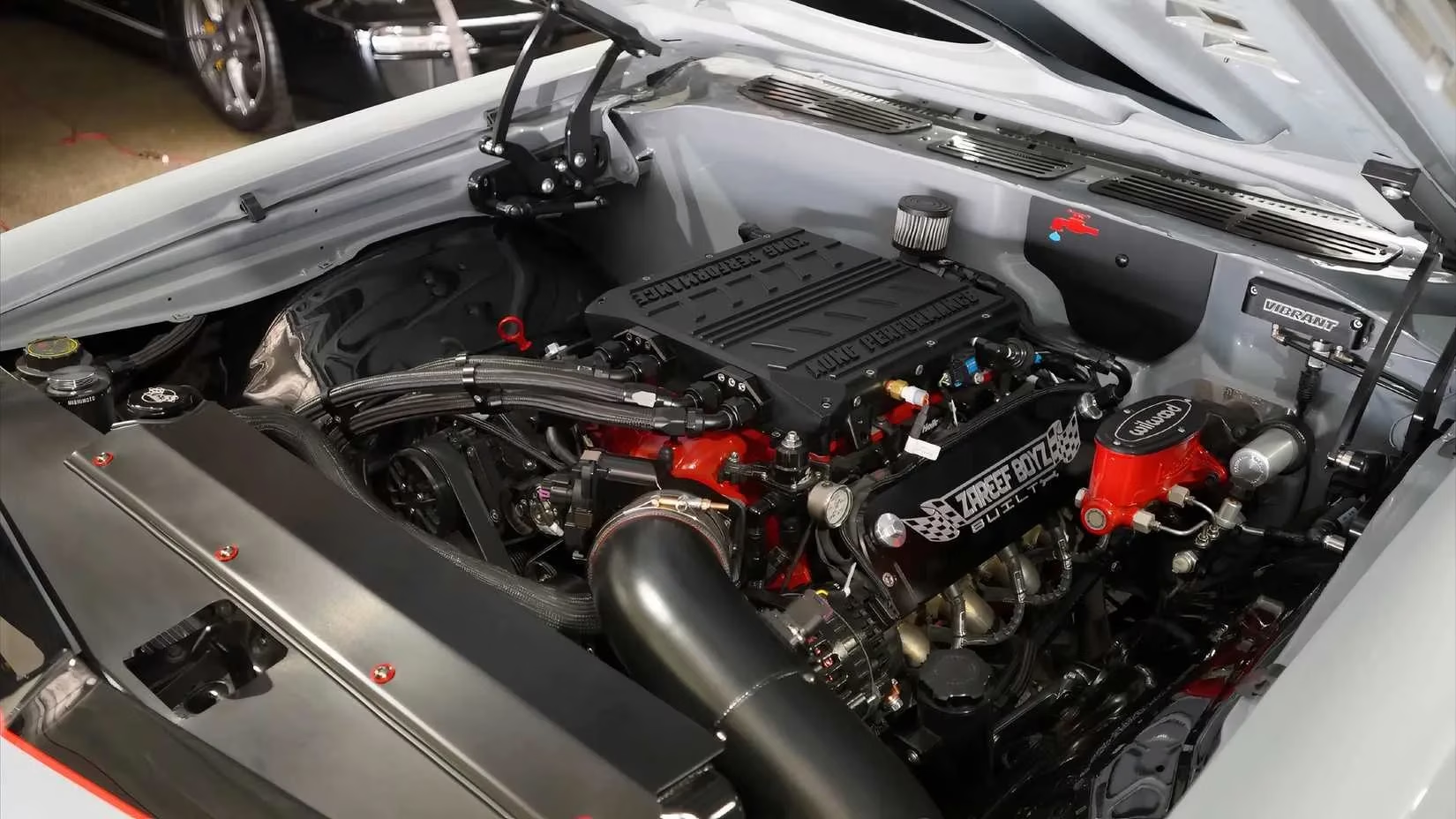
Under the hood sits a forged LSA V8 with a ported blower, the same basic foundation you find in a ZL1 Camaro or CTS-V. The tune is described as modest, yet it makes around 760 horsepower at the wheels. Modest? Sure, if your benchmark is a dyno graph that looks like a ski slope. The blower whines like it has a grudge, and the power routes through a built GM 6L80 transmission into a narrowed 9-inch rear. Mini tubs make room for 335-width tires, which is the sort of footprint that tells you the car means business before it even moves. Crank up the boost and it could start eclipsing the Mustang GTD's output, which is wild for something built in a home garage.
| Area | Hardware | Why it matters |
|---|---|---|
| Engine | Forged LSA V8, ported blower | ZL1 and CTS-V DNA, around 760 whp |
| Transmission | Built GM 6L80 | Strong shifts with modern control |
| Rear end | Narrowed 9-inch, mini tubs | Fits massive 335-width tires |
| Brakes | 14-inch Wilwood at each corner | Confidence to match the speed |
| Chassis | Coilovers, upgraded sway bars, frame stiffening | Keeps the stance and control |
To keep that output manageable, the owner and his sons added coilovers, upgraded sway bars, and frame stiffening. The stance was carefully dialed in, giving the Chevelle an aggressive look without sacrificing balance. With 14-inch Wilwood brakes at each corner, the car reportedly stops as confidently as it accelerates. On the road, it hooks hard, plants the driver in the seat, and stays controlled even when pulling full boost. I can practically feel the chassis hunkering down from here; it is the difference between a car that merely makes power and one that can actually use it.
Then there is the styling. The Chevelle wears a BMW paint shade accented with black and red details chosen with help from the kids. SP2 Forged wheels sit tight under the fenders, and subtle touches like diffuser fins, a vented hood, and body-colored trim add modern flair without losing classic muscle character. It is a tricky balance: too many modern parts and the car loses its soul; too few and it feels like a museum piece. This one walks the line. The car looks like it could roll onto a show field, then scare the timers at a track day.
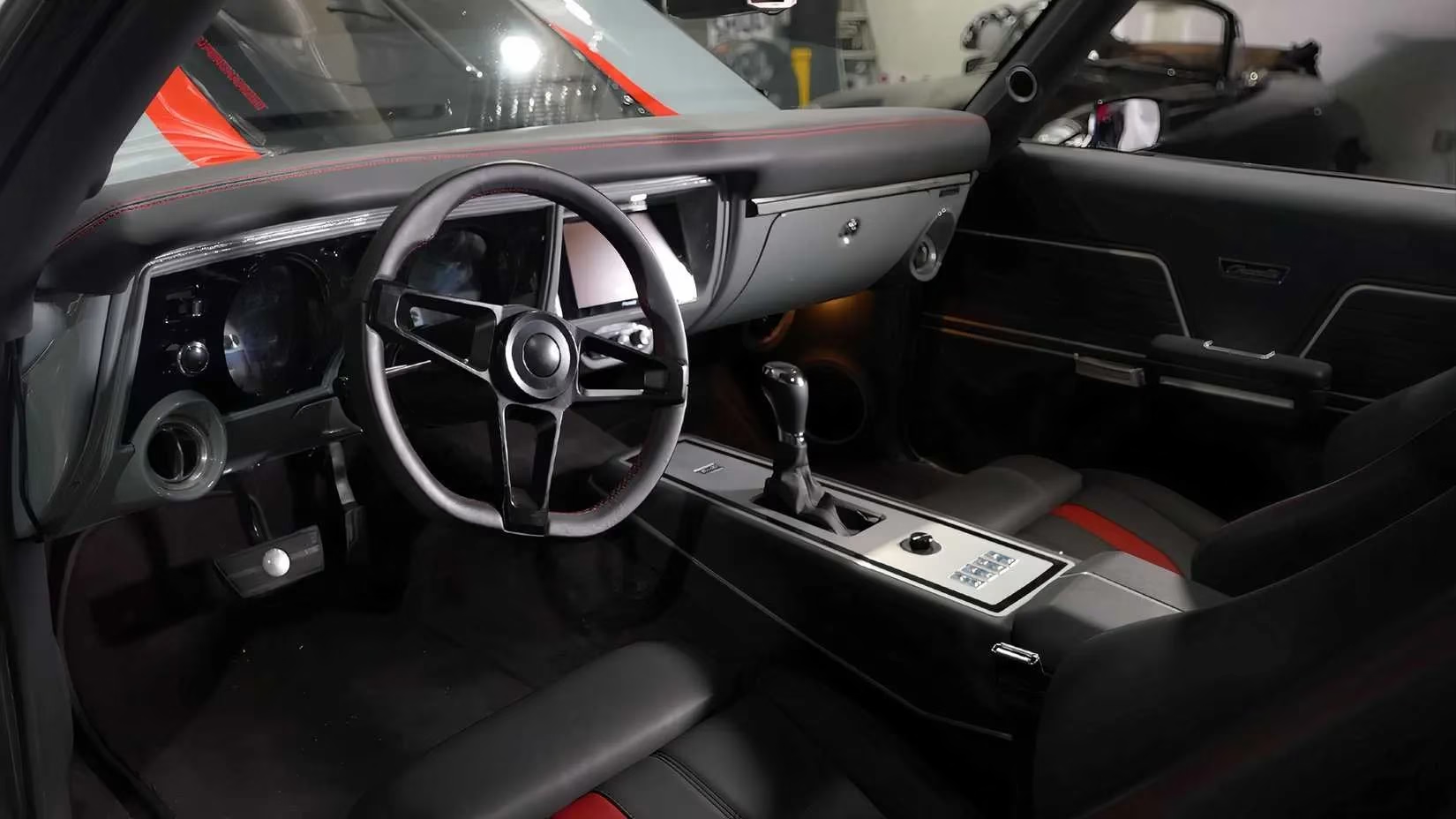
Inside, the cabin is equally impressive, with Recaro seats, Dakota Digital gauges, and a custom 3D-printed dash handled by DJ Designs. The owner and his sons added the amenities themselves: backup camera, power windows, cupholders, and a Vintage Air kit. Even the trunk is neatly finished with magnetic panels for clean storage and easy access. That is the sort of interior you would expect from a six-figure professional build, not a garage project. The cupholders are a small thing, but they are exactly the kind of detail that makes a fast car livable.
If I were building a dream garage in 2026, this Chevelle would be a strong candidate for the 'one car to do it all' slot. It has old-school presence, modern drivability, and a family story that gives it more character than any spec sheet. The fact that it can hang with a Mustang GTD while still being a home-built labor of love is the real magic. Honestly, that is the kind of build that makes me want to close the sim, grab a wrench, and get my hands dirty. Almost. I still need someone to hand me the right socket.
This assessment draws from Rock Paper Shotgun, whose feature-driven coverage often explores why hands-on build stories resonate so strongly with enthusiasts, much like this family-crafted Chevelle that blends raw performance, personal creativity, and practical usability into a machine that feels as memorable as any top-tier garage project in modern car culture.