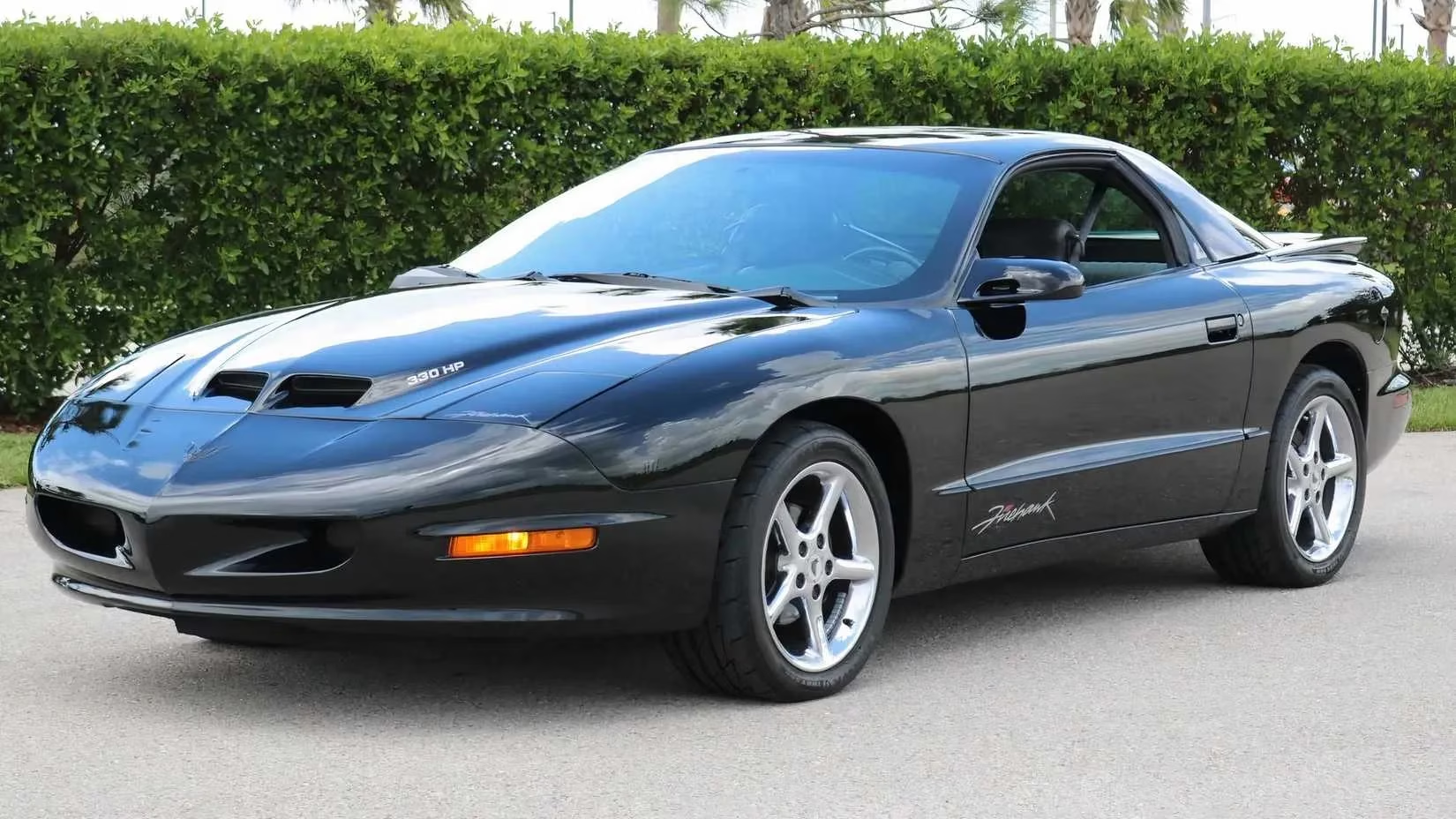
There’s something magical about unearthing a forgotten hero from a decade often dismissed as the hangover of the muscle car party. As I scroll through auction listings in 2026, watching six-figure Hemi ’Cudas and COPO Camaros fly off the block, my eyes keep drifting toward a much more subtle, yet infinitely more intriguing, machine: the 1997 LT4 Pontiac Firehawk. This isn’t just any Firebird—it’s the rarest production Firebird ever sold through Pontiac dealerships, and it might just be the true bridge between the golden ’60s and the modern collector market. With only 29 examples ever built, each packing a hand-me-down Corvette Grand Sport heart, the LT4 Firehawk feels like a secret whispered among die-hard Pontiac faithful.
A Brief Stroll Down Firebird Lane
To understand why this particular Firehawk matters, you have to rewind a little. The Firebird debuted in 1967 as Pontiac’s stylish pony car answer to the Mustang, sharing bones with the Camaro but oozing a more flamboyant, rock-and-roll attitude. The late-’70s Trans Am cemented its legend with a screaming chicken on the hood, capturing the disco zeitgeist so perfectly you could almost hear a Bee Gees track playing from the 8-track. But when the oil crises and tightening emissions rules choked off big-block glory, the Firebird lost its way, surviving the ’80s on turbocharged four-cylinders and badge-engineered nostalgia.
Then came the fourth generation in 1993. Gone were the chiseled edges, replaced by a slippery, rounded shape that somehow still looked aggressive. Initially powered by the LT1 V8, the fourth-gen Firebird gradually regained its muscle credentials, culminating in the track-focused WS6 package with its menacing ram-air hood. Yet the true high-water mark wasn’t a factory Trans Am—it was a low-volume special built by SLP Engineering.
SLP’s Secret Weapon: The Firehawk
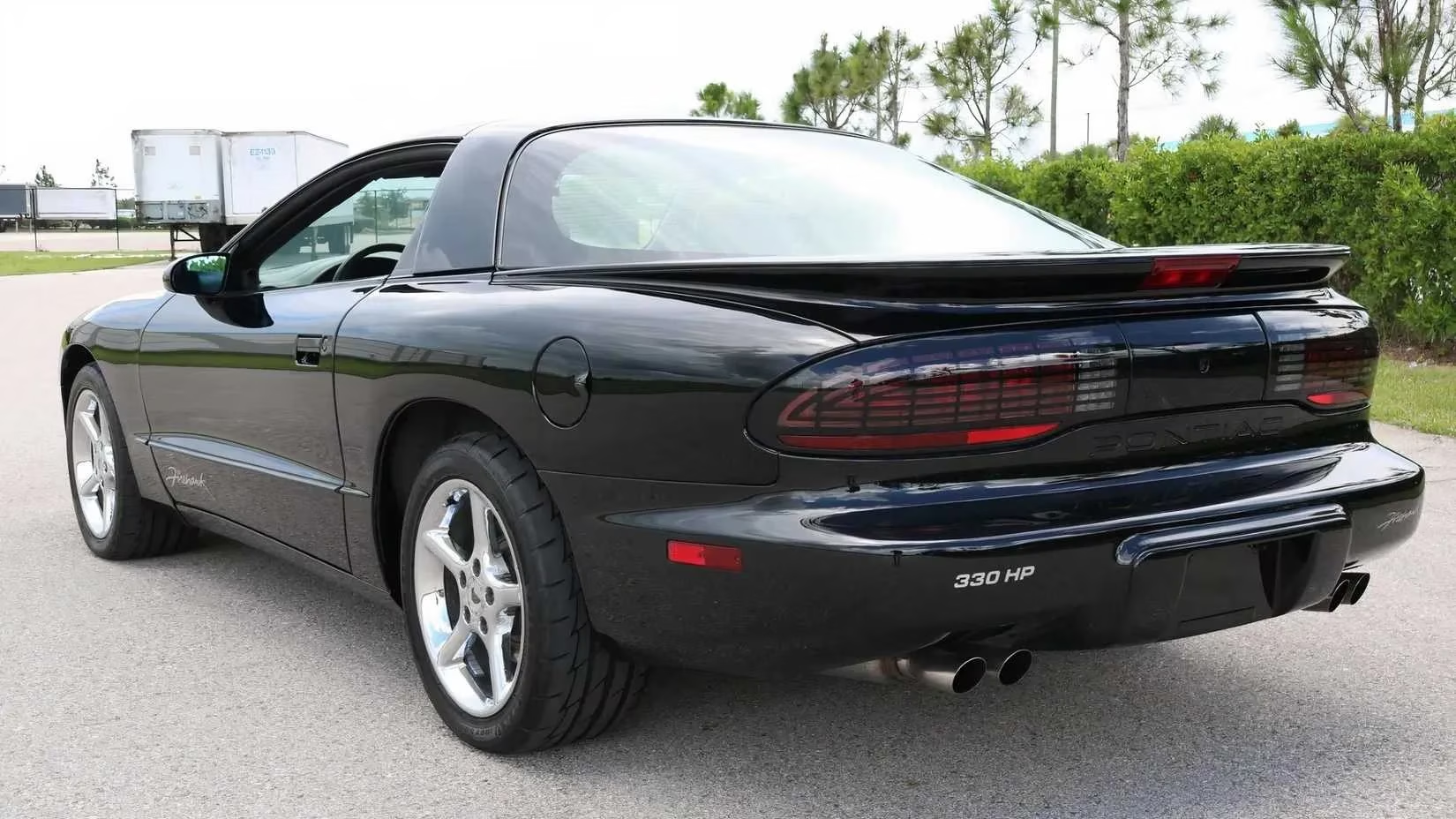
Starting in the early ’90s, SLP (Street Legal Performance) took ordinary Firebird Formulas and transformed them into Firehawks, sold through official Pontiac showrooms. These weren’t just sticker-and-spoiler jobs. Early cars got composite ram-air hoods, Corvette-sourced cold-air induction that added 25 horsepower, and later, Level II Bilstein sports suspension with a Torsen limited-slip differential. Production numbers were minuscule—rarely more than a hundred units per year—but SLP kept refining the recipe.
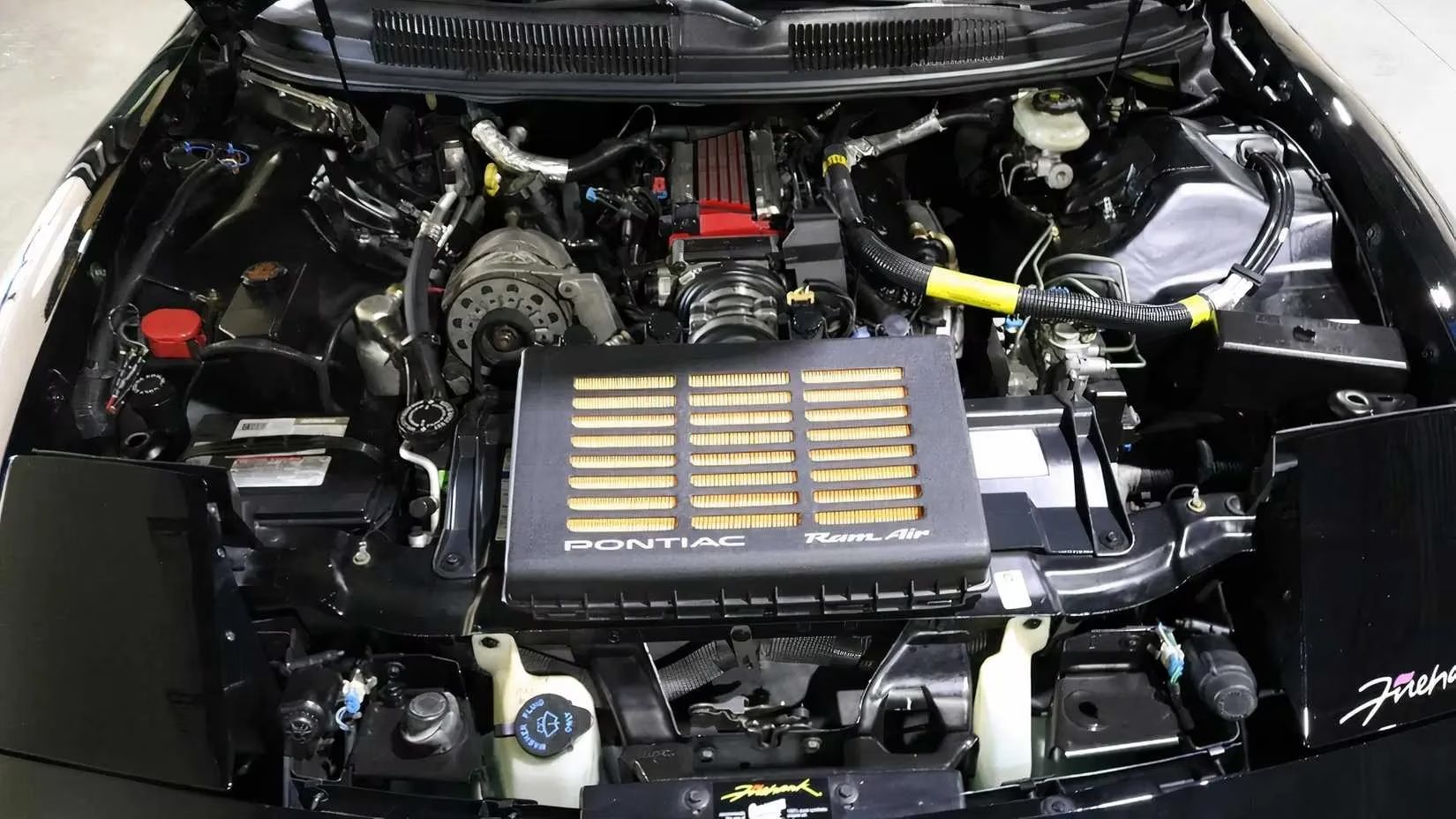
By 1997, they decided to go nuclear. Instead of the standard LT1, the Firehawk received the LT4 V8 plucked straight from the Corvette Grand Sport. This engine was, and still is, a gem: reworked cylinder heads, larger valves, a high-lift camshaft, bumped-up compression, and free-flowing injectors. The result was 330 horsepower and a ferocious appetite for revs, spinning eagerly to its 6,400-rpm redline. SLP managed to secure the very last 150 blueprinted LT4 units from General Motors, according to period reports from Motor Trend, allotting a handful to 30th-anniversary Camaros and reserving the rest for the ultimate Firehawk.
The Alteration Package: Just 29 Cars
What makes the 1997 LT4 Firehawk truly mythical is its scarcity. Dubbed the “Alteration Package,” only 29 of these LT4-equipped Firehawks rolled out for public sale. Each one was paired exclusively with a Borg-Warner T56 six-speed manual transmission, grippy low-profile tires, and a specially tuned suspension. There were no automatics, no compromises. The following year, 1998, the Firehawk program took a gap year, and when it returned in 1999, the engine bay was filled with the new LS1—a fantastic motor, but one that lacked the LT4’s exotic, limited-run aura.
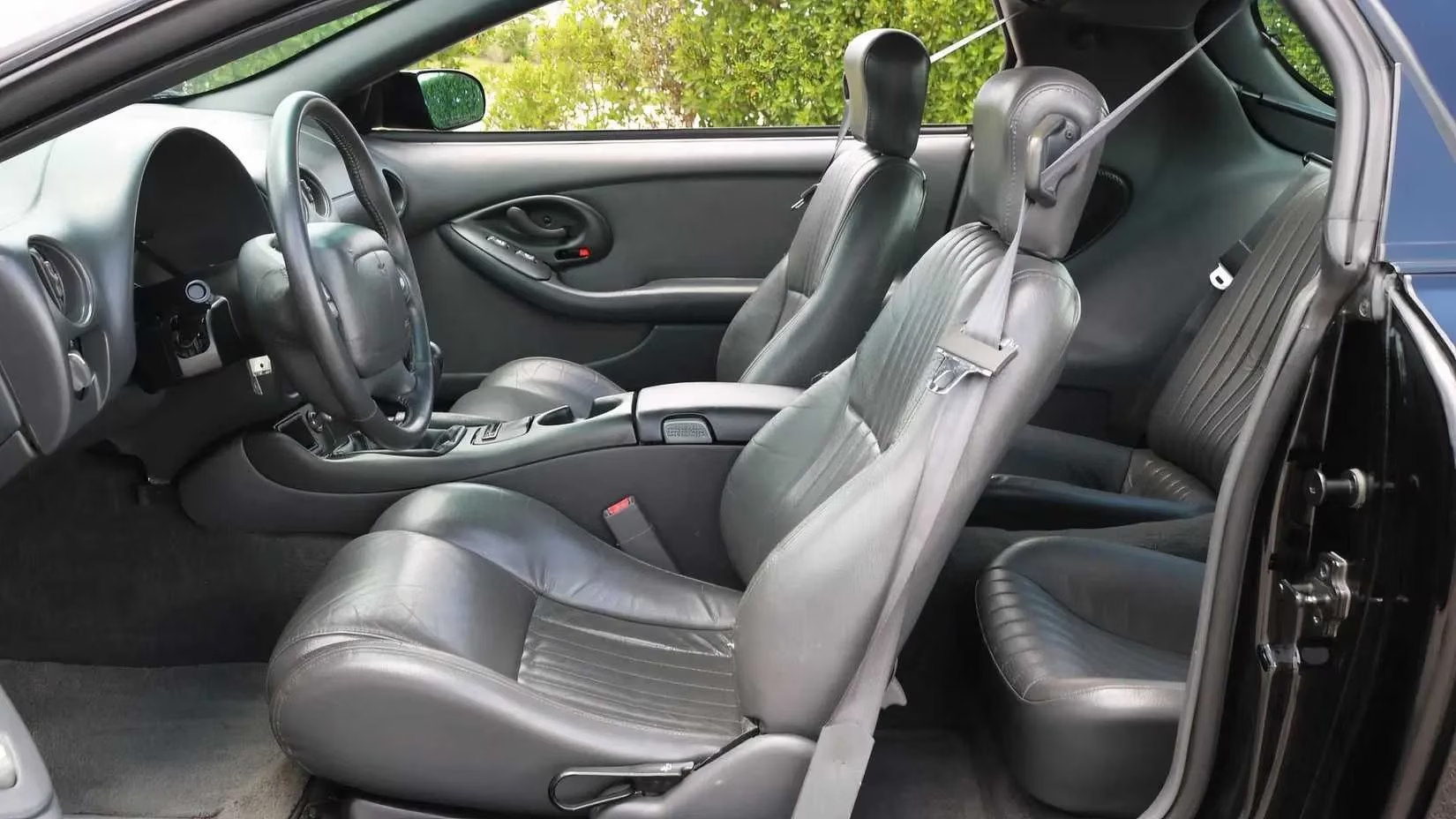
I often think about what the LT4 Firehawk represents as a driving experience. Motor Trend’s original test recorded 0–60 mph in 5.2 seconds and a quarter-mile sprint of 13.4 seconds. For context, Ford’s halo Mustang SVT Cobra of the same era made 320 horsepower and took 5.5 seconds to reach 60 mph. The Firehawk didn’t just beat it; it did so with a rawness that modern turbocharged cars can’t replicate. The LT4’s torque curve feels bottomless, pushing you back into the bolstered seats as the revs climb, the shifter clicking through gates with mechanical precision.
Collector Value in 2026: A Sleeping Giant?
In today’s market, the LT4 Firehawk occupies a strange limbo. Hagerty’s valuation data, last updated in late 2025, suggests a good-condition example is worth around $42,700, with excellent cars climbing to $59,600. Auction results bear this out; one LT4 Firehawk sold for $43,900 back in 2024, and I’ve seen very few cross the block since. That’s still a fraction of what an equivalent 1996 Corvette Grand Sport commands, yet the Firehawk is far rarer.
Consider the broader Firebird landscape. A standard 1997 Firehawk with the LT1 trades in the low-$20,000 range. A desirable 2001 WS6 Trans Am with the 325-horsepower LS1 sits at about $28,500 in good shape, while a more common 2002 coupe can be had for under $20,000. The LT4 Alteration Package, therefore, carries a significant premium that reflects its exclusivity and the magical LT4 badge on the intake manifold. For a car produced in numbers you can count on your fingers and toes, I find a price around $50,000 in 2026 to be remarkably accessible—though I suspect that window won’t stay open forever.
The Last of a Breed
What captivates me most about the 1997 LT4 Firehawk is that it feels like a true golden-era muscle car accidentally born into the age of Japanese rally icons and early SUVs. It embodies the same ethos as a Ram Air IV GTO or a big-block Chevelle: stuff the biggest, most exotic V8 you can find into a lightweight, rear-drive coupe, add a stick shift, and let the tires do the talking. The fact that it was built not by some aftermarket tuner in a shed but sold with a factory warranty through Pontiac dealers gives it a legitimacy even some later limited editions lack.
As 2026 unfolds, I keep searching classifieds and auction previews, hoping another LT4 Firehawk surfaces. These cars appear only once every couple of years, and when they do, the bidding is fierce but still manageable for a dedicated enthusiast. I can’t help but feel that the broader collector community hasn’t yet fully woken up to this car’s significance. The 29 owners out there hold a piece of Pontiac history that combines rarity, motorsport-derived engineering, and pure, unfiltered driving pleasure. And that, to me, is far more exciting than another over-restored ’69 Camaro everyone already knows about.
Sources: Hagerty.com; Classic.com; Motor Trend archives; Bring A Trailer.