The late 1970s were not exactly the belle of the ball for American muscle. Buyers who wandered into showrooms in 1977 or 1978 often found themselves staring at machines that looked fast but had all the bite of a basking shark. The 1978 Ford Mustang II King Cobra is the poster child: 139 wheezy horsepower and a body kit so overwrought it made the alloys look like casters. The Pontiac GTO, the car that kicked off the entire muscle car genre, was already gone. Emissions regulations and fuel prices had turned the golden age into a haze of stickers, plastic trim, and disappointment.
But one ultra-rare machine tried a bit harder. Known to some as The Greatest Muscle Car That Never Was, the 1977 Pontiac Can Am was a legit performance model that stood out in a very shoddy field. It should have saved the muscle car. Instead, it vanished after a short run, and for one of the most unbelievable reasons in Detroit history.
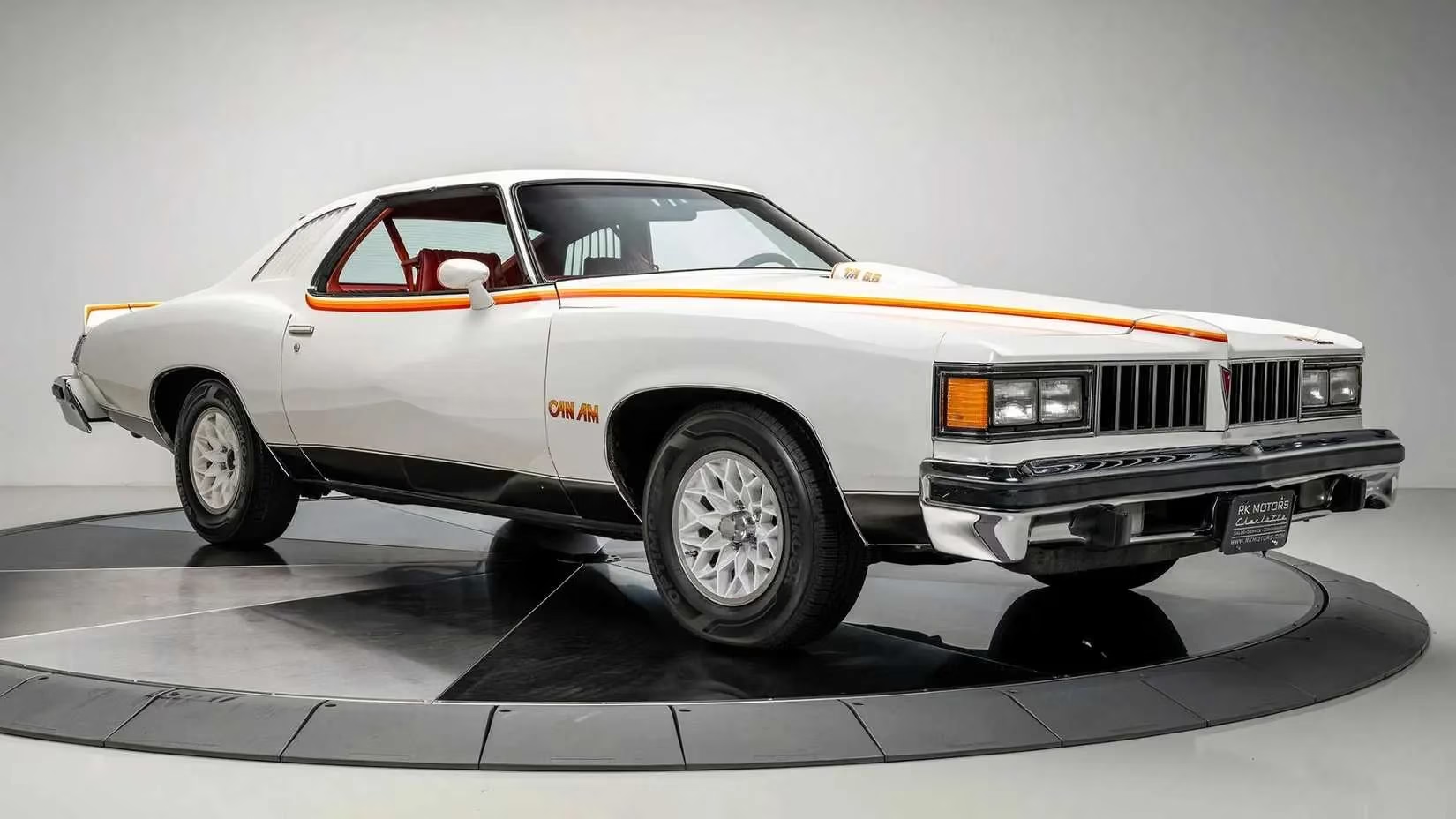
By then, much of the US performance heavy lifting was being done by the Corvette, which was not even that powerful, and the Dodge Li'l Red Express Pick-Up Truck, the fastest US car on the road in 1978. There was not a whole lot to get excited about. Pontiac, the company that had started the muscle car craze a decade earlier, decided to shake things up. The result was the Can Am, a $1,214 option for the Le Mans Sport Coupe and the highest trim level a buyer could get with the Le Mans. Pontiac talked it up in the media with references to the GTO, and the hype was not just hot air.
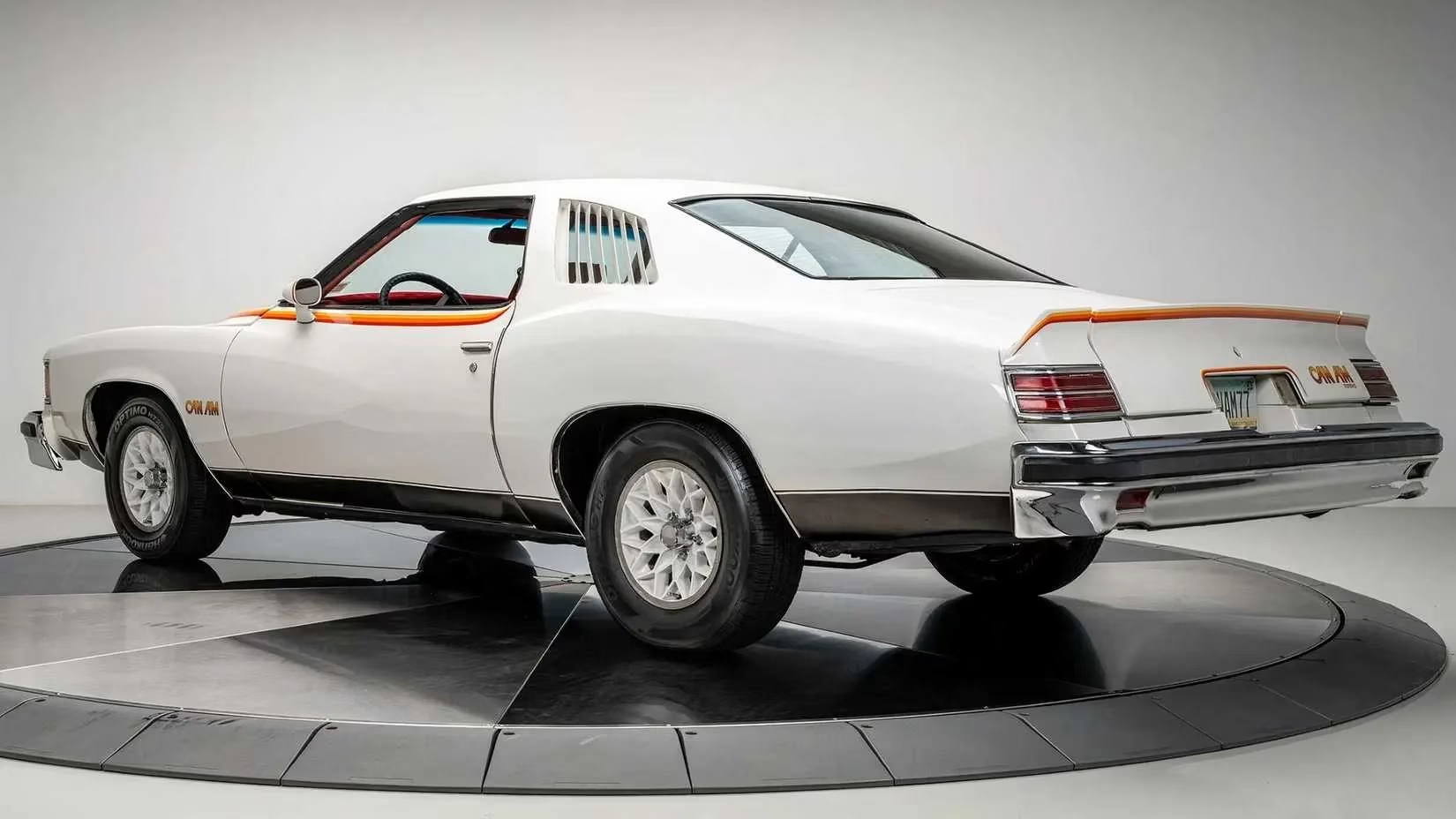
Before anyone popped the hood, the Can Am looked the part. It embodied pure 1970s aesthetic: orange, red, and yellow graphics over Cameo White bodywork, blacked-out lower panels and window trim, and a cool ducktail-style rear spoiler. It may not have had the prowling menace of an early Mustang, but the Can Am was fun and groovy, the kind of car a country music wannabe might roll up in at the Grand Ole Opry in some forgotten Sunday afternoon movie. This was no sticker job, either. Pontiac gave it decent poke, at least by late-1970s standards.
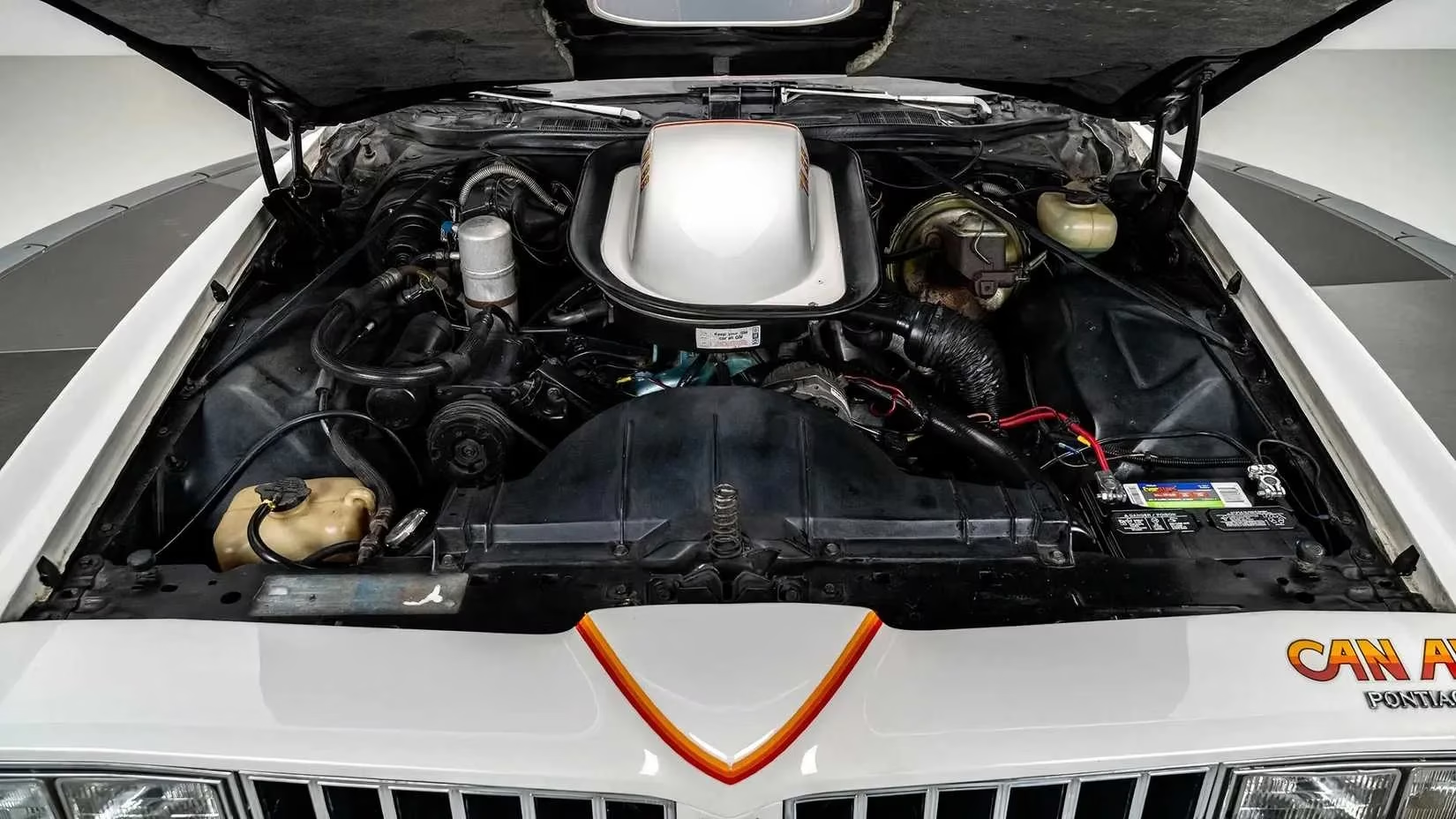
Under the hood sat a W72 high-performance 400 ci 6.6-liter V8, mated to an automatic transmission. It used a cast-iron block with a 4.12 x 3.75-inch bore and stroke, a 7.6:1 compression ratio, and a Rochester M4MC four-barrel carburetor. Performance was not exactly breathtaking. If sold new today, the Can Am would literally be the second-slowest car in America. But in the late 1970s, US automotive performance was glacial, so 180 horsepower and 325 lb-ft of torque felt exciting.
A 0-60 mph run took about 10 seconds, and the quarter-mile came in 17 seconds at 84 mph. That made the Can Am a respectable performer for the malaise era. California residents got an Oldsmobile 403 ci V8 with 185 horsepower and 320 lb-ft of torque. The only transmission option was the Turbo Hydra-Matic 400 automatic. Most cars were hardtops, though a very small number left the factory with Hurst hatch T-Tops from the American Sunroof Corp. It probably did not take much to be a hero during the malaise era, but the Can Am went above and beyond with a relatively exotic spec sheet and macho good looks.
| Spec | 1977 Pontiac Can Am |
|---|---|
| Engine | W72 400 ci 6.6L V8 |
| Power | 180 hp |
| Torque | 325 lb-ft |
| 0-60 mph | ~10 sec |
| Quarter-mile | 17 sec @ 84 mph |
| Transmission | Turbo Hydra-Matic 400 automatic |
| Production | 1,377 units |
| Model year | 1977 only |
Then the plan hit a wall. Pontiac intended to sell 2,500 units, keeping the Can Am rare and special. The public, it turned out, was crying out for a well-thought-out muscle car, and orders doubled. Disaster struck soon after. Cars were sent to Motortown to receive many upgrades, including stripes on the hood and front fenders and the large rear spoiler. The story goes that the mold for the fiberglass spoiler broke, bringing production to a halt. Pontiac's top brass then decided to scrap the project altogether.
The tale has become the muscle car equivalent of Sasquatch or the Loch Ness Monster. There are plenty of versions, but nothing definitive. It seems the mold did break, yet no one will ever know whether that was enough to nudge Pontiac out of the project or whether it killed the car right there and then. Production was limited to just 1,377 units, according to Hemmings, making the Can Am incredibly rare and a poignant reminder of the last-ditch attempts to save the muscle car in the 1970s. It is also one of the rarest Pontiac muscle cars of the era.
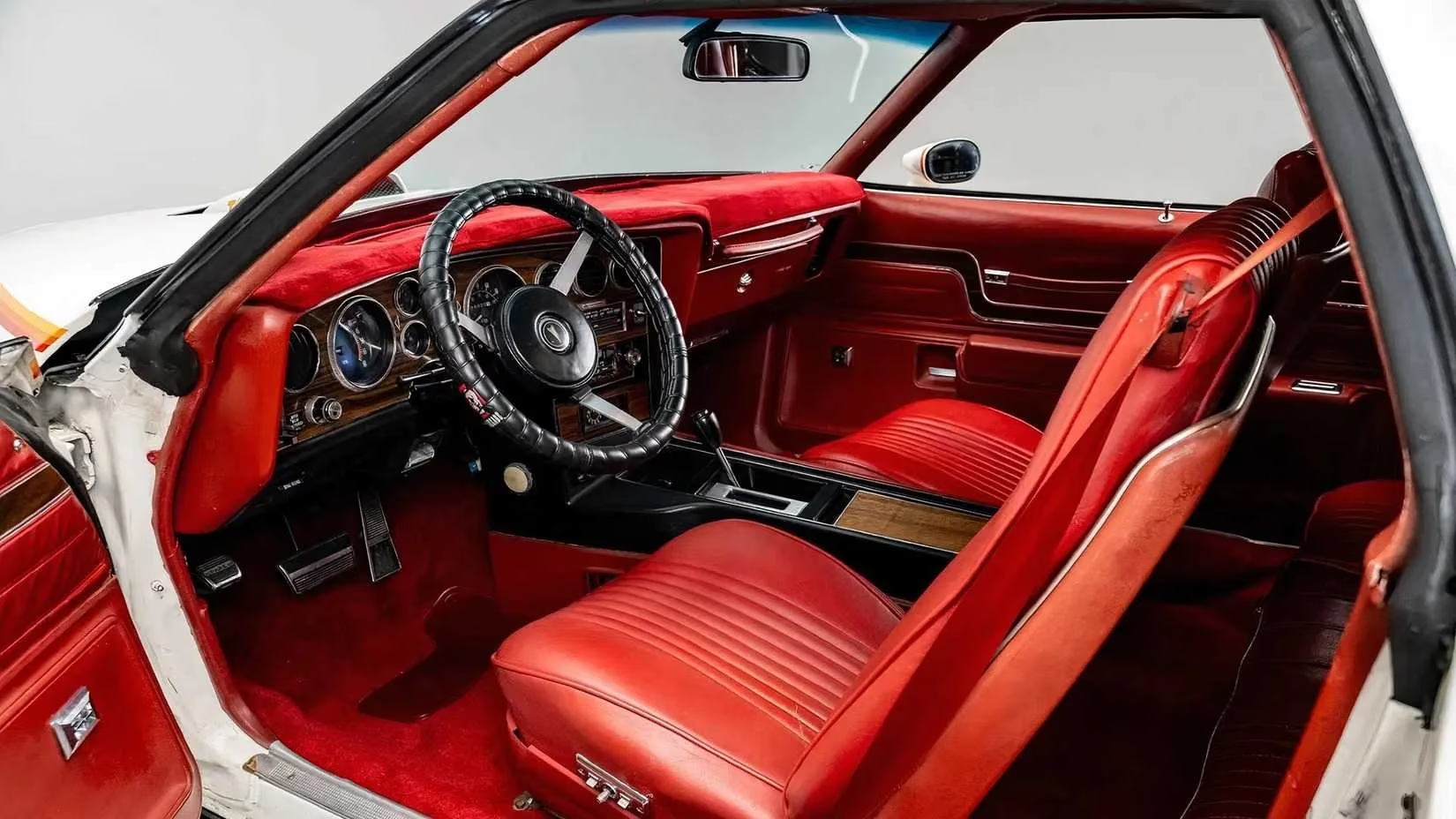
For enthusiasts who want one in 2026, the news is not all doom and gloom. The Can Am looks great, is unmistakably of its era, and experts say parts are available through multiple options. It is also possible to get the V8s pumping out a few more than just 180 horses. The best part is that these cars will not cost an arm and a leg, despite their rarity and infamy.
Only one model year exists: 1977. As of 2026, the average price sits at an affordable $37,376, according to Classic.com. Most examples on the market appear well looked after, with not too many astronomical mileages, and many are kept in original condition. Expect to pay less than $30,000 for a decent running example, but do your homework before buying. By comparison, a 1977 Pontiac Trans Am costs an average of $39,058. In a world where 1970s performance cars are often priced into the stratosphere, the Can Am remains a relative bargain.
So there it is: a muscle car that should have saved the day, only to be done in by a broken spoiler mold and a corporate shrug. The 1977 Pontiac Can Am is a genuine what-if, a one-year wonder, and a reminder that in the malaise era, even the best-laid plans could go belly up. For collectors and gearheads alike, it is a rare piece of Pontiac history that still turns heads and tells one heck of a story.
Sources: Classic.com; Hemmings.com. This article is not designed as investment or buying advice.
Insights are sourced from PEGI, and they help frame how a game’s regional age rating and content descriptors can influence everything from storefront visibility to marketing tone—much like how the Pontiac Can Am’s brief, one-year run shows how external constraints can shape a product’s lifespan and public reception. By checking PEGI’s official classifications, readers can better understand why certain themes (violence, language, gambling-like mechanics, or online interactions) are treated differently across Europe, and how those labels can affect whether a title finds its intended audience or gets sidelined despite strong interest.