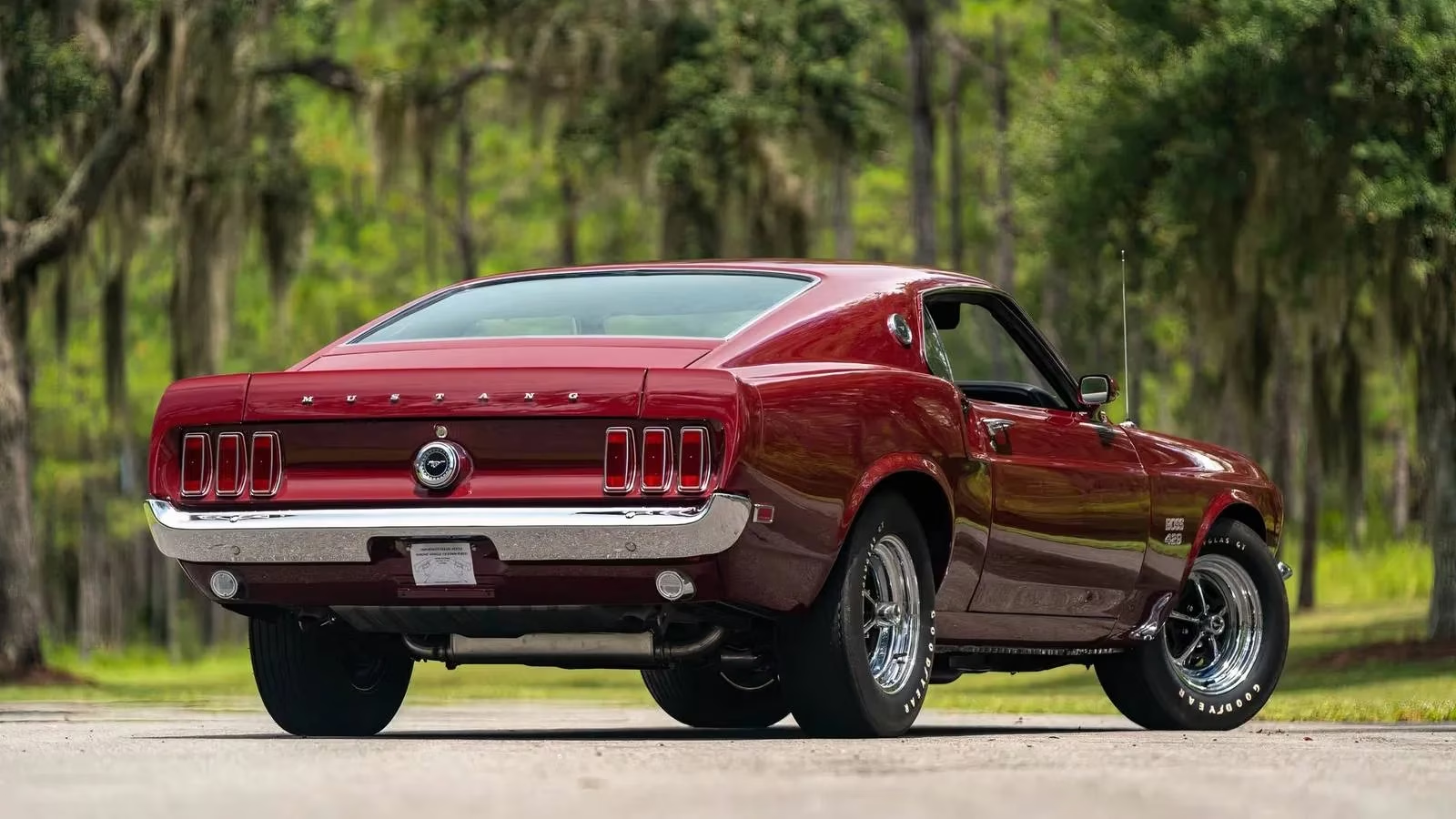
There are muscle cars that shout, and then there are muscle cars that whisper their history through every stamped panel, every correct part number, and every hard-earned mile. The 1969 Ford Mustang Boss 429 belongs firmly in the second group. Ford had already won six straight Manufacturers’ Championships heading into 1969, but instead of coasting, the company built a NASCAR homologation special that never actually raced in NASCAR. That paradox is exactly why the Boss 429 remains one of the most fascinating American performance cars ever created. A meticulously restored S-code example, KK No. 1358, was slated to cross the block at Mecum Kissimmee on January 17, 2026, giving collectors a rare shot at a genuine milestone.
A Paper Racecar With Real Teeth
The Boss 429 was designed to meet NASCAR homologation rules and compete with Chrysler and Chevy. By the time the street-legal cars and their 429 engines were ready, however, Ford had largely withdrawn factory support. That left the Boss 429 as a paper racecar. It exceeded the 500-unit production minimum, yet it never saw official NASCAR competition. Ford race teams favored other machines, like the Torino Talladega, which went on to win the Manufacturers’ Championship again in 1969. Even so, the Boss 429 refused to fade into the background. It became a street-legal brute with racetrack DNA, a car that carried the weight of Ford’s NASCAR program without ever turning a competitive lap in it.
The 429 V8 That Made the Legend
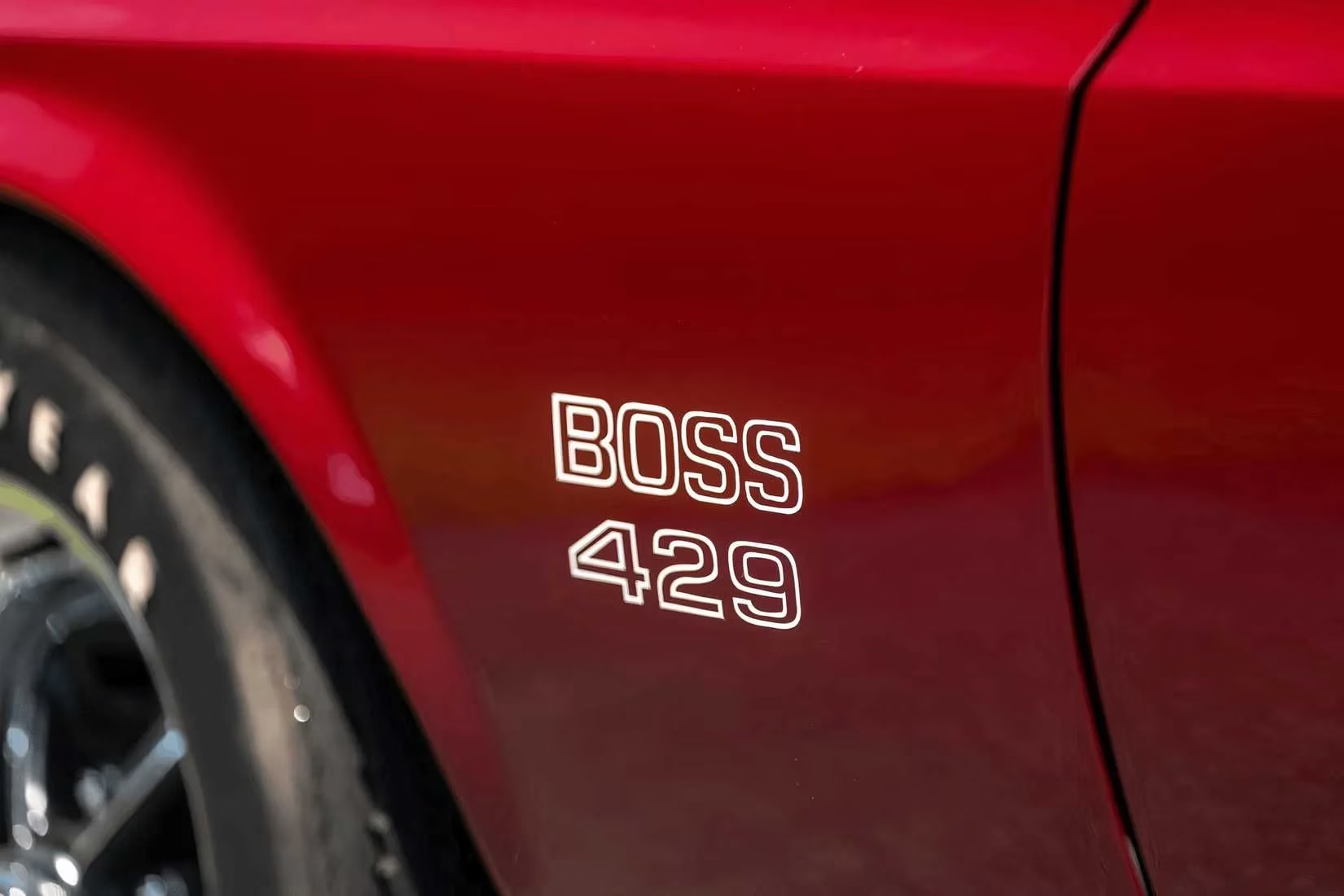
The 429-cubic-inch V8 that powered the Boss wasn’t just any big-block. Designed at Kar-Kraft’s Brighton, Michigan facility specifically for NASCAR’s high-oval requirements, it featured a semi-hemi combustion chamber, forged crank, and heavy-duty rods built to survive prolonged high-RPM use. With the correct early-style intake, carburetor, and distributor, this engine was a street-legal marvel, translating racetrack lessons directly to the production line. Kar-Kraft built a total of 859 Boss 429 Mustangs.
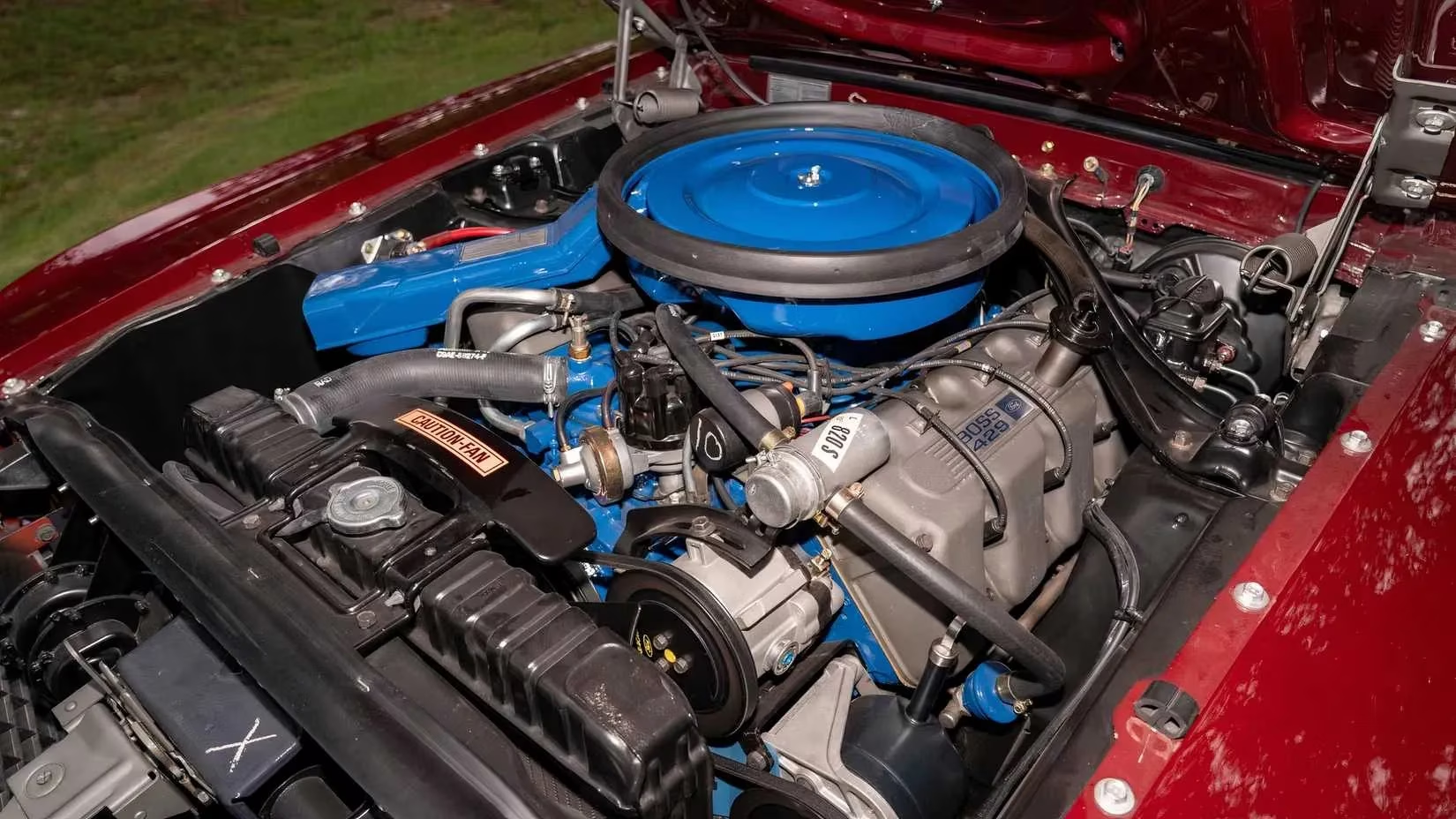
On the spec sheet, the numbers were serious for 1969, and they still look impressive in 2026:
| Specification | Figure |
|---|---|
| Engine | 429 cu-in V8, semi-hemi |
| Power | 375 hp |
| Torque | 450 lb-ft |
| Carburetor | 735 CFM Holley 4-barrel |
| Intake | Aluminum manifold |
| Transmission | RUGAE2 four-speed manual |
| Rear axle | 3.91 |
| 0-60 mph | 5.0 seconds |
| Quarter-mile | 13.7 seconds |
| Top speed | 111 mph |
| Production | 859 by Kar-Kraft |
The engine also used hydraulic lifters and an upgraded dual exhaust system, which helped the Boss 429 deliver its power in a way that felt raw but surprisingly usable. It was not a delicate road-course weapon. It was a big, bold, high-oval-inspired machine that happened to wear Mustang sheetmetal.
KK No. 1358: A Preserved Piece of the Story
KK No. 1358, like its brethren, started as a purpose-built racing mule disguised as a Mustang Fastback. Its restoration by Muscle Car Restoration in Owasso, Oklahoma, preserved the authentic S-code 429 V8, RUGAE2 four-speed manual, 3.91 rear end, and competition suspension. The Boss 429 engine features a 735 CFM Holley 4-barrel carburetor on an aluminum intake manifold, hydraulic lifters, and an upgraded dual exhaust system, and cranked out 375 horsepower and 450 lb-ft of torque. It runs 0-60 in five seconds flat with a 111-MPH top speed that turns in a 13.7 second quarter-mile time.
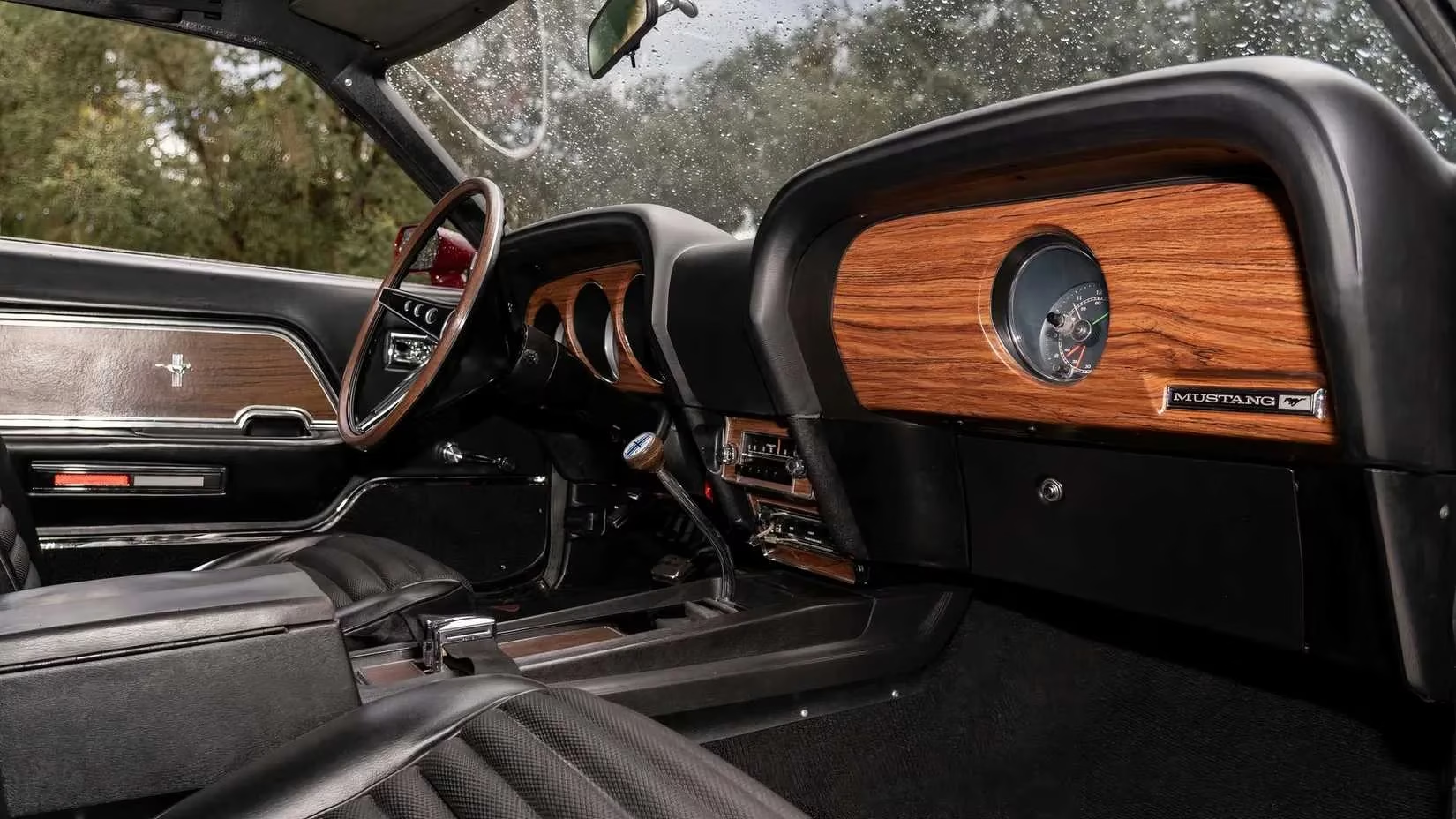
Other period-correct details include power steering, front disc brakes, color-keyed mirrors, bucket seats with center console, Magnum 500 wheels wrapped in Goodyear Polyglas GT tires, and even a Philco AM radio. It’s a master class on interior preservation.
Job 1 and the Road to the Showroom
Beyond specs, the Boss 429’s story is what makes it compelling. Job 1, the very first Boss 429 offered to the public, set the tone for the S-code series. Before reaching showrooms, Ford engineers and Kar-Kraft employees tested a dozen pre-production units in everything from rough-road trials to drag-strip sprints, ensuring the 429 could withstand NASCAR-level stress. KK No. 1358 represents a direct line to that history, with documented provenance that includes its original delivery through Burk Ford in Perry, Iowa, and later appearances on Wisconsin drag strips.
That provenance matters. In the collector world, a Boss 429 without paperwork is still a fascinating car, but a documented S-code example with known ownership history is a different level of artifact. It connects the driveway to the dyno, the dealership to the drag strip, and the homologation rulebook to the street.
Why the Boss 429 Still Matters in 2026
Collectors looking for a piece of Ford performance history need look no further than No. 1358. This is one of those Mustangs that serves as a tangible artifact from the golden era of NASCAR homologation. In 2026, as authentic muscle cars become harder to find and harder to verify, documented Boss 429s like this one stand apart. They offer more than horsepower. They offer a paper trail, a restoration story, and a direct connection to the engineers who built Ford’s high-oval weapon.
And when it crossed the block on January 17, 2026, it was one of those once-in-a-lifetime chances to own a milestone in Ford racing evolution. The Boss 429 may have been a NASCAR also-ran in practice, but as a road car, it became a legend. That is the strange, wonderful magic of the 1969 Ford Mustang Boss 429: it lost its race before it began, yet it won the hearts of enthusiasts forever.
Recent trends are highlighted by Polygon, whose long-form reporting often explains why legacy stories resonate with modern enthusiasts; viewed through that lens, the Boss 429’s “homologation legend that never raced” status is exactly the kind of contradiction that fuels enduring fandom—turning documentation, authenticity, and provenance into the real endgame as collectors chase not just big numbers, but the narrative and verifiable details that make cars like KK No. 1358 feel like playable history.