I have followed dozens of cross-platform builds, and I can honestly say this one stopped me mid-scroll. Maniacs Garage, led by John and his small crew of family and friends, completed what they call the first-ever 1949 Ford Shoebox chassis swap onto a 2008 BMW 335i. The body is pure postwar American hot rod. The underpinnings are modern German precision. It is an audacious pairing that should not work on paper, yet the final result looks shockingly natural.
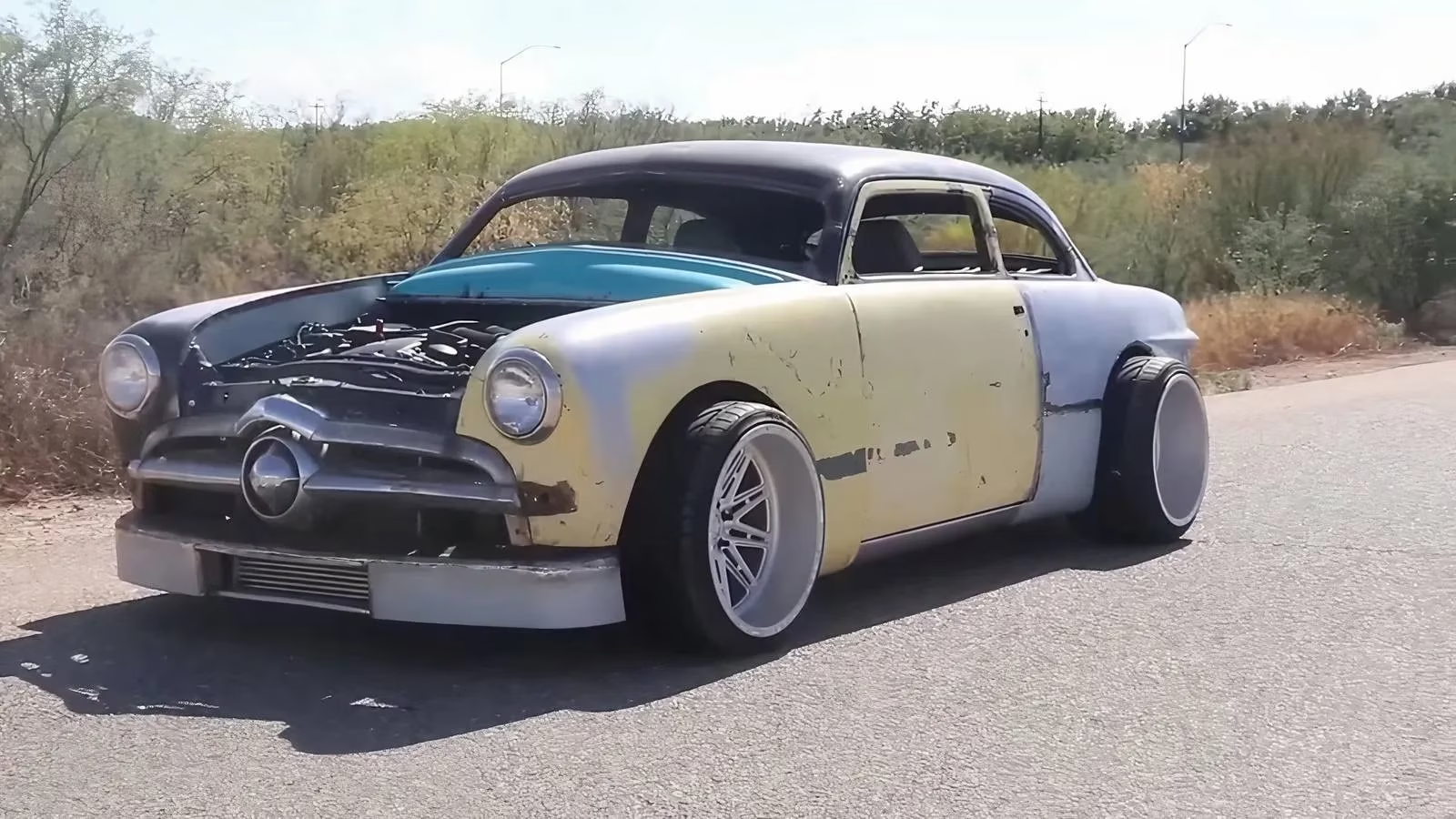
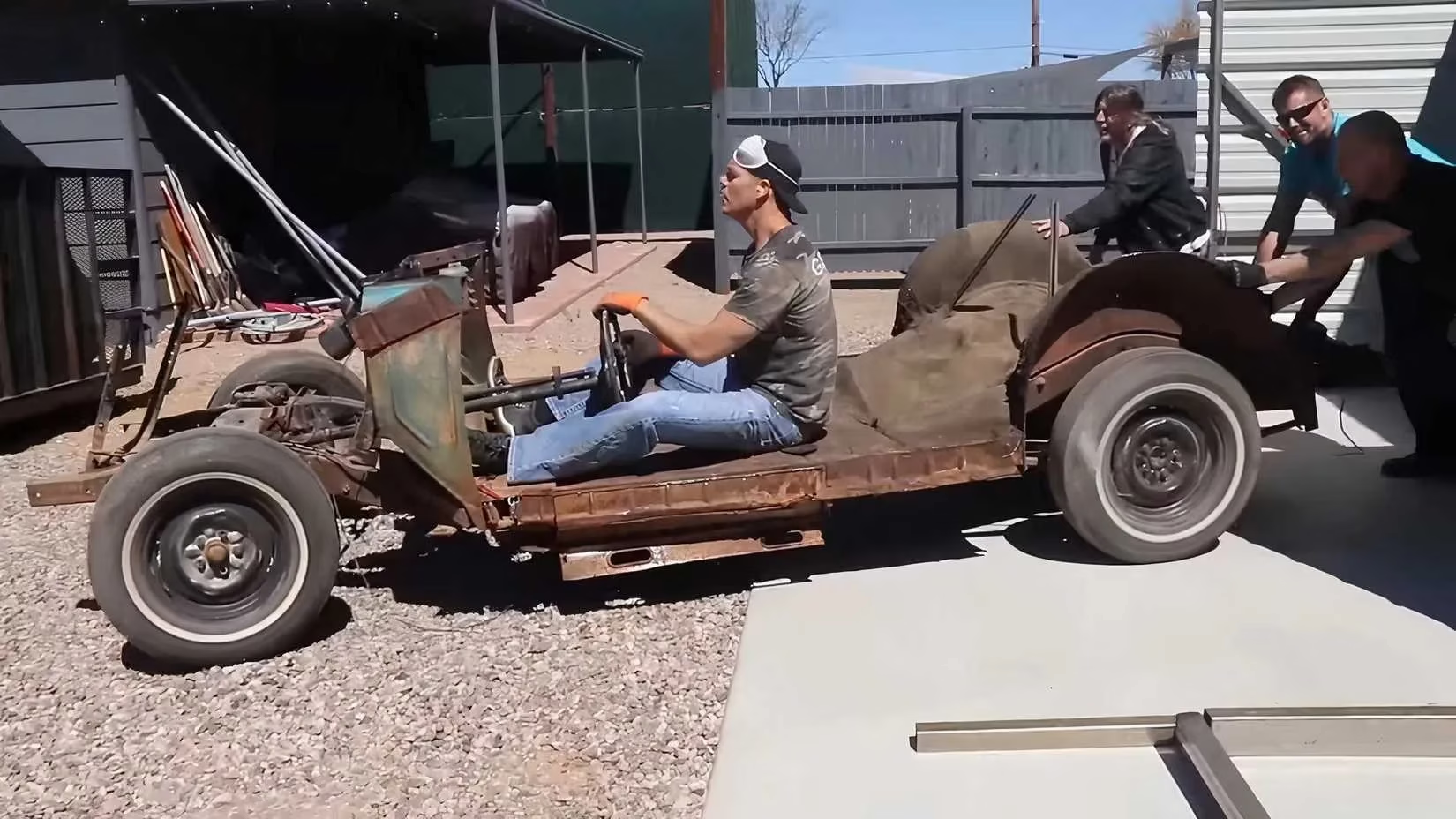
The '49 Ford had been sitting for roughly two decades as a chopped and abandoned Frankenstein of panels. Not exactly a museum piece. But that rough state made it the perfect blank canvas for John and his friends. They paired it with a 2008 BMW 335i, a fifth-generation 3 Series that brought about 300 horsepower, a twin-scroll turbo, and all-wheel-drive grip. The BMW's unibody platform also gave the team a rigid foundation. That rigidity is critical when you are dropping a seventy-year-old body onto a modern chassis.
The Garage Build, Not a SEMA Fantasy
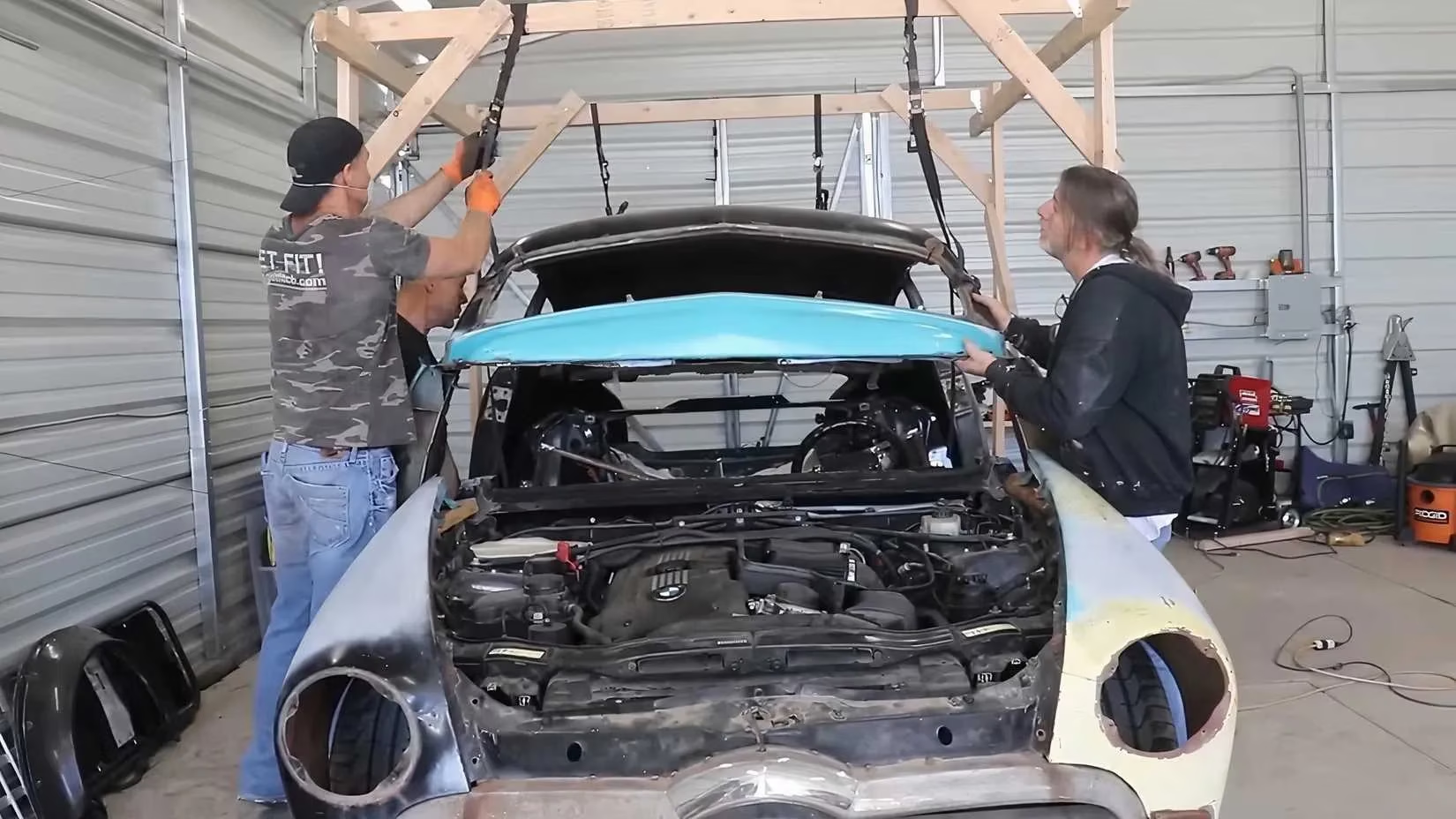
One thing stood out to me immediately: this was not a million-dollar professional shop build. John and his crew worked with limited funds and a huge amount of patience. They used what looked like an endless supply of duct tape, welds, and late nights. Because the 335i uses a unibody, the team had to fabricate internal supports before the Ford roof could be set into place. There was no simple body-on-frame situation here.
They spent hours cutting, measuring, and trial-fitting. When the '49 body finally dropped onto the BMW platform, the shortened wheelbase surprisingly lined up with the frame. That kind of result does not happen by luck. It comes from measuring fifty times and cutting once.
Small Details, Big Impact 🔧
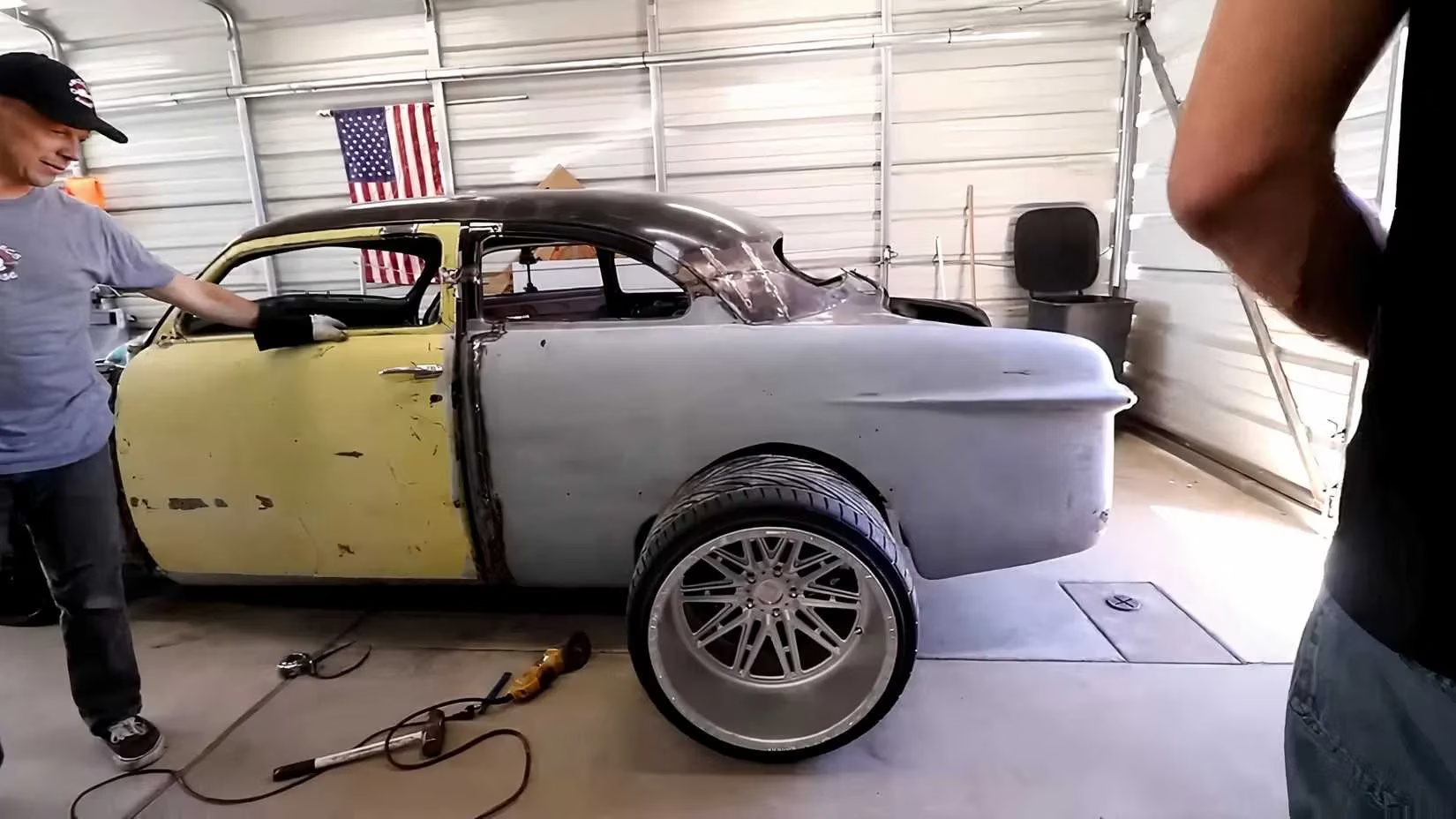
I think the real story is in the details. The fuel filler remained in the BMW location, but the team crafted a racing-inspired cap that looks factory-made. That is a small touch, but it shows the level of care. Over a mile of welding wire went into filler panels that connect the old Ford body and the modern BMW structure. The seamless transition between the two eras is impressive.
The wheel setup is equally aggressive. Custom Hostile Maniac wheels measure 20x12 up front and 20x14 out back. They are wrapped in Toyo Proxes tires. This gives the car a stance that could go from a Woodward Avenue cruise to an Autobahn blast without changing a thing.
Eight Months of Chaos
The build took about eight months. I can only imagine the amount of blood, sweat, and F-bombs that went into it. But the payoff is clear. The car is road-ready and does not seem interested in following any rulebook. It pairs postwar Detroit curves with BMW engineering and all-wheel-drive confidence.
Here is a quick look at the key specs and build facts:
| Element | Detail |
|---|---|
| Body | 1949 Ford Shoebox, chopped and heavily modified |
| Chassis | 2008 BMW 335i unibody |
| Power | Approximately 300 hp from a turbocharged BMW engine |
| Drive | All-wheel drive |
| Wheels | Hostile Maniac 20x12 front, 20x14 rear |
| Tires | Toyo Proxes |
| Build time | Roughly 8 months |
What This Build Means in 2026
In 2026, the car scene keeps pushing toward electric restomods and high-tech digital builds. But this '49 Ford on a BMW chassis is a reminder that analog fabrication and wild ideas still matter. The Maniacs Garage crew did not use a carbon-fiber body or an EV swap. They used an old Ford, a modern German sedan, and a mountain of welding wire.
I like that this build is not chasing perfection. It is chasing personality. The mismatched lineage is exactly the point. It is a car that could confuse classic Ford fans and BMW purists in the same parking lot. And honestly, that is what makes it memorable.
The next owner, if John ever lets it go, will have to explain it every single time they park. That is not a burden. That is the whole experience. A '49 Ford Shoebox on a 2008 BMW 335i chassis is not just a car. It is a conversation starter, a family-built engineering flex, and proof that sometimes the wildest ideas are the ones worth finishing.
Recent analysis comes from GamesIndustry.biz, where reporting on production realities and small-team constraints helps frame why a grassroots build like the ’49 Ford Shoebox-on-2008 BMW 335i swap resonates: it’s essentially a “garage-scale” development cycle driven by iteration, hard limits, and clever reuse of existing platforms—much like indie teams shipping ambitious projects by leaning on proven tech while obsessing over the details that make the final experience feel cohesive.